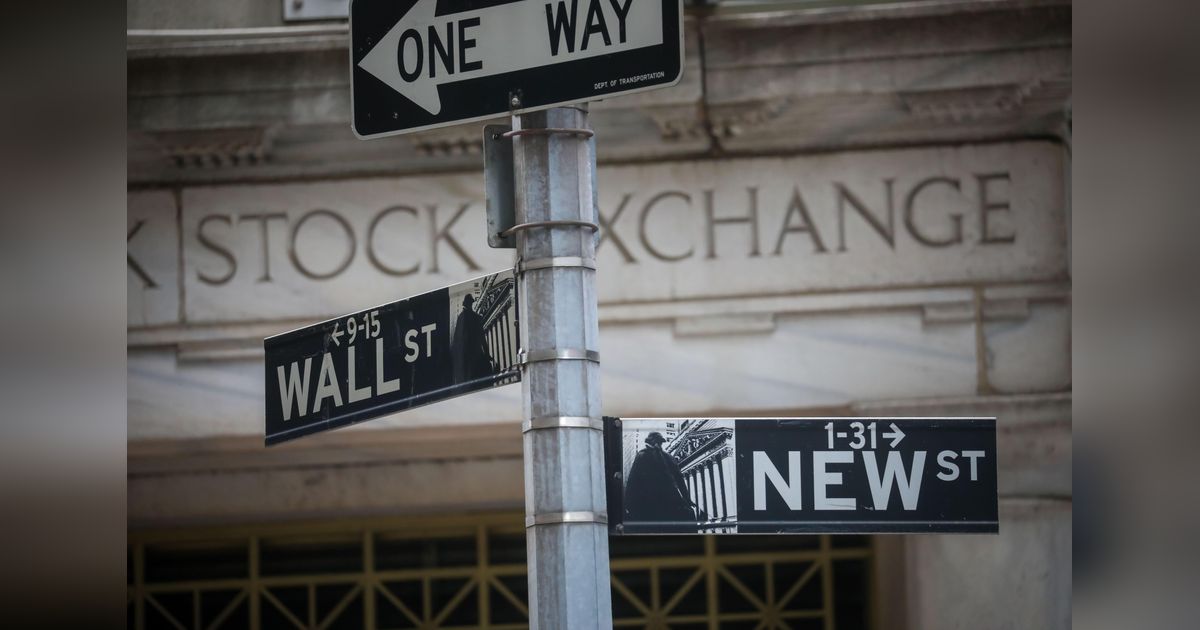
U.S. stocks rose in volatile trading on Friday as inflation showed signs of cooling, but a rout in tech shares amid renewed fears of AI-driven disruption capped gains, setting the S&P 500 and the Dow on track for their worst weekly loss since November.
Data on Friday showed U.S. consumer prices increased less than expected in January, prompting traders to slightly raise the odds of an interest-rate cut by the Federal Reserve in June to 69 per cent from 63 per cent earlier.
“The important takeaway for both (the) rate markets and equities is that the trend in disinflation continues. It kind of reinforces the idea that we are past peak inflation concerns,” said Michael Metcalfe, head of market strategy at State Street Markets.
“This is painting a picture of a continued improving inflation outlook, which will allow for rates to fall later in the year.”
Equity markets have pulled back from record levels as fears of AI-led disruption fueled a selloff in sectors spanning software and insurance to trucking companies, while stronger-than-expected January jobs data sowed doubts about the pace of monetary policy easing this year.
Cboe’s volatility index, Wall Street’s fear gauge, hit a one-week high of 22.40 points before easing slightly.
At 11:55 a.m. the Dow Jones Industrial Average rose 222.36 points, or 0.45 per cent, to 49,674.34, the S&P 500 gained 36.38 points, or 0.53 per cent, to 6,869.14, and the Nasdaq Composite added 72.55 points, or 0.32 per cent, to 22,669.69.
With earnings season more than halfway through, AI capex outlays emerged as a dominant theme for “Magnificent Seven” companies, whose cumulative investments are projected to reach about $650 billion. Investors are now demanding real payoffs as they continue to punish sectors they fear could be squeezed by growing competition.
“You’re discounting a lot of earnings streams that have to come to fruition. Investors are questioning whether those are going to actually occur and we’re not trading at cheap valuations,” said Brent Schutte, chief investment officer, Northwestern Mutual Wealth Management.
“That just makes the bar a bit higher for investors to continue to push the market higher.”
Big tech stocks weighed, with Nvidia and Alphabet down 1.5 per cent and 0.7 per cent, respectively.
Healthcare shares supported markets on Friday, with Eli Lilly and UnitedHealth adding 0.8 per cent and 1.2 per cent, respectively. Moderna jumped 8.9 per cent after posting fourth-quarter revenue above expectations.
Applied Materials shares advanced 9.3 per cent after the chipmaking-equipment firm forecast second-quarter revenue and profit above Wall Street expectations.
Networking equipment provider Arista Networks gained 9.8 per cent after forecasting annual revenue above expectations.
White House trade adviser Peter Navarro said there was no basis to reports that the administration was planning to reduce steel and aluminum tariffs.
Still some steelmakers dropped, with Nucor slipping 2.3 per cent and Steel Dynamics losing 3.2 per cent.
Aluminum producers Alcoa and Century Aluminum declined 1.1 per cent and 7.1 per cent, respectively.
Advancing issues outnumbered decliners by a 3.08-to-1 ratio on the NYSE, and by a 3.06-to-1 ratio on the Nasdaq.
The S&P 500 posted 28 new 52-week highs and five new lows, while the Nasdaq Composite recorded 40 new highs and 108 new lows.







