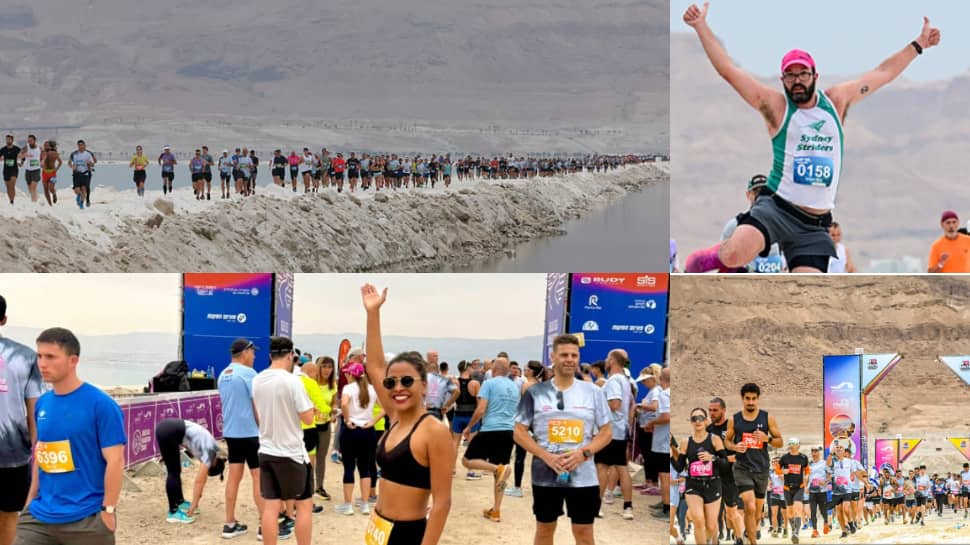
The Dead Sea Marathon, officially known as the Dead Sea Land Marathon, has solidified its reputation as one of the most surreal athletic challenges on the planet. Held on February 6, 2026, the seventh edition of this event saw approximately 8,700 participants descend to the lowest point on Earth. At roughly 430 meters below sea level, the race takes place in a landscape defined by salt flats, turquoise waters, and desert cliffs near Ein Bokek, Israel.
British contingent and Global appeal
The event has seen a significant surge in popularity among international “bucket list” runners. In 2026, the race sold out months in advance, drawing athletes from over 40 different countries. Runners from the United Kingdom have become a notable presence in recent years. Following the 2025 edition, where approximately 32 British athletes participated, the 2026 field saw an even larger UK contingent. These runners, ranging from club enthusiasts to ultra marathon specialists, are often drawn by the novelty of the “only way is down” challenge. Combining sport with tourism, many British participants utilize the 1.5 to 2 hour transfer from Tel Aviv to explore the mineral rich waters and historic sites surrounding the southern basin.
Six disciplines for every level
The 2026 event offered a diverse range of distances, catering to a wide spectrum of endurance levels:
5 km and 10 km: These scenic fun runs are designed for beginners or those wishing to enjoy the unique scenery at a leisurely pace.
15 km: A mid distance option for those transitioning to longer endurance events.
21.1 km Half Marathon: A flat and fast course dedicated to the memory of Tomer and Giora Ron.
42.2 km Full Marathon: A flat loop around the southern Dead Sea basin, prized for its fast times due to the increased oxygen concentration found at such low altitudes.
50 km Ultra Marathon: Serving as Israel’s national championship in partnership with the Athletics Association, this race represents the ultimate endurance test in the desert heat.
Environmental dynamics and performance
The course is famously unique, utilizing restricted salt embankments that are typically closed to the public. Runners benefit from a oxygen rich environment which can theoretically aid performance. However, this is balanced by the necessity for extreme hydration vigilance. The arid, salty conditions can lead to rapid dehydration or skin irritation. With typical February temperatures ranging between 15 and 25 degrees Celsius, the race features sunrise starts to ensure athletes complete the bulk of their distances before the midday heat peaks.
Challenges and rewards
For international participants, the logistics involve careful planning around bib collection in Tel Aviv and transport to the arid Judean Desert. Despite the challenges of salt exposure and dry climate, the rewards are unmatched. UK runners contribute significantly to the global vibe of the race, joining an international community that values the camaraderie of finishing a race in an otherworldly setting. As word of this “lowest race on Earth” continues to spread through publications like The Running Week, the Dead Sea Marathon remains a pinnacle event for those seeking to test their limits in one of nature’s most extreme environments.







