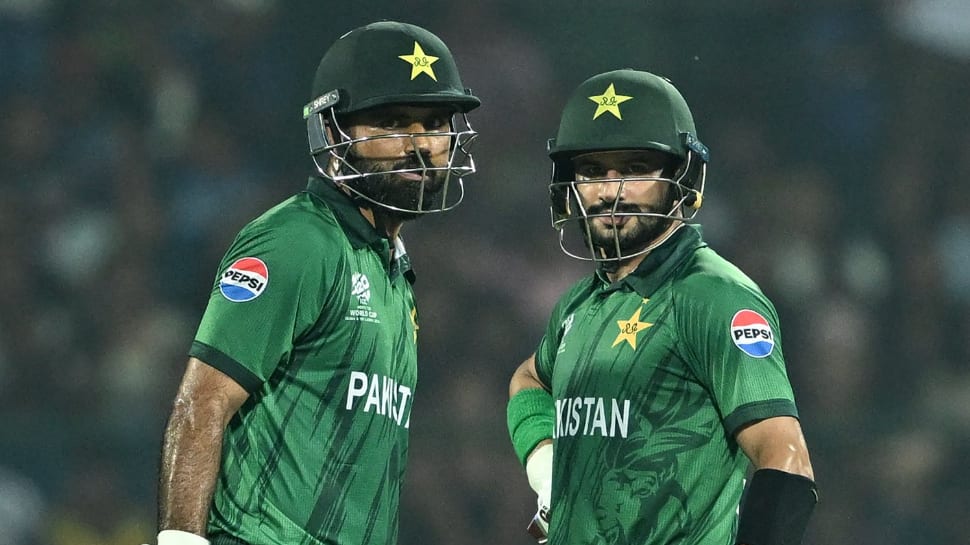
Pakistan’s campaign at the ICC Men’s T20 World Cup 2026 came to a heartbreaking end on Saturday, February 28, 2026, as they were eliminated from the tournament despite securing a thrilling five-run victory over Sri Lanka in their final Super 8 Group 2 match at the Pallekele International Cricket Stadium in Kandy.
Against Sri Lanka, it was a heart-wrenching moment for Salman Ali Agha-led Pakistan, who are heading home early from the 2026 T20 World Cup.
Here is the breakdown of why Pakistan didn’t qualify for semi-final of T20 World Cup 2026 despite win over Sri Lanka:
The Equation: Why A Win Wasn’t Enough
Heading into the match on February 28, 2026 against Sri Lanka, Pakistan sat on just 1 point following a washout against New Zealand and a loss to England. To qualify for the semi-finals, they didn’t just need to beat Sri Lanka; they needed to destroy them to fix their Net Run Rate (NRR).
The Target: Pakistan needed to win by at least 64 runs to overtake New Zealand’s NRR of +1.390.
The Cut-off: After posting a massive total of 212/8 in 20 overs, the equation was simple: Pakistan had to restrict Sri Lanka to 147 runs or fewer.
The Moment of Exit: The second Sri Lanka reached 148 in the 16th over, Pakistan’s semi-final dreams were officially extinguished, regardless of who eventually won the game.
Match Highlights: A Bitter Victory
Pakistan showcased the “intent” fans had been clamoring for, but it came a game too late. In a bold move, the team dropped former captain Babar Azam, opting for a more aggressive opening pair.
Pakistan posted a formidable total of 212/8 in their 20 overs after being sent in to bat. The innings was powered by a record-breaking opening stand of 176 runs between Sahibzada Farhan, who smashed a century (100), and Fakhar Zaman (84).
This partnership set a new benchmark for the highest opening stand in T20 World Cup history. However, the middle order struggled once again, a recurring issue throughout the tournament, preventing Pakistan from pushing the total even higher.
In response, Sri Lanka – already eliminated from semifinal contention – mounted a spirited chase, finishing at 207/6.
Captain Dasun Shanaka played a blinder, scoring an unbeaten 76 off 31 balls. His late-game heroics ensured Sri Lanka blew past the 147-run mark, effectively knocking Pakistan out mid-innings.
Final Group 2 Standings
The final standings in Super 8 Group 2 saw England topping the table with 6 points (unbeaten), followed by New Zealand qualifying on superior NRR with 3 points. Pakistan also finished with 3 points but an inferior NRR of -0.123, leading to their exit.
What’s Next For Pakistan?
The fallout from this exit is expected to be significant. While Salman Ali Agha defended the team’s effort, he pointed to the middle-order instability and the dew factor as key reasons for the failure to defend the “magic number” of 147.
“I think when I lost the toss, it was always going to be challenging because of the dew, and then it was a very good pitch and once restricting them 148 is going to be challenge. But we tried and couldn’t but it was always going to be challenging restricting them 148. I think if I would have won the toss, then it could have been a different story,” said a disappointed Salman Ali Agha.
With the semi-finals set to feature England, New Zealand, and South Africa (with the final spot decided by the India vs. West Indies clash), Pakistan will return home to face tough questions about their tactical choices and the future of their senior players.







