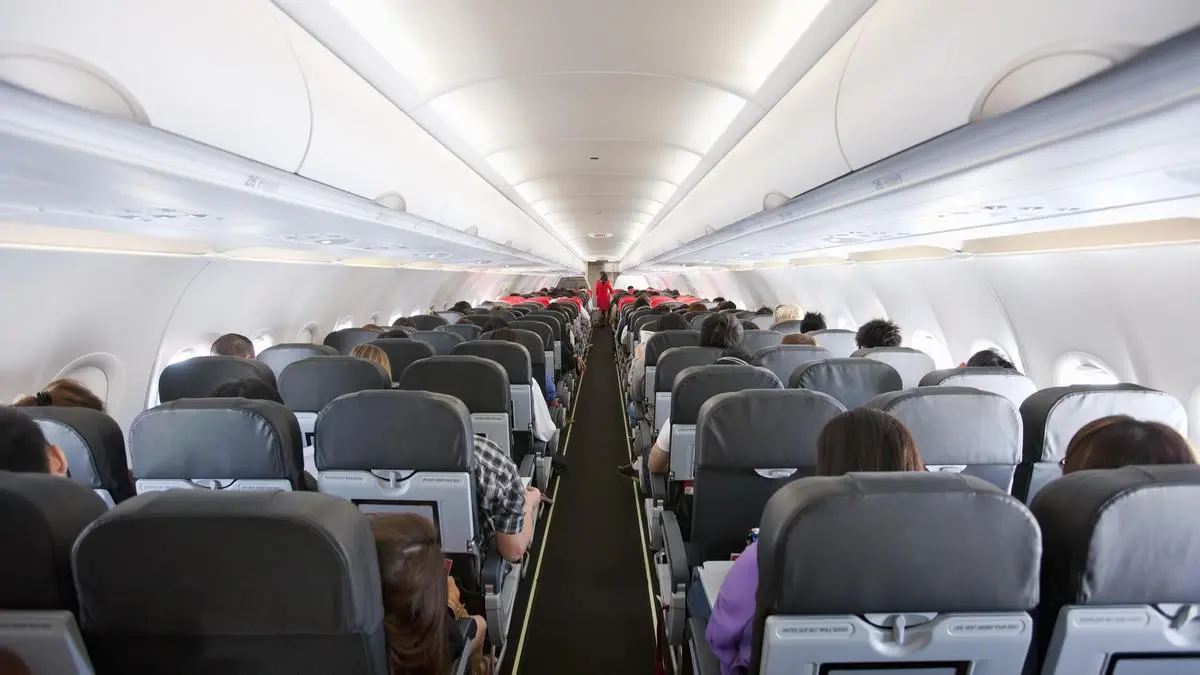
The move assumes significance given the current unbundled services framework, in which airlines price various components of travel separately
| Photo Credit:
enviromantic
In a passenger-centric move, the Centre has directed airlines to ensure that the selection of a minimum of 60 per cent of seats are made available free of charge, while also requiring carriers to seat passengers travelling on the same PNR together, preferably in adjacent seats.
As part of a broader push to improve transparency and standardisation, the Ministry of Civil Aviation, through the Directorate General of Civil Aviation (DGCA), has mandated airlines to clearly articulate policies on carriage of sports equipment, musical instruments and pets.
Besides, the directions mandate airlines to prominently display passenger rights across platforms and ensure communication of entitlements in regional languages.
The move assumes significance given the current unbundled services framework, in which airlines price various components of travel separately.
At present, most seat selections are chargeable, with passengers often paying extra for preferred seats or to ensure adjacent seating, even when travelling on a single booking.
Ancillary revenues, including seat selection, baggage and onboard services like food and beverages, account for an estimated 10–15 per cent of airline revenues, with seat selection contributing a relatively smaller share within this segment.
According to Kinjal Shah, Senior Vice President and Co-Group Head, Corporate Sector Ratings, ICRA, the DGCA directive is not going to have any material impact on the revenues of the airlines. “Ancillary revenues have accounted for less than 10 per cent of the revenues of Indian airlines over the last few years. Ancillary revenues comprise seat selection charges, extra baggage charges, and food sales, among others,” she said.
But there is still unease in the industry following the new norms, especially given the high cost of operations in the country.
“Given the crude oil price situation, it is very difficult for airlines to survive if the government continues to enforce policies that are financially unviable for the sector,” a senior executive of a leading low-cost carrier told businessline.
Another senior executive from a different airline said that the impact on fares may be limited, as seat selection charges themselves typically start at around ₹200 and form a small portion of overall ancillary revenues.
Globally, such practices are uncommon, with most aviation markets allowing airlines flexibility to price services under deregulated frameworks.
According to Mark Martin, Founder and CEO of Martin Consulting, “Selection of seats is considered a value-plus offering and preference. Although the 60 per cent limit will continue to allow airlines to sell window and aisle seats as a ‘value-plus add-on’, the bigger impact I see is with the Premium Economy product, as the middle seat in Premium Economy will need to be classified as a nil-value seat.”
The directions reiterate strict adherence to the existing passenger rights framework, particularly in cases of delays, cancellations and denied boarding.
While several of these provisions are already part of the regulatory framework, the latest directions are aimed at strengthening compliance and ensuring more uniform practices across airlines.
Published on March 18, 2026







