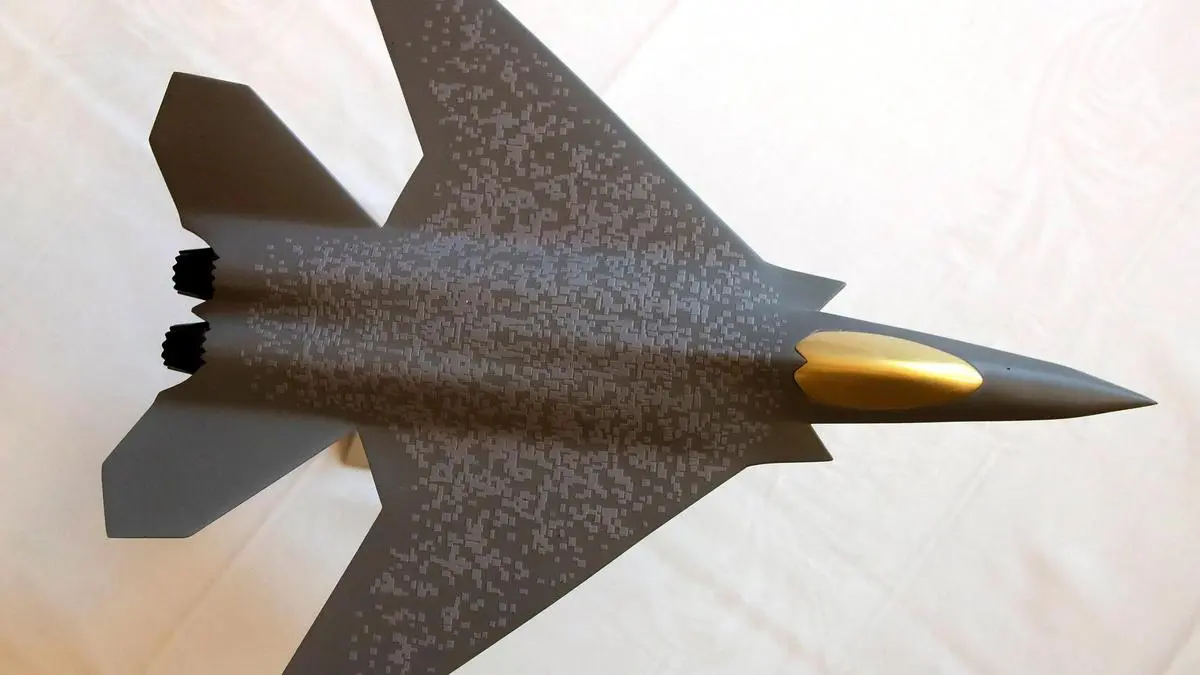
The proposal aligns with India’s broader strategy of balancing indigenous development like AMCA with selective global collaborations to strengthen future air combat capabilities. (A file photo)
| Photo Credit:
CHARLES PLATIAU
India is exploring joining one of two major European consortia developing sixth-generation fighter aircraft, according to a recent report by a Parliamentary panel.
The panel has recommended that the government evaluate collaboration with either the Future Combat Air System (FCAS) or the Global Combat Air Programme (GCAP)—two ambitious multinational projects to develop next-generation air combat platforms.
FCAS and GCAP: Europe’s next-gen air combat push
FCAS is a joint initiative led by France, Germany and Spain, centred on a networked combat system that integrates a next-generation fighter aircraft with drones and advanced digital combat technologies. Meanwhile, GCAP is being developed by the United Kingdom, Italy and Japan to field a sixth-generation stealth fighter expected to enter service in the mid-2030s.
The Parliamentary panel noted that partnering with either programme could significantly accelerate India’s access to cutting-edge aerospace technologies, including artificial intelligence-enabled warfare systems, advanced sensors and manned-unmanned teaming capabilities.
Early talks with France, scope for co-development
According to the report, India has already shown interest in collaborating with European partners—particularly France—on FCAS, with preliminary discussions indicating openness to co-development and co-manufacturing arrangements.
However, the panel also highlighted key challenges, including concerns over technology transfer, intellectual property rights and the extent of India’s role in design and production. These factors, it said, must be carefully negotiated to safeguard India’s long-term strategic and industrial interests.
Balancing AMCA ambitions with global partnerships
The move comes as India continues to pursue its indigenous fifth-generation Advanced Medium Combat Aircraft (AMCA) programme, while simultaneously preparing for future sixth-generation capabilities.
The panel emphasised that a balanced approach—combining domestic development with selective international collaboration—would be critical for strengthening India’s air power and achieving self-reliance in advanced defence technologies.
If realised, such a partnership would mark a significant step in India’s efforts to position itself among a select group of nations developing next-generation fighter aircraft systems.
Published on March 18, 2026







