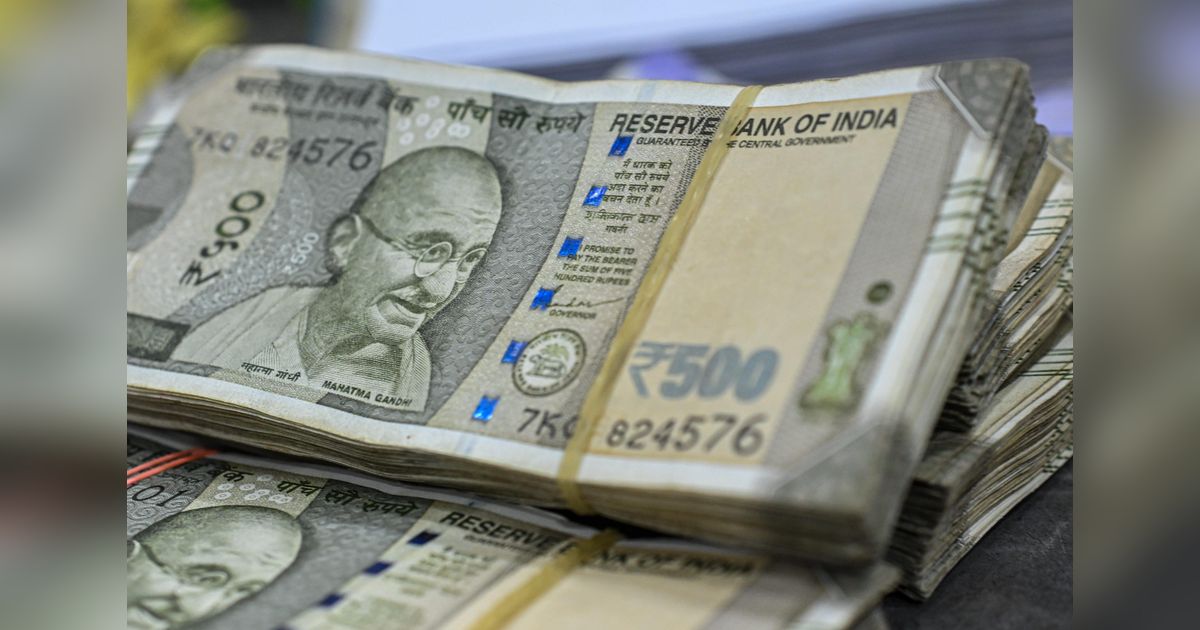
The rupee slumped to a fresh intraday low of 94.85 per dollar on Friday, while government bond yields surged to a near two-year high, as foreign investors pulled out of domestic markets amid escalating tensions in West Asia and elevated crude oil prices.
The local currency settled at a new closing low of 94.81, depreciating nearly 0.9 per cent from the previous close to become the worst-performing currency in Asia. It has fallen over 4 per cent since the West Asia crisis began in late February, and 5.2 per cent this quarter.
The rupee is inching closer to the psychologically crucial 95 mark, with the Reserve Bank of India (RBI) intervening intermittently in the foreign exchange market through dollar sales.
Currency dealers said the RBI was seen intervening mainly in the forward segment rather than in the spot market. They said the central bank’s increasing reliance on the forward market to manage rupee volatility was beginning to influence the currency’s medium-term trajectory.
“While such interventions help stabilise the rupee in the near term by easing immediate dollar demand and preserving headline foreign exchange reserves, they create a future overhang, as these contracts mature and require delivery or rollover,” said Kunal Sodhani, head of treasury, global trading centre, FX & rates treasury, Shinhan Bank India.
Data released on Monday showed that foreign exchange reserves fell $11.4 billion to $698.3 billion for the week ended March 20. The entire decline was due to a $13.5 billion drop in gold reserves, while foreign currency assets rose $2.1 billion. The rupee fell 1.23 per cent during that week.
“This has already manifested in elevated forward premiums and tighter liquidity conditions in swap markets, signalling underlying dollar demand,” he added.
The rupee has depreciated more than it did during the taper-tantrum years of 2013-14, falling 9.85 per cent in FY26. This financial year could be the Indian currency’s worst since FY12, when it had fallen 12.37 per cent.
Market participants said the rupee was expected to weaken in a calibrated manner, with levels around 95 per dollar appearing increasingly likely, especially if external pressures such as elevated crude prices, sustained dollar strength, and portfolio outflows persisted.
Foreign investors sold around ₹850 crore worth of government securities under the fully accessible route (FAR) on Friday, according to data from the Clearing Corporation of India Ltd (CCIL). Overseas investors have pulled $11.5 billion from local stocks this month, according to data compiled by Bloomberg.
On the other hand, the yield on the benchmark 10-year bond climbed past 6.95 per cent, as sentiment weakened after the excise duty cut on fuel raised concerns over the fiscal outlook, compounding pressures already stemming from elevated oil prices amid the West Asia conflict and a heavy supply of government debt.
Total state development loan (SDL) issuances for the week stood at ₹94,800 crore, which further weighed on central government bond yields. States raised about ₹54,834 crore at Tuesday’s auction, against the indicated ₹47,985 crore. Additionally, 13 states together raised about ₹39,991 crore against an indicative ₹12,000 crore on Friday.
The yield on the benchmark 10-year government bond settled at 6.94 per cent, the highest since July 26, 2024, against its previous close of 6.88 per cent.
“The rupee’s sharp depreciation reflects a broader riskoff sentiment due to foreign outflows and high crude prices, and the RBI’s intervention is somewhat smoothing near-term volatility,” said the treasury head at a private bank who did not wish to be named. “Government bond yields rose because of fiscal concerns after the announcement of excise duty cuts, adding to existing pressures from higher oil prices and the large supply.”
Brent crude oil rose to $109.75 per barrel, up from $99.31 the previous day. The dollar index also rose to 100, against the previous day’s 99.31.
Economists estimate that the excise duty cut on petrol and diesel could result in a net revenue loss of over ₹1 trillion for the Centre over 12 months, after accounting for gains from higher taxes on fuel exports.







