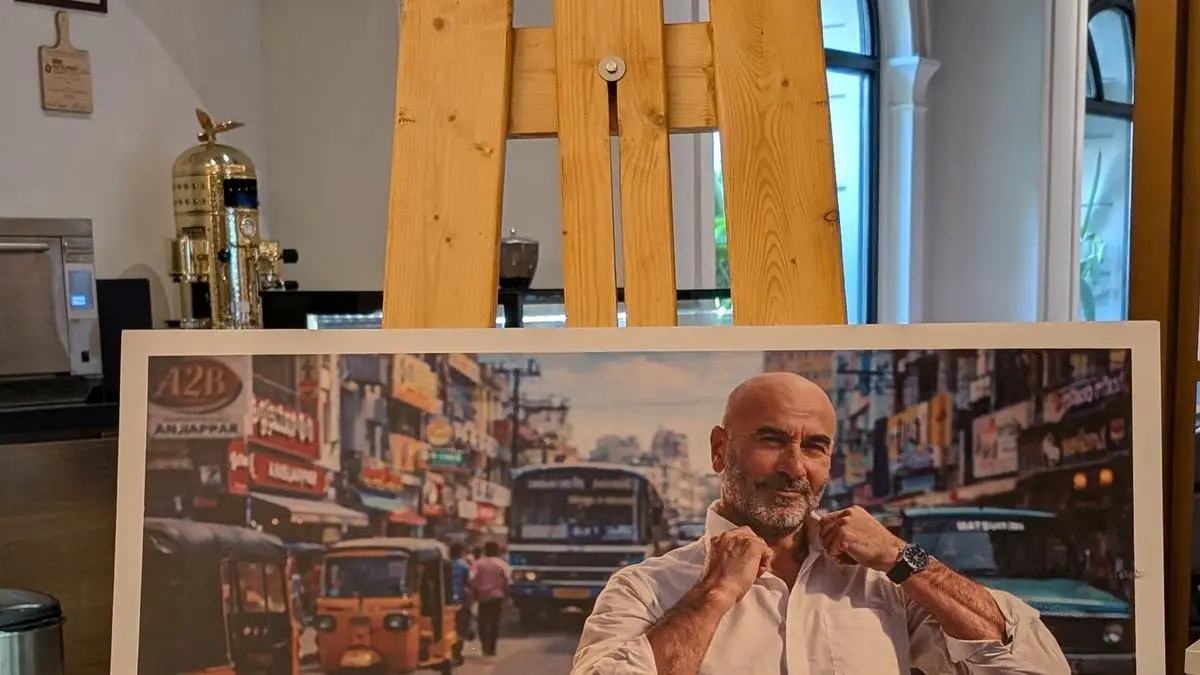
SERVING UP THALAIVA. Chema Basterrechea, global president and COO,
Radisson Hotel group, strikes a pose in this AI image
Last fortnight, the lobbies of the Radisson Blu GRT in Chennai and Radisson Blu Temple Bay at Mamallapuram had swashbuckling filmi posters of the global hospitality chain’s leadership. There was Nikhil Sharma, MD and COO for South Asia, hands on hips, rocking a mundu and crisp white shirt, and Chema Basterrechea, the global president and COO at Radisson Hotel group, also clad in white mundu and shirt and flicking his collars in classic Rajinikanth-style. Everyone from the IT head to HR head and sustainability lead was captured in dramatic poses inspired by Tamil films.
It was a conversation starter for the over 120 general managers and 80-plus owners who had converged in the southern capital to discuss growth strategies to scale up the chain’s presence from over 200 hotels to 500 by 2030. The event, RAD Leads 2026, was also an occasion to reward and applaud performance. “It was an opportunity to thank a lot of people for achieving amazing results,” said Basterrechea.
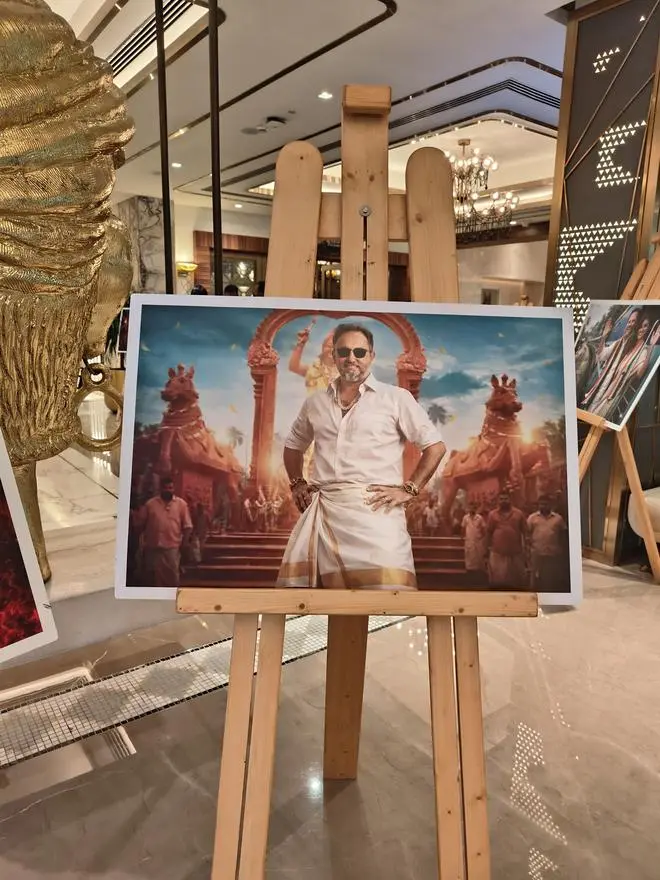
Nikhil Sharma, MD and COO for South Asia, Radisson Hotel group, strikes a pose in this AI image
For those tracking the hotel sector for long, the 500 mark took one back a decade, when the race among the chains was to touch the 100 mark in India. Now, the race is to breach the psychological 500 mark (India’s Taj hotels is inching there with 388 properties and targets 700 by 2030). It’s a magical mark, for sure, for an industry that hit the doldrums during Covid but has been on a resurgence in the last couple of years and boldly building more supply. Overall, the industry is expected to add 1.14 lakh branded rooms by 2030, according to consultancy firm Hotelivate. “We have maintained a steady momentum with 14 openings in 2025 and additional hotels already opening in 2026, and we expect to cross 150 operational hotels soon,” says Sharma. The chain has 141 operating hotels, plus 91 in the pipeline.
But numbers tell only half the story. Where the hotels are expanding, which brands they are betting on, whether the growth is coming from conversions or through greenfield properties… are all significant factors. Sharma says a key growth driver will be expansion in tier 2 and 3 cities. “We will also continue to leverage conversion-led growth and flexible development models, which enable faster expansion and efficient capital deployment.” He said another key strategy would be to tap emerging demand segments, including leisure destinations, spiritual tourism circuits, and industrial hubs. The growing investor interest in hospitality as an asset class would also drive growth, he said.
In a competitive landscape, guest experience, employee experience and owner experience all matter; Radisson’s Chennai meet touched on all three. Said Basterrechea, “The hotels and companies that will make a difference are the ones that are ready for the present as well as the future. So we will continue to invest in technology and in people, because the share of the market can only be earned by doing better than the others.”
Interestingly, the Belgium-headquartered chain had even invited owners whose properties weren’t sporting the Radisson flag yet — for instance, the founders of Nala hotel, in Namakkal, who were soaking in the experience. “We will be converting to a Radisson Individuals six months from now. Right now, we are renovating,” said Lakshminarmadha Sureshkumar. Many of the owners at the event said it was Radisson’s flexible approach (no insistence on culturally irrelevant brand standards) that led them to sign up with the chain.
Globally Radisson has 10 distinctive brands — most have arrived in India, except for Prize by Radisson and the art’otel. “We continue to evaluate opportunities to introduce brands in India,” Sharma says.
Radisson has an interesting ownership structure. In 2018, the Belgian chain was acquired by Chinese conglomerate Jin Jiang International (it owns the EMEA and APAC business), while Choice Hotels acquired the Americas business in 2022. Has it made any difference? “The global ownership has strengthened our scale, access to capital, and global synergies, while our strategy in India has remained focused on growth,” says Sharma.
The industry is roaring with 80 per cent occupancy in cities like Delhi, and average daily rates are climbing sharply. But there are red flags. Hotelivate notes that frenetic building could lead to oversupply in smaller towns and a rate war. Geopolitics is a worry too. But as Basterrechea says, if there is one thing the hotel industry learnt during Covid, it was to be prepared for any crisis. “We do simulation exercises to handle any scenario,” he says.
(The writer was at RADS LEADS, in Chennai, at the invitation of Radisson Hotel Group)
More Like This
Published on March 30, 2026







