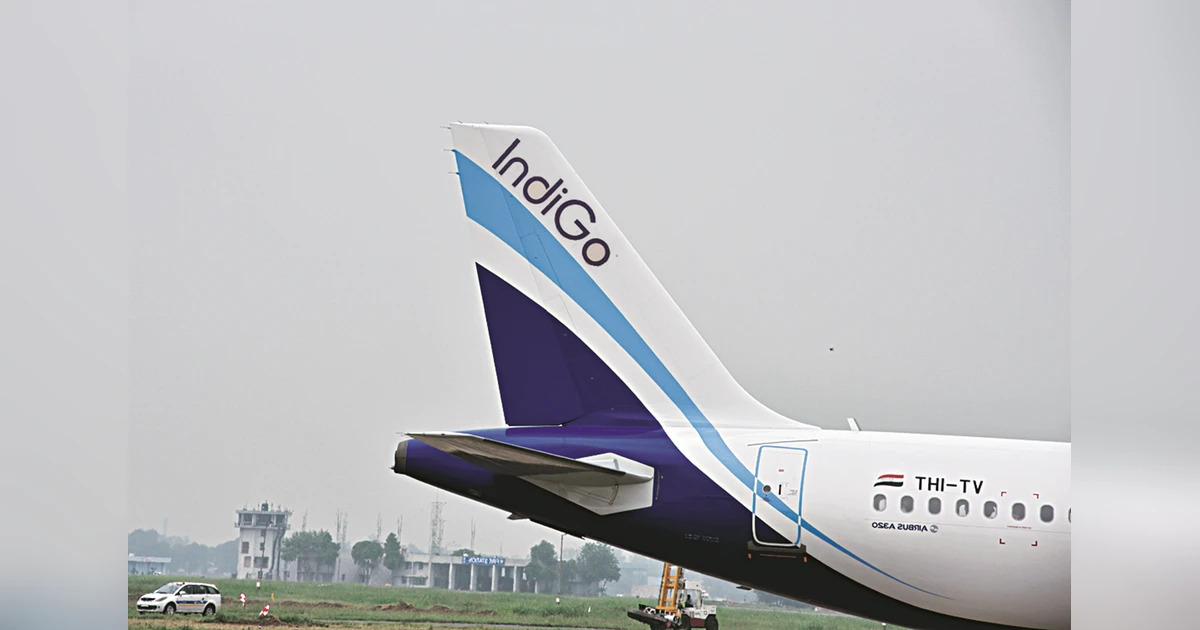
The stock of the country’s largest listed company, InterGlobe Aviation (IndiGo), has slipped 18 per cent to Rs 3,943 a share since the start of the Iran war. While the Flight Duty Time Limitation (FDTL) norms had hit the December quarter (Q3) financials, the market leader faces demand, cost, and revenue headwinds in Q4FY26 and FY27 on account of hostilities in the Gulf region. Given the negative impact of the same, brokerages have cut their margin and net profit estimates for Q4 as well as FY27. While these factors will weigh on the stock, the appointment of Willie Walsh as the chief executive officer replacing Pieter Elbers, who resigned on March 10, could offer some stability to the stock price.
The immediate impact of the Iran war will be on revenues. Analysts led by Meet Jain of Motilal Oswal Research point out that the escalation of the US-Iran conflict from late February 2026, compounded by the continued Pakistan airspace closure for Indian carriers, has effectively neutralised IndiGo’s entire Middle East and large portions of its European network for the time being. This resulted in the progressive closure and restriction of the Middle East airspace across a corridor that handles a quarter of global international air traffic by passenger volume. The suspension of the Gulf routes, which account for about 18–20 per cent (or Rs 14,500 crore to Rs 16,000 crore) of total revenue on an annual basis, not only impacts travel during the month but also hits advance sales, creating a revenue shortfall in Q4FY26.
The other impact is on the cost front given the sharp rise in Brent crude oil prices. They have gone up by over 60 per cent from under $70 per barrel earlier in the year to over $115 per barrel currently. Aviation turbine fuel, which is linked to crude oil prices, rose in March after witnessing cuts in January and February. Every dollar per barrel increase in crude oil prices reduces profitability by Rs 360 crore, estimates Motilal Oswal Research. The brokerage has estimated an incremental cost impact of Rs 1,600 crore as fuel forms about a third of overall costs.
What has aggravated the cost base is a weak rupee and higher non-fuel cost per available seat kilometres (CASK). ICICI Securities says that compared to FY25 CASK (excluding fuel) of Rs 3.09, 9MFY26 CASK has been Rs 3.17. Analysts led by Ansuman Deb of the brokerage factor in a CASK of Rs 3.54 for Q4FY26, while the estimates for FY27 and FY28 are pegged at Rs 3.40 and Rs 3.37, respectively. Beyond generic inflation and a weaker rupee, IndiGo also has higher capex and finance leases, which will limit increases in cash and profit margins, says the brokerage.
Factoring in higher fuel costs, rupee depreciation, and lower international operations leading to adverse operating leverage, Motilal Oswal Research has reduced its FY26 and FY27 operating profit before rental estimates by 7 per cent each. It has cut its net profit estimate for FY26 by 31 per cent, while those for FY27 and FY28 have been reduced by 15 per cent and 10 per cent, respectively. Though Motilal Oswal Research has reduced its target price to Rs 5,500 per share, it has maintained a buy rating.
ICICI Securities, too, has a buy rating, though it has cut its target price from Rs 5,680 to Rs 5,210 per share. The elevated crude and cracks, along with the rupee’s sharp depreciation, have led to an increase in cost assumptions, which is expected to be partially offset by price hikes, says the brokerage. Accordingly, its FY27 estimates now reflect a sharp downward revision, while FY28 estimates remain intact — assuming a partial recovery in spreads and volume growth.







