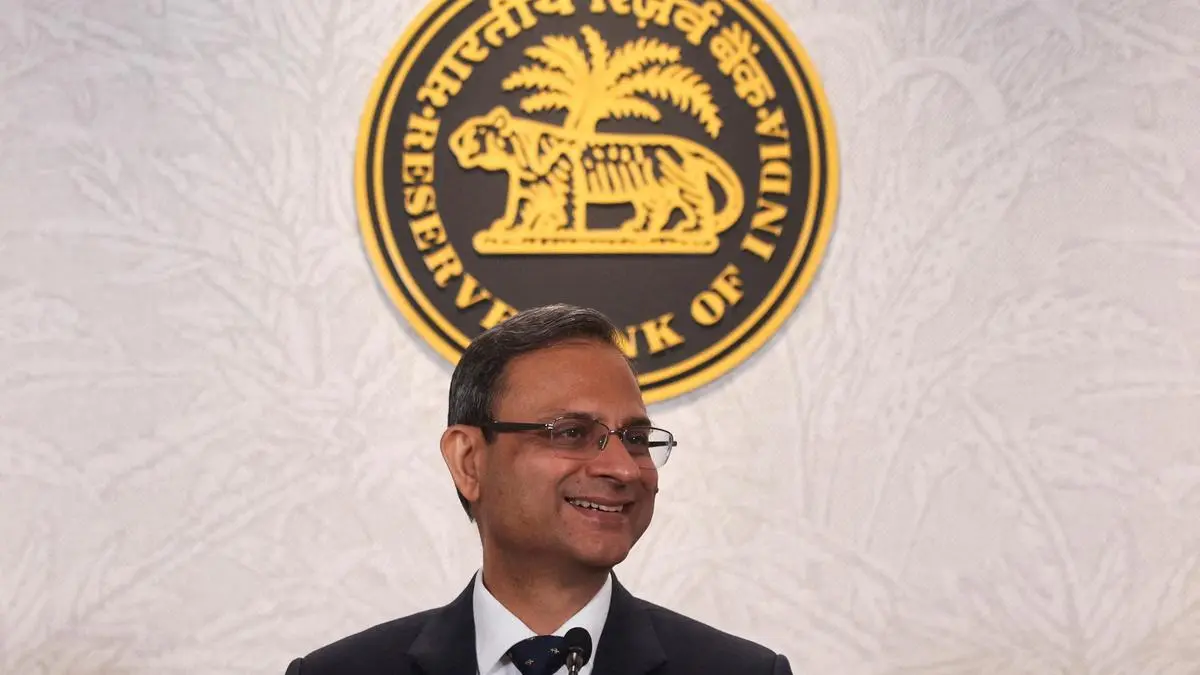
Reserve Bank of India (RBI) Governor Sanjay Malhotra arrives at a press conference in Mumbai
| Photo Credit:
FRANCIS MASCARENHAS
The Reserve Bank of India on Wednesday proposed to ease banks’ capital adequacy norms, including allowing greater flexibility in recognising quarterly profits as regulatory capital.
The draft amendments relate to the computation of Capital to Risk Weighted Assets Ratio (CRAR), where the RBI has proposed to remove a key restriction that currently governs the inclusion of interim profits in Common Equity Tier 1 (CET1) capital.
At present, banks can include current-year profits in CET1 on a quarterly basis only if incremental provisions for non-performing assets (NPAs) in any quarter of the previous financial year do not deviate by more than 25 per cent from the average of all four quarters. The RBI has now proposed to do away with this qualifying condition, effectively making it easier for banks to count quarterly profits towards capital adequacy.
The move is expected to provide banks greater headroom in maintaining regulatory capital ratios, particularly during periods of earnings volatility, while also reducing operational complexity in capital computation.
IFR framework
In a parallel development, the central bank has also proposed changes to the Investment Fluctuation Reserve (IFR) framework, which acts as a buffer against mark-to-market losses on investment portfolios.
Under the draft norms, banks that already maintain capital charge for market risk and follow revised investment valuation norms may be exempted from maintaining IFR. Additionally, the requirement to maintain IFR on a continuous basis may be relaxed, with banks instead required to meet the threshold only at balance sheet dates.
The RBI said the review takes into account operational challenges faced by banks in maintaining IFR levels at all times, as well as differences in prudential frameworks across bank categories. The proposals also seek to harmonise IFR-related guidelines and remove inconsistencies.
Comments on both sets of draft directions have been invited from stakeholders until April 29, 2026.
Published on April 8, 2026







