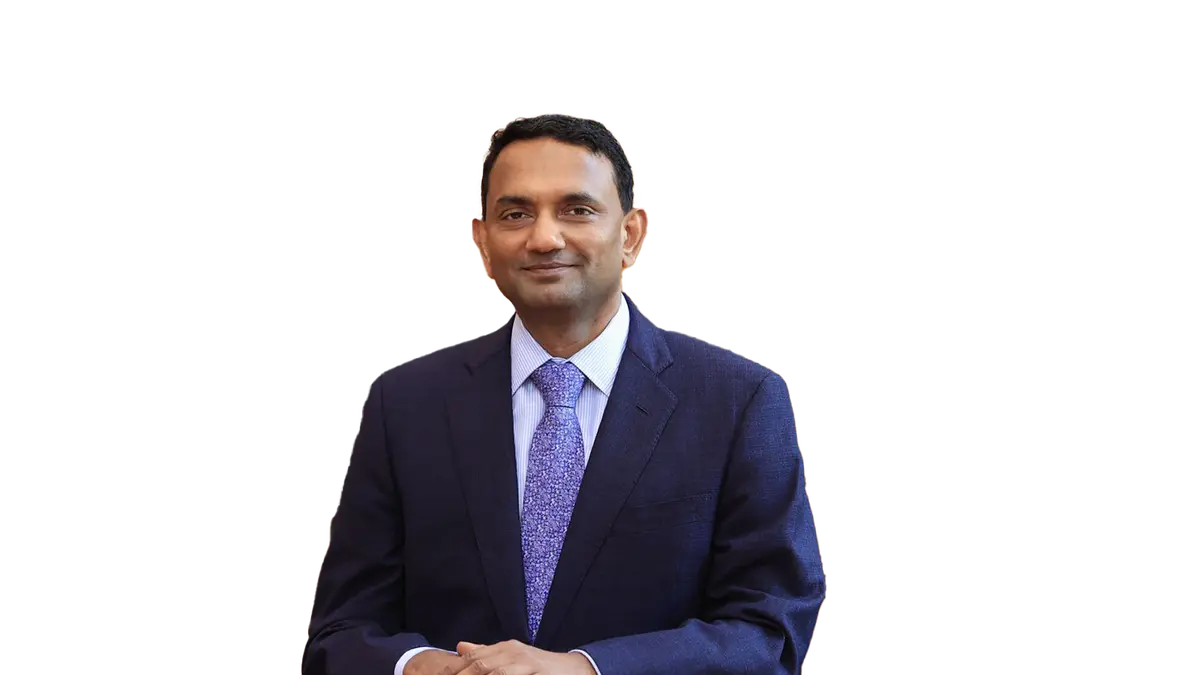
As clients direct funds towards tech modernisation, Tata Consultancy Services (TCS) management talks about the inevitability of the AI wave in the twenty-first century. In conversation with businessline, TCS CEO K Krithivasan and CFO Samir Seksaria, talk about the changes in the tech sector and the role of system integrators like the giant in the evolving space.
Last year, you said FY26 will be good. Now, you said FY27 will be better and that the worst is over. Is something fundamentally changing in the business?
Krithivasan: We were expecting greater momentum to compensate for the first quarter but unfortunately we were not able to do that. Despite that we grew in three consecutive quarters. The order book has been good. We signed mega deals. The customer band movement has been very strong across all buckets. We also saw more customers coming to larger, newer projects, transformation engagements and AI has become an inevitable technology. They have to invest quickly or it becomes a competitive disadvantage. Now we have business case existing for tech modernisation as many of our customers are embarking on that.
The time from disruption to hope to final redemption took about 2 to 3 years. Do you see a similar cycle with AI?
Krithivasan: Actually, even more. There is so much of adoption yet to happen, it takes much longer. However, the time shrinks with every technology disruption. That does not mean it will happen in the next year. This is going to be a disruption that is broader and deeper.
Anthropic recently suggested that advances in generative AI could significantly reduce demand for traditional IT services.
Krithivasan:Customers need system integrators like TCS, who understand the context, technology implementation, give you business benefits out of technology. We are helping our customers in multiple things, cannibalising our own revenue in terms of software engineering. We give them benefits that helps them in addressing the backlog. Then we help them in adopting AI: model, training, building agentic architecture. These are opportunities for us in the mid-term. Our overall philosophy though is, every time a technology destruction comes, it increases economic activity manifold, creates more jobs, as long as people are willing to adopt.
So, TCS’s nature as a IT services player may change?
Krithivasan:It could change because today we have 6 lakh employees approximately. Maybe 5 lakh of them are people come with programming background. We will probably need lesser proportion of programmers but we will need people to train models, context engineers, prompt engineers, model testers, agent developers. All those newer skills and newer opportunities will emerge.
Your client numbers in terms of investments have gone up. Have existing clients increased their spends or have you gained new clients?
Krithivasan: We are getting new clients. Most clients start off with smaller investments. Of course, sometimes we get lucky and some come in with large spends but it is common for most clients to start with smaller spends.
How are you able to protect margins?
Seksaria: We called out our ‘build-acquire-partner’ strategy and we have been investing on it. Investments are offset by either gains being reinvested. Looking forward, our priority would be to focus on investments to sustain growth. At the same time, we will look at operational rigor in terms of execution excellence, whether it is the normal levers, pyramid, productivity, utilization. Currency can be a tailwind, at least on annual basis. The sharp depreciation in FY26 leads some tailwind to FY27. The 25 per cent margin was delivered while making investments through the year. We are exiting FY26 with a 4-year high on annual margin numbers.
Your attrition grew over the year. How are you assessing the job market in this context?
Krithivasan: The overall demand environment at this time is quite healthy. Last year, despite a headcount reduction, we had almost 90,000 people. About 45,000 of them were from the campus. The trend will continue for FY27. We have already rolled out close to 25,000 campus offers. We are actively recruiting people from the market. As the quarters progress, we will calibrate how many more people, campus layers will be recruited and what would we do in terms of lateral recruitment. However, we don’t see any serious significant reduction or change in the number.
Do you have enough attractive jobs here for young freshers?
Krithivasan: I would say TCS is very attractive. We do lot of interesting work. Last year, we offered almost 44,000 offers, the largest ever by a private sector for a campus fair in a single year. There are concerns but we continue to hire lot of people, provide opportunities. I still believe TCS is the best place for anyone to work and that is the greatest opportunity.
Looking at it from a Human+AI model, how are you assessing the compensation and increments for your associates?
Krithivasan: Compensation and increment would be based on the individual employee’s contribution, company performance. That we have announced the increment within six months or the last month shows the confidence we have on the overall growth prospect. It has to be based on the confidence we have on the future as well and we are quite confident about it. Assessment metrics will keep evolving. Some of the software measures will keep evolving.
Is there a timeline for the HyperVault data center to go live?
Krithivasan: We have been talking about sometime in calendar year 2028.
Isn’t that a significant time gap from the time?
Krithivasan: I t takes 12 to 18 months from the time you put the shovel on the ground to operationalisation. 12 to 18 months is actually still quite accelerated.
With all the demand coming in, are you thinking of increasing the cash that you are pumping in?
Krithivasan: We will start looking at how much of actual capex has to happen. Currently, we have signed the MoU for most of them. We are in the phase of finalising design, SLA, land and other timelines. Once that is done, we will start looking at putting actual money into these investments. Currently our target is 1 GW but as it scales up, we will recalibrate our (capacity?).
How many MoUs have you done?
Krithivasan: We have announced two and we are in discussions with a few more. First, you do the MoU then there is a long process of agreeing on the design and specifications. After that, we will start the actual.







