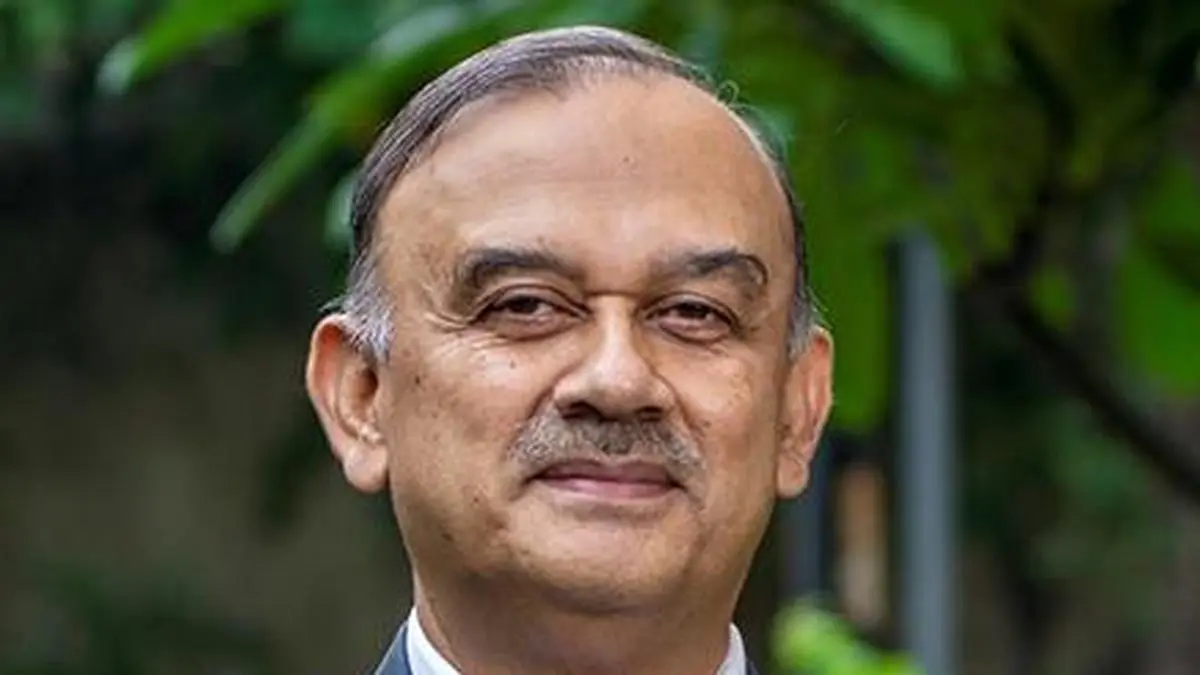
Atanu Chakraborty
| Photo Credit:
Gerra Madhusudan 10751@Chennai
The resignation of Atanu Chakraborty as HDFC Bank’s Part Time Chairman on March 17this a governance stress-test at a big bank, not a breakdown in financial stability, operational integrity, or board functioning, according to InGovern Research Services.
The corporate governance advisory services firm observed that the aforementioned episode is more about a governance-oversight nuance driven by an individual’s personality rather than a material threat to shareholder value.
Chakraborty resigned citing “certain happenings and practices within the bank, that I have observed over last two years, are not in congruence with my personal Values and Ethics,” without specifics on operations or finances.
InGovern, in a note, said at banks of HDFC Bank’s size and complexity (advances ₹30,57,500 crore and deposits ₹31,05,500 crore as at March 31, 2026—up 10.2 per cent and 14.4 per cent YoY, respectively; strong CASA franchise, large overseas footprint), strategic or cultural-tone disagreements among board members are not unheard-of, and are often treated as part of the governance stress-test rather than a fatal flaw.
The firm observed that the bank’s steps after Chakraborty’s resignation have been practical and governance-focused, with an an experienced interim chairman being appointed with RBI approval and retention of a strong, stable top-level management team and undertaking an external legal review of the resignation to uphold standards.
There are no visible signs of disruption in disclosed financial metrics, it added.
Shriram Subramanian, Managing Director, InGovern Research Services Pvt Ltd, said: “The chairman’s resignation of 18th March 2026 led to a panic among shareholders as the resignation letter triggered governance conversations relating to the bank.
“The bank continues to report good financial results, and this seems to be a one-off aberration and a personality driven issue. The chairman’s resignation letter and statements, in the press later, failed to highlight any specific instances of alleged governance lapses at the bank”
He noted that the steps taken by the bank so far are consistent with how large institutions typically manage such transitions.
Shriram opined that “The bank should quickly put out the findings by the external lawyers with the review outcomes. The bank should also continue its practices by regular investor engagement and disclosures,”
Despite the resignation, HDFC Bank’s governance and financial metrics hold up well – investors have no reason for concern on financial strength or leadership, the InGovern note said.
It emphasised that the Reserve Bank of India (RBI) has reaffirmed HDFC Bank as a D-SIB (Domestic – Systemically Important Bank) with sound financials, a professional board, competent management, adequate capital + liquidity – no material concerns on governance.
InGovern said: “The bank’s deposit franchise remains resilient and lending franchise shows strong momentum. The bank can grow loans and earnings organically while keeping capital-quality intact.
“Profitability gains are less likely to be eroded by sudden credit-cost shocks, which preserves per-share value and dividend-safety.”
Shriram said the Bank’s capacity for earnings growth and payouts stays strong, with quality earnings, low-risk balance sheet, and clear dividend policy disclosures. Further, the Bank is leaning into transparency rather than defensiveness, signalling confidence in its governance processes.
Published on April 16, 2026







