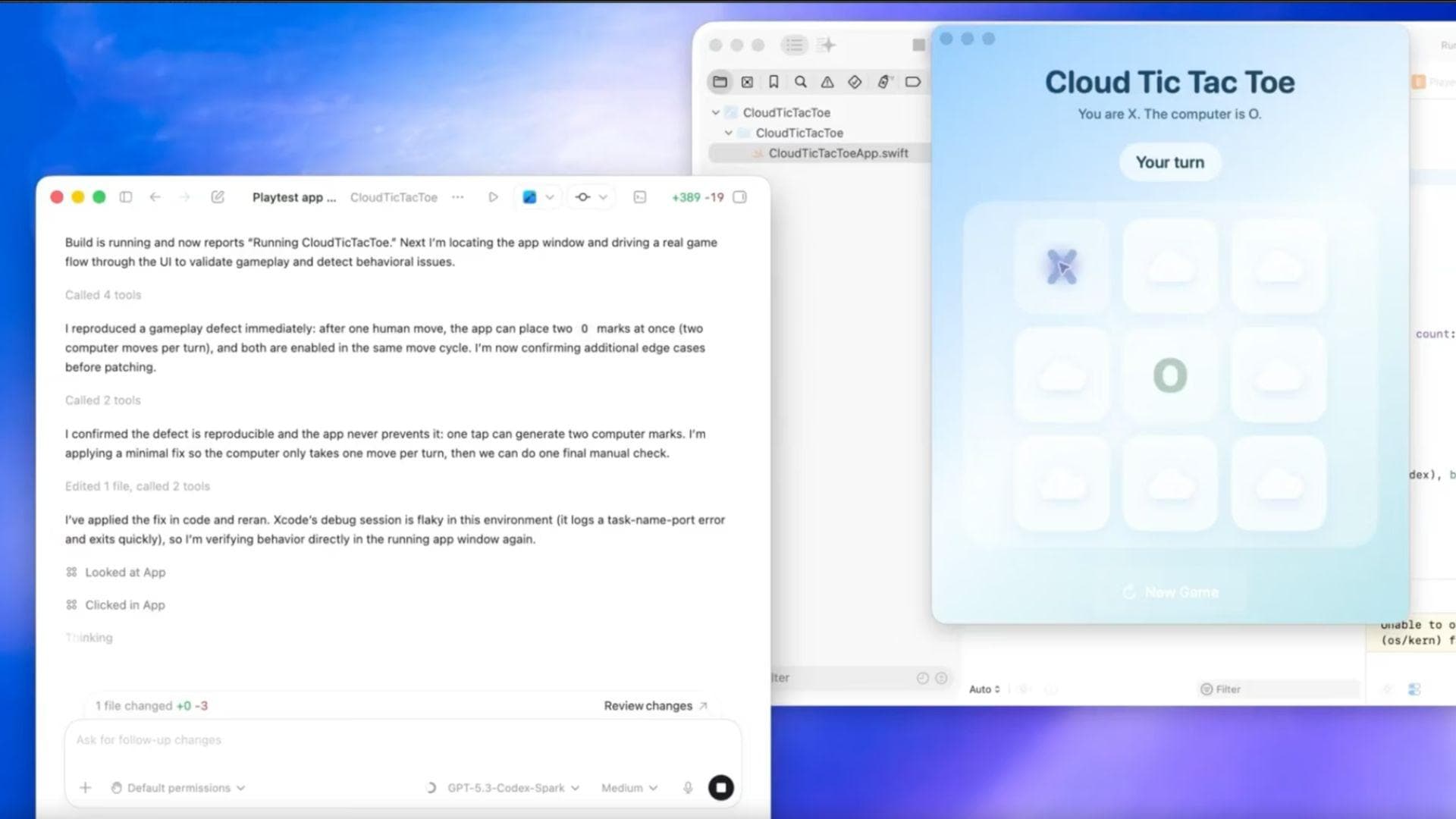
OpenAI has announced a major update to Codex, expanding its role beyond coding into a more active assistant across the entire software development cycle. The update introduces features such as computer control, memory, automation and deeper integrations with developer tools to help users handle tasks from start to finish. It also brings over 90 new plugins that combine skills, app integrations and MCP servers, allowing Codex to gather context and take actions across a wider range of tools.
Codex update: What’s new
According to the latest update, Codex is no longer limited to writing code. It can now operate a user’s computer by seeing, clicking and typing using its own cursor. Multiple agents can run tasks in parallel without interrupting ongoing work, which can be useful for testing apps or making frontend changes in tools that don’t offer APIs.
The app also includes an in-app browser, allowing users to interact directly with web pages and give instructions. This feature is currently useful for frontend and game development and is expected to expand further over time.
Improved tools and integrations
Codex now supports image generation using a built-in model, making it easier to create visuals, mockups and design elements within the same workflow. Codex uses GPT-image-1.5 to generate and refine images alongside code and screenshots. Additionally, more than 90 new plugins have been introduced, enabling integration with tools such as JIRA, GitLab, Microsoft apps and other developer platforms.
Automation and memory
Codex now supports automation for long-term tasks, allowing it to reuse past conversations, schedule work and continue tasks over time. Its automation features can retain previously built context from existing threads, helping workflows stay consistent. It can also schedule tasks in advance and automatically resume ongoing work, even across days or weeks. The blog mentioned that the teams use these automations to handle tasks such as closing open pull requests, following up on work and tracking conversations across tools like Slack, Gmail and Notion.
Availability and rollout
The update is rolling out to Codex desktop app users signed in with ChatGPT. Personalisation features, including context-aware suggestions and memory, will roll out to Enterprise, Edu and EU and UK users soon. Initially, computer control is available on macOS, with wider availability planned.







