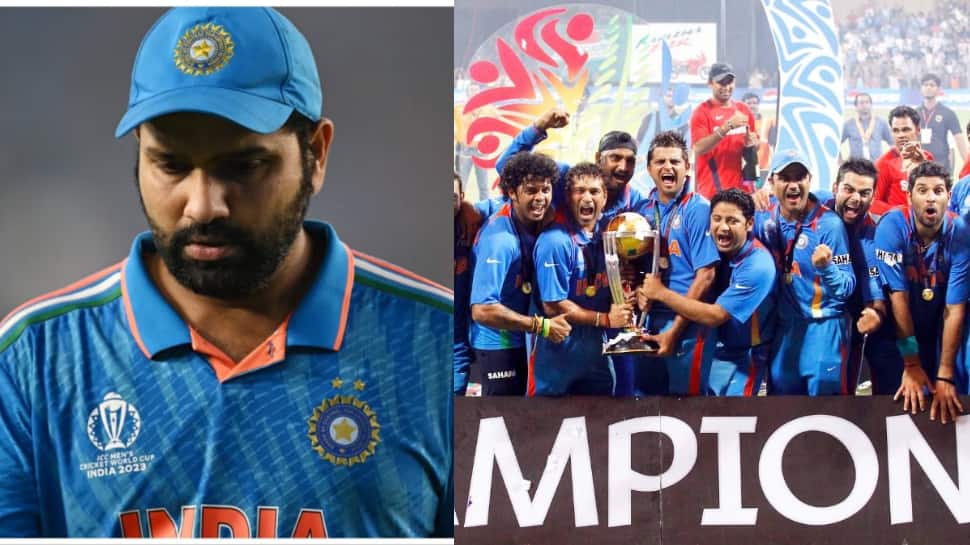
Former BCCI selection chairman Kris Srikkanth has expressed deep regret regarding the decision to exclude Rohit Sharma from India’s legendary 2011 World Cup squad. Despite Sharma’s rising status in One Day International cricket at that time, he was famously left out of the team that eventually secured the trophy on home soil, ending a 28 year title drought. Srikkanth clarified that the omission was not a reflection of Sharma’s talent but rather a result of a specific strategic blueprint.
The Strategy Behind the Selection
The selection committee at the time prioritized “half all rounders” to ensure maximum team balance, mirroring the philosophy used during India’s first World Cup win in 1983. This approach sought players who could contribute significantly with both bat and ball to provide the captain with various bowling options.
“I feel bad for him even today. I told Rohit one day, in 2020… I’m sorry, boss. It’s not on purpose, but it’s just that we wanted to take those half all-rounders. The team was packed with half all-rounders. Because if you see the 1983 World Cup – Roger Binny was an all-rounder, the main all-rounder was Kapil Dev… Except Srikanth, Kirmani and Sunil Gavaskar, everybody bowled in that World Cup,” he said.
Kris Srikkanth said : “In every interview, Rohit Sharma says, I missed the 2011 World Cup. I feel bad for him even today. I told Rohit last year, I’m sorry, boss. It’s not by purpose, but it’s just that we want to take those half all-rounders. Our thought process was similar to… pic.twitter.com/tMx5WEklbP
— Rohit Sharma Fan (@hitmanfanfollow) April 22, 2026
Impact of Team Dynamics
The success of the 2011 campaign largely validated the committee’s focus on multi dimensional players. Notable examples include:
Yuvraj Singh: He was named Player of the Tournament after contributing 362 runs and taking 15 wickets.
Versatile Batting Unit: Players like Virender Sehwag, Sachin Tendulkar, Suresh Raina, and Yusuf Pathan were all capable of bowling a few overs when necessary.
Srikkanth further explained the situation by saying, “And at the end of the day, who was the Player of the Tournament? Yuvraj Singh, with the ball and bat. In some matches, Sehwag, Sachin and Suresh Raina would have bowled a few overs. Even Yusuf Pathan is a half all-rounder. So in all these things, unfortunately, what happened, this half all-rounder concept, Rohit Sharma, the poor fellow, could not find a place. He was actually good enough to play in the 2011 World Cup, but poor boy missed out.”
Rohit Sharma’s Standing at the Time
Before the 2011 selection snub, Rohit Sharma had already established himself as a significant prospect, having debuted in 2007 against Ireland. By that time, he had accumulated over 1,200 runs across approximately 57 matches and had made a major impression during the 2007 08 Commonwealth Bank Series in Australia. Although he missed that historic 2011 victory, he subsequently evolved into one of the most successful white ball batsmen in the history of Indian cricket.
Not On Purpose
“[people say] Oh, how could we miss Rohit that time?’ But then whom to replace? Whom could he replace? We don’t know. That’s a debatable question. So let’s not go into that. I’m just saying – if you ask Rohit, even now, in every interview, he’ll say my biggest disappointment is not being a part of the 2011 World Cup. I told him straight on his face boss, sorry boss. I know I’ve seen all the interviews, you keep on saying I missed the 2011 World Cup. My apologies. We didn’t do it on purpose,” he added.







