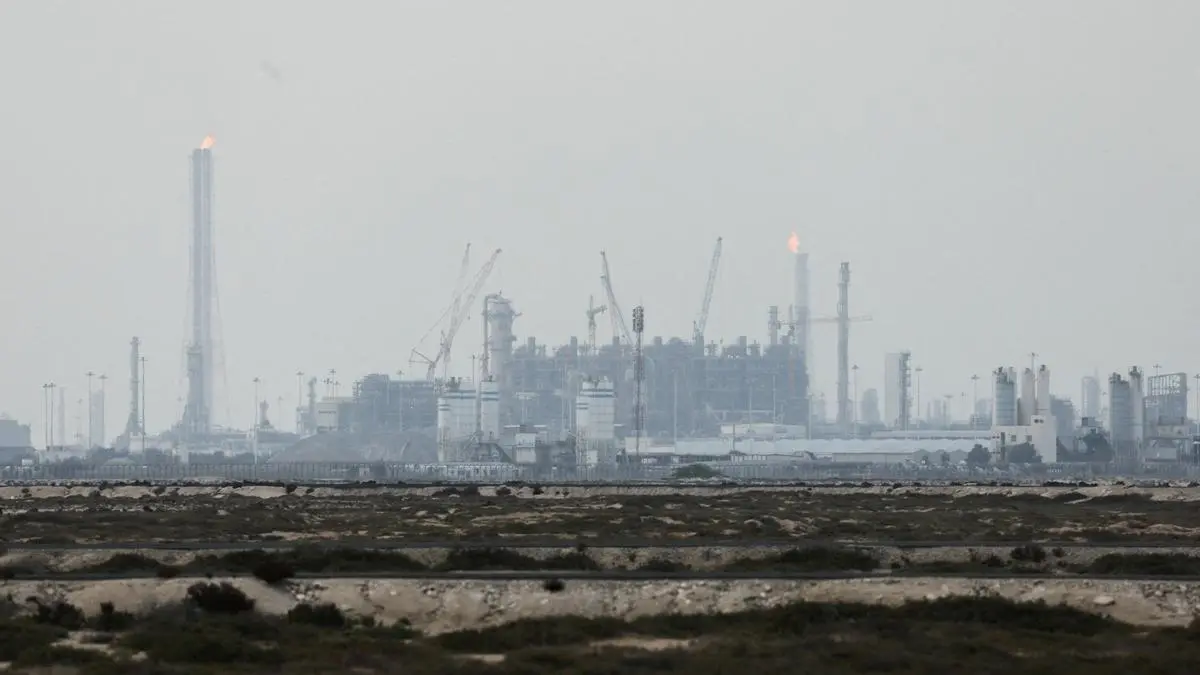
A file photo of QatarEnergy’s liquefied natural gas (LNG) production facilities, amid the U.S.-Israeli conflict with Iran, in Ras Laffan Industrial City, Qatar March 2, 2026. REUTERS/Stringer/File Photo
| Photo Credit:
STRINGER
Extensive damage to what is known as world’s largest liquefied natural gas (LNG) hub — Qatar’s Ras Laffan Industrial City – meant deliveries to major Indian players in the sector such as Petronet LNG, GAIL, and GSPC being severely disrupted or ceased entirely.
Qatar is India’s single largest supplier, providing nearly 40–50 per cent of its total LNG imports.
The partnership between Petronet LNG and QatarEnergy has been seen as the cornerstone of India’s energy security for sometime now. In February 2024, Petronet renewed its contract with QatarEnergy for another 20 years (2028–2048). The agreement ensures a supply of 7.5 million tonnes per annum (mtpa) of LNG. The 2024 renewal was signed at significantly lower rates than previous terms, projected to save India approximately $6 billion over the contract period, according to reports.
GAIL (India) Ltd is currently facing a total suspension of its Qatari LNG supply. As the primary offtaker for gas imported via Petronet LNG, GAIL is the main conduit for this disruption into the Indian domestic market.
The ongoing conflict is also having an impact on natural gas and LNG prices. To meet the supply gap left by Qatar, India is scouting for cargoes from distant suppliers, which incur additional logistical and premium costs.
Cost pressure
According to analysts, for every $10 increase in LNG prices, India’s energy import bill faces significant pressure, contributing to a broader $13–14 billion increase in total energy costs when combined with rising crude prices. The government is facing a massive spike in fertilizer subsidies, as the cost of gas (the primary feedstock for urea) has tripled. Many price-sensitive industrial consumers in the ceramics and glass sectors are being forced to switch to costly alternatives like LPG or fuel oil as spot LNG becomes unviable.
“Natural gas and LNG prices are headed sharply higher in the short-term, with Asian spot prices already doubling to $24-25 per MMBtu amid the supply shock and forward contracts for 2026 averaging around $13 per MMBtu the highest levels since 2022 as the Qatar outage offsets much of the projected global surplus,” Umud Shokri, energy strategist and senior visiting fellow at George Mason University told businessline.
However, if the production halt resolves within weeks and new capacities from the US and delayed Qatar expansions come online later in the year or 2027, prices could moderate toward a buyer’s market by year-end, though sustained regional tensions may keep volatility elevated through 2026, he said.
Let us look at the price. According to information available prices for fuel from the US and Norway are currently hovering around $15–18 per MMBtu at the source, but long shipping times (up to two months) and high freight costs make the delivered price much higher. Spot or emergency purchases as high as $23.08 to $28.28 per MMBtu for immediate March delivery.
While geographically closer than the US, Australian spot volumes are also tracking the surged JKM index ($25/MMBtu).
“The recent attacks on QatarEnergy’s LNG facilities in Ras Laffan and Mesaieed have halted production at the world’s largest export complex, triggering force majeure declarations and immediate supply disruptions to India, which relies on Qatar for 40-50 per cent of its LNG imports (around 10-11 mtpa out of total annual imports of 25-27 mtpa). This has forced Indian importers such as Petronet LNG to cut deliveries by up to 40 per cent, leading to reduced gas allocations for industries, city gas distribution networks, power generation and fertilizer plants,” Shokri said.
“The fallout includes higher operational costs, potential industrial slowdowns, and strain on energy security, as shipments through the Strait of Hormuz are also affected, exacerbating India’s dependence on imported gas for over 55 per cent of its needs,” he added.
Options for India
While New Delhi has been maintaining that it continues to closely monitor developments in Gulf and West Asia region and also working on various options, it is time to act and not watch, said industry observers.
“The options before India include urgently diversifying LNG sourcing from non-Middle Eastern suppliers such as the US, Australia, Papua New Guinea, and Russia via spot cargoes and new long-term contracts, with two alternative shipments already en route as per government updates,” Shokri said.
“Domestically, authorities are redirecting available natural gas and regasified LNG to priority sectors like power and fertilizers while rationing supplies to less critical users, alongside exploring increased domestic production and coal switching in some power plants. Longer-term strategies involve accelerating pipeline imports, expanding regasification terminals and negotiating flexible deals to build resilience against geopolitical risks,” he said.
Whatever efforts are being taken or done by New Delhi the situation will dent the economy.
“Bombings on producing gas fields in the Persian Gulf are a terrible news. It has shaken the oil and gas industry to the core globally. Needless to say, it will have devastating impact on prices for months to come. No oil and gas importing economy is insulated .. everyone is going to get seriously hurt,” said Narendra Taneja, Energy expert.
Published on March 19, 2026







