Why US has restricted foreign access to Anthropic's Claude Fable 5, Mythos

Why US has restricted foreign access to Anthropic's Claude Fable 5, Mythos


The US government has restricted foreign access to Anthropic’s latest artificial intelligence models, Claude Fable 5 and Claude Mythos 5, in one of the most significant interventions yet in the deployment of advanced AI systems.


The company said the order forced it to disable the two models for all customers to ensure compliance. “Access to all other Anthropic models will not be affected,” it said.


What did the US government order?


Anthropic said it received the directive at 5:21 pm Eastern Time on Friday. The company said the letter cited national security authorities but “did not provide specific details of its national security concern”.


The restriction applies to foreign nationals both inside and outside the US, making it broader than a conventional geographic access ban. In practical terms, Anthropic said the “net effect” of the order was that it had to “abruptly disable Fable 5 and Mythos 5 for all our customers”.


The move came shortly after Anthropic released Fable 5 widely. Fable 5 is a limited, guardrailed version of Mythos 5, a more advanced model that the company had kept under tighter access because of cybersecurity concerns.


US government concerned about ‘potential jailbreak’


Anthropic said its understanding was that the US government believed it had found a way to bypass, or “jailbreak”, Fable 5’s safeguards. Such a bypass could potentially allow users to obtain information the model is designed to restrict.


The company said it reviewed a demonstration of the technique being used to identify “a small number of previously known, minor vulnerabilities”. It added that these vulnerabilities appeared “relatively simple” and that other publicly available models could also discover them without requiring a bypass.


Anthropic said it had only received verbal evidence from the government of a “potential narrow, non-universal jailbreak”. According to the company, the method essentially involved asking the model to read a specific codebase and fix software flaws.


“We disagree that the finding of a narrow potential jailbreak should be cause for recalling a commercial model deployed to hundreds of millions of people,” the company said, adding that it was complying with the legal directive but disagreed with the government’s action.


It warned that if the same standard were applied across the industry, “it would essentially halt all new model deployments for all frontier model providers”. 


Anthropic also said governments should be able to block unsafe deployments, but only through a more clearly defined process. “We believe the government should have the ability to block unsafe deployments, as part of a statutory process that is transparent, fair, clear, and grounded in technical facts,” the company said. “This action does not adhere to those principles.”


The company described the episode as a “misunderstanding” and said it was working to restore access as soon as possible.


What safeguards did Fable 5 have?


Anthropic said Fable 5 had been launched with safeguards aimed at reducing the risk of misuse in areas such as cybersecurity. The company said its safeguards were “so strong that many users have complained that they are overly broad”.


In the weeks before Fable 5’s launch, Anthropic said it had worked with the US government, the UK AI Security Institute, private third-party organisations and internal teams to red-team the model’s safeguards for thousands of hours.


The company said no testers had found a “universal jailbreak”, or a method that could broadly bypass the model’s safeguards across a wide range of cyber capabilities.


Anthropic said it had adopted a “defence in depth” strategy, aiming to make jailbreaks either narrow or expensive to produce, while monitoring usage to detect and shut down successful attacks.


What is the Trump administration’s position?


The action came 10 days after US President Donald Trump signed an executive order to establish a framework for the federal government to vet national security risks from the most advanced AI systems for up to a month before their public release. Participation by AI developers was described as “voluntary” under the order.


White House adviser David Sacks wrote in a social media post that officials issued the export control “reluctantly” after Anthropic CEO Dario Amodei “refused” to “fix the jailbreak or de-deploy the model”.


“The Admin’s hope now is that Anthropic remediates the safety issue, the export control is lifted, and Fable goes back into general release,” Sacks wrote.


What it means for AI companies, users?


For AI companies, the dispute highlights a deeper regulatory problem: how to balance rapid deployment, commercial competition, cybersecurity risks, government oversight, and international access to powerful models.


For users, the immediate effect is simpler. Fable 5 and Mythos 5 are offline for now, while Anthropic and the US government work through whether the models can return under modified safeguards.


(With inputs from agencies)


Source link

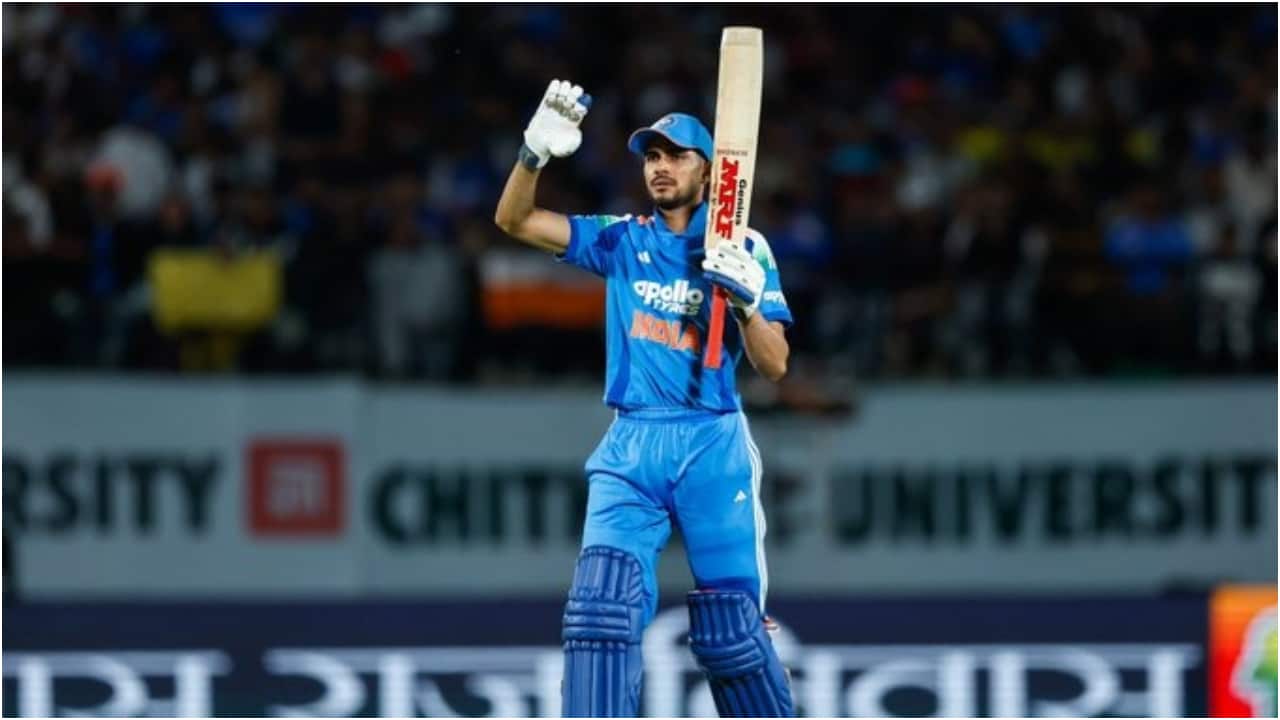
Captain Shubman Gill creates history, becomes fastest Indian to… | Cricket News | Zee News

Captain Shubman Gill creates history, becomes fastest Indian to… | Cricket News | Zee News


The milestone arrived during the first ODI against Afghanistan in Dharamsala, with Gill achieving the landmark in just his 62nd innings. Globally, he stands second only to South Africa’s Hashim Amla, who reached the same mark in 57 innings.

Image Credit: Credits – X


Source link

LIC targets stronger market leadership as it approaches its platinum jubilee

LIC targets stronger market leadership as it approaches its platinum jubilee


R Doraiswamy, CEO & MD, LIC
| Photo Credit:
bl-online Administrator

LIC CEO and MD R Doraiswamy has said that despite rising competition in the life insurance sector, the Corporation will stay focused on strengthening its leadership position while contributing to the national development as it heads toward its platinum jubilee.

LIC CEO and MD R Doraiswamy has said that despite rising competition in the life insurance sector, the Corporation will stay focused on strengthening its leadership position while contributing to the national development as it heads towards its platinum jubilee.

Insurance behemoth LIC alone commands close to 60 per cent market share in the life insurance segment and manages assets of over ₹57 lakh crore. It has real estate properties valued at around ₹60,000 crore.

The story of Life Insurance Corporation of India (LIC), which completed its 70th year of existence, is inseparable from the story of India.

“As the economy grows, LIC grows. LIC growth helps the economy grow. So, it has been a synergetic kind of relationship that LIC has been having,” he told PTI in an interaction.

Reflecting on the organisation’s remarkable journey since its inception in 1956, he said that LIC’s growth has always been closely intertwined with India’s development. Built on the vision, dedication and hard work of generations of employees and leaders, LIC has evolved into one of the country’s most respected and trusted institutions, playing a vital role in nation building.

“From 1956 to 2026 has been a journey which was intertwined with the development of the nation and we look at this organisation remaining fully prepared for meeting the needs of the country, for ensuring that the country moves towards Viksit Bharat and developing along with the growth of the country,” he said.

Stressing that LIC is one of the biggest institutions not only in the country but in the entire continent, Doraiswamy said, with that scale comes a responsibility to continuously evolve, remain relevant and place the welfare of citizens and the nation above all.

“We have been growing along with the country, and we will certainly look at growing in the way the country will expect us to grow. We would like to be a major player as we continue to be,” he said.

While outlining the LIC’s long-term vision, he said, “As more players enter the market, our objective is not only to retain leadership but to maintain a substantial lead. Our aspiration for the 75th year, the 100th year and beyond is to see LIC thriving, flourishing and contributing to nation development. That remains our core objective.” LIC came into existence on September 1, 1956, through an Act, with the objective of spreading life insurance more widely and in particular to the rural areas.

By nationalising 245 Indian and foreign insurers and provident societies, LIC was formed by the Life Insurance Corporation Act, 1956, with a capital contribution of ₹5 crore from the Government of India.

Today, LIC functions with 2048 fully computerised branch offices, 113 divisional offices, 8 zonal offices, 1,381 satallite offices and the Corporate office. LIC’s Wide Area Network covers 113 divisional offices and connects all the branches through a Metro Area Network.

LIC has tied up with some banks and service providers to offer an online premium collection facility in selected cities.

The insurer also has two wholly-owned subsidiaries and six associates, including IDBI Bank, LIC Housing Finance and LIC Mutual Fund.

Besides national presence, LIC has its overseas operations in 13 countries through its branch offices, joint venture companies and wholly-owned subsidiaries.

Doraiswamy further said LIC is actively considering establishing a fintech arm either through strategic investment or an organic way to cater to its growing digital needs.

“Naturally, to meet the modernisation requirement and particularly to bring innovation, we are engaging both fintech and insurtech players, and we are getting a lot of new things being developed by such players,” he said.

On the other side, he said, “We are a big financial institution investing in multiple organisations, and we also look at strategic investments in any specialised player as a way of improving the returns on the policyholders’ funds.”

Published on June 14, 2026



Source link

FPIs pull out ₹62,800 crore from Indian equities in first fortnight of June

FPIs pull out ₹62,800 crore from Indian equities in first fortnight of June


Foreign investors remained sellers in Indian equities, dumping more than Rs 62,853 crore of shares in the first fortnight of June amid heightened geopolitical tensions, concerns over global economic growth and persistent weakness in the rupee.


With the latest outflows, total withdrawals by Foreign Portfolio Investors (FPIs) from Indian equities have surged to Rs 2.87 lakh crore so far in 2026, surpassing the Rs 1.66 lakh crore pulled out during the entire calendar year 2025, according to data from the National Securities Depository Ltd (NSDL).


Pabitro Mukherjee, Deputy Vice President-Research at Bajaj Broking, said FPI flows in the coming week will depend on developments in the US-Iran peace talks, the US Federal Open Market Committee’s policy decision, the Bank of Japan’s rate decision and commentary from major central banks.


According to NSDL data, FPIs have remained net sellers in every month of 2026 except February. They withdrew Rs 35,962 crore in January before turning net buyers in February, investing Rs 22,615 crore, marking the highest monthly inflow in 17 months.


The trend, however, reversed sharply in March, when foreign investors pulled out a record Rs 1.17 lakh crore. The selling pressure continued in April with net outflows of Rs 60,847 crore and in May with withdrawals of Rs 32,963 crore. In June, FPIs have already withdrawn Rs 62,853 crore during the first two weeks of the month.


Himanshu Srivastava, Principal, Manager Research, Morningstar Investment Research India, said investors continue to navigate an environment marked by elevated uncertainty around the interest-rate trajectory of major central banks, geopolitical developments and concerns over global growth.


“In such phases, emerging markets often witness tactical de-risking as investors seek safety and rebalance portfolios towards developed markets and defensive assets,” he said.


Srivastava added that India’s relatively rich valuations compared with several emerging-market peers may also have prompted foreign investors to adopt a more selective approach towards allocations.


Market participants said the persistent depreciation of the rupee has emerged as another key factor behind the sustained outflows.


The Indian currency has weakened nearly 6 per cent so far in 2026 and around 10 per cent over the past year, falling from the mid-80s level to about 95 against the US dollar despite efforts by the Reserve Bank of India (RBI) to stabilise the currency.


However, the pace of FPIs outflows moderated significantly in the latter half of last week, indicating that while risk aversion remained elevated, the intensity of foreign selling eased gradually.


On Friday, FPIs sold equities worth only Rs 1,082 crore in the cash market.


V K Vijayakumar, Chief Investment Strategist at Geojit Investments, said recent geopolitical developments and expectations of a peace agreement between the US and Iran have resulted in a sharp correction in Brent crude prices to below USD 87 per barrel.


“For a large oil importer like India, this is a significant positive. India is facing a balance of payments deficit of about USD 60 billion in FY27,” he said.


Given the importance of foreign portfolio flows in financing the current account deficit and supporting the balance of payments, policymakers have announced a series of measures aimed at attracting overseas capital.


These include the RBI absorbing hedging costs on FCNR deposits mobilised by commercial banks, expanding the forex swap window, increasing access to government bonds through the Fully Accessible Route (FAR), and raising investment limits for non-resident Indians and overseas citizens of India in domestic equities.


In contrast to the equity outflows, FPIs invested more than Rs 13,200 crore in debt securities through the FAR route during the first fortnight of June, taking total investments through this channel to nearly Rs 28,000 crore so far this year.


Source link

Long-awaited NSE IPO set to advance; draft papers likely next week

Long-awaited NSE IPO set to advance; draft papers likely next week


The long-awaited initial public offering (IPO) of the National Stock Exchange (NSE) is set to move a step closer, with the country’s largest stock exchange expected to file its preliminary papers with Sebi next week, people aware of the matter said.


This comes after NSE’s board approved the proposed IPO on February 6, following receipt of Sebi’s no-objection certificate (NOC).


The public issue will be entirely an offer for sale (OFS), with no fresh issue component.


According to people familiar with the development, the draft red herring prospectus (DRHP) is likely to be filed on June 15 or June 16.


The exchange has a broad-based shareholder base comprising domestic financial institutions, insurance companies, foreign investors and individual shareholders.


Life Insurance Corporation of India (LIC) is the single largest shareholder in NSE, holding a 10.72 per cent stake. State Bank of India (SBI) and its subsidiary, SBI Capital Markets, together own around a 7.5 per cent stake in the exchange.


Among foreign investors with significant holdings are Aranda Investments, a subsidiary of Temasek, and Canada Pension Plan Investment Board (CPPIB).


The filing would mark a major milestone for NSE, whose listing plans had remained on hold for nearly a decade due to regulatory issues, including the co-location controversy.


In January, Sebi granted an NOC to NSE, paving the way for the exchange to revive its IPO plans.


The proposed issue is expected to be among the largest in India’s capital markets. NSE, which has around 1.8 lakh shareholders, is valued at over Rs 5 lakh crore in the unlisted market, according to market participants.


NSE had first filed draft offer documents in 2016 to raise around Rs 10,000 crore through an offer for sale by existing shareholders. However, Sebi withheld approval amid concerns related to governance lapses and the co-location case.


Since then, the exchange has made multiple representations to the regulator seeking clearance and has undertaken various governance and compliance measures.


As part of its IPO preparations, NSE appointed 20 merchant bankers, besides legal advisers and other intermediaries, to manage the proposed public issue.


In January, Sebi Chairman Tuhin Kanta Pandey said in January that the regulator had granted “in-principle” approval to NSE’s settlement application in the unfair market access case, a move widely seen as clearing a key hurdle for the IPO.


NSE had filed its settlement application in June 2025 in connection with the co-location case, in which certain brokers were accused of receiving preferential access to the exchange’s trading systems.


After years of litigation, the exchange in 2025 offered to pay Rs 1,388 crore to settle the matter and move forward with its long-pending listing plans.


Source link

YouTube
Instagram
WhatsApp




