वैभव सूर्यवंशी के भाई भी हैं छोटा पैकेट बड़ा धमाका, ठोका पहला शतक; सिर्फ बाउंड्री से 86 रन

वैभव सूर्यवंशी के भाई भी हैं छोटा पैकेट बड़ा धमाका, ठोका पहला शतक; सिर्फ बाउंड्री से 86 रन


वैभव सूर्यवंशी का नाम क्रिकेट जगत में छाया हुआ है, पूरी दुनिया उनकी काबिलियत की चर्चा कर रही है कि कैसे एक 15 साल का खिलाड़ी बड़े गेंदबाजों पर बिना डरे बड़े-बड़े हिट लगा रहा है. वह भारत की नेशनल टीम में चुने जाने वाले अभी तक के सबसे छोटे प्लेयर बन गए हैं, उन्हें BCCI ने आयरलैंड, इंग्लैंड दौरे के साथ एशियन गेम्स के स्क्वॉड में शामिल किया है. लेकिन अब उनके भाई भी सुर्खियों में आ गए हैं, जिन्होंने अपना पहला शतक लगाया है.

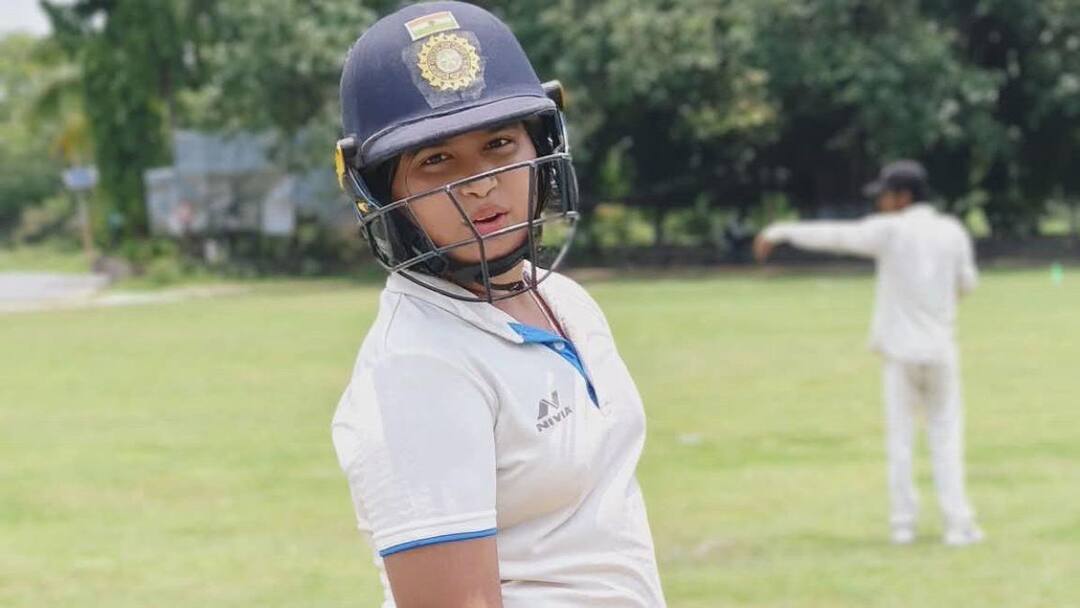
वैभव के छोटे भाई आशीर्वाद सूर्यवंशी ने समस्तीपुर में एक अभ्यास मैच में अपने बल्ले से कमाल का प्रदर्शन किया. उन्होंने शतक जड़ा, 103 रनों की इस पारी में उन्होंने 86 रन तो सिर्फ बाउंड्रीज से बनाए. इसकी जानकारी उनके भाई उज्जवल सूर्यवंशी ने दी.

उज्जवल सूर्यवंशी ने आशीर्वाद की फोटो और स्कोरकार्ड का स्क्रीनशॉट शेयर करते हुए इसकी जानकारी दी. वैभव ने 87 गेंदों में 103 रनों की पारी खेली, जिसमें 20 चौके और 1 छक्का लगाया. आशीर्वाद भी वैभव सूर्यवंशी की तरह ओपनिंग बैट्समैन हैं, जो शायद उसी बैखोफ अंदाज में खेलते हैं.

‘विरोधी से दोस्त तक…’, केन विलियमसन के संन्यास पर आया विराट कोहली का रिएक्शन; जानें क्या कहा

आशीर्वाद के शतक पर पिता भी खुश

वैभव सूर्यवंशी के पिता संजीव सूर्यवंशी ने भी आशीर्वाद के इस मैच की फोटो सोशल मीडिया पर शेयर की. उन्होंने फेसबुक पर लिखा, “मेरे छोटे बेटे आशीर्वाद सूर्यवंशी ने आज प्रैक्टिस मैच में अपना पहला शतक बनाया. आप सभी से अनुरोध है कि आशीर्वाद पर अपना प्यार और आशीर्वाद बनाए रखें.”

AFG से पहले वनडे में रोहित शर्मा तोड़ देंगे 37 साल पुराना रिकॉर्ड, विराट-सचिन-धोनी आस-पास नहीं

वैभव सूर्यवंशी की बात करें तो वह इंडिया ए टीम के साथ ट्राई सीरीज खेलने श्रीलंका गए हैं, जहां उन्होंने पहले मैच में श्रीलंका के खिलाफ 14 और अफगानिस्तान के खिलाफ दूसरे मैच में 22 गेंदों में 44 रन बनाए. वह आयरलैंड दौरे पर टीम इंडिया के साथ जाएंगे, जहां वह इंटरनेशनल डेब्यू कर सकते हैं. अगर ऐसा हुआ तो वह भारत के लिए इंटरनेशनल खेलने वाले सबसे कम उम्र के खिलाड़ी बन जाएंगे.


Source link

Broker’s call: Rainbow Children’s (Buy)

Broker’s call: Rainbow Children’s (Buy)


PL Capital

Target: ₹1,700

CMP: ₹1,363.65

Rainbow Children’s Medicare delivered modest EBITDA growth of 11 per cent CAGR over FY23-26, reflecting the absorption of about 780 beds added during its aggressive expansion cycle, which has now largely concluded.

The company continues to benefit from industry-leading margins, strong FCF generation, a net cash balance sheet, and healthy return ratios, aided by its asset-light hub-and-spoke model, unique position as India’s only integrated multi-specialty pediatric healthcare platform, and differentiated full-time doctor engagement model.

The slowdown in FY26 was largely driven by seasonal headwinds and start-up losses of new bed commissioning.

Recently, Rainbow has strengthened its growth engine through leadership appointments, including a new CEO, Chief Growth Officer and hiring new clinical talents with more focus on tertiary and quaternary cases.

This will aid better clinical mix and help them to reduce dependence on seasonality.

Overall, we expect mature unit’s occupancy to normalize toward 56-58 per cent in FY28 from current level of 51 per cent. Further upside is expected from the gradual ramp-up of the international patient business.

With newly commissioned capacities entering the ramp-up phase and occupancy levels expected to improve, we forecast Pre IND-AS EBITDA growth of 20 per cent CAGR over FY26–FY28E.

We recommend ‘Buy’ rating with TP of ₹1,700/share, based on 26x FY28E Pre-IND-AS EV/EBITDA.

Published on June 12, 2026


Source link

Broker’s call: Equitas SFB (Add)

Broker’s call: Equitas SFB (Add)


Target: ₹77

CMP: ₹75.53

We attended Equitas Small Finance Bank’s analyst day, and management commentary indicates that the bank is entering the next phase of its evolution after several years of portfolio diversification, liability franchise build-up and technological investments.

The transformation of the loan book is the most important takeaway from the analyst day. MFI exposure has reduced from over 50 per cent at the time of bank conversion in FY17 to about 10 per cent currently, whereas secured portfolio has increased to around 88 per cent. Growth is increasingly driven by SBL, affordable housing, vehicle finance and gold loans.

Management expects further gains from current accounts, affluent banking, NRI banking and cross-sell initiatives while technological investments and AI-led processes should support operating leverage. However, deposit mobilisation remains the most critical execution variable as sustaining about 20 per cent loan growth and achieving management’s profitability aspirations will require continued improvement in liability productivity and funding costs.

That said, deposit mobilisation and execution on profitability targets are the key areas to monitor. We are increasing FY27E/28E EPS by +4/5 per cent and the target FY28E P/BV to 1.2x (from 1x), yielding a revised TP of ₹77 (earlier ₹65). We are, hence, upgrading Equitas to Add (from Reduce)

Published on June 12, 2026


Source link

APEDA releases SOP on rice export to China, orders for immediate compliance

APEDA releases SOP on rice export to China, orders for immediate compliance


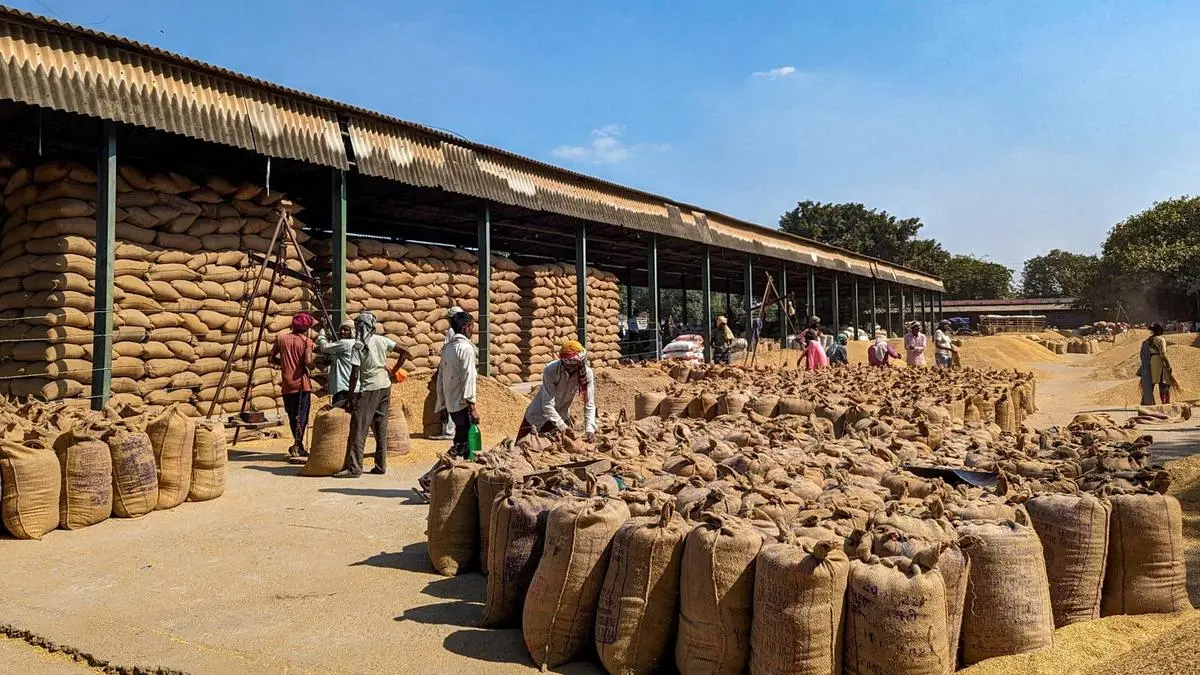
APEDA has issued a new SOP for rice exports following China’s rejection of non-basmati consignments over alleged GMO (genetically modified organisms) contamination. It has begun to enforce the new procedures from Tuesday (June 9). Keen to protect its footprint in a lucrative neighbouring market that shows strong demand for Indian broken rice, the trade body is acting to cushion the sector against falling export volumes in parts of Africa.

In a notice on June 8, APEDA general manager Vinita Sudhanshu said that in order to ensure compliance with the sanitary and phytosanitary requirements for the export of rice to China, a procedure has been developed for the guidance of exporters and other stakeholders.

“The procedure shall come into effect for all RCAC applications received by APEDA from June 9 onwards and shall be applicable to all rice consignments intended for export to China,” she said asking exporters to ensure compliance with the prescribed requirements.

Africa saturated

Welcoming the issuance of the standard operating procedure (SOP), The Rice Exporters Association President B V Krishna Rao said China is an important market as Africa is saturated to meet its concerns of GMO. However, speaking to businessline, Rao said that the export contracts already concluded and shipments presently under execution should be allowed to continue until July 31 as a transitional arrangement under the new system. He suggested the SOP may be implemented from August 1 to provide sufficient time to exporters.

At the meeting of the Non-Basmati Rice Development Fund (NBDF) in May last week, a section of exporters said that some African countries such as Senegal, Burkina Faso, Benin and Sudan have taken restrictive measures to reduce rice imports, which has adversely impacted Indian non-Basmati rice, sources said.

APEDA Charman Abhishek Dev, while addressing the NBDF committee, asked rice exporters to represent at African trade events independent of APEDA’s participation, the sources said. Dev also stressed on the need to diversify rice exports toward high-potential markets such as the Philippines, Indonesia, and China, where India’s share is yet to reach its true potential. Exporters need to incentivise farmers to grow the varieties demanded in these destinations, he said.

Unrelenting China

When some exporters raised the issue of rejection of consignments by China, Dev told them that meeting with General Administration of Customs of the People’s Republic of China (GACC) has been held and in that meeting APEDA clarified that India is a non-GMO country for rice. India also shared with GACC confirmation by ICAR and GEAC that there is no availability of GMO rice seeds, nor any commercial cultivation of GM rice in India was ever allowed.

But, industry sources said that since China did not budge from its stand, India had issued the SOP to get a testing done for GMO so that a uniform procedure is followed by all exporters.

According to the SOP, the export of rice to China shall be allowed only from the rice mills/processing units registered with Directorate of Plant Protection, Quarantine and Storage (DPPQS), in accordance with the 2016 Order. The DPPQS under the Department of Agriculture and Farmers Welfare registers the rice mills/processing units for export to China. Indian exporters are also mandated to either register with GACC or have to source rice only from GACC-registered facilities.

APEDA has also stipulated that exporters shall continue to obtain Phytosanitary Certificate issued by DPPQS prior to export to China. “Export consignments of rice shall be allowed to be shipped to China only after testing by laboratories recognized by APEDA having scope of accreditation for GMO analysis in rice,” it said.

Surging exports

Exporters shall have to apply to recognised laboratories for drawing and testing of samples for GMO analysis under a specific format. After sampling, the lot shall not be shifted/relocated by the processing unit or exporter to another location, it said.

Only after conformity of the sample, the exporter will apply for the Registration-cum-Allocation-Certificate (RCAC) by submitting the Certificate of Analysis to APEDA.

India had exported 315,193 tonnes worth $103.90 million (Rs 922.15 crore) of non-basmati rice to China in 2025-26, against 180,805 tonnes worth $79.43 million (Rs 677.87 crore) in 2024-25. As China had restrictions on Indian rice through non-tariff barriers, the export was less till 2019-20 – only 567 tonnes in 2019-20, but it surged to 331,571 tonnes in 2020-21 after it removed those curbs.

Published on June 12, 2026


Source link

Corporate bond market revives with ₹27,000-crore issuances this week

Corporate bond market revives with ₹27,000-crore issuances this week


Corporate bond issuances surged, with borrowers raising around ₹27,000 crore this week as a decline in bond yields lowered borrowing costs and encouraged issuers to tap the market.


The issuance pipeline remains active, with Housing and Urban Development Corporation (HUDCO), Small Industries Development Bank of India (SIDBI), and Rural Electrification Corporation (REC) planning to raise a combined ₹13,000 crore through bond sales next week.


Yields on high-rated corporate bonds have softened by nearly 50-70 basis points following the RBI’s recent measures to attract inflows through FCNR(B), external commercial borrowing, and other channels, and growing market confidence that policy support will help stabilise funding conditions and the rupee. The yield on the 10-year government bond softened almost 9 bps this week.


The revival in the primary market comes after comparatively muted activity in the first two months of the current financial year, with elevated yields prompting borrowers to tap bank loans. Indian companies raised a little over ₹1.07 trillion through the domestic bond market in April and May, down nearly 58 per cent from the year-ago period and the lowest mobilisation in the first two months of a financial year since FY23. Market participants attributed the sharp decline in issuances to elevated bond yields amid geopolitical tensions in West Asia, which kept issuers away from the debt market.


“The recent surge in corporate bond issuances reflects issuers making a beeline to the bond market to lock in funding while the issuance window remains favourable,” said Venkatakrishnan Srinivasan, founder and managing partner of Rockfort Fincap LLP. “While floating-rate structures had witnessed strong demand until recently, many issuers now seem more comfortable locking in current yields rather than remaining exposed to future benchmark resets,” he added.


Institutions such as the National Bank for Financing Infrastructure and Development (NaBFID), National Bank for Agriculture and Rural Development (Nabard), Housing and Urban Development Corporation (HUDCO), Small Industries Development Bank of India (SIDBI), Rural Electrification Corporation (REC), and LIC Housing Finance, along with private sector issuers such as Bajaj Finance, Bajaj Housing Finance, Tata Capital, Tata Capital Housing Finance, HDB Financial Services, Sundaram Finance, Kotak Mahindra Prime, and L&T Finance, have either tapped the bond market recently or are scheduled to raise funds in the coming days.


On Friday, infrastructure financier NaBFID raised ₹5,000 crore through two tranches of non-convertible debentures. The development finance institution accepted bids worth ₹2,500 crore in a 10-year bond at a yield of 7.66 per cent and ₹2,500 crore in a three-year bond at 7.37 per cent.


Issuance activity has also broadened across maturities. While the three-year segment continues to attract demand from mutual funds and bank treasuries, several issuers have also raised funds through five-year and 10-year bonds. Market participants said borrowers are increasingly looking to term out liabilities and secure longer-tenor funding amid uncertainty surrounding the medium-term outlook for interest rates, inflation, crude oil prices, and global geopolitical developments.


“Several issuers had deferred their borrowing plans amid uncertainty. As market stability has improved, yields have softened and RBI measures have supported liquidity and foreign inflows, those planned issuances are now returning to the market, leading to a pickup in corporate bond supply,” said Ajay Manglunia, executive director and FIM head at Capri Global Capital Ltd.


In April and May, several large state-owned issuers withdrew planned bond issuances amid concerns over pricing and demand. Market participants said some issuers were either unable to raise the desired amount at targeted rates or were unwilling to borrow at high yields. Nabard was among the issuers that withdrew its planned bond issue.


Source link

YouTube
Instagram
WhatsApp