IPL 2026: Sanjiv Goenka’s reaction after Rishabh Pant’s LSG loss leaves fans stunned

IPL 2026: Sanjiv Goenka’s reaction after Rishabh Pant’s LSG loss leaves fans stunned


Lucknow Super Giants owner Sanjiv Goenka backed captain Rishabh Pant after the team’s six-wicket defeat to Delhi Capitals in their IPL 2026 opener, even as a post-match on-field exchange between the two sparked widespread discussion on social media. LSG were bowled out for 141 at home, a total that proved insufficient as Delhi Capitals chased it down comfortably with more than two overs to spare. The result has put early focus on LSG’s team combination and leadership decisions.


Add Zee News as a Preferred Source


Reacting shortly after the match, Goenka struck a composed tone, backing both the captain and the squad.

“This is a long season, and moments like these are part of building something meaningful. I have full confidence in our captain and the team to respond with strength,” Goenka wrote on X.

He also acknowledged fan support at the Ekana Stadium and expressed confidence that the team would “come back stronger”, signalling no immediate concern despite the loss.

Viral visuals add to post-match narrative

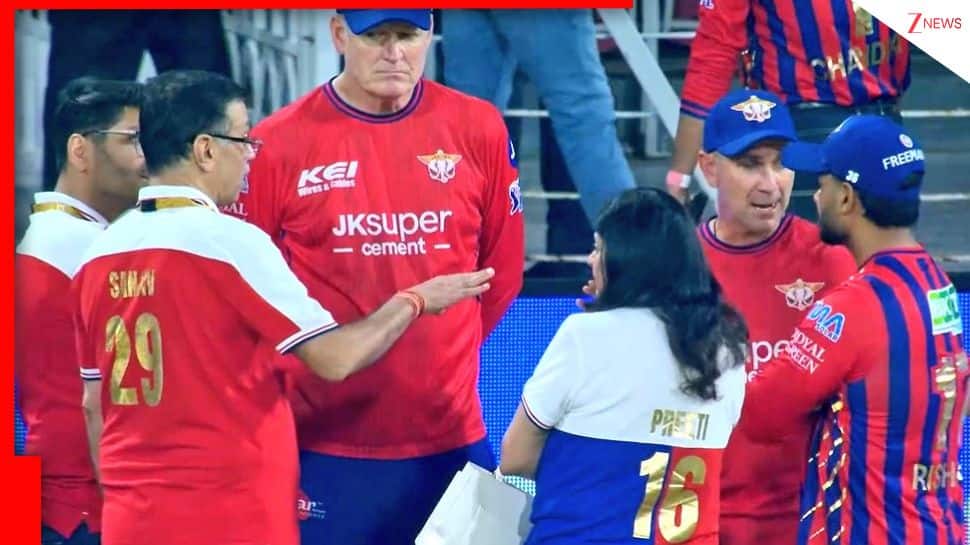
Following the match, visuals of Goenka in conversation with Pant and head coach Justin Langer surfaced online and quickly went viral. While there was no audio to confirm the nature of the discussion, the clip triggered speculation among fans.

The moment also revived comparisons with Goenka’s earlier public interaction with former LSG captain KL Rahul during the 2024 season, which had drawn criticism at the time. However, Goenka’s public statement after the game appeared aimed at diffusing any such narrative.

Batting struggles cost LSG in opener

On the field, LSG struggled to build momentum with the bat. The top order failed to deliver:

  • Pant scored 7 after promoting himself up the order
  • Aiden Markram managed 11
  • Nicholas Pooran added just 8

The lack of partnerships proved costly as LSG were restricted to a below-par total.

In response, Delhi Capitals sealed the chase comfortably, powered by:

  • Sameer Rizvi (70*), anchoring the innings
  • Tristan Stubbs (39*), finishing the game
  • Pant reflects on opening decision

Pant’s decision to open the innings was one of the key talking points after the match. The left-hander, who has predominantly batted in the middle order, said the move remains under consideration.

“It’s a 50-50 call,” Pant said when asked if he would continue opening.

Statistically, Pant has been effective as an opener in T20 cricket, but the role change raises questions about LSG’s overall batting balance, especially with established top-order options like Mitchell Marsh and Markram.

Tactical calls under scrutiny

Pant also addressed other decisions taken during the match. He explained that all-rounder Shahbaz Ahmed was introduced as an impact substitute following a batting collapse, which limited the team’s bowling options.

On the batting order, Pant defended the move to send Ayush Badoni ahead of Pooran.

“The idea was simple. He would take charge in the middle overs. We had a defined role for him, especially when we lose early wickets,” Pant said.

He admitted that the team fell short due to the absence of key partnerships but pointed out that the bowlers showed promise with the new ball.


Source link

Why RBI is clamping down on FX arbitrage

Why RBI is clamping down on FX arbitrage


India’s central bank has activated crisis-era measures to support the rupee, which has fallen to an all-time low as oil prices soared ​and foreign investors pulled money out at a record pace.

Amid the strain, the Reserve Bank of ‌India (RBI) has stepped in to curb speculative activity via arbitrage trades.

Here is ​what the central bank is trying to achieve through its measures.

What has the RBI done?

The RBI has announced two rounds of measures to support the rupee.

Last Friday, the RBI capped the net open rupee position of banks at $100 million compared with its earlier rule where positions equivalent ‌to 25 per cent of capital were permitted. A few days later, on Wednesday, it said banks can’t offer rupee non-deliverable forwards to resident and non-resident clients.

What are the reasons behind the move?

The RBI’s moves followed a near 4% depreciation ‌in ⁠the rupee in March, over and above an about 4% depreciation in the ⁠prior 12 months.

While some of the declines were due to weakening external fundamentals – foreign outflows and higher oil prices – a popular arbitrage trade had added to the pressure on the currency.

This so-called rupee basis trade involved profiting from differences ​between rupee forward rates onshore and ‌in the NDF market.

The trade itself is relatively straightforward. When NDFs imply a weaker rupee than onshore markets, traders can arbitrage the gap by selling dollars in the NDF market while buying dollars onshore.

This adds to dollar demand in an already strained local market and ‌accelerates the fall in the rupee. It also dulls the impact of FX ​market interventions by the central bank and puts more pressure on its forex reserves.

How large is the arbitrage trade?

Bankers estimate that across state-run, ⁠private and foreign lenders, banks had built up positions of about $30 billion to $40 billion with a significant chunk of the activity occurring since the Iran war broke out.

Do the rules amount to capital controls?

Not really. No additional restriction has been imposed on withdrawing capital from India.

What the steps do mean is that banks and corporates will only be able to hedge genuine underlying exposures/dollar requirements while making it significantly harder for both to put on large speculative wagers on the currency.

What does this mean for corporates and banks?

The moves could leave banks saddled with chunky losses as they rush to unwind arbitrage positions, an objective made ‌even costlier by the central bank’s decision to bar lenders from offering corporates NDF contracts.

The cost of cutting ​positions to RBI levels largely depends on the spread between the onshore market and the offshore NDF. A wider spread raises the cost of unwinding positions, ⁠and consequently, increases losses.

The move has also led to a sharp rise in hedging costs for overseas ⁠investors who typically rely on NDFs to hedge currency risk.

What does this mean for the rupee?

The rupee is expected to benefit from the measures as ‌the unwinding of arbitrage positions would spark a bout of heavy dollar sales in the onshore market.

The flip-side, though, is that the measures could create a disconnect between the ​onshore and NDF market while also denting the central bank’s previous efforts to integrate the two markets.

Published on April 2, 2026


Source link

‘संजीव गोयनका जी इसे लेकर पजेसिव हैं तो…’, LSG के मालिक पर मोहम्मद शमी का बेबाक बयान

‘संजीव गोयनका जी इसे लेकर पजेसिव हैं तो…’, LSG के मालिक पर मोहम्मद शमी का बेबाक बयान


लखनऊ सुपर जायंट्स टीम के मालिक संजीव गोयनका को लेकर कई लोगों में धारणा बनी हुई है कि वह हार का गुस्सा खिलाड़ियों पर निकालते है. दरअसल 2024 में टीम की एक हार के बाद केएल राहुल और पिछले साल ऋषभ पंत के साथ हुई बातचीत के कुछ वीडियो वायरल हुए थे, जिसमें ऐसा लग रहा था कि गोयनका गुस्से में हैं. तेज गेंदबाज मोहम्मद शमी ने इसको लेकर उनका बचाव किया और कहा कि बड़ी रकम लगाकर टीम बनाने वाले मालिक की प्लेयर्स के लिए उम्मीद होना स्वाभाविक है.

संजीव गोयनका की कप्तानों के साथ बहस की कुछ वीडियो वायरल हुईं थी, जिसके बाद फैंस ने उनके रवैये पर सवाल उठाए. इसको लेकर कई मीम्स भी बने और वायरल हुए. मोहम्मद शमी ने कहा कि वह जितनी भी संजीव गोयनका से मिले हैं, हर बाद लॉजिकल बात हुई है और टीम को लेकर ही बातचीत हुई है.

मोहम्मद शमी ने क्या कहा?

‘अनप्लग्ड’ पॉडकास्ट पर गोयनका के बारे में पूछे जाने पर मोहम्मद शमी ने कहा कि जब कोई इतनी बड़ी रकम के साथ टीम खरीदता है, तो प्लेयर्स से उम्मीद रखना नार्मल है. उन्होंने आगे कहा, “अगर गोयनका जी पजेसिव हैं तो इसमें कुछ गलत नहीं है. इसमें कोई बुराई नहीं है अगर वह अपने प्लेयर्स से अच्छे प्रदर्शन और सर्वश्रेष्ठ देने की उम्मीद करते हैं.”

उनको लेकर बने मीम्स पर शमी ने कहा, “बहुत सारे मीम्स बने, जो सही नहीं है. अगर किसे से 5 हजार लगवाकर देखो, उसे टेंशन रहेगी कि मेरे 5 या 10 हजार कहीं डूब न जाए.” संजीव गोयनका के साथ अपने रिश्ते को लेकर शमी ने कहा, “2 या 3 बार हमारी मुलाकात हुई है, जो भी बात हुई वो लॉजिक के साथ और टीम के बारे में हुई. उनसे बात करके मुझे मजा आया.” बता दें कि गोयनका ने लखनऊ सुपर जायंट्स को 7,090 करोड़ रुपये में खरीदा था.

पहले मैच में शमी ने की अच्छी गेंदबाजी

IPL 2026 के पहले मैच में लखनऊ सुपर जायंट्स हार गई, हालांकि 142 रनों को डिफेंड करते हुए गेंदबाजों ने अच्छी शुरुआत दिलाई थी. मोहम्मद शमी ने पारी की पहली गेंद पर केएल राहुल को आउट किया था. शमी किफायती रहे, उन्होंने अपने 4 ओवरों में सिर्फ 28 रन दिए.


Source link

Samsung Galaxy Book6 Pro first impressions: Slim, premium, display-first

Samsung Galaxy Book6 Pro first impressions: Slim, premium, display-first


Thin and light laptops are usually predictable. You expect a clean design, decent performance, and a focus on portability over everything else. The Samsung Galaxy Book6 Pro follows that formula; however, Samsung seems to have made fewer compromises here, offering a great touchscreen AMOLED display and an Intel Core Ultra X7 processor.


I have been using this device for almost a week now as my everyday work laptop, along with using it as my primary device for watching content. While I’ll be diving deeper into performance, battery life, and overall usability in the full review, here’s what stands out so far.


Samsung Galaxy Book6 Pro: First impressions


The Galaxy Book6 Pro fits squarely into the ultrabook category, and it leans heavily into that identity. The design is clean, minimal, and understated in a way that doesn’t try too hard to grab attention, but still feels premium the moment you pick it up.


The chassis is built out of metal, and it shows. The finish is smooth, the edges are rounded, and the overall construction feels solid in everyday use. The lid has a bit of flex if you press on it, but nothing that feels concerning. The hinge is well-tuned, opening smoothly and holding the display steady without wobble.


What really stands out, though, is how thin the laptop is. It slides into a backpack almost effortlessly, and on a desk, it takes up very little visual or physical space. It’s not the absolute lightest laptop in this category, but the slim profile makes it feel more portable than the numbers suggest. Carrying it around for work hasn’t been an issue so far.


The keyboard and trackpad experience are mostly in line with what you’d expect from a thin-and-light machine. The keys feel slightly shallow, and there were moments when presses didn’t register as cleanly as I’d like, especially while typing quickly. The trackpad, on the other hand, is large, smooth, and reliable, making navigation easy during daily use.


The display is another highlight, even in these early days. The Dynamic AMOLED 2X panel looks sharp and vibrant, with deep blacks and punchy colours that make it particularly enjoyable for media consumption. Whether it’s watching videos or just browsing, the screen feels like one of the strongest parts of the experience so far.


Performance, at least for now, feels consistent for everyday tasks. Browsing with multiple tabs, working on documents, and handling routine workloads haven’t caused any slowdowns. The laptop does get slightly warm under moderate use, and the fans are audible at times, but the noise stays relatively controlled.


Battery life also seems dependable so far. It has comfortably lasted through my work routine without needing a charger mid-day, though I’ll be testing this more thoroughly before drawing final conclusions.


Samsung Galaxy Book 6 Pro: Price


  • Review unit (35.56 cm, Intel Core Ultra X7, 32 GB RAM): Rs 2,14,990


Source link

Now you can view memories from Google Photos on Samsung TVs: How to set up

Now you can view memories from Google Photos on Samsung TVs: How to set up


Google has partnered with Samsung to integrate Google Photos into Samsung smart TVs, allowing users to view their personal memories on a larger screen. The integration will be available on select 2026 Samsung TV models, where users can access their photos through the Daily+ row, the Daily+ app launcher, and the Now Brief widget within the TV interface. 


Google said that this integration is designed to better utilise the size and capabilities of modern TVs, offering a more immersive and visually engaging way to revisit photos and memories at home.


Google Photos on Samsung TVs: How it works


According to Google, the Photos experience will be integrated across different parts of Samsung’s TV interface. It will appear in the “Daily Board” widget, the “Daily+ row,” and as a standalone option inside the “Daily+ app launcher.”


For context:


  • Daily+ row: This is a horizontal content strip on the TV home screen. It shows quick suggestions and updates.

  • Daily+ app launcher: This is like an app section within the Daily+ area.

  • Now Brief widget: This is a widget-style panel that shows small bits of information at a glance, such as updates or highlights.


Google said that each section will serve a slightly different purpose. The Daily+ row will show a rotating set of memories that refresh automatically. The Daily Board widget will surface selected photos within the UI, while opening the app from the launcher will display memories in full screen for a more immersive viewing experience. 


Google noted that the integration is designed to make better use of the TV’s larger display and offer a more engaging way to revisit personal moments at home. 


Set up process and controls


To access Google Photos on a Samsung TV, users need to sign in using a QR code that appears on the screen. According to Google, users must scan the code with their phone, select their Google account, and grant permission. Once connected, the Photos experience becomes available across the supported sections. 


Google said users can also “manage memories,” allowing them to include or exclude specific people, pets, or dates. These settings will sync across all devices linked to the same account. 


Limitation


According to Google’s description, this version of the app does not allow full browsing of the photo library. Instead, it focuses only on “Memories,” which are automatically curated highlights from a user’s collection. This means users cannot scroll through all images like they would on a phone, tablet, or Google TV. The experience is closer to a smart display or digital photo frame, where selected photos are shown automatically.”


Source link

YouTube
Instagram
WhatsApp




