Adani Green Energy promoter sells 1.3% stake for ₹3,246 cr; Adani Infra buys shares

Adani Green Energy promoter sells 1.3% stake for ₹3,246 cr; Adani Infra buys shares


A promoter group entity of Adani Green Energy on Tuesday sold a 1.3 per cent stake to Adani Infra (India) Ltd for ₹3,246 crore through open market transactions.

According to the block deal data on the NSE, Ardour Investment Holding Ltd, a promoter entity, offloaded 2,15,00,000 shares representing a 1.3 per cent stake in Adani Green Energy.

The shares were disposed of at an average price of ₹1,510 apiece, taking the transaction value to ₹3,246.50 crore.

At the end of the March quarter, Ardour Investment Holding Ltd owned a 6.35 per cent equity stake in the company.

Meanwhile, Adani Infra (India) Ltd acquired the same number of shares, as per the data.

Shares of Adani Green Energy rose nearly 3 per cent to close at ₹1,532 apiece on the National Stock Exchange (NSE).

Published on June 9, 2026


Source link

अर्जुन तेंदुलकर का होगा टीम इंडिया में डेब्यू? ऑलराउंडर प्रदर्शन के बाद हुई BCCI से बड़ी मांग

अर्जुन तेंदुलकर का होगा टीम इंडिया में डेब्यू? ऑलराउंडर प्रदर्शन के बाद हुई BCCI से बड़ी मांग


अर्जुन तेंदुलकर ने अपने ऑलराउंडर प्रदर्शन से मुंबई टी20 लीग में आर्क्स अंधेरी को 9 विकेट से जीत दिलाई. उन्होंने गेंद और बल्ले, दोनों से कमाल किया जिसके बाद फैंस उन्हें नेशनल टीम में शामिल करने की मांग कर रहे हैं. वैसे भी भारतीय टीम को एक अच्छे ऑलराउंडर की तलाश है. अभी टीम में हार्दिक पांड्या, नितीश कुमार रेड्डी और शिवम दुबे के रूप में 3 प्रमुख ऑलराउंडर हैं.

हार्दिक पांड्या की फिटनेस हमेशा सवालों के घेरे में रहती है, अभी भी वह बेंगलुरु स्थित सेंटर ऑफ एक्सीलेंस में हैं. हालांकि रिपोर्ट के अनुसार उन्हें फिटनेस क्लीयरेंस मिल गया है. शिवम दुबे की बात करें तो IPL 2026 के दौरान वह भी आउट ऑफ फॉर्म नजर आए, वह गेंदबाजी भी बहुत कम करते हैं. नितीश कुमार रेड्डी के साथ भी ऐसा ही है, उनकी प्लेइंग 11 में जगह कंफर्म नहीं रहती. ऐसे में अर्जुन तेंदुलकर के लिए दरवाजें खुल तो सकते हैं.

अर्जुन तेंदुलकर का ऑलराउंडर प्रदर्शन

अर्जुन तेंदुलकर ने मुंबई टी20 लीग में बंद्रा ब्लास्टर्स के खिलाफ पहले गेंद से कहर बरपाया. उन्होंने 3 ओवरों में मात्र 11 रन देकर 3 विकेट चटकाए, उन्होंने एक ओवर मेडल भी डाला. उनकी शानदार गेंदबाजी के चलते बंद्रा ब्लास्टर्स 144 रनों पर ढेर हो गई.

यह भी पढ़ें- डायरेक्ट हिट, क्रीज से बाहर था श्रीलंकाई बल्लेबाज, अंपायर ने दिया नॉटआउ; भड़के भारतीय खिलाड़ी

अर्जुन ने इसके बाद बल्ले से धमाल मचाया, उन्होंने मुशीर खान के साथ मिलकर दूसरे विकेट के लिए 116 रनों की नाबाद साझेदारी की. उन्होंने 34 गेंदों में 66 रन जड़ दिए, जिससे उनकी टीम ने 13.5 ओवरों में जीत दर्ज की.

यह भी पढ़ें- रोहित शर्मा ने पास कर लिया फिटनेस टेस्ट, हार्दिक पांड्या का भी आया अपडेट; 13 जून को है पहला वनडे

अर्जुन तेंदुलकर IPL 2026 में लखनऊ सुपर जायंट्स टीम में शामिल थे. टीम लगातार हार रही थी, बावजूद अर्जुन को नहीं खिलाया गया. जब उन्हें अंतिम मैच में प्लेइंग 11 में जगह दी गई तब टीम पहले ही प्लेऑफ की दौड़ से बाहर हो चुकी थी. हालांकि अर्जुन ने इस मैच में अपनी गेंदबाजी से प्रभावित किया, पंजाब किंग्स के खिलाफ इस मैच में उन्होंने अपने पहले ही ओवर में विकेट का मौका बना दिया था. लेकिन ऋषभ पंत ने आसान सा कैच झटक दिया था, उन्होंने उस मैच में 1 विकेट लिया था.


Source link

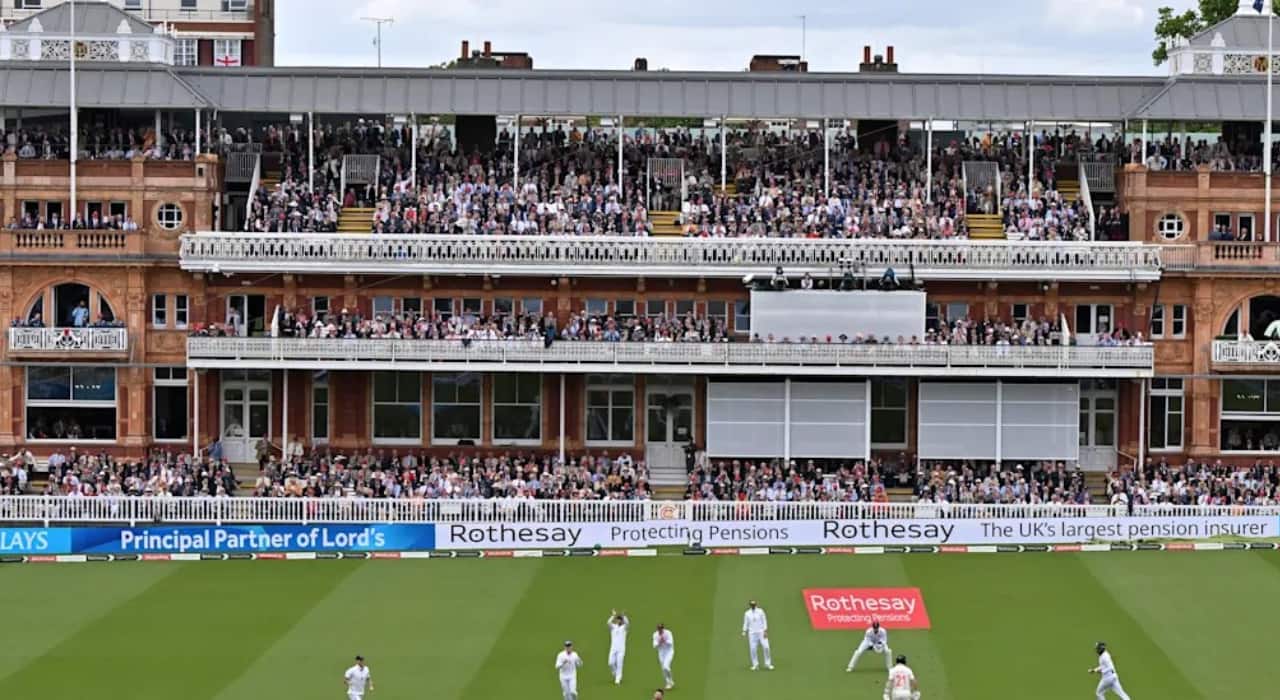
Lord’s, Gaddafi Stadium pitches rated ‘unsatisfactory’ by ICC, handed demerit points

Lord’s, Gaddafi Stadium pitches rated ‘unsatisfactory’ by ICC, handed demerit points


The International Cricket Council (ICC) has handed one demerit point each to Lord’s in London and the Gaddafi Stadium in Lahore after pitches used in recent international fixtures were rated “Unsatisfactory” under the ICC Pitch and Outfield Monitoring Process. 

The sanction follows assessments submitted by match referees after the opening Test of the ICC World Test Championship 2025-27 cycle between England and New Zealand at Lord’s and the third ODI between Pakistan and Australia in Lahore.

Both venues have received one demerit point, with the ICC confirming there were no previous demerit points against either ground. The respective reports have been forwarded to the England and Wales Cricket Board (ECB) and the Pakistan Cricket Board (PCB), who now have 14 days to appeal the decision.


Add Zee News as a Preferred Source


At Lord’s, concerns centred on the excessive assistance offered to bowlers throughout the Test match, which ended inside four days despite significant rain interruptions on the third day. The match witnessed a remarkable 33 wickets fall across the opening two days alone, with 16 wickets tumbling on Day One and a further 17 on Day Two.

Explaining the decision, match referee Andy Pycroft pointed to the imbalance between bat and ball that persisted throughout the contest.

“There was plenty of excessive seam movement throughout the Test, and the ball also kept extremely low on several occasions. The bounce was variable throughout as 16 wickets fell on the first day and 17 on the second. There was simply an over-balance in favour of ball against bat caused by the pitch,” Pycroft said.

The pitch at Lahore’s Gaddafi Stadium came under scrutiny for entirely different reasons. While Lord’s was criticised for offering excessive assistance to seam bowlers, the Lahore surface was deemed too slow and difficult to score runs on in a 50-over contest.

The third ODI between Pakistan and Australia turned into a low-scoring affair, with batters from both sides struggling to score freely as the pitch offered assistance to spin from an early stage.

Match referee Graeme La Brooy highlighted those concerns in his report, stating, “The pitch was slow and low and made scoring runs very difficult. It did not suit a One Day International game as batters had to spend more time to settle in. It helped spin very early in the match and continued the same way throughout.”

Under the ICC’s Pitch and Outfield Monitoring Process, venues accumulate demerit points for below-standard playing surfaces. Grounds that accrue multiple demerit points over a rolling five-year period can face sanctions, including suspension from hosting international cricket.

While neither Lord’s nor Gaddafi Stadium faces any immediate threat, the latest ratings serve as a warning for two of the sport’s most prominent venues as they seek to avoid further penalties in future international fixtures. 


Source link

Hexagon Nutrition IPO Day 3: Subscribed 54 times so far, check GMP

Hexagon Nutrition IPO Day 3: Subscribed 54 times so far, check GMP


Hexagon Nutrition’s initial public offering (IPO) received strong investor demand on the final day of bidding, with the issue subscribed 53.68 times overall, driven largely by robust participation from non-institutional investors.

The non-institutional investors (NII) portion was subscribed 161.49 times, while the retail category saw subscription of 26.85 times. The qualified institutional buyers (QIB) segment was bookedt19.77 imes.

The ₹139-crore IPO has a price band of ₹42-45 per equity share. The public issue is entirely an offer-for-sale (OFS) of over 3.08 crore equity shares by promoters. At the upper end of the price band, the issue size is estimated at ₹138.87 crore.

Anchor portion

Ahead of the IPO opening, Hexagon Nutrition raised ₹41.66 crore from anchor investors by allotting 92.57 lakh equity shares at ₹45 apiece.

Bandhan Small Cap Fund was the only domestic mutual fund participant in the anchor book, receiving an allocation of 26.66 lakh shares worth ₹12 crore. Other investors included Ampersand Growth Opportunities Fund Scheme-I, CP Capital Ltd, Visionary Value Fund and Innovative Vision Fund.

Listing date

Hexagon Nutrition said the proposed listing would help enhance visibility, strengthen brand recognition and provide liquidity to existing shareholders. Shares of the company are expected to list on the stock exchanges on June 12.

Founded in 1993, Hexagon Nutrition started as a micronutrient formulations company and later diversified into branded nutrition products. Its portfolio includes brands such as Pentasure, Obesigo and Pediagold across health, wellness and clinical nutrition categories.

The company operates in more than 75 countries and offers products including micronutrient premixes, therapeutic nutrition, clinical nutrition, wellness products and fortified foods.

More Like This

Ildo Frazao

Published on June 9, 2026


Source link

‘-65 billion expected to flow into the country on RBI measures on FCNR (B) deposits, ECBs

‘$55-65 billion expected to flow into the country on RBI measures on FCNR (B) deposits, ECBs


The Reserve Bank of India (RBI) logo is pictured outside its head office in Mumbai

About $55-65 billion is expected to flow into the country due to the RBI move to bear the full hedging cost of banks for raising fresh 3- 5-year FCNR (B) deposits and providing a concessional forex swap facility to incentivise ECBs by PSUs, according to estimates by State Bank of India’s economic research department (ERD).

The effect of the aforementioned measures could be that the rupee could strengthen to about 92/dollar; the overall balance of payment would be in the range of $5 to $10 billion surplus for FY27 (way above ERD’s previous estimate of $65-70 billion deficit); and bank deposit growth could jump to 14.5 per cent, with the credit-deposit gap in FY27 shrinking to less than 2 per cent from the peak of 6.7 per cent in FY24, per ERD economists in a report.

The economists noted that the current FCNR (B) rate is 3.35 per cent (three years). At present, the cost of hedging, forward premium is 3.5 per cent. Current Card rate for a 3-year deposit is 6.3 per cent.

“Thus, banks can offer attractive FCNR (B) pricing in the range of 5.5-6 per cent. This will be quite attractive even if we compare with current US yields at 4.20 per cent for three years. Additionally, the deployment of FCNR(B) funds can also be done at a rate lower than the prevailing 3 year MCLR (marginal cost of funds-based lending rate),” said Soumya Kanti Ghosh, Group Chief Economic Adviser, SBI.

Ghosh said the interest rate gap (between the Indian government bond yields for 3-year tenure and the US three-year treasury yield) has narrowed down significantly, reducing the possibility of leverage this time. He assessed that in case of three years, the rate gap has now reduced to 2.1 per cent and for five year it has narrowed down to 2.2 per cent.

SBI economists expect around $40-45 billion to come in through the FCNR (B) deposits route.

They estimated that the ECB (external commercial borrowing)/OFCB (overseas foreign currency borrowing) swap window will support the rupee by encouraging fresh foreign currency borrowings and improving dollar supply. About $15-20 billion is expected to flow in through this route.

The economists opined that the estimated $55-65 billion inflows will ensure that the deposit growth for FY27 for banking system could jump to around 14.5-15 per cent against a potential credit growth of 16 per cent.

“This will mean that the credit deposit gap after adjusting for regulatory dispensation will shrink by around ₹1 lakh crore. This will ensure that the term structure of interest rates will decline further. It may be noted that in FY14 after the FCNR(B) fund mobilisation deposit and credit growth were almost identical,” they said.

The economists observed that at this juncture, the RBI may continue to ensure that the rupee is not subject to excessive depreciation. In fact, the risks of allowing continued rupee weakness far outweigh the benefits of further currency flexibility.

Therefore, the central bank should continue to adopt a more forceful and unambiguous intervention strategy to arrest any dramatic fall in rupee value as it happened on June 8. They cautioned that in the current environment, a passive approach could prove costly. A decisive RBI intervention would help anchor expectations, contain imported inflation, reduce pressure on the external account, and preserve macro-financial stability.

NRI deposits

V Rama Chandra Reddy, Head – Treasury, Karur Vysya Bank, observed that RBI’s latest FCNR(B) swap facility is a significant incentive for banks to mobilise long term NRI deposits. “By offering an at-par USD/INR swap for fresh FCNR(B) deposits of 3-5 years, the central bank is effectively absorbing nearly 280-300 basis points (bps) of annual swap cost, substantially improving the economics for banks,” he said.

Adding to the attractiveness, the RBI has exempted eligible FCNR(B) deposits mobilised between June 8 and September 30 from CRR and SLR requirements. Reddy assessed that the CRR exemption alone provides a cost benefit of around 20 bps, while the SLR relaxation further enhances balance sheet efficiency.

“Taken together, the swap concession and regulatory exemptions significantly lower the effective rupee cost of funds, enabling banks to offer more competitive FCNR(B) rates while remaining cost-effective. This is likely to intensify competition for NRI deposits, particularly in the 3-5 year maturity segment,” he said.

Published on June 9, 2026


Source link

YouTube
Instagram
WhatsApp