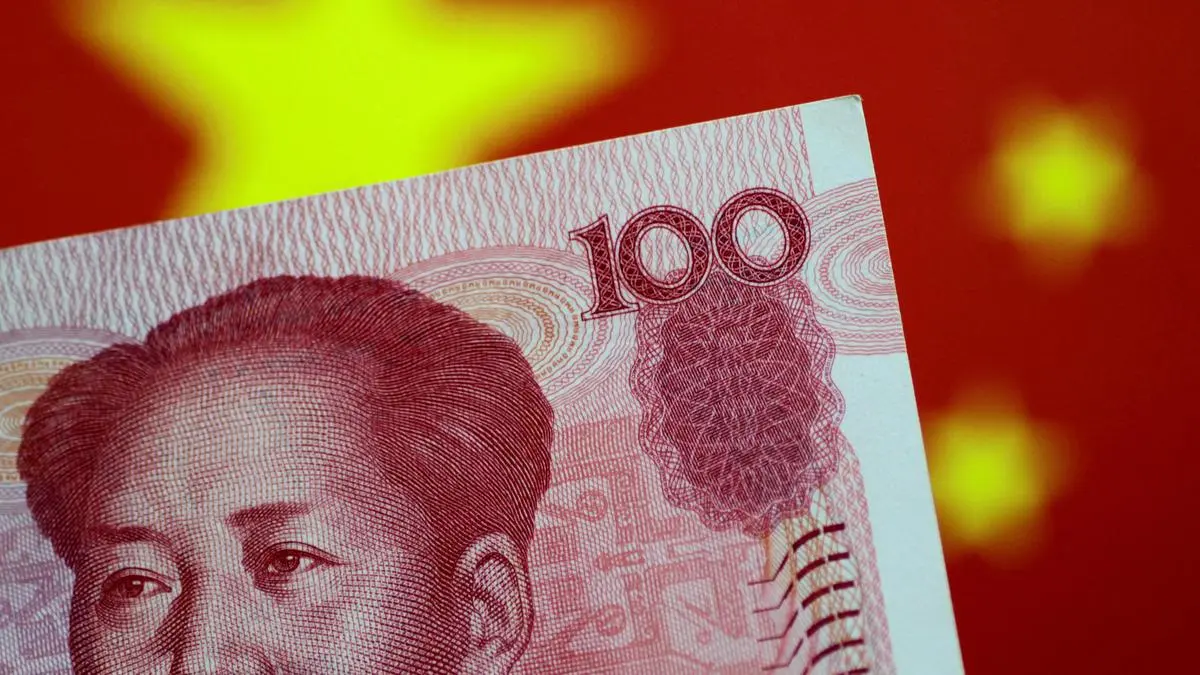
The lender’s view aligns with Beijing’s push to elevate the yuan’s role as a global funding currency, signalling room for continued growth in issuance and liquidity for foreign issuers in China’s onshore bond market.
| Photo Credit:
THOMAS WHITE
China’s onshore bond market, backed by ample liquidity and a stable currency, is emerging as an attractive funding source for developing economies, according to the BRICS-led New Development Bank.
With borrowing costs low, the Chinese bond market “is now one of the most cost-effective funding sources in the world,” Zhongxia Jin, the bank’s director general for treasury and portfolio management, said in Beijing on Tuesday. “We don’t just see the Chinese bond market as a source for cheap cash, we see this market as the future of local currency finance.”
Yuan-denominated funding, Jin added, provides a natural hedge for projects in local currencies, particularly across the Global South, which includes India, Indonesia and the Philippines, as well as Brazil and other parts of Latin America. Such financing is especially suited to initiatives like the green transition.
The lender’s view aligns with Beijing’s push to elevate the yuan’s role as a global funding currency, signalling room for continued growth in issuance and liquidity for foreign issuers in China’s onshore bond market.
“Chinese bond market is no longer just an alternative asset class, it tends to become a key pillar of global financial architecture,” Jin said, citing lower funding costs and relative currency stability.
New Development Bank sold five yuan-denominated notes totalling 25 billion yuan ($3.6 billion) last year, the largest annual issuance since it began tapping the market in 2016, according to data compiled by Bloomberg. In its latest deal late last year, the bank extended panda bond maturities to 10 years for the first time, signaling a push to secure longer-term funding.
New Development Bank was established by BRICS members Brazil, Russia, India, China and South Africa, according to the bank’s website.
More stories like this are available on bloomberg.com
Published on April 1, 2026







