Kerala banking sector expands across key metrics, NR deposits surge

Kerala banking sector expands across key metrics, NR deposits surge


Banks in Kerala recorded an 11 per cent growth in non-resident (NR) deposits during 2025-26, taking the total NR deposit base to ₹3.24 lakh crore, according to a review meeting of the State Level Bankers’ Committee (SLBC).

The State’s banking sector registered robust growth across key indicators. Total deposits increased by 12 per cent to ₹10.62 lakh crore, while total credit expanded by 13 per cent to ₹7.74 lakh crore.

Priority sector lending also witnessed strong growth during the year. Agricultural credit reached an all-time high of ₹1.73 lakh crore, marking a 12 per cent increase. Lending to the MSME sector grew by 11 per cent. Kerala’s credit-deposit ratio (CDR) stood at 72.88 per cent, significantly higher than the 60 per cent benchmark stipulated by the Reserve Bank of India.

The SLBC meeting also discussed the Emergency Credit Line Guarantee Scheme (ECLGS) 5.0 approved by the Union Government. The scheme provides guarantee coverage of up to 85 per cent for MSMEs and 90 per cent for non-MSMEs, including airlines, to address short-term liquidity mismatches arising from the West Asia crisis.

Addressing the meeting, Chief Minister V.D. Satheesan sought greater support from the banking sector for the flagship programmes of the United Democratic Front (UDF) government, including the Indira Guarantees and several key development initiatives. He urged banks to become “development partners” in advancing programmes aimed at stimulating economic growth and building a “Puthuyuga Keralam” (New Age Kerala).

The Chief Minister said the government aims to facilitate the establishment of at least 10,000 MSME units and called for enhanced credit support to manufacturing, MSMEs, food processing and agro- based industries, logistics, tourism, renewable energy, and startups.

He also charted out the government’s long-term plans to unlock the potential of Kerala’s 600-km coastline and transform the State into South Asia’s aviation hub.

Published on June 2, 2026


Source link

Jaishankar, Thuringia Minister-President discuss business, technology cooperation

Jaishankar, Thuringia Minister-President discuss business, technology cooperation


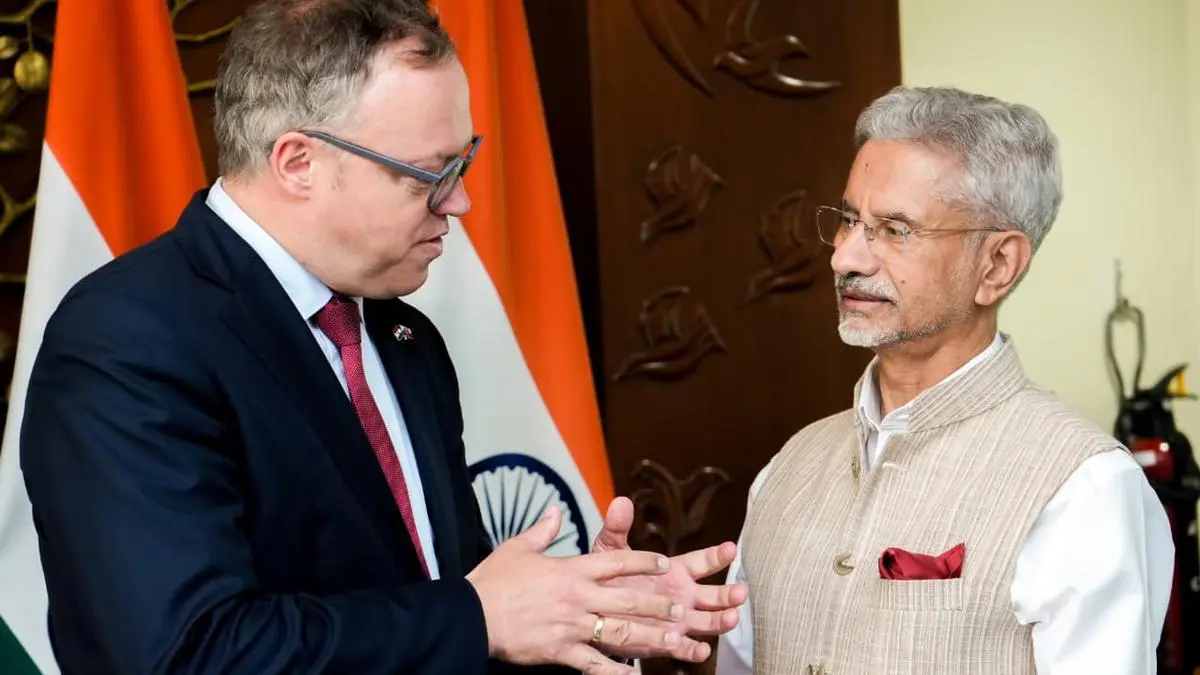
Mario Voigt, Thuringia Minister-President and S Jaishankar, India’s External Affairs Minister

External Affairs Minister S Jaishankar on Tuesday held talks with Thuringia Minister-President Mario Voigt and his delegation, highlighting the growing momentum in India-Germany and India-European Union ties.

In a post on X, Jaishankar said he was delighted to meet Minister-President Mario Voigt of Thuringia, Germany, and his delegation. He welcomed his strong support for expanding relations between India and Germany as well as between India and the European Union.

The post added that his strong support for expanding India-Germany and India-EU relationships was welcome. They had a good discussion on business opportunities and technology partnerships.

On the same day, External Affairs Minister S Jaishankar held talks with South African Deputy President Shipokosa Paulus Mashatile in New Delhi. Both leaders discussed ways to deepen bilateral cooperation in various sectors and agreed to work closely in international forums.

In a post on X, Jaishankar said he was pleased to meet Mashatile and appreciated his strong commitment to deepening their longstanding partnership between India and South Africa. The discussions focused on opportunities in trade, investments, MSMEs, digital and infrastructure domains. Both sides also agreed that India and South Africa must work closely in international forums.

In another post on X, Jaishankar said that India has dispatched the second tranche of 43 tonnes of medical assistance consignment to Africa’s Centre for Disease Control and Prevention to bolster response capacities across Africa in the wake of the Ebola outbreak.

The assistance comprises protective gear, diagnostic and monitoring equipment, medicines, and supplements. “Confident that this 43 tonnes consignment will further strengthen public health preparedness and bolster Ebola response capacities across the African Union,” he said.

Jaishankar also extended greetings to Italy on the occasion of its National Day, expressing confidence in the continued growth of bilateral ties between the two countries.

In a post on X, he conveyed his wishes to Italian Deputy Prime Minister and Foreign Minister Antonio Tajani, the Italian government and its people. “Warm greetings to DPM & FM Antonio Tajani, the Government and people of Italy on their National Day. Confident that our Special Strategic Partnership will continue to grow from strength to strength,” he said.

Published on June 2, 2026


Source link

India slips to seventh in global market cap rankings as South Korea pulls ahead

India slips to seventh in global market cap rankings as South Korea pulls ahead


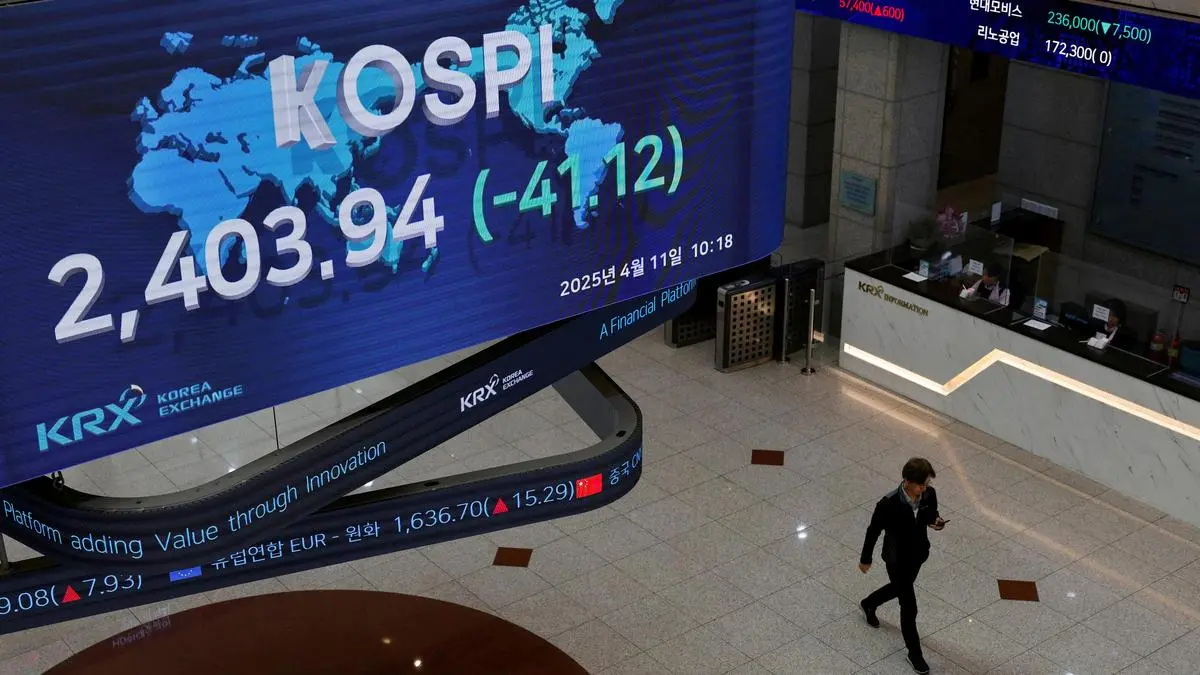
South Korean chipmakers Samsung Electronics and SK Hynix have surged this year, lifting the KOSPI 107% higher while Taiwan SE Weighted index has advanced 59%, boosted by demand for AI-linked ‌stocks.
| Photo Credit:
REUTERS/SOO-HYEON KIM

India’s equity markets slipped to seventh place in terms of market capitalisation on Tuesday as heavy ​foreign selling, weak earnings growth and limited exposure to AI-linked stocks allowed ‌South Korea’s chip-heavy market to overtake it.

South Korean stocks have rallied ​this year, driven by AI chipmakers, which have lifted ⁠the combined value of companies listed on the KOSPI, KOSDAQ and KONEX to $5.01 trillion, surpassing the $4.85 trillion value of firms on India’s National Stock Exchange, exchange ‌data showed.

India, once a darling among emerging markets, has now fallen two rungs in a fortnight after slipping behind Taiwan ‌last month.

“About 18 months ago, India’s equity market cap was ‌roughly 3.5 ⁠times South Korea’s and more than twice Taiwan’s. Fast forward ⁠just five months into 2026 and that lead has evaporated,” Bernstein analysts Venugopal Garre and Nikhil Arela said in a note.

India’s Nifty 50 and BSE Sensex have lost 10.1% and ​12.5% each this year, ‌while the IT index — the second-heaviest sector on the benchmarks — has tumbled 19%, pressured by a subdued earnings outlook and persistent foreign selling.

Foreign investors have pulled out $26.4 billion from Indian stocks so far in 2026, ‌surpassing $18.91 billion in 2025 — the previous annual record.

Additionally, India’s share in ​the MSCI Global Standard index has shrunk to 12.3% from a peak of 21% in September 2024.

“It’s really ⁠a remarkable decline and a restructure of the whole investment environment for us because of, obviously, the rise of South Korea and Taiwan as ‌well,” said Naomi Waistell, a fund manager in the emerging equities team at French firm Carmignac, which manages 41 billion euros ($47.76 billion) in assets.

The contrast is particularly stark in technology-heavy markets. South Korean chipmakers Samsung Electronics and SK Hynix have surged this year, lifting the KOSPI 107% higher while Taiwan SE Weighted index has advanced 59%, boosted by demand for AI-linked ‌stocks.

India, by comparison, has struggled to benefit from the AI-driven investment boom.

Market returns ​indicate that the narrative is that “AI is the defining theme and semiconductors are at its centre and within emerging markets, that ⁠story belongs to Taiwan and Korea, not India,” said Abhay Laijawala, managing ⁠director and India chief investment officer at Lighthouse Canton.

However, that view may be overstated as India offers a “picks-and-shovels” opportunity in ‌the AI era through investments tied to electricity, cooling systems, physical infrastructure and data centres that underpin the broader AI ecosystem, Laijawala added.

Published on June 2, 2026


Source link

Kaziranga launches eco-shop on Amazon, GeM to support conservation-linked livelihoods

Kaziranga launches eco-shop on Amazon, GeM to support conservation-linked livelihoods


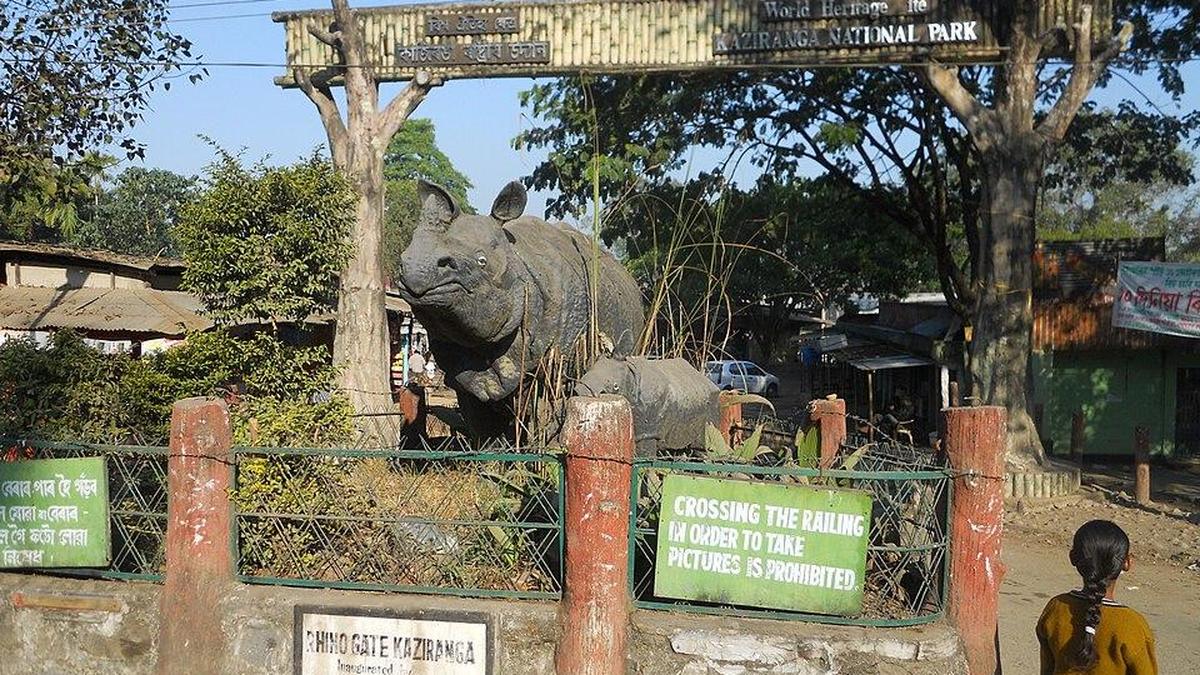
Assam’s Kaziranga National Park and Tiger Reserve has launched its much-publicised Eco-Shop on Amazon and the Government e-Marketplace (GeM), opening a new channel for locally made, biodiversity-linked products crafted by fringe communities to reach a wider national and global market.

The Eco-Shop initiative reflects Kaziranga’s continuing efforts to connect conservation with livelihoods by promoting products rooted in traditional skills, local materials and environmentally responsible practices. Dr Sonali Ghosh, Field Director of Kaziranga National Park & Tiger Reserve, said that the launch is expected to create stronger market access for artisans and producer groups from fringe villages while showcasing the rich craft heritage of the Kaziranga landscape.

“It was therefore a grand success that the Eco Shops managed entirely by Kaziranga Staff Welfare Society, within its 2 years of inception, made a whopping sale of products, which largely also benefited the local community,” she said. Dr Sonali Ghosh further said that, overall sales of 2024-25 in Kaziranga Eco Shops were ₹1.24 crore, and in 2025-2026 sales have increased to ₹1.87 crore.

“The Eco-Shop features a range of handcrafted, eco-friendly products, including woven articles, textile goods, decorative items and other livelihood-based creations made by community members. The community-led products that are popular with the visitors include – handloom, woodcraft, edibles (Pickles and Honey) and water hyacinth products that are eco-friendly and carry the unique Kaziranga signature.

It is pertinent to mention that under the Ministry of Textiles- SAMARTH scheme, over 300 women benefited from the skilling workshop and the products woven by them see a ready market in the eco shops,” Dr Sonali Ghosh said. The Field Director of Kaziranga National Park & Tiger Reserve also said that the key highlight of these products has been incorporating traditional animal motifs into textiles and the use of natural dyes derived from locally available wild resources.

“The training has helped build on existing traditional ecological knowledge and handloom skills, enabling artisans to transform biodiversity knowledge into market-ready products. By linking these products to popular online marketing stores such as Amazon and GeM, the initiative aims to provide artisans with improved visibility, consistent demand and broader customer outreach. Kaziranga National Park and Tiger Reserve reaffirmed its commitment to promoting community-based conservation and livelihood initiatives through its EDC mandate that celebrates local knowledge, supports artisanal enterprise, and contributes to the socio-economic well-being of the region,” she said.

Published on June 2, 2026


Source link

Crude Oil futures slip as uncertainty clouds US-Iran talks

Crude Oil futures slip as uncertainty clouds US-Iran talks


Crude oil futures traded lower on Tuesday morning despite uncertainty over the ceasefire talks between the US and Iran.

At 10.13 am on Tuesday, August Brent oil futures were at $94.29, down by 0.73 per cent, and July crude oil futures on WTI (West Texas Intermediate) were at $91.37, down by 0.86 per cent. June crude oil futures were trading at ₹8714 on Multi Commodity Exchange (MCX) during the initial hour of trading on Tuesday against the previous close of ₹8736, down by 0.25 per cent, and July futures were trading at ₹8480 against the previous close of ₹8536, down by 0.66 per cent.

In their Commodities Feed for Tuesday, Warren Patterson, Head of Commodities Strategy of ING Think, and Ewa Manthey, Commodities Strategist, said oil prices received a boost on Monday as talks between the US and Iran appeared to break down — again. This has become a common pattern in recent months, and there are still plenty of mixed messages. US President Donald Trump says that negotiations are continuing. As a result, oil prices continue to be whipsawed by quickly changing headlines.

Iran, meanwhile, issued threats against vessels transiting the Bab el‑Mandeb, the narrow Red Sea chokepoint that carries a major share of the world’s energy shipments. This is a concern for oil markets, given that the Saudis have diverted a large amount of oil that should be exported from the Persian Gulf to the Red Sea. Any disruptions to southbound flows from the Red Sea would require vessels to travel north through the Suez Canal and around the Cape of Good Hope, they said.

The Russian government has banned jet fuel exports until the end of November amid the recent surge in Ukrainian drone attacks on energy infrastructure. Russia is a marginal exporter of jet fuel, shipping only around 30,000 barrels a day. The global impact will be limited, but it’s still an unwelcome twist for a market already stretched thin by disruptions in West Asia, they said.

The Commodities Feed said that a bigger concern for refined product markets would be if Russia moved to limit or ban diesel exports. There have been reports in recent days that Russia is considering limits on diesel exports.

June aluminium futures were trading at ₹395.25 on MCX during the initial hour of trading on Tuesday against the previous close of ₹392.15, up by 0.79 per cent.

On the National Commodities and Derivatives Exchange (NCDEX), June jeera contracts were trading at ₹18900 in the initial hour of trading on Tuesday against the previous close of ₹19050, down by 0.79 per cent.

June turmeric (farmer polished) futures were trading at ₹16080 on NCDEX in the initial hour of trading on Tuesday against the previous close of ₹16134, down by 0.33 per cent.

Published on June 2, 2026


Source link

Russia announces aviation fuel export ban until November 30

Russia announces aviation fuel export ban until November 30


The Russian administration declared a prohibition on the export of aviation fuel, effective until November 30, in an effort to protect domestic inventories amidst declining refinery production and shifting dynamics across its energy network.

In a statement issued on Monday outlining the strategy, the Kremlin indicated that the temporary trade limitation was designed to preserve equilibrium within the domestic fuel sector.

“The aim of this decision is to ensure stability in the domestic fuel market,” the government stated.

The implementation of this policy follows widespread reports indicating that Moscow was weighing potential export constraints on diesel and jet fuel.

These considerations emerged after refining operational rates adjusted to multi-year lows following recent drone and missile strikes targeting Russian energy complexes.In recent months, Russia’s energy infrastructure, including oil-processing refineries and cross-country pipeline networks, has been the target of an intensified military campaign by Kyiv.

These aerial incidents have impacted Russia’s overall fuel-processing capabilities, leading to measures aimed at securing domestic supplies, particularly as the nation enters periods characterised by heightened seasonal consumption.

Russia occupies a position as one of the premier global exporters of refined petroleum commodities, traditionally dispatching a substantial volume of its diesel and aviation fuel output to international buyers.

The administration clarified that the newly enacted export suspension would not impact fuel dispatches managed under pre-existing intergovernmental treaties.

Moscow, recognised globally as a major oil and gas powerhouse, had previously placed limits on the export of automobile fuel as market pressures continue to develop during the ongoing conflict with Ukraine.

During this period, Kyiv has scaled up its tactical operations against Russian energy targets over the past few weeks while experiencing daily missile and drone bombardments.

Published on June 2, 2026


Source link

YouTube
Instagram
WhatsApp