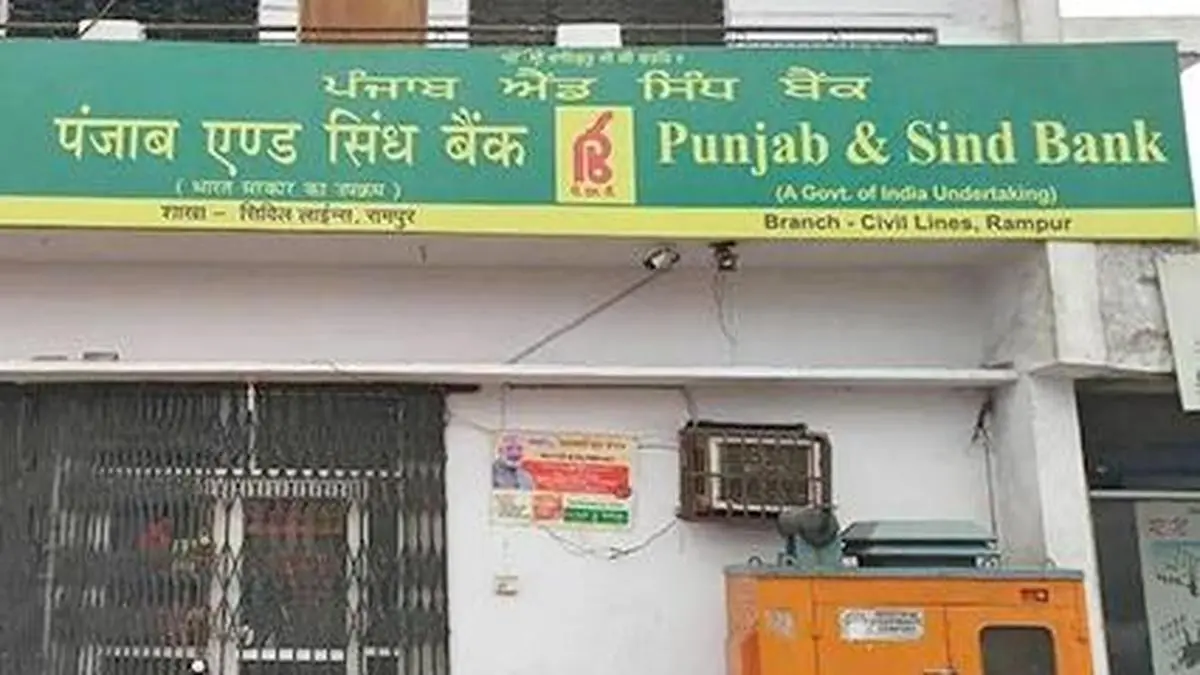
Punjab & Sind Bank plans ₹3,000-cr share sale this fiscal

Punjab & Sind Bank plans ₹3,000-cr share sale this fiscal


Public sector lender Punjab & Sind Bank is eying to mobilise up to ₹3,000 crore via share sale on a private placement basis in a bid to meet the minimum public shareholding (MPS) norms of market regulator Sebi.

As per Sebi norms, listed entities are required to have at least 25 per cent public shareholding.

Currently, the government of India holds a 93.85 per cent stake in Punjab & Sind Bank.

“We have got board approval for raising up to ₹3,000 crore from Qualified Institutional Placement (QIP) or other means. We are in discussion with merchant bankers. We will soon start roadshows to engage with investors for proposed stake dilution,” Punjab & Sind Bank managing director and CEO Swarup Kumar Saha told PTI.

However, he said, timing and exact quantum would depend on market conditions, which are not very conducive at present.

Besides, he said, the board has also approved ₹5,000 crore infrastructure bonds and ₹2,000 crore from Tier I and Tier II bonds to fund credit growth.

The bank had done a maiden issuance of infrastructure bonds in December 2024.

Saha said the bank has fully deployed the funds raised from its first infra bonds.

Domestic investors have shown a lot of interest in such bond issuance by banks, and many lenders have exercised this option for raising resources in the recent past.

The advantage of infrastructure bonds is that they are exempt from regulatory reserve requirements such as the Cash Reserve Ratio (CRR) and Statutory Liquidity Ratio (SLR). So, infrastructure bond proceeds can be fully deployed for lending activities.

Banks have been preferring infrastructure bonds over AT-1 and Tier-2 bonds, as they are better priced.

During the fourth quarter ended March 2026, Punjab & Sind Bank reported a 35 per cent jump in net profit at ₹422 crore as against ₹313 crore in the same period a year ago, helped by a decline in bad loans.

Total income moderated to ₹3,457 crore from ₹3,836 crore a year ago, Punjab & Sind Bank said in a regulatory filing.

On the asset quality front, the bank’s gross Non-Performing Assets (NPAs) eased to 2.4 per cent of gross advances, as compared to 3.38 per cent by the end of March 2025. Similarly, net NPAs came down to 0.79 per cent from 0.96 per cent earlier.

The bank’s capital adequacy ratio improved marginally to 17.42 per cent, from 17.41 per cent at the end of FY25.

For the entire financial year 2025-26, the bank reported a 30 per cent increase in profit at ₹1,322 crore, as against ₹1,016 crore in the previous year. Total income rose to ₹13,759 crore from ₹13,049 crore.

The bank’s board has recommended a dividend of 39 paise per equity share of face value of ₹10 each for 2025-26, subject to shareholders’ approval.

Published on April 28, 2026



Source link

Sapphire Foods reports strong Q4 growth despite continued losses

Sapphire Foods reports strong Q4 growth despite continued losses


Sapphire Foods India Limited reported its strongest quarterly performance in 12 quarters on Tuesday, with Q4 FY26 consolidated revenue rising 11 per cent year-on-year to ₹789.8 crore, driven by a sharp recovery at KFC India.

Despite the operational uptick, the company remained loss-making, posting a consolidated net loss (PAT) of ₹12.6 crore for the quarter against a profit of ₹2 crore in Q4 FY25.

For the full year FY26, the company reported revenue of ₹3,115.9 crore, up 8 per cent YoY, but swung to a net loss of ₹32 crore compared to a profit of ₹16.7 crore in FY25. Adjusted EBITDA for the year declined 9 per cent to ₹238.2 crore, with margins compressing 150 basis points to 7.6 per cent.

KFC India was the clear outperformer. Quarterly revenue grew 15 per cent — the highest in eight quarters — to ₹549.5 crore, while same-store sales growth (SSSG) came in at 4 per cent, or 6 per cent excluding the Chaitra Navratri impact, the best in 14 quarters.

Restaurant EBITDA margin improved 110 basis points to 16.8 per cent, aided by gross margin gains and a two-pronged consumer recruitment strategy deploying aggressive value offers such as the ₹99 Chicken Krisper Burger Meal in northern and western markets and buy-one-get-one bucket deals in the South.

Pizza Hut India continued to be a drag. Quarterly revenue fell 6 per cent to ₹117.4 crore, SSSG declined 7 per cent, and restaurant EBITDA margin worsened to -6.0 per cent, down 140 basis points YoY. For the full year, the brand’s restaurant EBITDA margin stood at -3.3 per cent, a deterioration of 570 basis points.

The Sri Lanka business delivered its sixth consecutive quarter of double-digit SSSG at 11 per cent in local currency terms, with restaurant sales up 15 per cent to LKR 422.1 crore.

Exceptional items of ₹12.8 crorein Q4 — relating to labour code changes and ESOP modification costs tied to the announced merger with Devyani International — further weighed on the bottom line. Total restaurant count stood at 1,052 as of March 31, 2026.

The stock traded at ₹174.50 on NSE, down 0.81 per cent on the day, and is down nearly 46 per cent over the past year.

Published on April 28, 2026


Source link

Nirmala Sitharaman inaugurates new premises of IIGJ in Udupi

Nirmala Sitharaman inaugurates new premises of IIGJ in Udupi


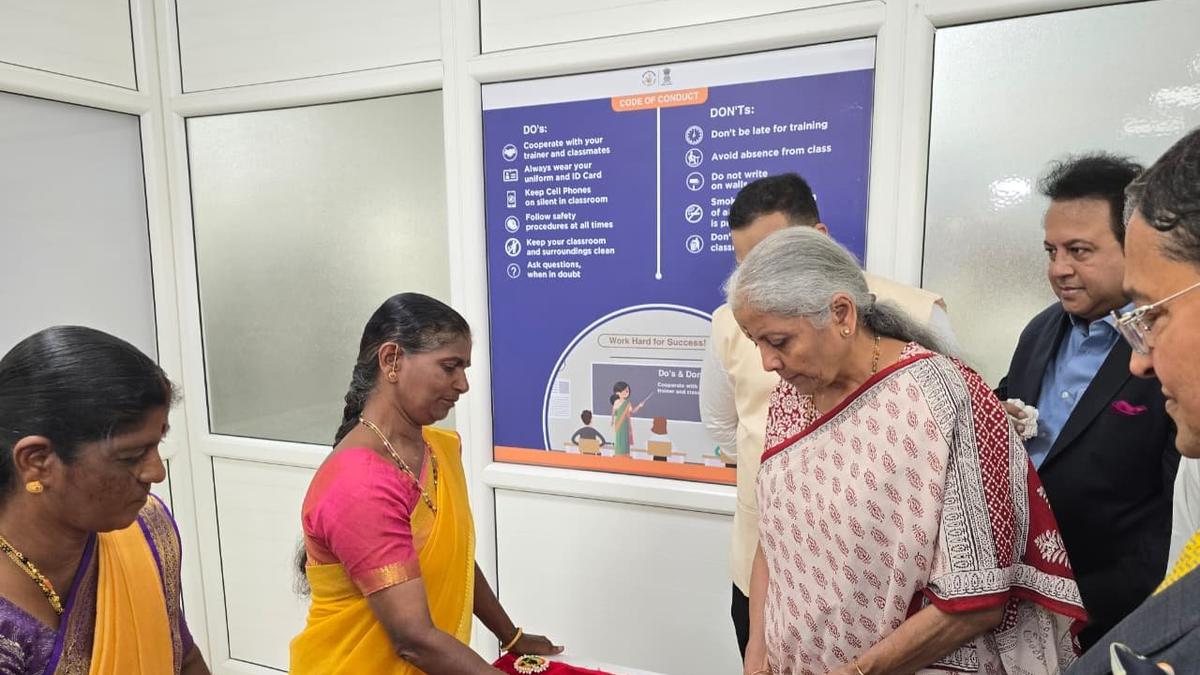
The Union Finance Minister, Nirmala Sitharaman, interacts with the trainees under the PM Vishwakarma scheme at IIGJ in Udupi on Tuesday.

Union Finance Minister Nirmala Sitharaman on Tuesday inaugurated the new premises of Indian Institute of Gems and Jewellery (IIGJ) in Udupi.

She had laid the foundation stone for IIGJ in Udupi in 2017 during her tenure as the Union Minister of Commerce and Industries with her MPLADS funds and with support from the Gem and Jewellery Export Promotion Council (GJEPC) and National Institute of Design (NID), Ahmedabad.

The institute provides upskilling for current workers and new skills for youth to make them globally competitive in design and manufacturing.

It provides training in various aspects of hand-crafted jewellery making, creating numerous employment and entrepreneurial opportunities in the gems and jewellery sector. It also focuses on enhancing the skills of the existing workforce.

Training facility

The institute is equipped with 41 jewellery manufacturing, CAD, casting, testing, and finishing machinery, including XRF gold-purity testing, CAD software, casting machines, plating units, and full production-line facilities, enabling both training and common facility centre (CFC) services.

The IIGJ-Udupi also trains people under the PM Vishwakarma scheme. The Minister interacted with the trainees under the PM Vishwakarma scheme on the occasion. More than 270 candidates have been trained at the IIGJ under the PM Vishwakarma scheme.

She also witnessed a demonstration of the ‘Design to Manufacturing’ process by students at IIGJ Udupi.

The event also witnessed the signing of a memorandum of understanding between the IIGJ and IIT Madras under the InCent LGD platform for a specialised, industry-oriented certification programme in lab-grown diamond technologies.

The programme is aimed at bridging critical skill gaps, create job-ready professionals, boost value-added manufacturing and strengthen India’s position in the global LGD (lab-grown diamond) value chain, aligned with ‘Make in India’, ‘Skill India’ and the goal of a self-reliant, globally competitive LGD ecosystem.

Published on April 28, 2026


Source link

Commerce Ministry notifies decision to allow exports of 25 lakh tonne additional wheat

Commerce Ministry notifies decision to allow exports of 25 lakh tonne additional wheat


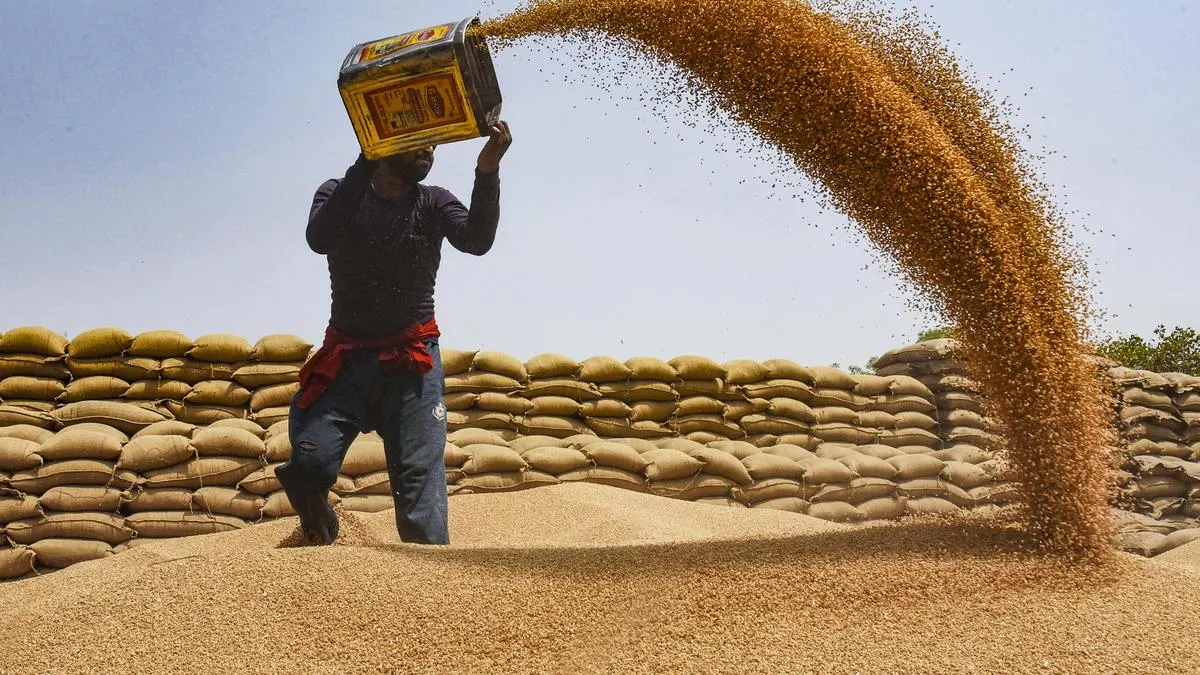
The Commerce Ministry’s arm DGFT has notified the government’s decision to permit 25 lakh tonnes of wheat exports.

On April 20, the Centre permitted exports of an additional 25 lakh tonne of wheat, considering a comfortable stock position amid the likelihood of another strong harvest.

With this, a total of 50 lakh tonne of wheat and 10 lakh tonne of wheat products have now been permitted for exports.

“The export policy of wheat…continues to remain prohibited. However, export of an additional 25 lakh metric tonnes (LMT) of wheat is permitted,” the Directorate General of Foreign Trade (DGFT) has said in a notification.

It said that the detailed modalities for this will be notified through a separate order.

“Furthermore, the existing policy condition mentioned in DGFT…dated May 13, 2022, continues to apply, wherein export shall also be allowed on the basis of permission granted by the Government of India to other countries to meet their food security needs and based on the request of their governments, over and above the said permitted amount of additional 25 LMT of wheat,” it added.

The country’s wheat production is pegged at 120.2 million tonne for the 2025-26 crop year (July-June) as per the second advance estimate of the Agriculture Ministry.

The higher production was due to an increase in wheat acreage to 33.41 million hectares during the 2026 rabi season against 32.80 million hectares in the year-ago period.

Earlier in January, the government allowed export of 5 lakh tonne of wheat products and thereafter in February, an additional 5 lakh tonne of wheat products and 25 lakh tonne of wheat were permitted.

Published on April 28, 2026


Source link

TN clocks 2nd year of double-digit growth at 10.83% in FY26

TN clocks 2nd year of double-digit growth at 10.83% in FY26


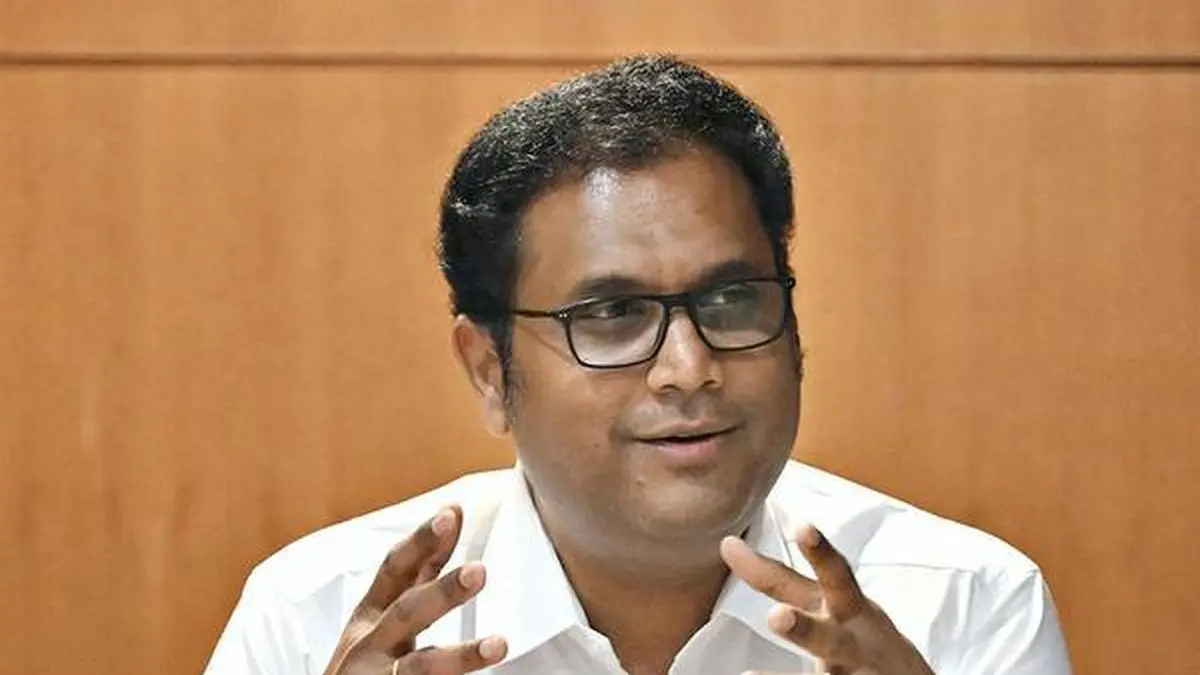
Tamil Nadu’s Industries Minister T R B Rajaa

Tamil Nadu clocked 10.83 per cent growth in 2025-26 and set a record by registering a double-digit economic growth for a second year in a row, state Industries Minister T R B Rajaa said on Tuesday.

This achievement follows the state recording 11.19 per cent growth in the previous year leaving the national average of 7.4 per cent “far far behind” he said.

“Double-digit growth two years in a row. Not noise. Not propaganda. Just plain factual numbers…While some are busy dividing people, Tamil Nadu is busy multiplying prosperity,” Rajaa said in a post on ‘X.’ This happens when governance is driven by industry-first policies and social justice stable leadership under Chief Minister M K Stalin, the minister claimed.

“No shortcuts. No slogans. Just results. This becomes even more special when one factors the trade headwinds and tariff wars. Let this be clear: the Dravidian model doesn’t just speak. It delivers,” he said.

Published on April 28, 2026


Source link

Iran talks stall, crude jumps— gold, silver under pressure?

Iran talks stall, crude jumps— gold, silver under pressure?


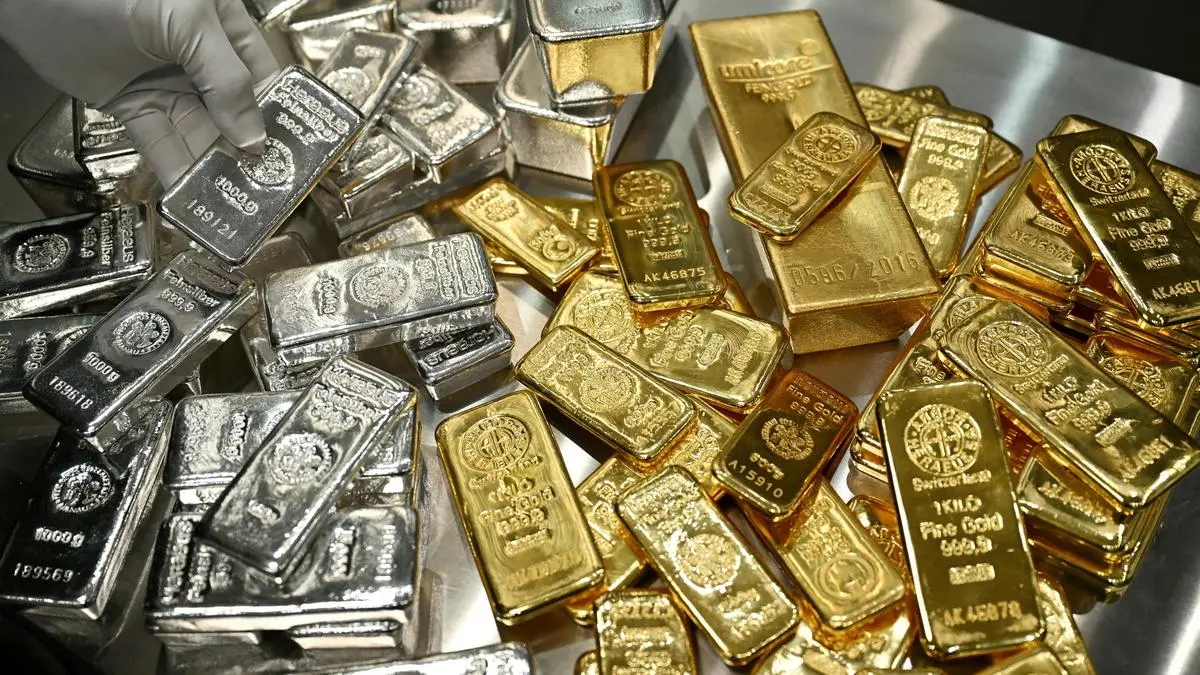
Gold and silver prices declined on April 28, 2026, as stalled US-Iran peace negotiations and elevated Treasury yields weighed on safe-haven demand, while crude oil extended its rally on persistent supply disruptions through the Strait of Hormuz.

MCX Gold fell 0.64 per cent to ₹1,51,721 per 10 grams, while spot gold on COMEX dropped 1 per cent to $4,693.7 per troy ounce. MCX Silver shed 1.15 per cent to ₹2,41,824 per kg, with COMEX silver down 1.78 per cent to $75.57 per ounce. Axis Direct pegged today’s implied trading range for MCX Gold at $4,649–$4,717 and for MCX Silver at $73.59–$77.11.

“…stalled peace talks between Iran and USA…” remained the primary driver for gold’s price action, according to Axis Direct’s metrics. The US 10-year Treasury yield held at 4.342 per cent, adding further pressure on non-yielding assets. Kotak Neo noted that the OTM options skew on COMEX showed call options increasing more than puts for gold, suggesting the short-term price regime remains “…bullish…” despite the session’s weakness.

Kotak Neo analysts flagged that gold’s near-term bias is sideways, with MCX support at ₹1,51,130 and resistance at ₹1,52,050. Axis Direct placed critical levels for pattern continuation at ₹1,54,000 on the upside and ₹1,50,000 on the downside, with daily momentum stochastics turning bearish on both MCX and COMEX.

Crude oil bucked the trend sharply. MCX Crude Oil surged 3.28 per cent to ₹9,106 per barrel, with Brent climbing 2.75 per cent to $108.2 and WTI advancing 2.09 per cent to $96.4. Axis Direct described the key driver as “…supply tightness as Strait of Hormuz remains almost shut…” with the conflict now entering its ninth week. Motilal Oswal analyst Manav Modi noted that “…oil prices continued to push higher, sustaining concerns over an energy-driven inflation shock that could delay interest rate cuts…”

Iran was reported to have proposed a phased reopening of the Strait and a ceasefire extension ahead of nuclear talks via Pakistani mediators, but US skepticism kept the outcome unclear. Kotak Neo noted the market’s “…acute sensitivity to diplomatic signals…” as the brief dip on Iran’s proposal was quickly reversed. A decisive break above ₹9,275 on MCX could push crude toward ₹9,350–₹9,470, while support holds near ₹8,950.

Among base metals, LME copper slipped 0.73 per cent to $13,213 per tonne, and zinc underperformed with a 2.15 per cent decline to $3,398. MCX Copper traded nearly flat at ₹1,279.1 per kg, up just 0.19 per cent. Axis Direct rated copper’s trend score as neutral, with profit-booking ahead of China’s upcoming labour holiday cited as a key drag. Nickel remained volatile, touching its highest level since June 2024 before settling, supported by Indonesia’s 2026 ore production quota falling significantly below projected smelter demand.

Natural gas on NYMEX rose 1.07 per cent to $2.55 per MMBtu, with MCX Natural Gas up 2.39 per cent to ₹261.5. Kotak Neo noted gains were capped by “…cooler early-May weather forecasts…” despite solid LNG demand.

Markets this week are focused on the US Federal Reserve policy decision, which is also expected to be Jerome Powell’s last meeting before Kevin Warsh takes over. The BOJ kept rates unchanged at 0.75 per cent on Monday, though three members voted for a hike and the bank revised inflation forecasts upward while cutting GDP projections. Key US data including GDP, consumer confidence, ADP employment and durable goods orders are also due.

Published on April 28, 2026


Source link

YouTube
Instagram
WhatsApp