Lloyd’s of London to anchor global reinsurance presence in GIFT City

Lloyd’s of London to anchor global reinsurance presence in GIFT City


Lloyd’s is one of the world’s most influential underwriting centres for complex risks across sectors such as shipping, aviation, energy and catastrophe insurance. The move to set up base in Gujarat could dramatically boost GIFT City’s access to global underwriting capital, deepen its risk-management capabilities, and signal India’s rising significance on the global reinsurance map. 
| Photo Credit:
REUTERS/Simon Dawson

Marking a landmark step in positioning India’s IFSC as a regional hub for cross-border reinsurance, UK-based insurance and reinsurance powerhouse Lloyd’s of London — renowned for underwriting some of the world’s most complex and high-value risks — is set to establish operations in Gujarat International Finance Tec-City (GIFT City) in Gujarat.

The application is for the establishment of a statutory insurance and reinsurance corporation, authorised to undertake insurance and reinsurance business under the IFSCA Registration of Insurance Business Regulations, 2021, with funds to be remitted from Lloyd’s head office in London. Officials from IFSCA told the businessline that LLoyd’s proposal is currently “under process.”

Lloyd’s is one of the world’s most influential underwriting centres for complex risks across sectors such as shipping, aviation, energy and catastrophe insurance. The move to set up base in Gujarat could dramatically boost GIFT City’s access to global underwriting capital, deepen its risk-management capabilities, and signal India’s rising significance on the global reinsurance map. Lloyd’s declined to comment on the development.

There has been a rapid expansion in the insurance and reinsurance ecosystem at GIFT City. As of December 2025, the number of IFSC Insurance Offices (IIOs) rose to 24 from 19 a year ago, while Insurance Intermediary Offices (IIIOs) climbed to 31 from 25, highlighting consistent growth. Premiums transacted by IIOs and IIIOs together reached $299 million in Q3 FY2025–26, more than double the $148 million recorded a year earlier, reflecting robust year-on-year growth.

While Q3 of FY26 saw a quarter-on-quarter dip in reinsurance gross written premiums, falling to $148.13 million from $235.70 million in Q2, the segment has grown significantly on a year-on-year basis. In comparison to Q3 FY25, when only $52 million was transacted, the current figures represent nearly threefold growth, underscoring the increasing scale and appeal of reinsurance operations at GIFT City.

Another key entrant is Echo Reinsurance Ltd, based in Zurich, which has been granted approval to open a branch in GIFT IFSC where it will undertake reinsurance business. Beyond Lloyd’s and Echo, global insurance and reinsurance majors from South Korea, the United Kingdom, Singapore, Saudi Arabia, UAE and Kazakhstan have either lined up or have been granted approval to establish operations in GIFT City.

The (IIOs) in GIFT City play a key role in supporting trade finance by offering trade credit insurance and export-related risk covers, including protection against credit, political and non-payment risks. These offerings help strengthen exporter confidence and improve the bankability of cross-border transactions. Currently, four IIOs operating out of GIFT IFSC offer seven trade credit insurance products, with the regulator aiming to scale up the ecosystem by attracting more global players and expanding the range of products.

Published on March 18, 2026


Source link

Crude oil trades lower as Iraq, Kurdistan decide to resume exports to Turkey’s Ceyhan hub

Crude oil trades lower as Iraq, Kurdistan decide to resume exports to Turkey’s Ceyhan hub


Crude oil futures traded lower on Wednesday morning after the Iraqi government and the Kurdistan Regional Government agreed to resume oil exports to the Ceyhan energy hub in Turkey.

At 9.58 am on Wednesday, May Brent oil futures were at $101.17, down by 2.18 per cent, and May crude oil futures on WTI (West Texas Intermediate) were at $92.56, down by 3.11 per cent. March crude oil futures were trading at ₹8604 on Multi Commodity Exchange (MCX) during the initial hour of trading on Wednesday against the previous close of ₹8871, down by 3.01 per cent, and April futures were trading at ₹8610 against the previous close of ₹8844, down by 2.65 per cent.

Citing Iraqi state media reports, a Reuters report said oil flow from Ceyhan port is ‌expected to start at 7.00 GMT on Wednesday.

In a post on the social media platform X, Masrour Barzani, Prime Minister of the Kurdistan Region of Iraq, said: “Given the extraordinary circumstances facing the country, and the responsibility we all share to get through this difficult chapter, we have decided to allow oil to flow through the Kurdistan Region’s pipeline as soon as possible. In parallel, our discussions with Baghdad will continue with urgency to lift the restrictions on imports and trade into the Kurdistan Region, and to secure guarantees for oil and gas companies so they can safely resume production.”

In their Commodities Feed for Wednesday, Warren Patterson, Head of Commodities Strategy of ING Think, and Ewa Manthey, Commodities Strategist, said ICE Brent has now settled above $100 a barrel for four consecutive days. With no sign of de-escalation in West Asia, the market continues to consolidate above this key level. Oil flows remain largely constrained, despite hopes that Iran might allow additional tankers to move through the Strait of Hormuz to select countries. However, if Iran’s plan is to inflict pain through higher energy prices, the number of tankers it allows through the Strait of Hormuz may be very limited, they said.

Confirmation of the death of Iran’s security chief, Ali Larijani, only increases uncertainty for markets. It’s unlikely to lead to de-escalation.

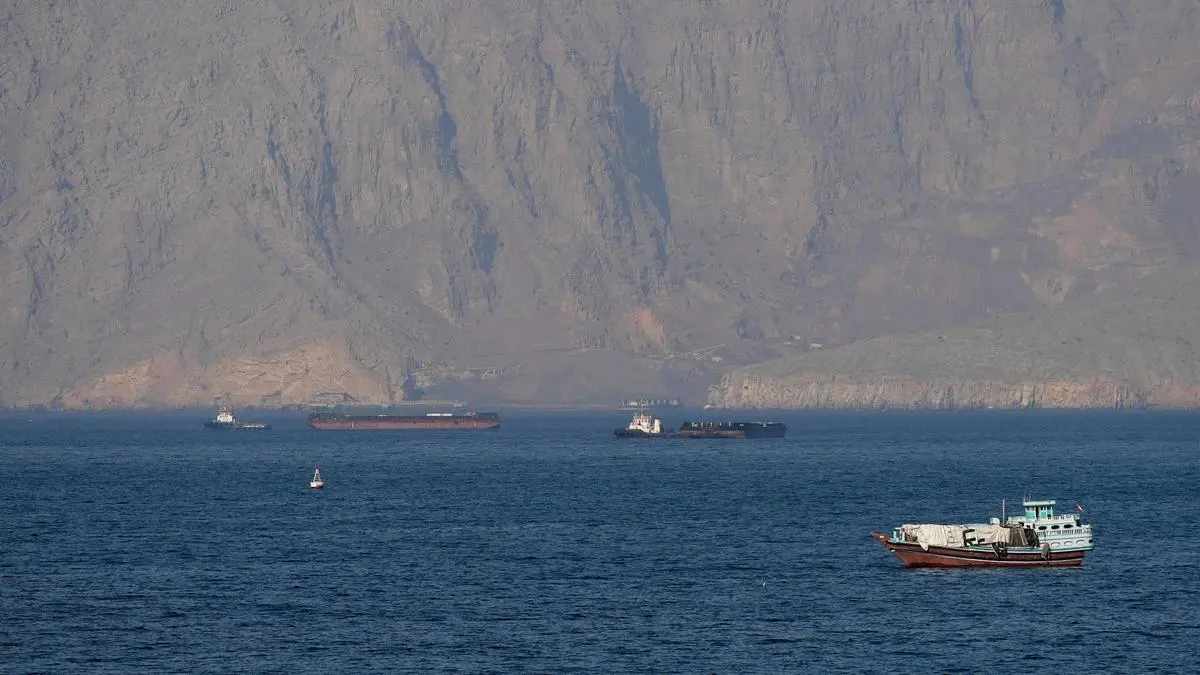
Energy infrastructure across the Persian Gulf continues to be targeted by Iran, with the UAE’s Fujairah port being targeted multiple times. Meanwhile, upstream production continues to decline as producers try to manage storage constraints.

There are reports that the UAE and Kuwait oil cuts are now as much as 1.5 million barrels a day and 1.3 million barrels a day, respectively. This is on top of roughly 2.9 million barrels a day and 2-2.5 million barrels a day of reported supply cuts from Iraq and Saudi Arabia, they added.

Meanwhile, US President Donald Trump took to the social media platform Truth Social to express his displeasure over NATO allies.

In a post Truth Social, he said: “The United States has been informed by most of our NATO “Allies” that they don’t want to get involved with our Military Operation against the Terrorist Regime of Iran, in the Middle East, this, despite the fact that almost every Country strongly agreed with what we are doing, and that Iran cannot, in any way, shape, or form, be allowed to have a Nuclear Weapon. I am not surprised by their action, however, because I always considered NATO, where we spend Hundreds of Billions of Dollars per year protecting these same Countries, to be a one way street — We will protect them, but they will do nothing for us, in particular, in a time of need. Fortunately, we have decimated Iran’s Military — Their Navy is gone, their Air Force is gone, their Anti-Aircraft and Radar is gone and perhaps, most importantly, their Leaders, at virtually every level, are gone, never to threaten us, our Middle Eastern Allies, or the World, again! Because of the fact that we have had such Military Success, we no longer “need,” or desire, the NATO Countries’ assistance — WE NEVER DID! Likewise, Japan, Australia, or South Korea. In fact, speaking as President of the United States of America, by far the Most Powerful Country Anywhere in the World, WE DO NOT NEED THE HELP OF ANYONE!”

March natural gas futures were trading at ₹273.70 on MCX during the initial hour of trading on Wednesday against the previous close of ₹280.90, down by 2.56 per cent.

On the National Commodities and Derivatives Exchange (NCDEX), March jeera contracts were trading at ₹21935 in the initial hour of trading on Wednesday against the previous close of ₹21600, up by 1.55 per cent.

April turmeric (farmer polished) futures were trading at ₹14,928 on NCDEX in the initial hour of trading on Wednesday against the previous close of ₹14,778, up by 1.02 per cent.

Published on March 18, 2026


Source link

अडानी ग्रुप की होने जा रही दिवालिया हो चुकी यह कंपनी, NCLT ने दी मंजूरी

अडानी ग्रुप की होने जा रही दिवालिया हो चुकी यह कंपनी, NCLT ने दी मंजूरी


Adani Group Acquisition: नेशनल कंपनी लॉ ट्रिब्यूनल (NCLT) की इलाहाबाद पीठ ने दिवालिया हो चुकी जयप्रकाश एसोसिएट्स लिमिटेड (JAL) के लिए अडानी एंटरप्राइजेज के रिजॉल्यूशन प्लान को मंजूरी दे दी है. इस क्रम में NCLT ने वेदांता लिमिटेड की चुनौती को भी खारिज कर दिया. जेपी ग्रुप की बड़ी कंपनी जयप्रकाश एसोसिएट्स पर कुल 57185 करोड़ रुपये के दावे हैं. इसके प्रमुख लेनदारों में नेशनल एसेट रिकंस्ट्रक्शन कंपनी लिमिटेड (NARCL) भी शामिल है. 

क्यों दिवालिया हुई कंपनी?

कंपनी ने यमुना एक्सप्रेसवे समेत कई पावर प्लांट्स और सीमेंट फैक्ट्रियों में भारी निवेश करने के लिए SBI और ICICI जैसे बैंकों से भारी कर्ज लिया. बाद में प्रोजेक्ट्स से सही कमाई न हो पाने और ब्याज दरें बढ़ने की वजह से कंपनी समय पर कर्ज नहीं चुका पाई और उसे डिफॉल्ट घोषित कर दिया गया. अब कर्ज में डूबी इसी कंपनी को अडानी ग्रुप 15000 करोड़ रुपये में खरीदने जा रहा है. अडानी ग्रुप ने जेपी एसोसिएट्स को खरीदने के लिए 15000 करोड़ रुपये का ऑफर दिया था, जिसे अब NCLT ने मंजूरी दे दी है.

बैंकों को लौटाए जाएंगे उनके पैसे

जेपी एसोसिएट्स को खरीदने की रेस में अनिल अग्रवाल की कंपनी वेदांता लिमिटेड और डालमिया भारत जैसी कंपनियां शामिल थीं, लेकिन आखिरकार जीत अडानी ग्रुप को मिली. कंपनी को खरीदने के लिए अडानी ग्रुप से मिलने वाले 15000 करोड़ में से एक हिस्से का इस्तेमाल बैंकों का कर्ज चुकाने के लिए किया जाएगा. बैंकों की कमेटी भी इस डील के लिए अडानी ग्रुप के पक्ष में वोटिंग की थी. 

अडानी ग्रुप को क्या-क्या मिलेगा? 

  • इस डील के तहत अडानी ग्रुप को जेपी ग्रुप की कई कीमती संपत्तियां मिलेंगी जैसे कि नोएडा और ग्रेटर नोएडा में 3985 एकड़ की जमीन.
  • जेपी ग्रुप के 5 लग्जरी होटल.
  • जयप्रकाश पावर वेंचर्स के नाम की कंपनी में 24 परसेंट की हिस्सेदारी.
  • सीमेंट बनाने वाली फैक्ट्रियां, जिनकी कैपिसिटी सालाना 6.5 मिलियन टन तक है.

वेदांता ने लगाई थी 17000 करोड़ की बोली

कंपनी को खरीदने के लिए वेदांता ने कुल 17000 करोड़ रुपये की बोली लगाई थी. हालांकि, कंपनी ने शुरुआत में 4000 करोड़ का तुरंत भुगतान करने और बाकी की रकम अगले 5-6 सालों में चुकाने की बात कही थी. वहीं, अडानी ग्रुप ने कहा कि वह 15000 करोड़ में से 6000 करोड़ रुपये तुरंत और बाकी रकम केवल 2 साल में चुकाने के लिए तैयार है इसलिए बैंकों ने अडानी ग्रुप को चुना. 

वेदांता को किस बात पर ऐतराज?

जेपी एसोसिएट्स को खरीदने की प्रक्रिया जब शुरू हुई थी, तब वेदांता और डालमिया भारत जैसी कंपनियों ने डेडलाइन के भीतर ही अपनी-अपनी बोलियां जमा कर दी थीं. पहले कंपनी को खरीदने में अडानी ग्रुप ने दिलचस्पी नहीं दिखाई, लेकिन बाद में कंपनी ने इसे खरीदने के लिए एक बड़ा ऑफर पेश किया. वेदांता ने इसी बात का विरोध किया था. बैंकों और NCLT ने अडानी ग्रुप के प्रस्ताव को इसलिए स्वीकार किया क्योंकि कंपनी बड़ी मात्रा में और जल्दी पैसा लौटा रही थी. 

ये भी पढ़ें:

रॉकेट की स्पीड से भाग रहे पेट्रोल-डीजल के दाम, कई देशों में 72 परसेंट तक उछाल; भारत पर क्या होगा असर? 


Source link

Saudi Arabia takes Indian startup’s help for satellite images

Saudi Arabia takes Indian startup’s help for satellite images


File photo: Image of Krishna River Delta captured by Pixxel’s satellites

At a time when it is being drawn into the war in West Asia and amid the energy crisis, Saudi Arabia has taken the help of an Indian space start-up for providing it satellite images.

Bengaluru-based, Google-backed Pixxel, whose Firefly constellation of 18 satellites provide hyperspectral images, will supply special satellite data to Saudi Arabia’s national platform, UP42. Instead of buying data separately, Saudi agencies can now log onto this platform and get Pixxel’s imagery.

“The integration of hyperspectral capabilities into NSG UP42 strengthens Saudi Arabia’s geospatial infrastructure by providing government entities, regulators, and enterprises with deeper environmental and surface intelligence through a unified, sovereign platform,” says a press release from Pixxel.

Pixxel’s satellites do not take optical images—photos—of Earth; they take spectral images, in over 135 spectral bands. In simpler terms, this means that the images can be processed to get a very clear picture of the ground below. Electromagnetic waves (such as infra red, visible light, ultra violet, X-rays, gamma rays) hit the ground, but each feature on the ground reflects the waves differently, depending on its own nature. For example, soil’s reflection would be different from a plant’s, which would be different from another plant’s or a tree’s. Each feature has its own “signature” — so one can divine what exactly lies in the area pictured.

Pixxel says that Saudi Arabia will use the hyperspectral data provided by it to support applications, such as mineral detection and resource exploration, mine site closure and rehabilitation monitoring, illegal mining detection and environmental compliance and sustainability reporting enabling science-based regulatory oversight.

The release is silent on the possible military applications of Pixxel’s satellite imagery, but hyperspectral imaging is inherently capable of dual use. It can be used for surveillance, camouflage detection and battle damage assessment.

Pixxel is among the best-funded Indian space startups, having raised $95 million from investors such as Google, Radical Ventures, Lightspeed, Glade Brook Capital Partners and M&G Catalyst.

Published on March 17, 2026


Source link

India’s IPO rush hits pause as macro volatility delay listings

India’s IPO rush hits pause as macro volatility delay listings


Fintech major PhonePe recently put its IPO plans on hold, underscoring how even well-prepared, market-leading companies are choosing to wait for more favourable conditions
| Photo Credit:
SAMYUKTA LAKSHMI

India’s much-anticipated IPO wave is showing signs of delay as global macroeconomic volatility, geopolitical tensions and valuation mismatches prompt startups and investors to reassess listing timelines.

Fintech major PhonePe recently put its IPO plans on hold, underscoring how even well-prepared, market-leading companies are choosing to wait for more favourable conditions. The move comes at a time when several new-age firms, including Zepto, OYO, Acko and Turtlemint, were gearing up to tap public markets in what was expected to be a blockbuster year for listings.

“Global macro volatility is directly impacting IPO timing more than IPO intent,” said Ujwal Sutaria, founder and general partner at TDV Partners. “Many fundamentally strong companies are choosing to hold back, rather than rush into listing at the wrong time.”

Sutaria added that IPO timelines are increasingly becoming “market-driven rather than milestone-driven,” with founders recognising that timing is as critical as business readiness.

Valuation reset underway

A key friction point emerging in the current environment is the widening gap between founder expectations and public market valuations.

“We’re seeing a clear disconnect between what founders expect and what public market investors are willing to pay,” Sutaria said, attributing it to lingering expectations from the 2021–22 funding boom, even as public investors shift focus to profitability and cash flows.

The case of PhonePe highlights this divergence, with investor appetite reportedly pegging its valuation significantly below prior private market estimates.

Shyam Menon, co-founder at Bharat Innovation Fund, said macro headwinds have created “an environment with zero tolerance for unpredictable cash burn,” forcing startups to recalibrate.

“IPO readiness is no longer just about scale; it is about profitability,” he said, adding that companies are cutting costs and tightening unit economics to present stronger financials before listing.

He also noted that founders are beginning to accept that “pricing an IPO to leave some money on the table for retail investors is a better long-term strategy” than chasing peak valuations and risking weak listings.

Delays and alternative exits

Industry executives expect IPO delays to become more common over the next 12–18 months, with companies adopting a wait-and-watch approach amid global uncertainty.

“The current VUCA environment… has definitely thrown a spanner in the works for impending IPOs,” said Rajeev Kalambi, general partner at Cactus Partners, pointing to geopolitical tensions and global trade disruptions. “We expect several IPOs to be deferred… merchant bankers would be keeping their eyes peeled to identify a window of opportunity.”

At the same time, startups are increasingly exploring alternative liquidity options. “If IPO markets are not attractive, companies tend to explore a combination of primary fundraising and secondary sales,” Kalambi said.

Sutaria echoed this trend, noting that secondary transactions, pre-IPO rounds and strategic sales are gaining traction as firms seek flexibility amid tighter capital conditions.

“The companies that will succeed in the next IPO cycle won’t just be the fastest-growing,” he said. “They’ll be profitable, capital-efficient, and just as thoughtful about timing the market as they are about building their business.”

Published on March 17, 2026


Source link

YouTube
Instagram
WhatsApp