Indian Navy ramps up escort for oil tankers, unlikely to join US coalition in Hormuz

Indian Navy ramps up escort for oil tankers, unlikely to join US coalition in Hormuz


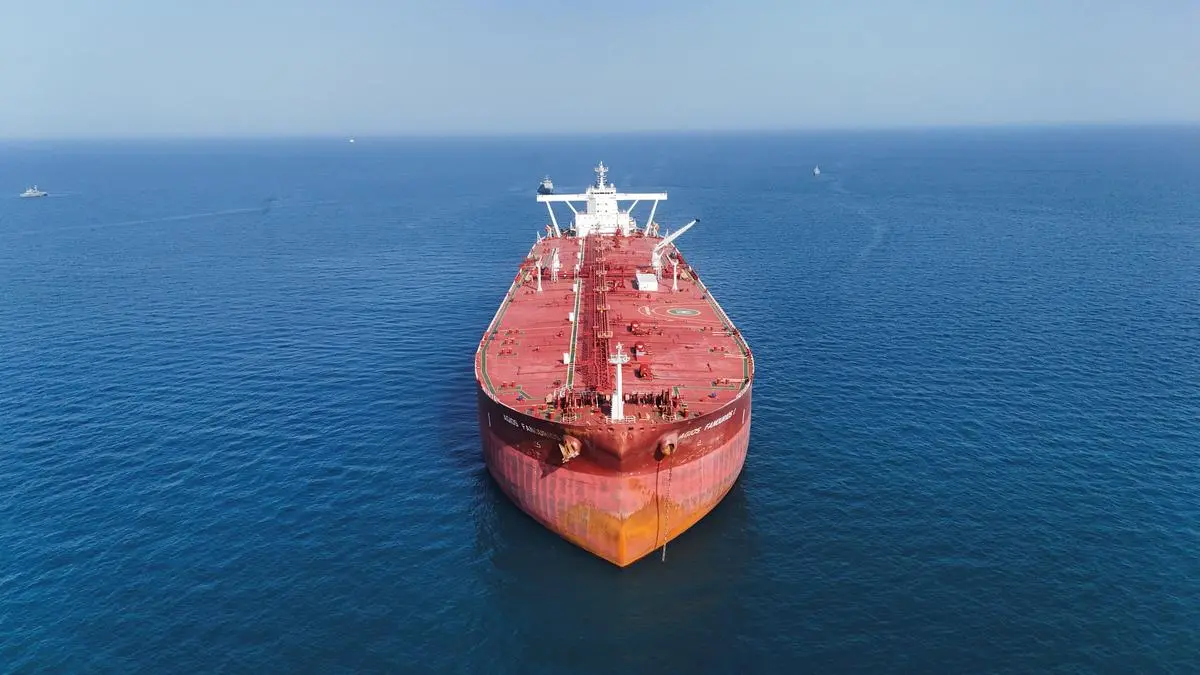
India has deployed naval task forces to escort crude oil and gas tankers through the Strait of Hormuz after Iran restricted commercial movement following tensions with the US and Israel.
| Photo Credit:
iStockphoto

With the second LPG tanker Nanda Devi docking at a Gujarat port early on Tuesday after transiting the Strait of Hormuz, the Indian Navy has stepped up efforts to secure energy shipments by deploying two naval task forces to assist and escort vessels carrying crude oil and gas through the sensitive corridor, which Iran has blocked for commercial trading following the war with the US and Israel.

Naval task forces deployed to secure energy routes

A task force means two groups of ships under orders to escort and support the movement of merchant vessels, Navy officials explained, without getting into the details of the number of maritime platforms deployed to ensure the safe passage of India-bound energy tankers.

Selective passage through Strait raises concerns

According to US Treasury Secretary Scott Bessent, Iran has allowed only some Indian and Chinese fuel tankers to pass through the Strait, which connects the Gulf of Oman with the Arabian Sea, while it has struck many others, driving up global oil prices.

India has managed an initial breakthrough, benefiting from behind-the-scenes diplomacy, but it’s trying to secure safe passage for 22 stranded vessels to overcome an energy shortage, including cooking gas.

No blanket clearance for Indian ships

External Affairs Minister S Jaishankar, in an interview with a foreign newspaper, clarified that Iran has not agreed to any “blanket arrangement”, giving nod to all Indian flag-bearing ships to cross the Strait of Hormuz. Instead, clearance is taking place ship by ship, according to the Minister.

India rules out joining US-led naval coalition

However, India is unlikely to join a naval coalition sought by US President Donald Trump to deploy warships in the Strait, the route for one-fifth of global oil shipments, to ensure the safe passage of oil and gas tankers. The Ministry of External Affairs (MEA) made it clear that no talks with the Trump administration or any other country have taken place to date on the Washington proposal to deploy warships to escort vessels through the key energy route.

Former Deputy National Security Advisor Pankaj Sharan seconded the MEA, and stated that “Trump has said that India, China and Japan are all victim countries because they import energy. I don’t think we will let the Indian Navy work under any trans-national force..”

Strategic autonomy guides naval operations

Earlier, too, the Indian Navy had refused to join a US-led coalition and preferred a “strategic autonomy”, deploying at least a dozen warships at the peak of attacks on merchant vessels in the Red Sea by Houthis more than two years ago.

Under Operation Sankalp, the Indian Navy, through its robust presence in the Red Sea and the Gulf of Aden since December 2023, reportedly responded to over 25 incidents, probed over 250 vessels, and ensured the safety of over 230 merchant ships.

Published on March 17, 2026


Source link

NPCI International expands UPI acceptance in Sri Lanka to boost cross-border payments

NPCI International expands UPI acceptance in Sri Lanka to boost cross-border payments


NPCI International Payments Limited is expanding UPI merchant acceptance in Sri Lanka to improve cross-border payment experiences for Indian tourists and support the island nation’s digital economy.

NPCI International Payments Limited, the international arm of National Payments Corporation of India (NPCI), has reaffirmed its commitment to expanding Unified Payments Interface merchant acceptance in Sri Lanka. The initiative aims to enhance cross-border payment experiences for Indian tourists, support Sri Lanka’s growing digital economy, and further strengthen the deep economic and cultural ties between India and Sri Lanka, NPCI International Payments Limited (NIPL) said in a statement on Tuesday.

UPI, India’s real-time, account-to-account payment system, enables instant and secure transactions through mobile applications.

Processing over 20 billion financial transactions monthly, it has emerged as one of the world’s most advanced digital payment infrastructures, it said.

With over 700 million UPI QR touch points across India, its open, interoperable architecture and strong security framework allows it to integrate seamlessly with international payment ecosystems, including Sri Lanka’s LankaQR infrastructure, it said.

India has consistently remained Sri Lanka’s leading source for tourism. Over 4,16,000 Indian tourists visited the island in 2024, and this number grew to 5,31,000 in 2025, accounting for the highest share of total international arrivals.

Published on March 17, 2026


Source link

As sugar mills are yet to clear ₹5,000 cr cane dues to farmers, ISMA seeks revision in minimum selling price

As sugar mills are yet to clear ₹5,000 cr cane dues to farmers, ISMA seeks revision in minimum selling price


As high as ₹4,898 crore is yet to paid by sugar mills in Maharashtra to the sugarcane farmers as of February 28 in current season, which necessitates a revision in the minimum selling price (MSP) of sugar, said an industry body.

“As the sugar season advances and reaches its penultimate phase, the industry continues to await an early upward revision of the MSP. With production costs increasing and ex-mill realisations lagging, mills are facing mounting cash-flow pressures, leading to higher cane payment arrears,” said Indian Sugar and Bio-energy Manufacturers Association (ISMA).

In Maharashtra, sugarcane arrears (amount not paid to farmers within 14 days) were ₹4,898 crore as of February 28, 2026, compared with ₹2,949 crore in the corresponding period in last season, it said in a statement. “A timely MSP revision aligned with current cost structure is crucial to restore mill viability, expedite farmer payments and maintain market stability, without any additional fiscal burden on the government,” ISMA said.

Ops on in 157

The industry body also said that India’s sugar production reached 26.21 million tonne (mt) so far in the ongoing 2025-26 season, up by 10.5 per cent from 23.72 mt in the year-ago period. The output so far has exceeded the total net production of 26.12 mt in the entire 2024-25 season (October-September).

The crushing was underway as 157 mills were in operation as on March 15, while 379 mills have closed operation.

As per the data, production in Maharashtra, the country’s largest sugar producer, rose to 9.84 mt as of March 15 from 7.87 mt year-ago. Production in Uttar Pradesh, the largest sugarcane producing state, reached 8.13 mt from 8.12 mt, while that in Karnataka it reached 4.60 mt from 3.92 mt in the said period.

ISMA said that some mills in south Karnataka are expected to resume operations during the special season from June/July to September 2026.

Published on March 17, 2026


Source link

Navi launches zero-commission digital motor insurance for cars and two-wheelers

Navi launches zero-commission digital motor insurance for cars and two-wheelers


The plans cover comprehensive, own-damage, and third-party insurance for both conventional and electric vehicles, reinforcing Navi’s digital-first strategy.

Financial services firm Navi on Tuesday announced its foray into the motor insurance segment with the launch of a fully digital, zero-commission offering for cars and two-wheelers.

The direct-to-customer product, available on the Navi app, eliminates intermediary commissions to offer competitive and transparent pricing, the company said in a statement.

The new offering provides comprehensive, own-damage, and third-party covers for both traditional and electric vehicles (EVs).

“As a digital-first, direct-to-customer insurer, we are cutting out commissions entirely, thus passing those savings directly to customers through competitive pricing,” said Vaibhav Goyal, Managing Director and CEO, Navi General Insurance.

Published on March 17, 2026


Source link

CEAT’s ₹1,300-cr Chennai plant expansion takes cumulative investment to ₹4,800 crore

CEAT’s ₹1,300-cr Chennai plant expansion takes cumulative investment to ₹4,800 crore


Jayasankar Kuruppal, Senior Vice President- Manufacturing, CEAT.
| Photo Credit:
BIJOY GHOSH

Tyre maker CEAT Ltd plans to invest a fresh ₹1,300 crore to expand passenger car radial (PCR) tyre capacity at its Chennai manufacturing facility, taking the cumulative investment at the plant to ₹4,800 crore—surpassing its original commitment of ₹4,000 crore. The company has already invested about ₹3,500 crore in the facility.

The expansion will add around 35 lakh tyres annually, increasing total PCR capacity from 95 lakh units to about 1.3–1.4 crore tyres, depending on the product mix. The enhanced capacity is expected to be operational by the first half of FY28. Civil works are likely to begin in the coming months, with equipment orders already placed, said Jayasankar Kuruppal, Senior Vice President (Manufacturing).

Located in Kanchipuram district near Chennai, the 63.4-acre facility currently produces passenger car radial tyres, truck and bus radial (TBR) tyres and two-wheeler tyres.

The plant commenced operations in February 2020 with PCR and two-wheeler tyre lines, and later added a TBR line in September 2024, expanding its product portfolio. In parallel with the PCR expansion, CEAT is also doubling TBR capacity from 5 lakh to 10 lakh tyres annually.

Women employees at CEAT tyre facility .

Women employees at CEAT tyre facility .
| Photo Credit: BIJOY GHOSH

At present, the Chennai unit produces about 20,000–22,000 passenger car tyres per day and operates at 80–85 per cent capacity utilisation. It employs around 1,500 people across three production lines, he said.

Kuruppal said that the facility has also emerged as a key export hub, with nearly 40 per cent of its PCR output shipped to markets such as Europe, the Middle East and Latin America. The company is also expanding its presence in the US market. CEAT began exports from the plant in 2017 with about 10,000 tyres per month, with volumes steadily rising since.

The plant’s location near major OEM hubs in southern India—home to companies such as Hyundai Motor Company, Renault-Nissan and Daimler AG, along with two-wheeler makers like Yamaha Motor Company, TVS Motor Company and Royal Enfield—was a key strategic factor.

Productivity in Chennai plant is about 30 per cent higher than some of its older plants, driven by newer machinery and Industry 4.0 technologies. With the latest investment, CEAT expects the Chennai plant to play a larger role in its growth strategy, catering to both domestic demand and export markets, he said.

Published on March 17, 2026


Source link

YouTube
Instagram
WhatsApp