Finding a niche in air, water and carbon

Finding a niche in air, water and carbon


BREATHE EASY. Deepak Pahwa, Chairman, Pahwa Group

It’s rather apt that one meets veteran entrepreneur Deepak Pahwa on a day when Delhi’s air quality is particularly bad. His Pahwa group of companies, which include the over 60-year-old Bry-Air, Desiccant Rotors International (DRI), DelAir and Technical Drying Services (TDS), are in the business of hi-tech air treatment and environmental control. “There’s a lot of discourse around air quality now, but not so much about indoor air quality,” says Pahwa, pointing out that it has a direct bearing on productivity.

His companies are also into energy recovery and energy savings, particularly important areas in these volatile times, when the world is exceedingly conscious about energy consumption. The products from the group cater to sectors ranging from pharmaceuticals to advanced battery manufacturing.

Pahwa animatedly talks about the latest launch from Bry-Air — a dehumidifier specially developed for the pharma industry, which uses metal organic frameworks (MOF) technology. The Nobel Prize for chemistry in 2025, he points out, was won by three scientists for MOF, which are porous materials that can trap carbon dioxide. “We had been working on this technology for 13 years and we just launched our first product incorporating MOF,” says Pahwa, explaining how, for 35 years, the world has relied on silica gel as a desiccant for dehumidification. “With MOF technology you are saving 60 per cent energy, which is a giant leap, and our product has big applications in pharmaceutical and food factories,” says Pahwa.

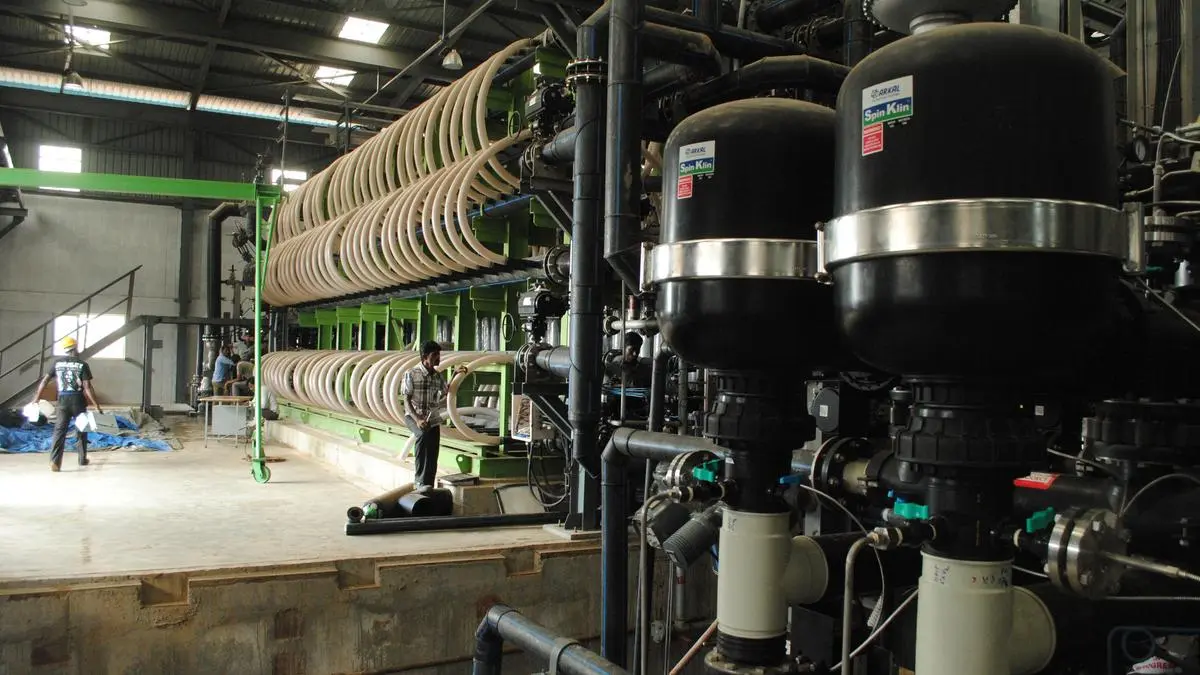
Bry-Air’s water maker

Bry-Air’s water maker

It was pure chance that Pahwa, an electrical engineer from BHU, got into the niche of environmental control products. “It’s not with a vision that we got here… but, one way or other, throughout our journey, our innovations and technology development have somehow been focused on energy saving devices. We didn’t add those labels, but in the last 15 years we found the world’s attention on it, as sustainability became a buzzword,” he says. This explains why the group is in a good space now, and its products are found everywhere in the world, from China to North America and West Asia to Latin America. “We are not so active as a group in Europe and Japan, other than that we are active everywhere around the globe,” says Pahwa.

The origins

The flagship company of the Pahwa group is Bry-Air, which has an interesting history. It was founded in 1964 by Art Harms, a former sales representative at Bryant, a division of Carrier Corporation. Harms founded Bry-Air as an offshoot of Bryant after Carrier decided to exit the dehumidification business. In 1981, Harms’ family entered into a joint venture with Pahwa to form Bry-Air Asia. “In 1999, they decided to cash out of the JV and thus we acquired the name for Asia,” says Pahwa.

But then in 2006, there was a management takeover of Bry-Air USA. “We part-funded that takeover,” says Pahwa, “and, in the process, we acquired the global name and licensed its use back to the person who bought it, with the provision and restriction that he could only use it in North America.” Last December, there was a sunset to the agreement, and now the Bry-Air business is wholly with the Pahwa group.

“We have an organisation which is very innovation driven,” says Pahwa, describing how the company has filed over 130 patents (80 granted) for adsorbent and dehumidification technologies. An innovation he is betting big on is a unit (Taaza water) that can generate water from air — moisture from air is captured, its quantity enhanced and then condensed. “We expect a pretty interesting future for it in this water-stressed world,” he says. At the moment, the units, which can produce 60 litres of water a day, are being distributed through NGOs to various small locations. Each unit is priced at ₹1.5 lakh. “We are working on larger systems designed to produce 1,000 litres an hour,” he says.

Which is the group’s hero product? “We have three products which have given us extensive recognition. One is our desiccant dehumidifiers. The second product is our energy recovery wheels. It rotates and transfers the energy. And the third product is a wheel, too — that is in the heart of every dehumidifier. In fact, the best of companies that make dehumidifiers in China buy the wheel from us in India — the core or gut is going from us,” he says.

There’s also the energy recovery devices, made by DRI, which help maintain sufficient fresh air in occupied spaces without a punishing air-conditioning load, he says. “We recover the energy from exhaust air, which is stale. And we bring in fresh air, which is treated. And the energy is transferred from one to the other. Almost every airport in West Asia uses our devices. During the Beijing Olympics, China used it extensively,” he adds.

Climate tech

Clocking revenues of around ₹1,000 crore, the group, with 1,900 employees, is working on futuristic technologies, Pahwa says. “Global warming has led to opportunities, as drastic measures are needed to reduce the carbon content in the atmosphere. People are scrambling to develop technologies for removal of carbon dioxide. Today, we are also working on very advanced levels of carbon dioxide capture technologies,” he says.

These climate mitigating technologies, he says, have applications in industries like cement factories, which emit a lot of carbon. “But we don’t want to get into the front end of that rat race — there are many start-ups there with sustainability funds investing in them. We are working on the core or the heart of what they will need.”

More Like This

Published on March 16, 2026


Source link

CAFE-3 norms: Small cars face steep price hikes as PMO calls meeting to finalise draft proposals

CAFE-3 norms: Small cars face steep price hikes as PMO calls meeting to finalise draft proposals


Government weighs CAFE-3 framework while industry raises affordability concerns over tougher small car emission norms
| Photo Credit:
BABU

The Prime Minister’s Office (PMO) is set to finalise the draft proposals for the next phase of Corporate Average Fuel Efficiency (CAFE-3) norms. A meeting has been convened to give final touches to the proposals by the Principal Secretary in the PMO, Shaktikanta Das, on Monday.

While an inter-ministerial group submitted a nearly finalised draft to PMO Advisor Tarun Kapoor on February 25, sources indicated that a more detailed presentation has been requested for Monday’s meeting.

Sources aware of the developments told businessline that representatives from the Bureau of Energy Efficiency (BEE) under the Ministry of Power (MoP), the Ministry of Road Transport & Highways (MoRTH), the Ministry of Heavy Industries (MHI) and the Ministry of Petroleum and Natural Gas (MoPNG) will be part of this high-level meeting at the PMO where the ongoing debate over small and big cars is expected to take centrestage once again.

This time, the proposals consider two approaches for small cars: a technology derogation allowing up to 9g CO2/kg of emissions at a cost of ₹15,000 for FY2028-30, or a more stringent approach costing between ₹32,000 and ₹40,000 starting in FY2031-32, an official privy to the details told businessline.

The BEE, in September 2025, released a revised draft of the CAFE-3 standards for four-wheelers, which was expected to come into effect from April 1, 2027, until March 31, 2032. But there have been revisions since then, especially concerning small cars.

In the September, 2025 draft, the slope (as per formula) was set at 0.002 litres/100km per kg with a reference weight of 1,170kg. But, in the revised draft, the slope has been lowered to 0.00154 litres/ 100km per kg, further declining to 0.00128 litres/ 100km per kg in 2031-32. But the reference weight is updated to 1,229kg, which, according to experts, does not significantly alter the outcome.

In its upcoming submission, the PMO will review the added differential cost metrics, which outline the financial impact of implementing various CO2 mitigation technologies.

However, industry veterans argue that these proposals may mislead the PMO by introducing stringent norms for small cars, a regulatory approach that is not followed in developed markets such as Europe, China, Japan, or South Korea.

“The differential cost of ₹15,000 would translate to nearly ₹50,000-60,000 per car at the showroom. That would be passed on to the customers. That affects affordability. Prices of small cars could rise again to the pre-GST 2.0 reforms era ,” said an industry veteran.

He added that this logic brings the proposed standards ‘back to square one,’ effectively penalising small, entry-level cars with stringent norms while allowing larger, fuel-heavy utility vehicles to benefit under the CAFE-3 framework.

Published on March 15, 2026


Source link

Samsung Union issues strike notice; conciliation talks on Monday over 27 workers’ termination

Samsung Union issues strike notice; conciliation talks on Monday over 27 workers’ termination


In the strike notice, the union urged the company to reinstate the 27 workers whose services were terminated and provide them employment again.

Samsung India Workers Union (CITU) at the Samsung factory in Sriperumbudur has issued a strike notice on February 13 stating that it would resort to a strike after 14 days if the termination of 27 workers is not revoked.

Following the notice, A Yasmin Begum, Additional Commissioner of Labour at the Office of the Commissioner of Labour, has directed both Samsung India Electronics Private Limited and the union to appear for a conciliation meeting on March 16.

In the strike notice, the union urged the company to reinstate the 27 workers whose services were terminated and provide them employment again. It also demanded that the management withdraw all disciplinary actions taken against union members.

The 27 workers have been under suspension since March 7, 2025 due to pending disciplinary proceedings.

Published on March 15, 2026


Source link

AEPC Chairman urges TN govt to include apparel export industry in 20% commercial LPG cylinder allotment

AEPC Chairman urges TN govt to include apparel export industry in 20% commercial LPG cylinder allotment


Apparel Export Promotion Council (AEPC) Chairman A Sakthivel
| Photo Credit:
cueapi

Apparel Export Promotion Council (AEPC) Chairman A Sakthivel, has urged the Tamil Nadu government to include the apparel export Industry within the 20 per cent commercial LPG cylinder allotment permitted during the current LPG shortage. This will help the sector, which employs lakhs of employees, to continue its operations without disruption during this challenging period.

In a representation addressed to R Sakkarapani, Minister for Food, Civil Supplies and Consumer Protection, and TRB Rajaa, Minister for Industries, Sakthivel highlighted the urgent need to ensure uninterrupted LPG supply to the apparel export industry, says a release from APEC.

LPG is a critical fuel used extensively in garment manufacturing, especially in processing segments such as dyeing, washing, compacting and finishing units that form the backbone of the apparel export ecosystem, Sakthivel said in the release.

AEPC has requested the State government to consider, including the apparel export Industry within the 20 per cent commercial LPG cylinder allotment so that industries may receive at least a limited but essential supply during this critical period.

Vital role

Sakthivel pointed out that LPG plays a vital role in sustaining the processing operations of the industry. If the present shortage continues, many processing units may be forced to suspend operations, which could have a cascading effect on garment manufacturing units and export production.

The industry provides direct and indirect employment to lakhs of workers across Tamil Nadu. If the situation persists, many factories may be forced to temporarily shut down, which would severely affect the livelihood of workers and their families, he said.

Published on March 15, 2026


Source link

मिडिल ईस्ट तनाव के बीच सरकार की तैयारी, पेट्रोल-डीजल की कीमतों को काबू में रखने का मास्टर प्लान

मिडिल ईस्ट तनाव के बीच सरकार की तैयारी, पेट्रोल-डीजल की कीमतों को काबू में रखने का मास्टर प्लान


Show Quick Read

Key points generated by AI, verified by newsroom

Government Fuel Plan: मिडिल ईस्ट में पैदा हुए हालात और होर्मुज स्ट्रेट के बंद होने के कारण ऊर्जा संसाधनों में कमी के संकेतों के बीच भारत सरकार लोगों को राहत देने की योजना बना रही है. सरकारी पेट्रोलियम मार्केटिंग कंपनियां फिलहाल ईंधन की खुदरा कीमतें नहीं बढ़ा रही हैं, जिससे उन पर वित्तीय दबाव बढ़ रहा है. इस घाटे को कम करने के लिए सरकार रिफाइनरीज को पेट्रोल और डीजल की इंपोर्टेड रेट्स से कम कीमत पर देने की योजना बना रही है. 

अगर ऐसा फैसला होता है तो एमआरपीएल, सीपीसीएल और एचएमएल जैसी सिंगल रिफाइनरी कंपनियों पर इसका नकारात्मक असर पड़ सकता है. आइए जानते हैं, केंद्र सरकार के इस प्लान के बारे में….

रिफाइनरी ट्रांसफर प्राइस में बदलाव पर विचार

मिली जानकारी के अनुसार पेट्रोलियम मार्केटिंग कंपनियां रिफाइनरी ट्रांसफर प्राइस (आरटीपी) को सीमित करने या उसमें कुछ छूट तय करने जैसे विकल्पों पर विचार कर रही हैं. आरटीपी वह आंतरिक कीमत होती है जिस पर रिफाइनरियां अपने ही मार्केटिंग डिवीजन को पेट्रोल और डीजल बेचती हैं.

इस कदम का उद्देश्य यह है कि रिफाइनरियों को ईंधन के लिए आयात के बराबर पड़ने वाली लागत से कम भुगतान किया जाए. अगर अंतरराष्ट्रीय बाजार में कच्चे तेल की कीमतें ऊंची बनी रहती हैं, तो रिफाइनरियां बढ़ी हुई लागत का पूरा बोझ आरटीपी के जरिए आगे नहीं बढ़ा पाएंगी और उन्हें इसका कुछ हिस्सा खुद ही उठाना पड़ सकता है. जिससे इन कंपनियों पर आर्थिक बोझ बढ़ने की संभावना है. 

निजी रिफाइनरियों पर भी पड़ सकता है असर

मीडिया रिपोर्ट से मिली जानकारी के अनुसार, अगर आरटीपी से जुड़ा प्रस्ताव निजी रिफाइनरी कंपनियों पर भी लागू किया गया, तो इसका असर नायरा एनर्जी और रिलायंस इंडस्ट्रीज लिमिटेड जैसी कंपनियों पर भी पड़ सकता है.

दरअसल ये कंपनियां अपने पेट्रोल और डीजल उत्पादन का बड़ा हिस्सा तेल कंपनियों को सप्लाई करती हैं. देश में एक लाख से अधिक पेट्रोल पंप में से लगभग 90 प्रतिशत का संचालन इन्हीं सरकारी तेल विपणन कंपनियों के पास है. इसलिए खरीद की शर्तों में बदलाव होने पर निजी रिफाइनरियों के कारोबार पर भी प्रभाव पड़ सकता है.

यह भी पढ़ें: मिडिल ईस्ट तनाव ने बिगाड़ा अंडे का फंडा, हुआ कुछ ऐसा कि खाने वालों की हो गई बल्ले-बल्ले…..


Source link

मिडिल ईस्ट तनाव ने बिगाड़ा अंडे का फंडा, हुआ कुछ ऐसा कि खाने वालों की हो गई बल्ले-बल्ले…..

मिडिल ईस्ट तनाव ने बिगाड़ा अंडे का फंडा, हुआ कुछ ऐसा कि खाने वालों की हो गई बल्ले-बल्ले…..


Show Quick Read

Key points generated by AI, verified by newsroom

Iran Israel Conflict Impact on Egg Prices: पश्चिम एशिया में ईरान और इजरायल के बीच बढ़ते तनाव का असर अब भारत के खाद्य कारोबार पर भी दिखने लगा है. हाल के दिनों में देश में अंडों की कीमतों में तेज गिरावट दर्ज की गई है. इसके पीछे की वजह यह बताई जा रही है कि खाड़ी देशों को होने वाला अंडों का निर्यात प्रभावित हुआ है.

दरअसल, क्षेत्र में जारी संघर्ष के कारण वहां की मांग और सप्लाई चेन दोनों पर असर पड़ा है. जिसका सीधा प्रभाव भारत के पोल्ट्री बाजार और अंडों के दाम पर दिखाई दे रहा है. आइए जानते हैं, आखिर इस लड़ाई ने कैसे बिगाड़ा अंडे का फंडा…

अंडों के कीमतों में आई नरमी

देश के कई बाजारों में अंडों की कीमतों में हाल के दिनों में गिरावट देखी जा रही है. रिपोर्ट के मुताबिक बेंगलूरु के थोक बाजार में अंडे की कीमत पहले करीब 7 रुपये प्रति पीस थी, जो घटकर लगभग 5 रुपये तक आ गई है. 100 अंडों वाला एक ट्रे करीब 500 रुपये में बिक रहा है. 

खुदरा बाजार में भी कीमतों में गिरावट देखने को मिल रही है. जहां पहले एक अंडे की कीमत 8 से 9 रुपये थी, वहीं अब इसकी कीमत करीब 5.50 से 6 रुपये के बीच पहुंच गई है.

निर्यात प्रभावित होने से दाम पर दबाव

निर्यात आंकड़ों की बात करें तो, देश से हर रोज लगभग 1 करोड़ अंडे खाड़ी देशों को भेजे जाते थे. इन अंडों के मुख्य खरीदार संयुक्त अरब अमीरात (UAE), ओमान, कतर और बहरीन जैसे देश रहे हैं.

लेकिन हाल की सुरक्षा चिंताओं और परिवहन में आ रही दिक्कतों के कारण इन देशों को होने वाला निर्यात काफी हद तक प्रभावित हो गया है. नतीजतन, जो अंडे विदेश भेजे जाने थे, वे अब घरेलू बाजार में आ रहे हैं. जिससे सप्लाई बढ़ गई है और कीमतों पर दबाव देखने को मिला.  

इसके साथ ही रमजान के दौरान खाड़ी देशों में खाने-पीने की आदतों में बदलाव भी देखा जाता है. अमूमन अंडों की मांग कम हो जाती है. मांग कम होने और निर्यात घटने के कारण अंडों की कीमतों में कमी देखने को मिली है.  

कीमत गिरने से पोल्ट्री किसानों की चिंता बढ़ी

अंडों के दाम घटने का सीधा असर पोल्ट्री कारोबार से जुड़े किसानों पर पड़ रहा है. खाड़ी देशों को होने वाला निर्यात रुकने से उनकी आमदनी पर दबाव बढ़ गया है. क्योंकि घरेलू बाजार में मिलने वाली कीमतें विदेशों में मिलने वाले दाम की बराबरी नहीं कर पा रही हैं.

बाजार से जुड़े जानकारों का कहना है कि जब तक खाड़ी देशों के साथ निर्यात और परिवहन की स्थिति सामान्य नहीं होती, तब तक भारत में अंडों की कीमतों में ज्यादा सुधार की उम्मीद कम है.  

यह भी पढ़ें: Stock Market Outlook: शेयर बाजार में बढ़ सकता है उतार-चढ़ाव, वैश्विक संकेतों और कच्चे तेल की कीमतों पर रहेगी नजर..


Source link

YouTube
Instagram
WhatsApp