Banks’ log robust growth in deposits and advances in Feb-end fortnight

Banks’ log robust growth in deposits and advances in Feb-end fortnight


As at February-end 2026, credit growth and deposit growth stood at 15.19 per cent and 13.03 per cent, respectively.
| Photo Credit:
Andrii Yalanskyi

Banks have logged a robust growth in deposits and advances in the fortnight ended February 28, 2026, reversing the declining trend of the preceding fortnight.

In the reporting fortnight, deposits and advances of all Scheduled Banks jumped ₹4,20,091 crore and ₹3,24,432 crore, respectively, per RBI’s Scheduled Banks’ Statement of Position in India.

In the preceding fortnight, deposits and advances of all Scheduled Banks had declined ₹1,03,192 crore and ₹35,440 crore, respectively.

Madan Sabnavis, Chief Economist, Bank of Baroda, observed that since the equity markets are not doing well, reverse migration of funds into deposits is happening. Further, Banks are raising bulk deposits to support credit growth.

He attributed the pick up credit to the corporate loan sanctions pipeline actually materialising.

Sanjay Agarwal, Senior Director, CareEdge Ratings, noted that with yields in the bond markets hardening, India Inc is finding borrowing from Banks relatively cheaper.

Banking expert V Viswanathan noted that deposit accretion during the reporting fortnight is divided between CASA (current account, savings account) and term deposits almost equally.

“When it comes to the increase in CASA deposits, States, where elections are due this year, could have seen increased spending by Governments before the election date is announced.

“Another reason for increase in CASA and term deposits is that the money withdrawn from stocks and mutual funds is finding its way to banks as deposits under both categories. Increase in Certificates of Deposit for credit deployment might have also contributed to Term Deposit increase,” he said.

In respect of advances, Viswanathan said the increase in corporate advances, which were committed/ sanctioned earlier might have been extended by banks. Retail credit could not have contributed to such an increase in overall credit in a fortnight.

Credit growth continues to surpass deposit growth on year-on-year basis. As at February-end 2026, credit growth and deposit growth stood at 15.19 per cent and 13.03 per cent, respectively.

Published on March 13, 2026


Source link

ED freezes 90 bank accounts in raids at 19 places across Haryana, Chandigarh, Punjab, Bengaluru in ₹597 crore money laundering case

ED freezes 90 bank accounts in raids at 19 places across Haryana, Chandigarh, Punjab, Bengaluru in ₹597 crore money laundering case


The Enforcement Directorate (ED) on Friday said it has frozen 90 bank accounts and incriminating material in the form of digital as well as documentary evidence during searches carried out on March 12 at 19 premises across Chandigarh, Haryana, Punjab and Bengaluru.

The action was part of the raids conducted in Chandigarh, Punjab’s Mohali, Haryana’s Panchkula and Gurgaon and Karnataka capital Bengaluru in connection with the IDFC First Bank Scam involving embezzlement of public funds amounting to ₹597 crore pertaining to the Haryana government, Chandigarh Municipal Corporation and other government accounts.

ED said, “The amount of ₹597 crore was to be kept as a fixed deposit with the bank; however, the accused persons diverted these government funds without authorisation.” The search operations covered former bank employees, namely Ribhav Rishi and Abhay Kumar, their family members, beneficiary shell entities, namely Swastik Desh Projects, Capco Fintech Services and Maa Vaibhav Laxmi Interiors, SRR Planning Gurus Private Limited, jewellers, namely Sawan Jewellers and real estate developers like Vikram Wadhwa and his business entities.

ED initiated an investigation under PMLA, 2002, based on an FIR registered by the State Vigilance and Anti-Corruption Bureau, Panchkula, in February 2026, in relation to a mismatch of balances in the bank account of the Development and Panchayat Department, Haryana, held with IDFC Bank and AU Small Finance Bank. “Searches have revealed that the public funds embezzled by the accused persons have been routed and layered across multiple shell entities. The modus operandi involves the incorporation of a shell entity, Swastik Desh Projects Pvt Ltd and huge government funds were diverted to this account initially. The partners of the Swastik Desh are Swati Singla and Abhishek Singla. Thereafter, the majority of the funds have been channelised through bank accounts of jewellers to create an illusion of gold purchase through bogus billing,” said the agency.

“The scam was perpetuated over the last year, approximately, through the assistance of the ex-bank employees. Ribhav Rishi, who is one of the ex-bank employees of IDFC First bank had utilised the various shell companies for siphoning off the bank funds. He resigned from IDFC First Bank in June 2025. Some of the Proceeds of Crime were even dissipated to the bank accounts of Ribhav Rishi and Divya Arora w/o Ribhav Rishi.”

Besides, ED said, a significant amount has also been siphoned off by Vikram Wadhwa, who is a hotelier and real estate developer running various projects at Mohali. “Vikram Wadhwa, who has directly received the Proceeds of Crime in his bank account, has subsequently transferred the funds to the various real estate concerns like Prisma Residency LLP, Kinspire Realty LLP and Martell Buildwell LLP. All these entities were covered in the search, and documents related to real estate investment were also seized.”

“It was found that he had utilised the services of the jewellers, Sawan Jewellers, Capco Fintech Services (Bhupinder Singh) and Klaita Jewellers and shell entities like Swastik Desh projects for siphoning off the bank funds. Vikram Wadhwa could not be located during the search operations, and he has been absconding since the fraud came to light,” pointed the agency.

Investigations also revealed that substantial funds received by the entity Chandigarh Mega Store were also layered and siphoned off by the accused persons, said the ED, adding “the partners of the store, Mohit Goyal was also covered during the search and evidences were recovered related to siphoning off the funds.” The searches were conducted at other entities like Maa Vaibhav Laxmi Interiors and SRR Planning Gurus Private Ltd, and it was found that these entities had directly received the funds from the government accounts and subsequently layered and dissipated to other shell entities, which are under investigation, it added.

Published on March 13, 2026


Source link

Markets log worst weekly rout in 15 months as war clouds darken

Markets log worst weekly rout in 15 months as war clouds darken


Markets capped their worst week in over 15 months on Friday, with investors losing approximately ₹20 lakh crore in market capitalisation across five sessions as the US-Iran conflict drove crude oil past $100 per barrel and pushed the rupee to an all-time low.

The BSE Sensex plunged 1,470.50 points, or 1.93 per cent, to close at 74,563.92, while the Nifty 50 fell 488.05 points, or 2.06 per cent, to settle at 23,151.10 — a fresh 10-month low. The BSE market cap dropped to ₹430.02 lakh crore on Friday alone, a single-session wipe-out of ₹9.70 lakh crore. For the week, the Sensex shed 7,375 points, or 5.5 per cent, and the Nifty lost 1,300 points, or 5.3 per cent — marking Nifty’s worst monthly fall since the pandemic crash of March 2020.

Sectoral damage was sweeping. Nifty Bank fell 7 per cent; Nifty Auto plunged over 10.5 per cent, its worst weekly performance since March 2020; Nifty Midcap shed 4.6 per cent; and Nifty SmallCap declined 3.65 per cent. On the BSE, 3,439 stocks declined against just 858 advances; 563 stocks hit 52-week lows. Friday’s Nifty 50 had only three gainers: Tata Consumer Products (+2.29 per cent to ₹1,082), HUL (+1.17 per cent to ₹2,161.80), and Bharti Airtel (+0.09 per cent to ₹1,803). Losers were led by L&T (-7.38 per cent to ₹3,445), Hindalco (-6.07 per cent to ₹910.90), Tata Steel (-5.41 per cent to ₹183.01), JSW Steel (-4.49 per cent to ₹1,120), and Grasim (-3.86 per cent to ₹2,570).

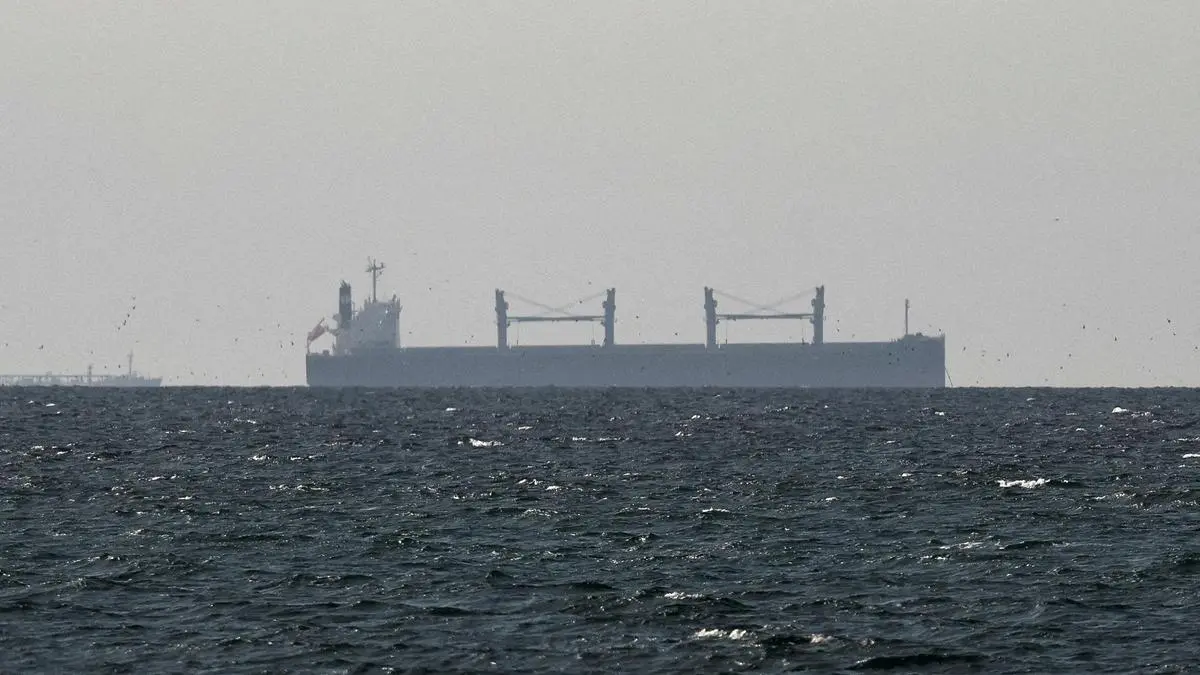
Three developments shook the markets. The Strait of Hormuz closure sent Brent crude surging, a critical blow for India, which imports nearly 88 per cent of its oil. The rupee hit an all-time low of ₹92.48 per dollar amid relentless FII outflows, even as the RBI intervened by selling dollars. The Trump administration’s trade investigation into India has added a third layer of uncertainty. The India VIX climbed above 22, up over 13 per cent for the week.

Vikram Kasat, Head Advisory at PL Capital, said the selloff appeared more sentiment-driven than fundamental. …”The correction appears more sentiment-driven rather than a reflection of weakening domestic fundamentals. Any meaningful correction should be seen as an opportunity for long-term investors to gradually accumulate quality large-caps and sector leaders with strong earnings visibility.”…

Dilip Parmar, Senior Research Analyst at HDFC Securities, pointed out that the rupee’s pressure isn’t going away soon. …”Surging global crude oil prices and sustained foreign fund outflows amid heightened risk aversion have kept the rupee under significant pressure,”… with immediate resistance seen at 92.50–92.70.

N. ArunaGiri, CEO of TrustLine Holdings, noted that history suggests the worst may be close. …”Almost without exception, in most crises, the bulk of the price damage tends to happen within the first few days of the outbreak of the conflict.”… He advised a selective, gradual approach to deploying capital in the broader markets.

Technically, the Nifty’s 14-period RSI has slipped to around 24, deep in oversold territory. Nagaraj Shetti of HDFC Securities warned that without a bounce from near 22,900 next week, further weakness toward 22,500–22,000 cannot be ruled out. Immediate resistance sits at 23,500. Amol Athawale of Kotak Securities added that the weak formation is likely to persist below 23,400 on the Nifty and 75,000 on the Sensex, with potential downside toward 22,800 and 73,600, respectively. The market direction next week will hinge on US-Iran developments, crude oil trajectory, and the pace of FII outflows — with the rupee and Bank Nifty’s 53,500 support the two key levels to watch.

Published on March 13, 2026


Source link

Technology adoption and improved seed varieties boost India’s wheat & rice production

Technology adoption and improved seed varieties boost India’s wheat & rice production


India’s wheat and rice production has increased over the last five years due to the adoption of various production and protection technologies to address the challenges of various biotic and abiotic stresses. These include development of high-yielding climate-resilient varieties, cost-effective and efficient pre and post-harvest technologies, according to Bhagirath Choudhary, Union Minister of State for Agriculture and Farmers’ Welfare.

In a written reply to a question in the Rajya Sabha on Friday, he said India’s wheat production was estimated at 117.95 million tonnes (mt) during 2024-25, 4.65 mt higher than 113.29 mt produced in the previous year. India’s wheat production was at 109.59 lt in 2020-21.

Total rice production was estimated at 150.18 mt during 2024-25, 12.36 mt higher than 137.83 mt the previous year. India’s rice production was at 124.37 mt in 2020-21.

As of February 16, the total stock of wheat and rice available in the central pool was 24.83 mt and 35.26 mt, respectively, against foodgrain stocking norms of 13.8 mt for wheat and 7.61 mt for rice.

“The increase in the production of both wheat and rice during 2024-25 is attributed to both expanded area coverage and improved productivity during last few years. Also, the increase in production is due to adoption of developed various production and protection technologies to address the challenges of various biotic and abiotic stresses. These include development of high-yielding climate resilient varieties, cost-effective and efficient pre- and post-harvest technologies, etc,” he said.

Iran impact on exports

To a question on the impact of Iran uncertainties on Basmati rice exports, Piyush Goyal, Union Commerce and Industry Minister, said basmati exports to Iran grew in value by 11.57 per cent (in rupee terms) and by 26.1 per cent in volume terms up to January 2026, indicating healthy and steady basmati trade to Iran.

With the commencement of conflict West Asia on February 28, stakeholders, including of basmati rice, have reported disruption of maritime and air cargo routes through West Asia, increase in freight costs due to re-routing and war-risk surcharges, cargo accumulation at ports and logistics hubs, and financial stress arising from longer transit cycles.

He said the government has been closely monitoring the evolving geopolitical situation in West Asia and the Gulf region and has taken measures to reduce the impact of the disruption on India’s exports and to safeguard livelihoods.

Empowering cotton growers

To a separate question, Bhagirath Choudhary said the Cotton Corporation of India Ltd (CCI) launched a mobile application, Kapas Kisan, on September 1, 2025, to empower cotton farmers. The sale of cotton by farmers under MSP operations has been mandated through this application only. Through the app, farmers can avail facilities such as self-registration and slot booking for selling their cotton under MSP on a four-week rolling basis, thereby enhancing flexibility, reducing waiting time, and preventing congestion at procurement centres. Accordingly, CCI has been procuring cotton only through slot booking via the Kapas Kisan app. So far, about 42 lakh cotton farmers have been registered on Kapas Kisan Mobile app, he said.

Rubber imports

In a written reply to a question on rubber imports, Jitin Prasada, Union Minister of State for Commerce and Industry, said the import of natural rubber was 5,50,918 tonnes in 2024-25 as against 5,46,369 tonnes in 2021-22, with no significant increase overall in this period.

The import of natural rubber was at 3,99,535 tonnes during April-January 2025-26 against 4,85,666 tonnes during the same period of 2024-25, showing a decline of 17.73 per cent.

He said the prices of natural rubber are determined in the open market based on demand and supply. International prices also influence domestic prices. The average price of natural rubber (RSS 4 grade) has been ₹193.77 per kg in Kottayam, Kerala, during the period April to January 2025-26 compared to an average price of ₹170.77 per kg for the period 2021-22 to 2024-25.

Soil health card

To a question on soil health cards (SHCs), Bhagirath Choudhary said 1.73 crore SHCs have been issued to the farmers during 2022-23 to 2024-25.

Referring to a 2025 survey by NITI Aayog, he said SHC has contributed to correcting fertilizer imbalance (by reducing the excessive use of urea) and improving productivity. The scheme has also helped in achieving the broader objectives of integrated nutrient management. About 68.5 per cent of the surveyed farmers reported a clear improvement in soil health after using natural inputs, while 25.7 per cent of farmers reported marginal improvement, he said.

Published on March 13, 2026


Source link

ईरान वॉर के बीच क्या रुक गई है भारत-यूएस डील? जानें दावे की सच्चाई

ईरान वॉर के बीच क्या रुक गई है भारत-यूएस डील? जानें दावे की सच्चाई


Show Quick Read

Key points generated by AI, verified by newsroom

India US Trade Deal: केंद्र सरकार ने शुक्रवार को उस रिपोर्ट को खारिज कर दिया, जिसमें दावा किया गया था कि अमेरिका के साथ द्विपक्षीय ट्रेड डील को रोक दिया गया है या उसमें देरी की जा रही है. Ministry of Commerce and Industry की ओर से जारी बयान में कहा गया कि दोनों देशों के बीच इस समझौते को लेकर बातचीत जारी है. मंत्रालय ने स्पष्ट किया कि मीडिया में आई कुछ रिपोर्टों में ट्रेड डील को लेकर जो दावे किए गए हैं, वे सही नहीं हैं.

ट्रेड डील पर सरकार का बयान

सरकार की यह सफाई ऐसे समय आई है जब समाचार एजेंसी Reuters की एक रिपोर्ट में कहा गया था कि भारत टैरिफ नीति को लेकर अगले कुछ महीनों तक ‘वेट एंड वॉच’ की रणनीति अपना सकता है और अमेरिका के साथ ट्रेड डील को टाल सकता है.

रिपोर्ट में यह भी कहा गया था कि फरवरी में Supreme Court of the United States द्वारा अमेरिकी टैरिफ को खत्म करने के फैसले के बाद इस समझौते की रफ्तार धीमी पड़ गई. इसके बाद से दोनों देशों के बीच इस मुद्दे पर कोई बड़ी प्रगति नहीं हुई, क्योंकि वॉशिंगटन का ध्यान फिलहाल ईरान से जुड़े तनाव पर केंद्रित है.

रॉयटर्स ने चार सरकारी अधिकारियों के हवाले से बताया था कि यह ट्रेड डील अगले कई महीनों तक टल सकती है. हालांकि, वाणिज्य मंत्रालय ने इन दावों को खारिज करते हुए कहा कि दोनों पक्ष लगातार बातचीत कर रहे हैं और समझौते की दिशा में प्रक्रिया जारी है.

ट्रंप ने शुरू कराई जांच

ट्रेड डील से जुड़ी यह स्थिति ऐसे समय सामने आई है जब अमेरिका के राष्ट्रपति Donald Trump ने भारत और चीन सहित करीब 60 देशों के खिलाफ कथित “अनफेयर ट्रेड प्रैक्टिस” की जांच फिर से शुरू कर दी है. इस जांच का फोकस आयात में कथित फोर्स्ड लेबर के इस्तेमाल पर रहेगा.

इसके साथ ही अमेरिका ने 16 प्रमुख व्यापारिक साझेदार देशों के खिलाफ अतिरिक्त औद्योगिक क्षमता (Excess Industrial Capacity) से जुड़े मामलों की भी जांच शुरू कर दी है.

ये भी पढ़ें: ईरान वॉर के बीच स्टॉक मार्केट में हाहाकार, 1471 अंक गिरकर सेंसेक्स बंद, जानें कब-कब बड़ी गिरावट


Source link

ईरान वॉर के बीच स्टॉक मार्केट में हाहाकार, 1471 अंक गिरकर सेंसेक्स बंद, जानें कब-कब बड़ी गिरावट

ईरान वॉर के बीच स्टॉक मार्केट में हाहाकार, 1471 अंक गिरकर सेंसेक्स बंद, जानें कब-कब बड़ी गिरावट


Stock Market News: मिडिल ईस्ट में बढ़ते तनाव का असर अब भारतीय शेयर बाजार पर भी साफ दिखाई दे रहा है. भारी बिकवाली और कच्चे तेल की कीमतों में तेज उछाल के कारण हफ्ते के आखिरी कारोबारी दिन शुक्रवार, 13 मार्च 2026 को बाजार में बड़ी गिरावट दर्ज की गई. S&P BSE Sensex 1,470.50 अंक गिरकर 74,563.92 के स्तर पर बंद हुआ, जबकि NSE Nifty 50 488.05 अंक लुढ़ककर 23,151.10 के स्तर पर आ गया. सबसे ज्यादा दबाव ऑटो और मेटल शेयरों पर देखने को मिला, क्योंकि सप्लाई सीमित होने और इनपुट लागत बढ़ने से कंपनियों के मुनाफे पर असर पड़ने की आशंका बढ़ गई है.

कब-कब आई ऐसी बड़ी गिरावट

ईरान युद्ध का असर
मिडिल ईस्ट में तनाव 28 मार्च से बढ़ना शुरू हुआ और तब से भारतीय शेयर बाजार में लगातार गिरावट देखी जा रही है. 27 फरवरी को S&P BSE Sensex 81,287 के स्तर पर था, जो अब गिरकर करीब 74,500 के आसपास आ गया है. यानी इस दौरान बाजार में करीब 6,787 अंकों की गिरावट दर्ज की गई.

9 मार्च को ईरान से जुड़े तनाव के कारण सेंसेक्स इंट्राडे में करीब 2,500 अंक तक गिर गया था और लगभग 3 प्रतिशत की गिरावट के साथ 76,424 के स्तर पर पहुंच गया था. वहीं NSE Nifty 50 भी करीब 750 अंक टूटकर 23,697 के स्तर पर आ गया था.

अमेरिकी टैरिफ का असर
इससे पहले 7 अप्रैल 2025 को अमेरिका द्वारा ऊंचे टैरिफ लगाए जाने के बाद भी बाजार में भारी गिरावट देखी गई थी. उस दिन S&P BSE Sensex गिरकर 73,137.9 के स्तर तक पहुंच गया था.

ईरान वॉर के बीच स्टॉक मार्केट में हाहाकार, 1471 अंक गिरकर सेंसेक्स बंद, जानें कब-कब बड़ी गिरावट

2024 लोकसभा चुनाव के नतीजे
लोकसभा चुनाव 2024 के परिणाम आने के बाद भी बाजार में भारी गिरावट दर्ज की गई थी. उस समय सेंसेक्स करीब 5.74 प्रतिशत और NSE Nifty 50 लगभग 5.93 प्रतिशत तक गिर गया था. कुछ ही घंटों में निवेशकों के लगभग 31 लाख करोड़ रुपये डूब गए थे.

हिंडनबर्ग रिपोर्ट
हिंडनबर्ग की रिपोर्ट आने के बाद भी भारतीय बाजार में बड़ी गिरावट देखी गई थी, जिससे निवेशकों में घबराहट का माहौल बन गया था.

कोरोना महामारी का असर
23 मार्च 2020 को कोरोना महामारी के दौरान भारतीय शेयर बाजार में ऐतिहासिक गिरावट दर्ज की गई थी. उस दिन S&P BSE Sensex 3,935 अंक यानी 13.15 प्रतिशत और NSE Nifty 50 1,135 अंक यानी 12.98 प्रतिशत गिर गया था. जनवरी से मार्च 2020 के बीच बाजार ने अपनी करीब 38 प्रतिशत वैल्यू खो दी थी.

नोटबंदी का असर
नवंबर 2016 में नोटबंदी के ऐलान के बाद भी बाजार में बड़ी गिरावट आई थी. 9 नवंबर 2016 को S&P BSE Sensex 1,689 अंक यानी 6.12 प्रतिशत गिरकर 26,902 के स्तर पर बंद हुआ था, जबकि NSE Nifty 50 541 अंक यानी 6.33 प्रतिशत गिरकर 8,002 के स्तर पर आ गया था. मिडिल ईस्ट में जारी तनाव और कच्चे तेल की कीमतों में उछाल ने एक बार फिर निवेशकों की चिंता बढ़ा दी है और बाजार में अस्थिरता का माहौल बना हुआ है.

डिस्क्लेमर: (यहां मुहैया जानकारी सिर्फ़ सूचना हेतु दी जा रही है. यहां बताना जरूरी है कि मार्केट में निवेश बाजार जोखिमों के अधीन है. निवेशक के तौर पर पैसा लगाने से पहले हमेशा एक्सपर्ट से सलाह लें. ABPLive.com की तरफ से किसी को भी पैसा लगाने की यहां कभी भी सलाह नहीं दी जाती है.)


Source link

YouTube
Instagram
WhatsApp