Invoices financed on RXIL’s platform jumps 51% to ₹1,21,105 cr in FY26

Invoices financed on RXIL’s platform jumps 51% to ₹1,21,105 cr in FY26


Receivables Exchange of India Ltd (RXIL) on Friday said it achieved a total throughput (invoices financed) of ₹1,21,105 crore in FY26, registering a 51 per cent growth.

In the process, the cumulative value of invoices financed on RXIL’s Trade Receivables Discounting System (TReDS) platform since inception (January 2017) has crossed the ₹3 lakh crore milestone, a company statement said.

RXIL has onboarded 72,000+ MSMEs and 3,400+ corporate buyers since inception, and facilitated the financing of over 1.2 crore invoices, it added.

The TreDS platform enables MSME suppliers to convert their approved receivables into cash without collateral in under 24 hours, through a transparent multi-financier bidding mechanism. RXIL’s promoter institutions are: SIDBI, NSE, State Bank of India, ICICI Bank, and YES Bank.

Manoj Mittal, CMD, SIDBI, and RXIL Chairman, said: “The growing relevance of the TReDS ecosystem underscores its role in addressing MSME working capital needs in a more efficient and transparent manner….As the ecosystem evolves, wider participation from buyers and financiers will be key to unlocking its full potential.”

Published on April 10, 2026


Source link

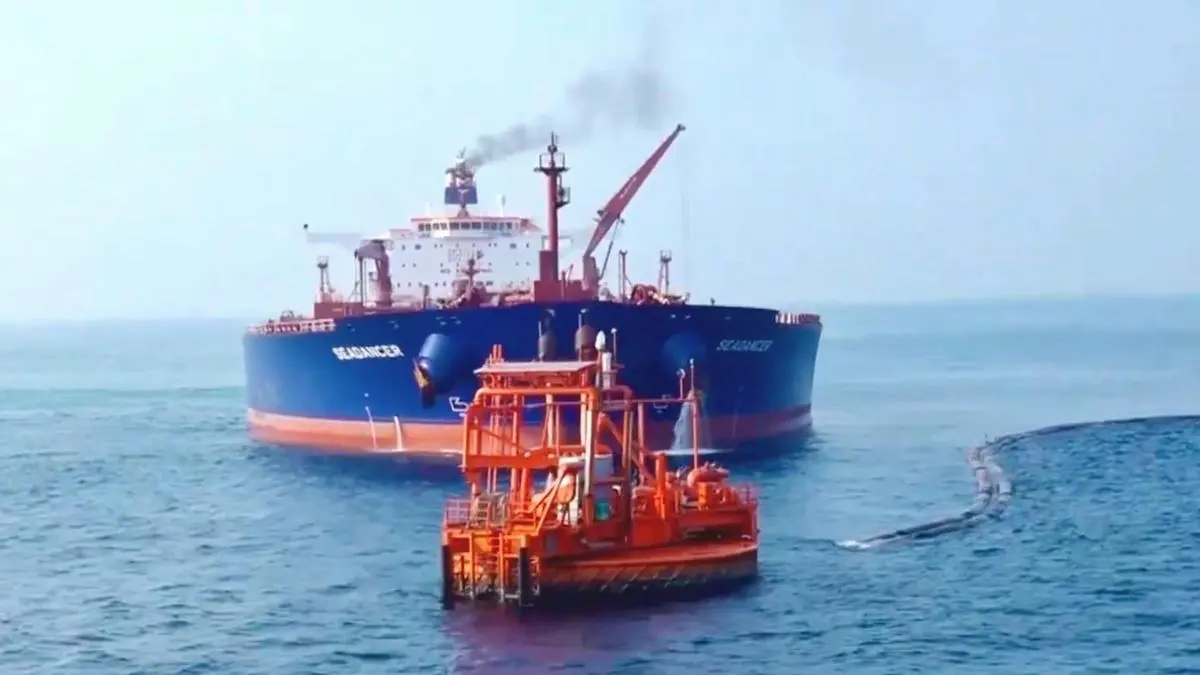
India to continue buying Russian crude oil

India to continue buying Russian crude oil


Indian refiners intend to persist with Russian crude purchases despite the expiration of the sanctions waiver
| Photo Credit:
KSL

Indian refiners will continue to purchase Russian crude oil as the ongoing conflict in West Asia keeps the global market on tenterhooks regarding supply certainty.

Furthermore, concerns persist over the extensive time required to rebuild the region’s damaged oil and gas infrastructure, indicating that it may take months to return to pre-war supply levels.

Sources indicate that Indian refiners intend to persist with Russian crude purchases despite the expiration of the sanctions waiver. The 30-day US sanctions exemption, which facilitated these oil imports from Moscow, is set to conclude on April 11.

This is because of the uncertainty over supply from key suppliers in West Asia, especially considering the lack of clarity on when normal traffic will resume in the Strait of Hormuz (SoH). Also, there is no clear estimation of the time it will take to rebuild the damaged infrastructure, said one of the sources.

“The supplies of crude oil, LNG and LPG from Saudi Arabia, Iraq, the UAE, and Qatar are adversely impacted, and so far there is no clear window of certainty on when full supplies can resume,” said another trading source.

Before February 28, 2026, West Asia accounted for around 50-52 per cent of India’s total crude oil imports, compared to roughly 40-45 per cent before the US sanctions on Russian firms Rosneft and Lukoil. At present, around 70 per cent of India’s crude oil imports are non-SoH.

Asked whether India will continue procuring Russian crude oil post the end of the US-sanctions waiver, Oil Ministry Joint Secretary Sujata Sharma said that crude imports are based on commercial decisions, keeping in mind the country’s “huge” demand.

“We are a very big country with a lot of energy needs. If you look at last year’s consumption, it is around 24-25 crore tonnes of petroleum products. Our priority is to source energy so that we can meet our domestic demand. The crude we purchase is driven by technical feasibility and the commercial sense it makes to our refiners,” she said at the inter-ministerial briefing on West Asia on Friday.

Published on April 10, 2026


Source link

Sun Pharma shares down 4 per cent on reports of overtures for  US-based Organon

Sun Pharma shares down 4 per cent on reports of overtures for US-based Organon


A pharma analyst told businessline that Sun Pharma had a good record of buying companies and integrating it – be it Israel’s Taro Pharma or India’s Ranbaxy, for example

Sun Pharmaceutical Industries’ shares closed down almost 4 percent at ₹1,654.70 on BSE, following reports that the drugmaker was close to sealing a deal for US-based Organon, in a $12 billion deal, its biggest transaction yet.

Known to be conservative in its approach, Sun Pharma Founder and Executive Chairman Dilip Shanghvi had told analysts in January, the company was looking for acquisitions – but they would be “disciplined” in their approach, and not shy away from raising debt. He was speaking to analysts following the company’s financial performance for the third quarter ended December 31, 2025.

On reports of making a bid for Organon, Sun Pharma told BSE on Friday: “the information set out in the article is speculative in nature and there is no material event/information that requires disclosure under Regulation 30 of the Listing Regulations.”

A pharma analyst told businessline that Sun Pharma had a good record of buying companies and integrating it – be it Israel’s Taro Pharma or India’s Ranbaxy, for example. However, this time around, the market was wary, as it was a large acquisition to digest, and Organon had a $9 billion debt.

Organon is a women’s healthcare company and a pharma industry insider said, the company was looking to strengthen its position in the US, given the demands by the present administration for a local foot-print. Besides women’s health products, Organon also had a biosimilar portfolio that could bolster Sun Pharma’s plans to bulk-up its innovation pipeline, he said.

Organon did not comment on the report of a Sun Pharma overture, so far. In 2025, Organon delivered $6.2 billion in revenue and $1.9 billion of adjusted EBITDA, the company said. The company’s shares surged over 28 percent to $8.85 (at 8.30 pm IST) in NYSE.

Published on April 10, 2026


Source link

Iran War: युद्ध की आग में झुलसा कारोबार! वैश्विक तनाव ने रोकी ड्राईफ्रूट्स की रफ्तार

Iran War: युद्ध की आग में झुलसा कारोबार! वैश्विक तनाव ने रोकी ड्राईफ्रूट्स की रफ्तार


Dry Fruit Import Export: ईरान और अमेरिका के बीच बढ़ते सैन्य तनाव और युद्ध जैसी स्थितियों ने वैश्विक व्यापार की कमर तोड़ दी है. इस अंतरराष्ट्रीय संघर्ष का सबसे सीधा और घातक असर अब भारतीय व्यापारियों पर देखने को मिल रहा है. ड्राईफ्रूट के आयात-निर्यात से जुड़े बड़े कारोबारी इस समय दोहरी मार झेल रहे हैं एक तरफ करोड़ों रुपये का माल समुद्र के बीच फंसा है तो दूसरी तरफ बैंक और कर्जदारों का दबाव बढ़ता जा रहा है.

पशुपति इंडस्ट्रीज के मैनेजिंग डायरेक्टर अशोक तिवारी ने ‘ABP न्यूज़’ से बातचीत में अपनी आपबीती साझा की. तिवारी ने बताया कि उनका संस्थान हर महीने लगभग 15 से 20 करोड़ रुपये मूल्य के ड्राईफ्रूट्स का कारोबार करता है. इसमें मुख्य रूप से ईरान और खाड़ी देशों से आने वाले उच्च गुणवत्ता के खजूर, अंजीर, पिस्ता, बादाम और सूखे खजूर (छुआरे) शामिल हैं. युद्ध शुरू होने से ठीक पहले उन्होंने बड़ी खेप का ऑर्डर दिया था, जो अब अधर में लटक गया है.

व्यापारिक रूट में बाधा और कंटेनर संकट की स्थिति

व्यापारिक रूट की जानकारी देते हुए अशोक तिवारी ने बताया कि गल्फ देशों से सारा माल कंटेनर के जरिए भारत आता है. लेकिन युद्ध की स्थिति के कारण सामरिक रूप से महत्वपूर्ण स्ट्रेट ऑफ होर्मुज’ (Strait of Hormuz) को बंद कर दिया गया है. इस रुकावट की वजह से उनके ड्रायफ्रूट से भरे 40-45 कंटेनर इस वक्त ईरान के ‘बंदर अब्बास’ पोर्ट और यूएई (UAE) के ‘जबल अली’ पोर्ट पर फंसे हुए हैं. स्थिति यह है कि न तो माल आगे बढ़ पा रहा है और कब बढ़ेगा इसके संकेत मिल पा रहे हैं.

ड्राईफ्रूट व्यापार की आर्थिक चक्र प्रणाली पर असर

ड्राईफ्रूट व्यापार की जटिलताओं पर बात करते हुए उन्होंने कहा, “हम करोड़ों का ऑर्डर देने के लिए अपनी जमापूंजी, साथी व्यापारियों से लिया गया उधार और बैंक लोन का इस्तेमाल करते हैं. यह एक रोलिंग साइकिल (चक्र) होता है जो हर महीने चलता है. लेकिन माल न पहुंचने की वजह से यह चक्र पूरी तरह टूट गया है. अब हालत यह है कि जिन व्यापारियों से पैसा लिया था, वे तगादा कर रहे हैं और बैंक भी अपनी किश्त मांग रहे हैं.”

व्यापारियों की अपील और बाजार में कीमतों में उछाल की आशंका

अशोक तिवारी दुबई, सऊदी अरब, ईरान और अफगानिस्तान जैसे देशों से माल मंगाकर न केवल नवी मुंबई की APMC मार्केट में बेचते हैं, बल्कि पूरे भारत में इसकी सप्लाई करते हैं. उन्होंने सरकार से मार्मिक अपील करते हुए कहा “मार्केट में मेरी तरह कई व्यापारियों की हालत खराब है. हमारा पैसा माल में फंसा है और ऊपर से ब्याज बढ़ रहा है. मेरी सरकार से विनती है कि इस संकट की घड़ी में हमें बैंक के कर्ज चुकाने के लिए अतिरिक्त समय दिया जाए, ताकि हमे कुछ मदद मिल सके.”

वर्तमान में ड्राईफ्रूट मार्केट में इस अनिश्चितता की वजह से आने वाले दिनों में कीमतों में भारी उछाल आने की भी आशंका जताई जा रही है, जिसका सीधा असर आम जनता की जेब पर पड़ेगा.


Source link

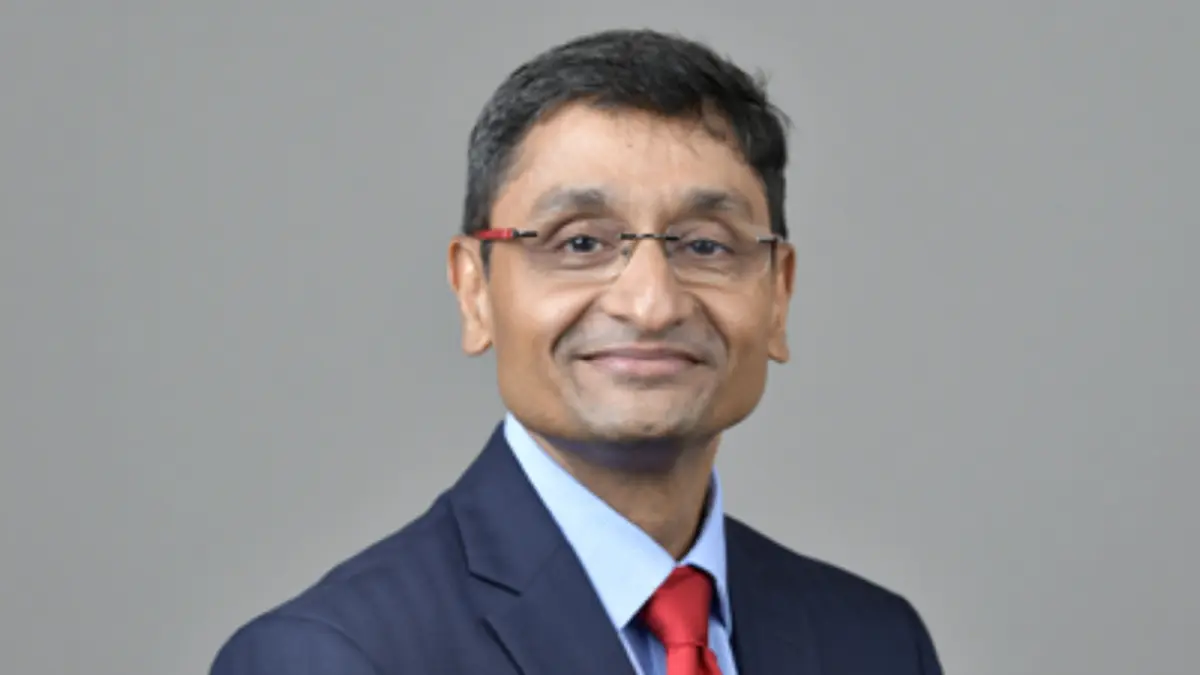
Rajive Kumaraswami to be MD and CEO of Chola MS General Insurance

Rajive Kumaraswami to be MD and CEO of Chola MS General Insurance


The Board of Directors of Cholamandalam MS General Insurance (Chola MS) has appointed Rajive Kumaraswami as Managing Director Designate with effect from April 22, 2026. 

Kumaraswami will succeed V Suryanarayananan as Managing Director and CEO of Chola MS from June 1, 2026. 

Suryanarayanan will retire from the Chola MS on May 31, 2026 after two decades with the company and almost thirty years with the Murugappa Group. 

“Under his leadership, Chola MS expanded and diversified its product portfolio, strengthened distribution partnerships, deepened its use of technology, built capable and engaged teams, and further reinforced governance practices,” the Murugappa Group company said in a statement.

Kumaraswami was most recently the Managing Director and Chief Executive Officer of Magma General Insurance Company.  

He began his career with ICICI Limited in project finance and subsequently joined ICICI Lombard General Insurance Company. He was also the Chief Representative for the Indian subcontinent at SCOR SE, the world’s fifth largest reinsurer.  Kumaraswami is an alumnus of the University of Delhi. He is a Fellow Member of the Institute of Chartered Accountants of India and an Associate Member of the Institute of Cost Accountants of India. 

Published on April 10, 2026


Source link

Greenlight open market buybacks, but stay cautious

Greenlight open market buybacks, but stay cautious


In a recent consultation paper, the market regulator SEBI proposed re-enabling buybacks of shares and other such securities through stock exchanges.

India Inc’s open market buyback offers are set to resume after a year-long pause, following SEBI’s decision to revive the route.

Several industry and market veterans had flagged concerns over the suspension of open-market buyback . Former Infosys CFO and board member TV Mohandas Pai was particularly vocal, urging the Securities and Exchange Board of India (SEBI) to allow listed entities to resume buybacks to support stock prices and stabilise markets amid sharp corrections.

In a recent consultation paper, the market regulator proposed re-enabling buybacks of shares and other such securities through stock exchanges.

Change of stance

“Under the open market buyback through stock exchange, there existed a possibility that the entire purchase order of the company could get matched with the sale order placed by one or very few shareholders. There is also a possibility that other shareholders who wanted to participate in the buyback could remain deprived of such opportunity,” SEBI said.

This was viewed as contrary to the principle of equitable shareholder treatment, as acceptance was a matter of chance due to the price-time matching mechanism, rather than a fair and proportionate process.

Another major concern relating to buyback, according to SEBI, was the taxation framework. “At that time, taxation of buy-back was governed by Section 115QA of the Income Tax Act, 1961, which required the company to pay buy-back tax, with no tax liabilities in the hands of shareholders on gains made by successful participants. While some shareholders could offload their entire shareholding through matching orders without paying tax, others who wanted to participate but whose offers did not match remained deprived of tax exemptions, rendering the buy-back from open market through stock exchange inequitable from a taxation perspective,” the regulator noted.

However, the buyback offer through the tender route via bourses continued to be available for corporates, with cash-rich companies preferring this mechanism to return capital.

Buybacks dwindle

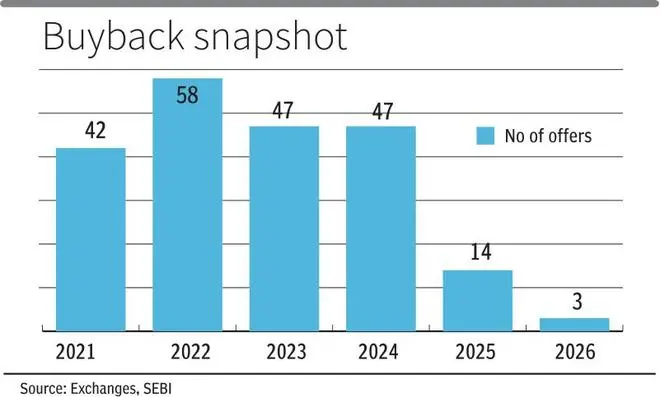
Following the restriction on open market buybacks, the number of such offers fell sharply.

In 2022, 58 companies announced buybacks, while both 2023 and 2024 saw 47 each. However, the number plummeted to 14 in 2025, and only three launched the buyback so far in 2026 despite a sharp fall in share prices. Notable companies that used the oprn market route in recent years included IEX, Emami, Natco Pharma, One 97 Communications, Bajaj Auto and ACC.

SEBI is now considering reintroducing the option for companies to buy back their shares directly from the secondary market following changes in the taxation framework that address previous imbalances.

“Accordingly, buy-back of shares or specified securities from open market through stock exchange may be re-introduced, subject to appropriate regulatory provisions and compliance mechanism. The re-introduction of this method of buy-back would provide companies with an additional mechanism for undertaking buy-back, while ensuring equitable opportunity and treatment of taxation for public shareholders,” it further stated.

So far, heavy selling by foreign portfolio investors has largely been absorbed by retail investors and mutual funds. If permitted, corporate buybacks could emerge as a key stabiliser. Their buying would also signal management’s optimism in the company’s future, thereby strengthening overall shareholder sentiment.

Free market proponents never agree with any regulatory intervention in market movements, but many now argue that the time is right to reintroduce the scheme, given SEBI’s view that recent tax changes ensure equitable treatment. However, the regulator must remain vigilant to prevent potential stock price manipulation by some greedy promoters.

Published on April 10, 2026


Source link

YouTube
Instagram
WhatsApp