RBI proposes ₹1 Lakh crore asset threshold for NBFC Upper Layer classification

RBI proposes ₹1 Lakh crore asset threshold for NBFC Upper Layer classification


Currently, the Upper Layer is populated with NBFCs, identified by way of a parametric scoring methodology
| Photo Credit:
EMMANUAL YOGINI

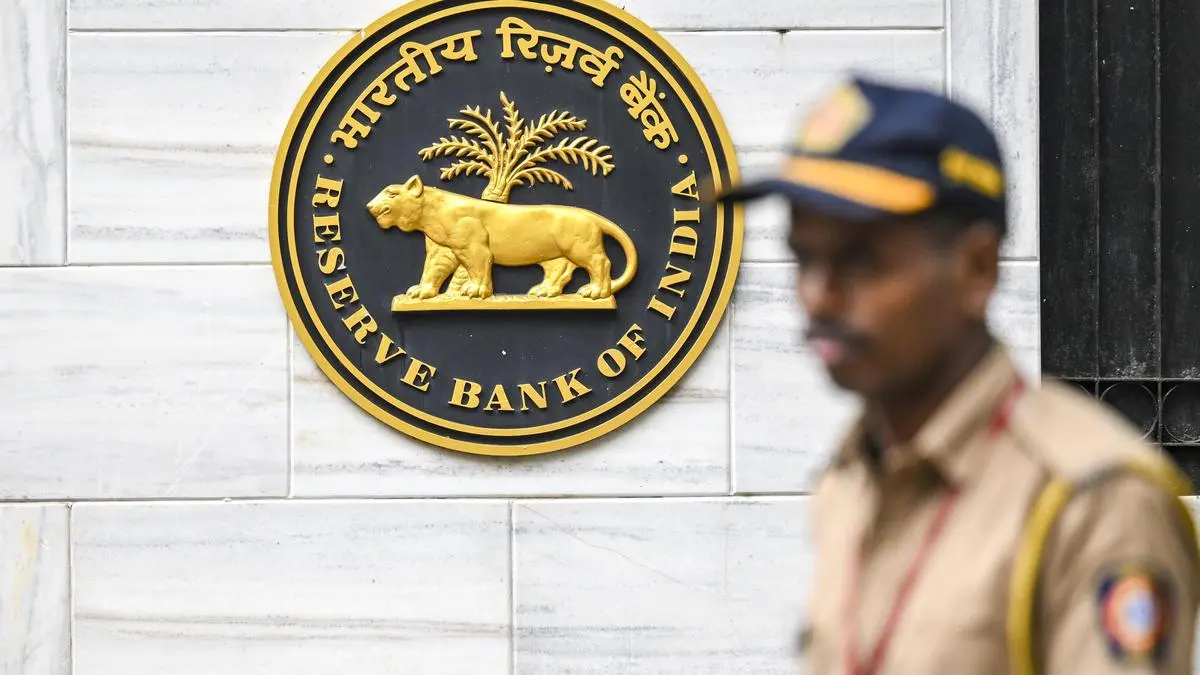
In a major overhaul of the methodology for identification of non-banking finance companies (NBFCs) in the Upper Layer (UL), the RBI plans to move away from the current parametric scoring methodology to one based on asset size.

Under the proposed overhaul, NBFCs in the upper layer, which are tightly regulated and supervised by RBI, will comprise those with assets of ₹1 lakh crore and above as per the latest audited balance sheet for the financial year.

Further, government-owned NBFCs will be brought under the Framework for scale-based Regulation of NBFCs, removing the arbitrage they enjoyed vis-à-vis private sector NBFCs, per the draft RBI guidelines.

So, State-owned NBFCs such as PFC, REC, and IRFC could be classified as NBFC-UL.

Currently, the Upper Layer is populated with NBFCs, identified by way of a parametric scoring methodology, comprising quantitative and qualitative parameters as well as supervisory judgment. This includes those with an asset size of less than ₹1 lakh crore.

There were 15 NBFCs in the Upper Layer under RBI’s scale-based regulation for the year 2024-25. It included LIC Housing Finance, Bajaj Finance, Shriram Finance, Tata Sons, Cholamandalam Investment and Finance, Tata Capital, Mahindra & Mahindra Financial Services, Aditya Birla Finance and Muthoot Finance, among others.

So far as Tata Sons is concerned, nothing much changes as its balance sheet size is well above the threshold, and it is up to the RBI to take a call on its classification as a UL-NBFC.

Sanjay Agarwal, Senior Director, CareEdge Ratings, said: “The RBI wants to give guidance to the market that identification of NBFCs in the Upper Layer will not be discretionary. It will be in black and white, based on asset size.

“So, the ₹1 lakh crore asset size criteria for placing an NBFC in the UL is a clear signal to those reaching this threshold to start preparing for an enhanced regulatory framework.”

He assessed that two to three private sector NBFCs could be out of the RBI’s UL list. However, the list will include large government-owned NBFCs.

Agarwal observed that for NBFCs in the UL, the level of regulatory compliance goes up, and their organisational structure has to be moulded according to the requirements of this layer.

He pointed out that it is not clear from the draft directions if consolidated assets of an NBFC, which has subsidiaries, will be taken into account under the proposed asset size criteria for classifying it as an Upper Layer NBFC.

Govt-owned NBFCs

A M Karthik, Senior Vice President and Co-Group Head Financial Sector Ratings, ICRA, opined that the draft directions on identification of Upper Layer NBFCs (NBFC-UL), which are based on the asset size criteria, provide clarity to all stakeholders.

Further, the inclusion of government-owned entities, too, based on their size, indicates a more harmonised way of identifying NBFC-UL. Based on the existing position, the number of NBFC-UL would go up vis-à-vis the 15 entities identified previously.

As per the Draft Directions, the criteria for identification of NBFC-UL shall be reviewed periodically. Further, the asset size threshold for identification of NBFC-UL shall be reviewed every five years.

Published on April 10, 2026



Source link

Broker’s call:  JM Financial (Buy)

Broker’s call: JM Financial (Buy)


Target: ₹160

CMP: ₹134.05

JM Financial is India’s leading integrated and diversified financial services group. With a legacy spanning over five decades, the firm has expertise across businesses including corporate advisory and capital markets, wealth and asset management, private markets and affordable home loans.

While JM Financial continued to maintain its leadership position in Corporate Advisory and Capital Markets (which includes investment banking, institutional equities, and research), the company’s earnings were weighed down by legacy balance sheet exposures post covid. Historically, JM Financial had been a relatively large player in real estate financing, with meaningful on-balance sheet exposure to the sector (including land financing), alongside exposure to distressed credit / ARC assets.

Given that from hereon, the focus of the Company is on high growth and high RoE businesses unlike earlier which were balance sheet heavy businesses, along with a high dividend payout ratio, the overall RoEs of the company is expected to improve from hereon. We have modelled RoE to increase from 9.4 per cent in FY25 in 12-13 per cent in FY28E.

Given the low capitalisation needs and a free cash flow generated in the group (specially from the CACM segment and private markets), the dividend payout ratio is expected to remain strong.

At CMP there is hardly any value assigned to the wealth, AMC and private markets We value JM Financial on a SOTP basis and arrive at a target price of ₹160 and initiate coverage with a Buy rating.

Published on April 10, 2026


Source link

PMMY at 11: Funding the unfunded, powering MSME-Led growth

PMMY at 11: Funding the unfunded, powering MSME-Led growth


Ashok Chandra, MD & CEO, Punjab National Bank
| Photo Credit:
cueapi

When Prime Minister launched the Pradhan Mantri MUDRA Yojana on April 8, 2015, the stated mission was simple: “Funding the Unfunded.” Eleven years later, the scheme has evolved into one of the world’s largest micro-credit programmes, fundamentally altering how India’s smallest entrepreneurs access formal finance establishing itself as a critical pillar in the nation’s financial inclusion architecture.

As of March 2026, PMMY has disbursed loans worth ₹40.07 lakh crore through more than 57.79 crore accounts. The scale of disbursement—exceeding the GDP of many mid-sized economies—reflects both the latent demand among micro-entrepreneurs and the institutional capacity built to service it.

The scheme emerged from a recognition that India’s micro, small, and medium enterprises (MSME) sector, which contributes approximately 30 per cent of GDP and 45 per cent of exports, remained chronically underserved by formal credit channels. Prior to PMMY, an estimated 5.77 crore micro-units operated outside the formal banking system, relying on informal moneylenders charging usurious rates or foregoing expansion altogether due to capital constraints.

PMMY operates through a three-tier institutional framework comprising the Micro Units Development and Refinance Agency Ltd. (MUDRA), Member Lending Institutions (MLIs) including public sector banks, private banks, regional rural banks, microfinance institutions, and non-banking financial companies, and the beneficiaries themselves. This architecture enables credit flow from formal financial institutions to the last mile without requiring borrowers to pledge collateral — a structural barrier that had historically excluded millions from institutional finance. The scheme has helped strengthen local businesses, supply chains, and rural economies. This structure has enabled scale, reflected in the steady rise in sanctions from ₹1.37 lakh crore in FY16 to ₹5.74 lakh crore in FY26.

The scheme’s graduated loan categories have proven instrumental in enabling enterprise growth. The original three tiers — Shishu (up to ₹50,000), Kishor (₹50,000 to ₹5 lakh), and Tarun (₹5 lakh to ₹10 lakh) — were designed to match credit availability with business maturity. Later on the October 2024

introduction of Tarun Plus, extending loan limits to ₹20 lakh signals a policy intent to support graduation, shifting the focus from subsistence-level activity to enterprise expansion.

Perhaps more significant than aggregate disbursement figures is the scheme’s reach into previously excluded demographics. Over 12 crore accounts belong to first-time borrowers, underscoring PMMY’s role in creating new entrepreneurs rather than merely refinancing existing businesses.

Women have emerged as the predominant beneficiaries, holding two third share in the number of loan accounts sanctioned. Further, more than half of MUDRA loan account holders belong to Scheduled Castes, Scheduled Tribes and Other Backward Classes— a distribution that speaks to the scheme’s effectiveness in reaching economically weaker sections.

Public sector banks have served as the primary delivery mechanism, leveraging their extensive branch networks to reach semi-urban and rural borrowers. The operational efficiency of the lending ecosystem is evident in the narrow gap between sanctioned and disbursed amounts — ₹5.74 lakh crore sanctioned versus ₹5.65 lakh crore disbursed in FY25-26 alone.

The role of Digital cannot be undermined here as the integration has further strengthened the delivery architecture. Platforms such as the Jan Samarth portal have streamlined application and disbursement processes, while credit guarantee mechanisms administered by National Credit Guarantee Trustee Company have mitigated lender risk. These developments are consistent with broader trends in India’s financial system towards digitisation and risk-sharing frameworks.

There are more than 7.94 crore . registered MSME units on Udyam portal out of which more than 7.88 are micro units and as per estimates MSME sector still have a substantial ₹30 lakh crore addressable credit gap. Bridging this gap is key to unlocking India’s full entrepreneurial potential.

Looking ahead to Viksit Bharat 2047, PMMY’s role will be pivotal in realising a $30-trillion-plus economy anchored in formal, resilient MSMEs. With formalisation accelerating via Udyam and digital public infrastructure, the scheme can evolve from micro-credit provider to a full-spectrum enabler—facilitating equity linkages, skill-credit convergence, and green financing for sustainable units. Policy priorities include expanding guarantee covers under CGTMSE, real-time data portals for performance tracking, targeted awareness in low-penetration regions, and incentives for lenders to support higher-ticket, repeat borrowers.

Reducing the residual credit gap through account aggregator frameworks and ONDC integration will be critical. As India transitions from job-seeker to job-creator economy, PMMY’s legacy of trust-based lending offers a replicable model: when the state guarantees potential over collateral, entrepreneurship flourishes at the grassroots. Sustained analytical rigour in monitoring outcomes will ensure the scheme not only survives but drives the next phase of inclusive, self-reliant growth.

After 11 years, PMMY has evolved into a cornerstone of India’s inclusive growth strategy. By enabling millions of small entrepreneurs — especially women and marginalised groups. It has powered MSME-led development, strengthened grassroots economies and advanced the vision of Atmanirbhar Bharat.

The writer is the MD & CEO of Punjab National Bank

Published on April 10, 2026


Source link

The Latest Home Loan Interest Rates: Apr 10, 2026

The Latest Home Loan Interest Rates: Apr 10, 2026


What are the various fixed and floating interest rates on offer for home loans today? Let’s take a comprehensive look at interest rates across banks and housing finance companies.

Institution Loan amount
Under
 Rs. 30 lakh
Rs. 30 to
75 lakh
Rs. 75 lakh Plus
BANKS (Floating rates)
Axis Bank 8.0-9.10 8.0-9.10 8.0-9.10
Bank of Baroda 7.20-8.95 7.20-8.95 7.20-8.95
Bank of India 7.10-10 7.10-10 7.10-10
Bank of Maharashtra 7.10-9.65 7.10-9.65 7.10-9.65
Canara Bank 7.15-10 7.10-10 7.05-9.90
Central Bank 7.10-8.70 7.10-8.70 7.10-8.70
DBS Bank <=8.70 <=8.70 <=8.70
Dhanlaxmi Bank 8.20-12.0 8.20-12.0 8.20-12.0
Federal Bank 7.30-9.50 7.30-9.50 7.30-9.50
HDFC Bank 7.75-13.20 7.75-13.20 7.75-13.20
ICICI Bank >=7.45 >=7.45 >=7.45
Indian Bank 7.15-8.55 7.15-8.55 7.15-8.55
IOB 7.10-8.20 7.10-8.20 7.10-8.20
IDBI Bank 7.35-11.95 7.35-11.95 7.35-11.95
J&K Bank >= 7.25 >= 7.25 >= 7.25
Karnataka Bank 7.31-11.69 7.31-11.69 7.31-11.69
Karur Vysya Bank 8.50-10.65 8.50-10.65 8.50-10.65
Kotak Mahindra Bank >=7.70 >=7.70 >=7.70
Punjab National Bank 7.30-9.15 7.25-9.15 7.25-9.05
Punjab & Sind Bank 7.30-10.70 7.30-10.70 7.30-10.70
RBL Bank >= 9.0 >= 9.0 >= 9.0
State Bank of India 7.25-8.45 7.25-8.45 7.25-8.45
South Indian Bank >=7.20 >=7.20 >=7.20
Tamilnad Mercantile Bank 7.90-9.30 7.90-9.30 7.90-9.30
UCO Bank 7.0-9.25 7.0-9.25 7.0-9.25
Union Bank of India 7.15-9.25 7.15-9.25 7.15-9.25
Yes Bank 9.0-11.50 9.0-11.50 9.0-11.50
BANKS (Fixed rates) 
Axis Bank 14.00 14.00 14.00
Bank of Baroda 8.90-9.95 8.90-9.95 8.90-9.95
Canara Bank 8.50-10.75 8.50-10.75 8.50-10.75
ICICI Bank 8.65-11.80 8.65-11.80 8.65-11.80
IDBI bank 10.90-12.0 10.90-12.0 10.90-12.0
Indian Bank 9.25-9.45 9.25-9.45 9.25-9.45
Karnataka Bank 12.27-12.99 12.27-12.99 12.27-12.99
Punjab National Bank 8.30-10.65 8.25-10.65 8.25-10.55
Union Bank of India 11.4 11.4-12.4 12.4-12.65
HOUSING FINANCE COMPANIES (Floating rates)
Floating Rates: 
Tata Capital >=7.50 >=7.50 >=7.50
PNB Housing 7.75-10.05 7.60-10.05 7.50-9.95
Central Bank Housing 10-12.85 10-12.85 10-12.35
Samman Capital >=8.75 >=8.75 >=8.75
Aditya Birla Housing Fin >=7.75 >=7.75 >=7.75
Bajaj Finserv 7.15-20 7.15-20 7.15-20
GIC Housing Finance Ltd >=8.80 >=8.80 >=8.80
Sundaram Home Finance Ltd* >=10.65 >=10.65 >=10.65
Piramal Finance Limited >=9.99 >=9.99 >=9.99
IIFL Home Finance >=8.75 >=8.75 >=8.75
LIC Housing Finance Ltd 7.15-9.65 7.15-9.75 7.15-10.10
HOUSING FINANCE COMPANIES (Fixed rates)
LIC Housing Finance Ltd 10-10.25 10-10.25 10-10.25

Compiled by BankBazaar.com from respective bank’s website as on the date mentioned above. Note that fixed interest rates may be subject to a revision after a specified tenure depending on the bank’s T&Cs.

Some banks/FIs allow fixed rate only for a definite period and thereafter prevailing floating rates are made applicable. *Annual percentage rate; ^For Bureau Score 751 and above


Source link

The Latest Home Loan Interest Rates: Apr 10, 2026

The Latest Fixed Deposit Interest Rates: Apr 10, 2026


A fixed deposit is a trusted way to maintain liquidity and earn an assured rate of return on the capital. Interest rates vary from one bank to another. Let’s take a comprehensive look at the interest rates on offer today.

Bank <1
year
1 to 2
years
2 to 3
years
3 to 5
years
w.e.f
FOREIGN BANKS
DBS Bank 6 6.6 6.4 6.4 Mar 25
Deutsche Bank 5 7 6.25 6.25 Jul 25
HSBC 4.1 5.5 5.35 5.5 Jul 17
Standard Chartered 5.75 6.6 6.5 6.5 Aug 29
INDIAN: PUBLIC SECTOR BANKS
Bank of Maharashtra 5.25 6.65 5.25 5.25 Jan 31
Bank of Baroda 6 6.6 6.5 6.4 Jun 12
Bank of India 5.5 6.6 6.3 6.25 Mar 02
Canara Bank 5.5 6.6 6.25 6.25 Mar 17
Central Bank of India 5 6.2 6.25 6 Dec 10
Indian Bank 4.75 6.6 6.15 6.05 Mar 03
Indian Overseas Bank 5.5 6.6 6.4 6.1 Dec 15
Punjab National Bank 5.6 6.6 6.3 6.1 Feb 24
Punjab & Sind Bank 4.85 6.75 6 5.95 Feb 16
State Bank of India 5.9 6.45 6.4 6.3 Dec 15
UCO Bank 5 6.45 6.1 6 Apr 01
Union Bank 6.1 6.6 6.25 6 Feb 11
INDIAN: PRIVATE SECTOR BANKS
Axis Bank 5.75 6.45 6.45 6.45 Apr 10
Bandhan Bank 4.20 7 7.25 7.25 Mar 25
CSB Bank 6.75 7.35 6.5 5.75 Apr 06
City Union Bank 6.25 7 6.5 6.25 Mar 11
DCB Bank 6.5 7.15 7.15 7.15 Mar 19
Dhanlaxmi Bank 5.25 6.95 6.25 7 Mar 26
Federal Bank 6 6.7 6.75 6.4 Mar 12
HDFC Bank 5.75 6.45 6.45 6.5 Mar 06
ICICI Bank 5.5 6.3 6.45 6.5 Apr 10
IDBI Bank 5.8 6.45 6.5 6.35 Feb 23
IDFC First Bank 6.5 7.4 7 7 Mar 19
IndusInd Bank 6.25 7 6.9 6.65 Sep 25
J & K Bank 6 6.75 7.25 6.65 Feb 11
Karnataka Bank 5.75 6.65 6.15 6.15 Aug 01
Kotak Bank 6 6.7 6.7 6.4 Feb 11
Karur Vysya Bank 6.65 7.2 6.55 6.55 Apr 06
RBL Bank 6.05 7.2 7.2 7 Sep 24
South Indian Bank 5.9 6.8 6.2 6.2 Apr 09
Tamilnad Mercantile Bank 6.5 7.25 7 6.7 Apr 10
TNSC Bank 6.85 7.6 7.1 6.85 NA
Yes Bank 6.5 7 7 7 Mar 05
SMALL FINANCE BANKS
AU Small Finance Bank 6.35 6.9 7.1 7 Jan 12
Equitas Small Finance Bank 6.35 6.9 7.4 7 Mar 02
ESAF Small Finance Bank 4.75 8 7.25 6 Mar 01
Jana Small Finance Bank 7 8 7.5 7.77 Mar 23
Suryoday Small Finance Bank 6.5 7.6 8.1 7.9 29-Mar
Utkarsh Small Finance Bank 6 7.5 7.5 7.25 Dec 01
Ujjivan Small Finance Bank 6 7.45 7.25 7.2 5-Aug

Compiled by BankBazaar.com from respective bank’s website as on the date mentioned above. Note that fixed interest rates may be subject to a revision after a specified tenure depending on the bank’s T&Cs.

Some banks/FIs allow fixed rate only for a definite period and thereafter prevailing floating rates are made applicable.


Source link

Broker’s call:  Physicswallah (Buy)

Broker’s call: Physicswallah (Buy)


Target: ₹140

CMP: ₹101.76

Physicswallah (PWL) has mastered an omnichannel education playbook: foster trust and engagement first, monetise later. Its community-led digital funnel — anchored by flagship JEE and NEET courses, expanding vernacular and category depth, and low-barrier entry — now fuels paid online cohorts and a higher-ARPU offline network.

With momentum in engagement, enrolments and centre expansion, we expect a revenue CAGR of 27 per cent and EBITDA CAGR of 84.7 per cent during FY25-28E, with adjusted PAT turning positive in FY27E and rising to ₹6.7 lakh crore by FY28E.

PWL’s low-CAC model turns trust into enrolments and engagement into revenue. Free content draws learners, who upgrade to paid courses, tests, doubt-solving, and tools, bypassing heavy marketing. The flywheel scales robustly: 134 million social followers, 83 million app downloads, about 3.4 million daily active users (DAU), and 4.37 million paid enrolments in 9M-FY26. Engagement metrics guide targeted expansion by city, category, and segment, transforming community reach into scalable revenue.

We initiate on PWL with a Buy rating and a target price of ₹140 once offline utilisation improves and the cash engine funds adjacencies without balance sheet strain.

Key risks: Regulatory changes in coaching may impact pricing and growth; and slower offline utilisation and faculty retention issues may delay margin

Published on April 10, 2026


Source link

YouTube
Instagram
WhatsApp