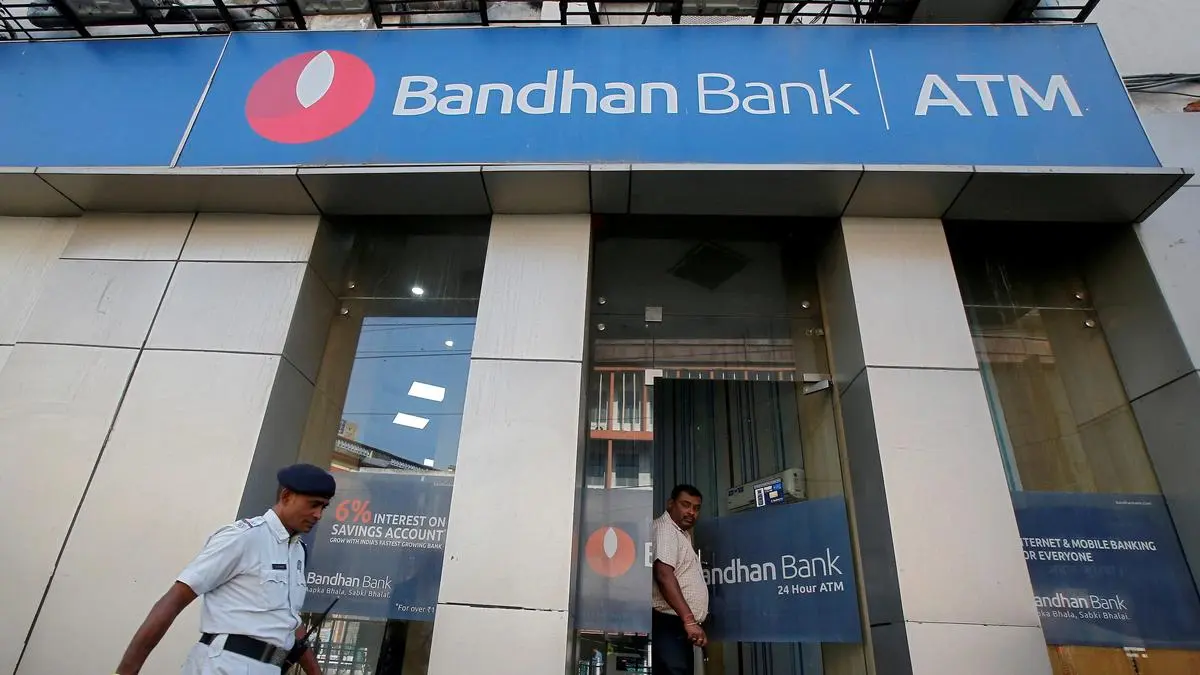
Bandhan Bank's loans, advances rise 12.6% in Q4 FY26

Bandhan Bank's loans, advances rise 12.6% in Q4 FY26


Bandhan Bank’s liquidity coverage ratio (LCR) stood at around 131.76% as of March 31.
| Photo Credit:
RUPAK DE CHOWDHURI

Bandhan Bank‘s loans and advances grew 12.6 per cent year-on-year to ₹1,54,235 crore as of March 31 compared to ₹1,36,995, the private lender said on Saturday.

On a sequential basis, the loan book expanded 6.2 per cent from ₹1,45,224 crore as of December 31, 2025, according to a provisional unaudited disclosure filed with the bourses.

Total deposits rose 10 per cent on-year to ₹1,66,344 crore at the end of the fourth quarter of 2025-26 against ₹1,51,212 crore in the corresponding period last year, and were up 6.1 per cent from ₹1,56,724 crore in the previous quarter.

Retail deposits, including CASA, climbed 17.7 per cent year-on-year to ₹1,22,547 crore, while retail term deposits surged 30.1 per cent to ₹73,796 crore. The retail-to-total deposits ratio improved to 73.67 per cent from 68.88 per cent a year earlier, the bank said in the filing.

CASA deposits stood at ₹48,751 crore in the fourth quarter, up 2.8 per cent year-on-year, while the CASA ratio stood at 29.31 per cent compared with 31.37 per cent a year ago. Bulk deposits declined 6.9 per cent year-on-year to ₹43,797 crore.

Bandhan Bank’s liquidity coverage ratio (LCR) stood at around 131.76 per cent as of March 31.

The figures are provisional and unaudited, the lender added.

Published on April 4, 2026


Source link

HDFC Bank reports 12% credit growth, deposits jump 14.4% in March quarter

HDFC Bank reports 12% credit growth, deposits jump 14.4% in March quarter


The country’s second-largest lender HDFC Bank on Saturday reported a 12 per cent credit growth to Rs 29.6 lakh crore for the March quarter.

Its total advances were Rs 26.43 lakh crore at the end of March 31, 2025, HDFC Bank said in a regulatory filing.

The lender reported a 14.4 per cent rise in total deposits to Rs 31.05 lakh crore from Rs 27.14 lakh crore at the end of the fourth quarter of the preceding financial year.

During the period, CASA deposits recorded a growth of 12.3 per cent to Rs 10.6 lakh crore compared to Rs 9.4 lakh crore in the year-ago period, it said.

The bank’s period-end time deposits were approximately Rs 20.45 lakh crore as of March 31, 2026, a growth of around 15.5 per cent over Rs 17.7 lakh crore as of March 31, 2025.

During the quarter, Atanu Chakraborty abruptly resigned as chairman of the HDFC Bank, citing ethical concerns effective March 18.

This is the first time that the part-time chairman of HDFC Bank left in the middle, raising concerns over the functioning.

“Certain happenings and practices within the bank, that I have observed over the last two years, are not in congruence with my personal Values and Ethics. This is the basis of my aforementioned decision,” he had said in his resignation letter dated March 17.

In a letter addressed to the Chairman of Governance, Nomination, and Remuneration Committee, H K Bhanwala, Chakraborty said that “there are no other material reasons for my resignation other than those stated above”.

It is to be noted that Chakraborty was appointed part-time chairman effective May 5, 2021, almost a year after retirement as Economic Affairs Secretary.

His term was extended for another three years in 2024 till May 4, 2027.

Chakraborty, a 1985 batch IAS officer of Gujarat cadre, retired as Secretary of the Department of Economic Affairs in April 2020. Prior to that, he was the Secretary of the Department of Investment and Public Asset Management (DIPAM). Both departments come under the Finance Ministry.

Chakraborty became chairman during the reverse merger process of the bank with the parent entity HDFC Ltd, a leading mortgage firm in the country.

The merger of HDFC Ltd with HDFC Bank became effective on July 1, 2023, creating a financial behemoth with a combined balance sheet of over Rs 18 lakh crore.

Published on April 4, 2026


Source link

Govt says fuel supplies sufficient despite war disruption, avoid panic buying

Govt says fuel supplies sufficient despite war disruption, avoid panic buying


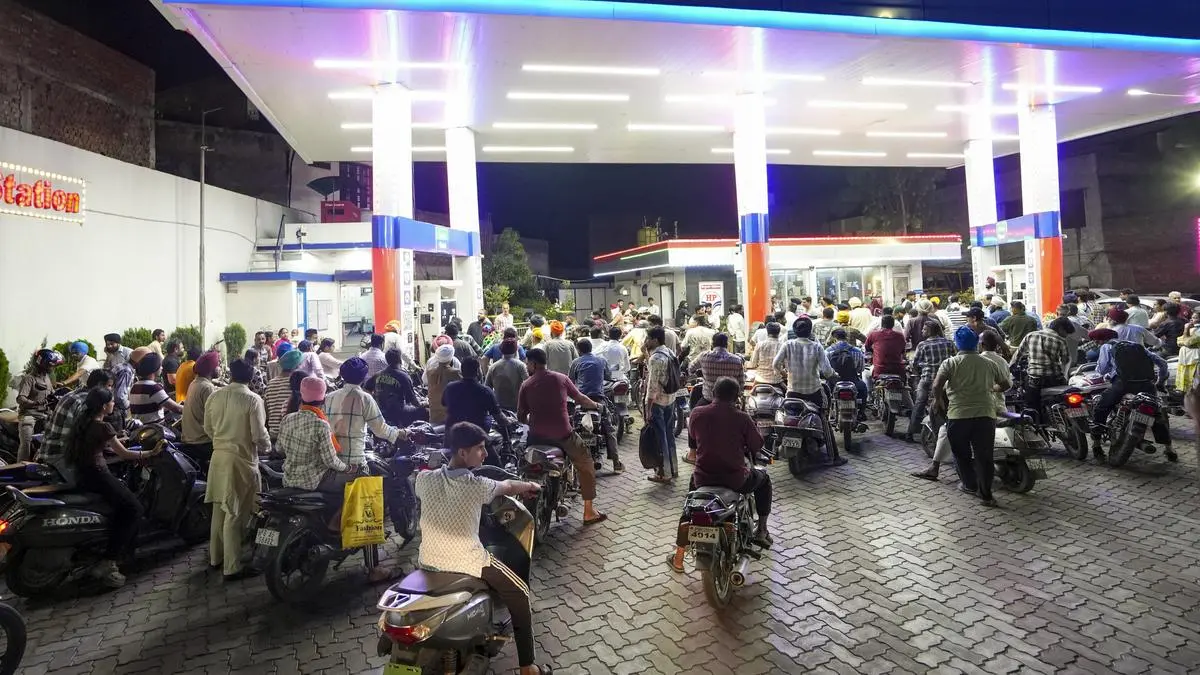
All refineries are operating at high capacity with adequate crude inventories, and petrol pumps across the country remain fully stocked, the oil ministry said.
| Photo Credit:
SHIVA SHARMA

The government on Saturday urged citizens to avoid panic buying of petrol, diesel and LPG, saying fuel supplies remain adequate despite disruptions linked to the closure of the Strait of Hormuz.

The Ministry of Petroleum and Natural Gas said the government is taking proactive steps to ensure the uninterrupted availability of petroleum products and cooking gas, while advising people to rely only on official information and conserve energy.

The government has prioritised domestic LPG and piped natural gas (PNG) supplies, particularly for households, hospitals and essential services, and has implemented measures to boost refinery output and manage demand, including extending LPG refill intervals.

Authorities have also stepped up enforcement against hoarding and black marketing, conducting more than 3,700 raids and issuing around 1,000 show-cause notices to LPG distributors, with 27 dealerships suspended so far.

No shortage

Despite supply pressures from the geopolitical situation, there are no reports of LPG shortages at distributor points, the ministry said in a statement, adding that about 51 lakh cylinders were delivered on Friday and online bookings accounted for 95 per cent of the total demand.

Commercial LPG supplies have been capped at 70 per cent of pre-crisis levels, while alternative fuels, such as kerosene and coal, are being deployed to ease demand.

On natural gas, the government said it is ensuring full supplies to households and transport sectors, while industrial and fertiliser sector allocations are being gradually increased, supported by incoming LNG cargoes.

All refineries are operating at high capacity with adequate crude inventories, and petrol pumps across the country remain fully stocked, the ministry said.

To shield consumers from rising global oil prices, the government has cut excise duty on petrol and diesel by 10 rupees per litre and imposed export levies on diesel and aviation fuel to boost domestic availability.

The ministry said state governments have been asked to intensify monitoring, counter misinformation and ensure smooth distribution of fuels, reiterating that India’s overall energy supplies remain secured.

Published on April 4, 2026


Source link

FPI outflows hit ₹24,743 crore in April week after record March sell-off in India

FPI outflows hit ₹24,743 crore in April week after record March sell-off in India


Foreign Portfolio Investors (FPIs) withdrew ₹24,743.74 crore from Indian markets during the shortened trading week ending April 3, 2026, with equities bearing the brunt.
| Photo Credit:
iStockphoto

Foreign Portfolio Investors (FPIs) recorded net outflows of ₹24,743.74 crore from Indian markets during the truncated trading week ending April 3, 2026, according to data compiled by the National Securities Depository Limited (NSDL). The week comprised only three trading sessions — March 30, April 1, and April 2 — with markets shut on March 31 for Mahavir Jayanti and on April 3 for Good Friday.

Equities take the biggest hit, debt sees mixed flows

Equities remained the hardest hit asset class. Across the reporting periods covering the week, FPIs recorded a combined net equity outflow of ₹23,801.94 crore through stock exchanges and the primary market route. In the debt segment, the Fully Accessible Route (FAR) saw net outflows of ₹4,309.70 crore across both reporting dates, while the Debt-VRR segment recorded marginal net inflows and the Debt-General Limit segment posted a combined net inflow of ₹1,414.79 crore. The rupee stood at ₹94.6543 to the US dollar on April 2.

March records biggest-ever monthly FPI sell-off

These weekly outflows come amid a record monthly sell-off. NSDL data shows FPIs recorded total net outflows of ₹1,25,736.40 crore from all asset classes in March 2026. Within this, combined equity outflows through stock exchanges and the primary market stood at ₹1,17,774.65 crore — the steepest monthly equity sell-off by foreign investors in Indian market history. Dr VK Vijayakumar, Chief Investment Strategist at Geojit Investments Limited, confirmed the scale, noting that…”March witnessed massive selling by FPIs to the tune of Rs 1,22,182 crore. This is the biggest ever monthly selling by FPIs.”

Global headwinds drive sustained FPI selling

The selling has been driven by a confluence of global headwinds. Dr Vijayakumar pointed to…”continuation of the war, crude again spiking to above $100 level, the steady decline in the rupee and appreciation of the dollar triggered this record selling by FPIs.” He noted that…”rupee depreciated by about 4 per cent since the war began and fears of further depreciation have added to the weakness of the rupee, which, in turn, is triggering further selling by FPIs.”

Himanshu Srivastava, Principal Manager Research at Morningstar Investment Research India, attributed the outflows to broader macro forces, noting that…”the sharp rise in geopolitical tensions in the Middle East has pushed up crude prices, revived inflation concerns, and reduced the probability of near-term rate cuts globally.” He added that elevated US bond yields had…”improved the relative attractiveness of fixed-income assets, prompting global investors to rebalance away from equities.” He also flagged that…”the Indian rupee remaining under pressure, thereby impacting dollar-adjusted returns for FIIs” had compounded the selling.

Domestic investors cushion market impact

For calendar year 2026 as a whole, FPIs have now recorded cumulative net outflows of ₹1,17,172.20 crore across all asset classes, with equity outflows alone reaching ₹1,31,121.53 crore, partially offset by net inflows in the FAR and Debt-General Limit segments.

Domestic Institutional Investors have provided a buffer. Pabitro Mukherjee, Associate Vice President – Technical Research at Bajaj Broking, noted that…”corresponding to the FII outflows of ₹1.11 lakh crore, the domestic buyers have supported with record buying of ₹1.28 lakh crore giving some support to the markets.”

RBI steps in to stabilise rupee

On the currency front, the Reserve Bank of India stepped in to arrest the rupee’s slide. Dr Vijayakumar noted that RBI’s directive capping daily rupee positions of banks and requiring short positions to be covered before April 10…”triggered a short-squeeze which enabled the rupee to rise to 93.20 to the dollar from the 95.30 level on March 30th.” He cautioned, however, that…”so long as crude price remains elevated, rupee will continue to be fundamentally weak,” and that…”FPI inflows can happen only when there is de-escalation on the war front, leading to decline in crude.”

Published on April 4, 2026


Source link

Pradhan vs Stalin: Language row escalates over three-language policy and NEP

Pradhan vs Stalin: Language row escalates over three-language policy and NEP


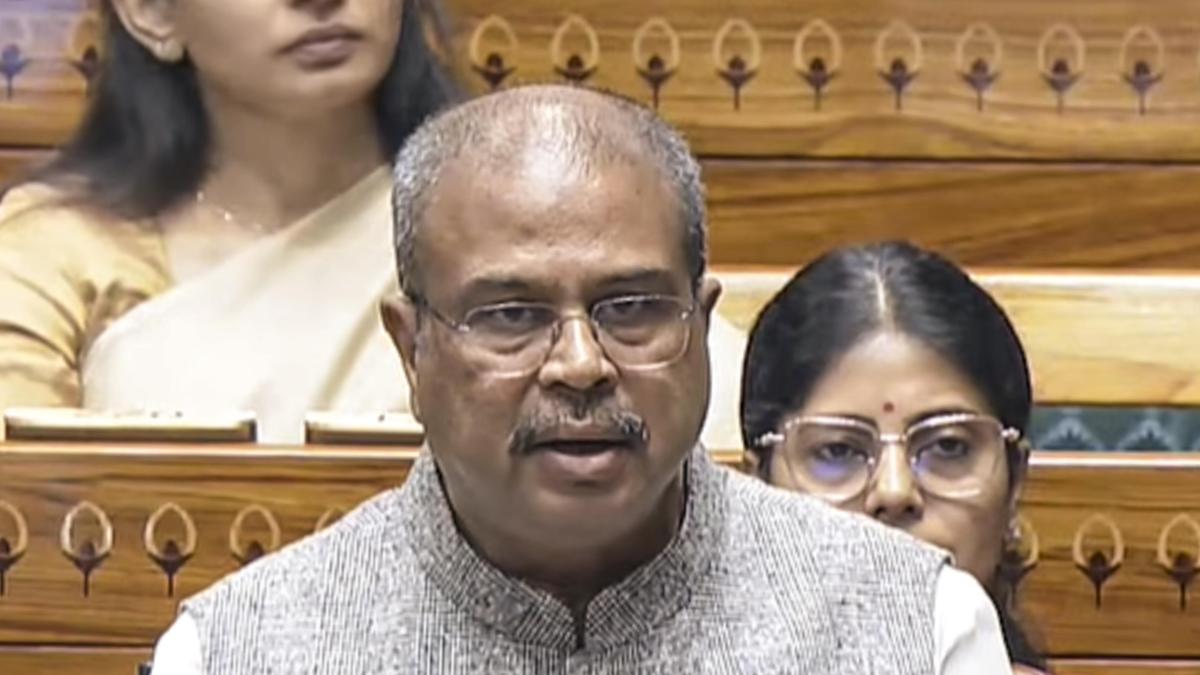
Union Education Minister Dharmendra Pradhan criticised Tamil Nadu Chief Minister M. K. Stalin over his opposition to the three-language formula, calling the “imposition” narrative misleading and politically motivated.
| Photo Credit:

Union Education Minister Dharmendra Pradhan on Saturday hit out at Tamil Nadu Chief Minister M K Stalin over his criticism of the three-language formula, saying the narrative of “imposition” is a “tired attempt” to mask political failures.

Pradhan said mischaracterising a progressive and inclusive reform as “linguistic imposition” was aimed at creating unnecessary apprehension and confusion.

Earlier in the day, Stalin said the three-language formula was a “covert” mechanism to expand Hindi into non-Hindi-speaking regions. He alleged that the CBSE’s curriculum framework, aligned with the NEP-2020, was a “calculated” and “deeply concerning” attempt at linguistic imposition.

Pradhan defends NEP as ‘linguistic liberation’

Responding to the criticism, Pradhan said, “The National Education Policy, 2020, is, in fact, a manifesto for linguistic liberation. It prioritises the mother tongue so every Tamil child can excel in their own glorious language “By misrepresenting a flexible policy as compulsory Hindi, you are not defending Tamil; you are creating barriers that deny our youth the opportunity to become multilingual global leaders,” he said in a post on X.

The minister said that portraying multilingualism as a threat was misplaced, adding that Tamil would be enriched and not weakened when its speakers become multilingual, confident and linguistically empowered.

Pradhan said the NEP upholds constitutional principles by promoting all languages equally and also addresses the limitations of the existing two-language system.

It also focuses on implementation through initiatives such as Samagra Shiksha, teacher training, and strengthening institutions like District Institute of Education and Training, along with national frameworks such as the National Professional Standards for Teachers and the National Mission for Mentoring.

“Your questions on reciprocity ignored the ground reality. While the Union government actively encourages students across India to embrace Indian languages, your government continues to deprive Tamil students of diverse opportunities for the sake of a divisive vote bank narrative,” he said.

Pradhan accuses Tamil Nadu govt of blocking PM-SHRI schools

Pradhan further attacked Stalin — the chief of the DMK — and alleged that his government had stalled the establishment of PM-SHRI schools in Tamil Nadu by refusing to sign the required Memorandum of Understanding, despite earlier commitments.

“This deliberate resistance is not merely administrative defiance; it is a direct disservice to lakhs of underprivileged students who stand to benefit from quality, merit-based residential education,” he said.

“This has effectively withheld modern infrastructure and teachers from its own students. The Union government remains fully committed to funding and teacher training, but progress is being held back by your dishonest politics,” he added.

Pradhan said by mischaracterising a progressive, inclusive reform as “linguistic imposition”, the Tamil Nadu chief minister was creating unnecessary apprehension and confusion.

“The real concern, perhaps, is not the policy’s clarity, but the chief minister’s unwillingness to acknowledge it. In doing so, he disregards the constitutional spirit that safeguards India’s linguistic diversity.

“Stop using the Hindi imposition argument to hide administrative failures and join the national mission of empowering every Indian language,” Pradhan said.

Published on April 4, 2026


Source link

Theni-born Rini Sampath in race to become Washington DC mayor

Theni-born Rini Sampath in race to become Washington DC mayor


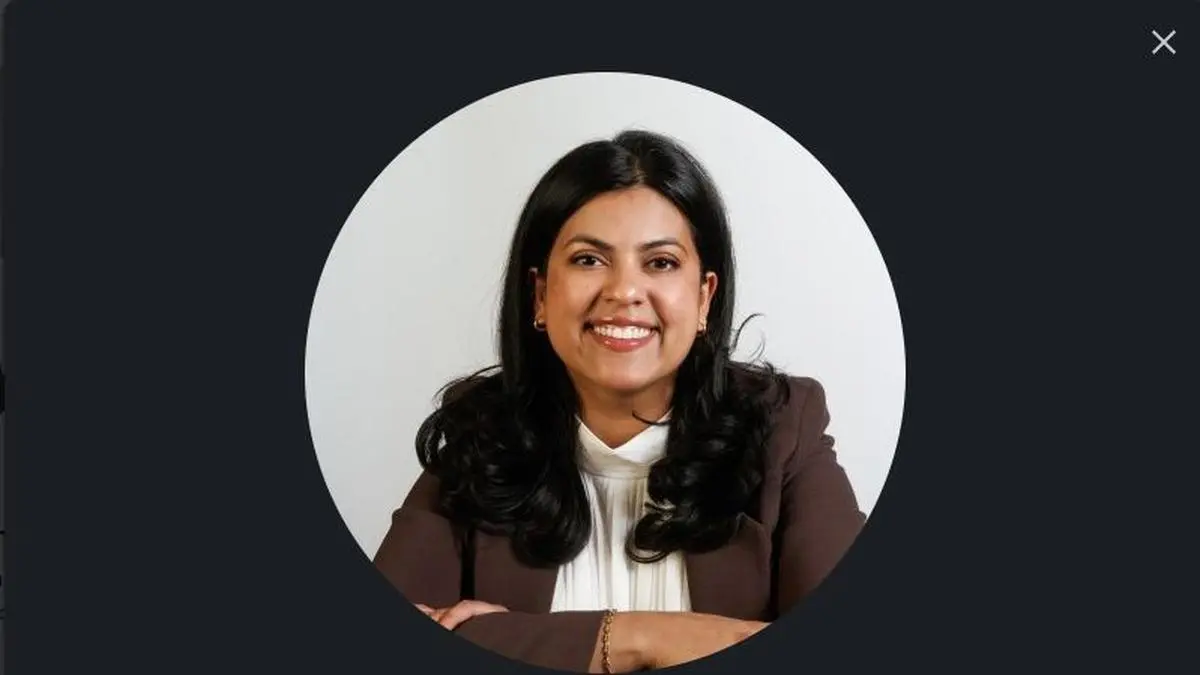
Rini Sampath, 1st South Asian candidate to be on the ballot for the primary for the election for the mayor of Washington DC, USA

Tamil Nadu-born Rini Sampath has become the first South Asian candidate to be on the ballot for the primary for the election for the mayor of Washington DC.

The 31-year-old government contractor from the Democratic Party has based her election campaign on the theme ‘Fix the Basics’ and the promise of “A new DC”.

“I’m not a politician. I don’t owe any special interest groups. It’s time for an outsider who is relentlessly focused on fixing our basic city services,” Samapth says on her campaign website.

Born in Theni in Tamil Nadu, she came to the US as a seven-year-old and has been a resident of Washington DC for more than a decade.

“It’s clear we have a real path to victory. In just four weeks, we made the mayoral ballot as the first South Asian candidate in DC history to do it. That’s what a lean, people-powered campaign can accomplish. Imagine what we could do with the resources to reach every voter across the city,” she said.

Washington DC is dominated overwhelmingly by Democrats and the city never has had a Republican mayor since the elections to the post began in 1975. Before that, the city was administered by a Board of Commissioners appointed by the US president.

The District of Columbia is administered by a popularly elected mayor and a 13-member district council.

“As Mayor of DC, my priority will be to make sure our city lives up to its basic commitments to our residents. Fill the potholes. Stop the catastrophic wastewater spill in the Potomac. Lower prices. Improve 911 wait times,” Sampath said.

The primary is scheduled for June 16, while the general election will be held on November 3.

Others in the mayoral race are Janeese Lewis George, Kenyan McDuffie, Gary Goodweather, Robert L Gross and Rhonda Hamilton.

Published on April 4, 2026


Source link

YouTube
Instagram
WhatsApp