City Union Bank, SalarySe partner for a credit card exclusively for salaried employees

City Union Bank, SalarySe partner for a credit card exclusively for salaried employees


R. Vijay Anand and V. Ramesh, Executive Directors, City Union Bank and SalarySe team of Mohit Gorisariya, Saumeet Nanda and Piyush Bagaria, Co-founders, SalarySe, at the launch of a salaried focused credit card in Chennai.
| Photo Credit:
Photo : Bijoy Ghosh

City Union Bank on Monday partnered with financial wellbeing platform SalarySe to launch the Level Up Credit Card, a credit card built exclusively for salaried individuals and powered by Credit on UPI technology.

“Aligned with the Reserve Bank of India’s vision to promote a cashless economy, the card is engineered to reward real-life spending patterns of working professionals through everyday UPI payments, online transactions, essential monthly bills and in-store purchases,” the companies said in a statement.

“Salary Day Bonus”

The Level Up Credit Card introduces a “Salary Day Bonus” feature, offering up to 37.5 per cent rewards on salary disbursement days, enabling employees to maximise returns on essential expenses coinciding with payroll cycles. Unlike conventional credit cards that concentrate rewards on select use cases, this offering integrates credit into the UPI ecosystem while maintaining credit access through employer-linked payroll verification.

The collaboration leverages SalarySe’s salary-powered financial infrastructure with City Union Bank’s trust and regulatory framework. Users can gain direct access to revolving credit lines within everyday UPI transactions, eliminating the need for standalone loan applications.

“Salaried individuals form the backbone of India’s consumption economy, and this collaboration with Salary Se aligns perfectly with our commitment to expand digital inclusion while encouraging disciplined credit usage,” Vijay Anandh R, Executive Director, City Union Bank, said.

Mohit Gorisariya, Co-founder of SalarySe, said, “With Credit-on-UPI, rewards designed around real life, luxury benefits like lounge access & lower forex markup and predictable financial flexibility, this product simplifies money for millions of working professionals and elevate their lifestyle.” Unlike conventional credit cards that concentrate rewards on select use cases, this offering integrates credit into the UPI ecosystem while maintaining credit access through employer-linked payroll verification.

The collaboration leverages SalarySe’s salary-powered financial infrastructure with City Union Bank’s trust and regulatory framework.

Users can gain direct access to revolving credit lines within everyday UPI transactions, eliminating the need for standalone loan applications.

“Salaried individuals form the backbone of India’s consumption economy, and this collaboration with Salary Se aligns perfectly with our commitment to expand digital inclusion while encouraging disciplined credit usage,” Vijay Anandh R, Executive Director, City Union Bank, said.

Published on December 8, 2025



Source link

Sberbank’s India fund creates rupee-to-Nifty corridor for Russian investors

Sberbank’s India fund creates rupee-to-Nifty corridor for Russian investors


In a move that could reshape how sanction-hit Russia deploys billions of stranded Indian rupees, state-owned Sberbank is launching a closed-ended mutual fund linked to the Nifty50, effectively opening a direct route for Russian investors to put their rupee surpluses into Indian equities.

The structure gives Moscow a way around its currency dilemma: when Russia sells crude oil to India, it receives payments in rupees parked in special vostro accounts that cannot be freely converted into dollars due to U.S. financial sanctions. The new product allows these idle balances to be channelled into Indian capital markets, turning an enforced rupee pool into an investment opportunity.

To start with, Russia’s Sberbank will launch a mutual fund linked to India’s Nifty50 Index, offering Russians diversified exposure to India’s largest and most liquid companies.

Gautam Kalia, Head Investment and Solutions, Mirae Asset ShareKhan, said India is encouraging Russia to reinvest the large rupee reserves accumulated from oil sales into productive sectors. These funds can flow into infrastructure projects like railways and logistics, energy, defence manufacturing, pharmaceuticals, fertilizers, and high-tech areas such as IT and automation, he said.

This strategy mirrors Japan’s long-standing model of infrastructure financing creating a win-win: Russia deploys its trapped rupee pool, and India gains capital for growth and modernisation.

In August, the RBI allowed authorised dealer category-I banks to open special rupee vostro account for their foreign correspondent banks without prior RBI approval. The central bank has also relaxed rules to let Russian firms invest in government securities, bonds and T-Bills, easing earlier curbs.

Led by crude oil imports, the trade turnover between Russia and India has seen remarkable growth over recent years, nearly quintupling to $68 billion in FY25 against about $13 billion in 2021. In FY25, India exported $4.9 billion to Russia but imported $64 billion, leaving a sharp trade gap of $59 billion; crude oil alone accounted for $50 billion.

Narinder Wadhwa, MD & CEO, Ski Capital Services, said similar to how Japan has historically financed major Indian infrastructure projects, Russia may explore long-gestation sectors such as energy, logistics, railways, ports and technology partnerships to deploy idle rupee balances productively.

However, he said returns from these projects in rupees are not helpful unless there is a sustainable avenue for repatriation or a long-term liquidity mechanism, which India has not yet clarified.

Sandeep Parwal, Founder of SPA Capital, said further liquidity in Nifty constituents will push valuations higher, raising entry risks for new investors while offering an exit window for existing shareholders.

Investment for development of infrastructure in India or monetizing the current operational infrastructure assets may be a superior alternative, he said.

Sberbank also plans to invest $100 million in technology, team expansion and new offices. The bank has already applied to the central bank to open branches in ten cities in three years. Its core IT platform — imported from Russia and re-engineered by hundreds of professionals in Bengaluru — is being aligned with Indian regulations.

Sberbank has become a critical bridge in Russia-India trade, cutting transaction time from weeks to under 10 minutes in 80% of cases, without needing a third-country currency.

Published on December 8, 2025


Source link

IDFC FIRST Bank launches upgraded version of its FD-backed credit card

IDFC FIRST Bank launches upgraded version of its FD-backed credit card


IDFC FIRST Bank on Monday said it has launched an upgraded version of its “FIRST WOW! Credit Card”, backed by a fixed deposit (FD).

The private sector lender, in a statement, said the card, which is available against an FD from ₹20,000 and is open to all applicants aged 18 and above, has zero Fx markup on all international spends, offers dual card with Mastercard and RuPay UPI, rewards on UPI spends, trip protection, among others.

Cardholders get a physical Mastercard plus a UPI-enabled RuPay virtual credit card both seamlessly linked to the same account with a unified credit limit and a single consolidated statement.

As at September-end 2025, the number of credit cards in force of the bank stood at 40 lakh, with an outstanding book of Rs 8,638 crore (or 3 per cent of the loan book).

In its second quarter presentation, the Bank said credit cards cost-to-Income ratio has come down from 240 per cent (in FY22) to 96 per cent (H1 FY26) in about four years and expected to reduce further to 75 er cent with scale by FY27.

Published on December 8, 2025


Source link

Wheat sowing up 11%, mustard 5% higher as farmers cover Rabi season’s 75% area

Wheat sowing up 11%, mustard 5% higher as farmers cover Rabi season’s 75% area


Farmers in India have completed planting of winter crops in over 75 per cent of the normal area 637.81 lakh hectares (lh) this year as per latest data of the agriculture ministry. While mustard, the key oilseed crop of the Rabi season, and barley have exceeded their normal area, wheat, chana (gram), masur (lentil), maize and paddy are likely to reach the season’s average in next few weeks.

The total area under all agriculture crops was 6.2 per cent higher at 479.02 lh as of December 5, as against 451.12 lh year-ago, the agriculture ministry said in a statement. The sown area under wheat was 241.40 lh as against 217.81 lh year-ago. The normal area (average of last five years) of wheat is 312.35 lh.

The sowing area under Rabi season’s paddy was 11.4 per cent higher at 10.98 lh from 9.86 lh and maize 3.3 per cent more at 11.41 lh from 11.05 lh. Barley acreage was at 5.95 lh from 5.68 lh year-ago whereas its normal area is 5.63 lh.

Jowar acreage reached at 18.08 lh, marginally lower from 18.56 lh, taking the total acreage under nutri/coarse cereals to 36.286 lh, up 0.9 per cent from 35.94 lh.

In pulses, which reached 106.21 lh against 105.78 lh year-ago, the area under chana was 77.84 lh against 75.16 lh, up by 3.6 per cent and masur acreage was 7.3 per cent lower at 12.98 lh from 14 lh.

The oilseeds acreage was 84.14 lh as of December 5, up by 2.9 per cent from 81.75 lh and it included coverage of 79.88 lh under mustard, which was 4.5 per cent higher from 76.43 lh year-ago, the data show.

Last year, the total area under all Rabi crops in the entire season was 663.04 lh and the foodgrains production was recorded 167.22 million tonne (mt) and that of oilseeds was 13.57 mt.

The government has fixed a target of 171.14 million tonne (mt) of foodgrains which include 119 mt of wheat, 15.86 mt of rice, 16.57 mt of pulses, 3.17 mt of nutri cereals, 14.5 mt of maize and 2.05 mt of barley, as well as 15.07 mt of oilseeds (including 13.9 mt of mustard).

Meanwhile, storage in the major 166 reservoirs continued below 90 per cent of the capacity even as the southern region experiencing 47 per cent surplus rainfall since November 27.

Data from the Central Water Commission (CWC) showed that the level in the key reservoirs was 86.41 per cent of 183.565 billion cubic metres (BCM) capacity at 158.624 BCM. Compared with a year ago and the normal storage (last 10 years) it was 7 per cent and 22 per cent higher, respectively.

Published on December 8, 2025


Source link

CBDT sends over 44,000 communications to taxpayers to disclose crypto transaction

CBDT sends over 44,000 communications to taxpayers to disclose crypto transaction


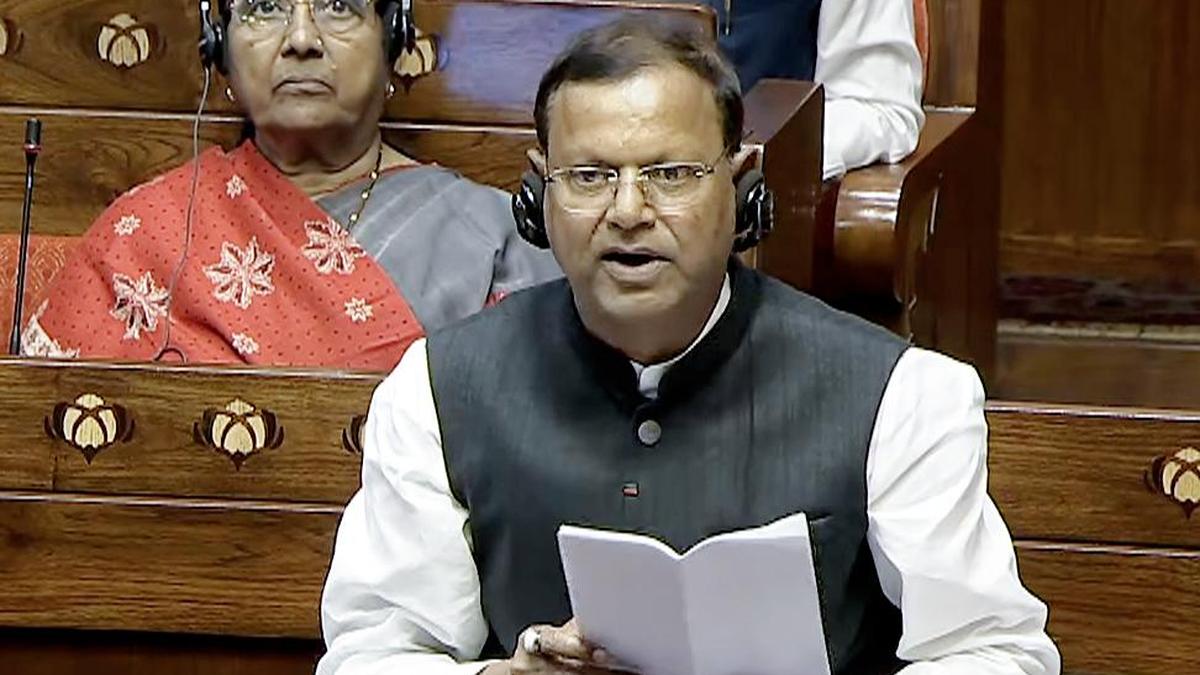
Minister of State in the Finance Ministry Pankaj Chaudhary
| Photo Credit:
ANI

Over 44,000 communications have been sent to taxpayers for not disclosing crypto transactions in the Income Tax Returns, Minister of State in the Finance Ministry Pankaj Chaudhary told Lok Sabha on Monday. At the same time, the Enforcement Directorate (ED) has attached proceeds of crime worth over ₹4,000 crore in crypto-related cases under the anti-money laundering law.

Meanwhile, mop up through Tax Deducted at Sources (TDS) on transaction of crypto has more than doubled in three years, Finance Ministry data, presented in Lok Sabha showed.

In a written reply Chaudhary said: “Under the CBDT’s NUDGE (Non-Intrusive Usage of Data to Guide and Enable) campaign, 44,057 communications have been sent to taxpayers who invested or traded in VDAs but did not report these in Schedule VDA of their Income Tax Returns (ITRs).” Data analytics tools, Project Insight and internal databases are used to match information on VDA transactions with disclosures in ITRs. “TDS returns filed by Virtual Asset Service Providers (VASPs) and taxpayers’ ITRs are also analysed to identify discrepancies and take appropriate action,” he added.

Further, he said that the ED has investigated several crypto-related cases under PMLA, attaching/seizing/freezing proceeds of crime worth ₹4,189.89 crore, arresting 29 persons, and filing 22 prosecution complaints. One accused has been declared a Fugitive Economic Offender

TDS collected

Data in another written reply by Chaudhary showed that total TDS collected from users by crypto exchange platforms was over ₹221 crore in 2022-23 which rose to over ₹511 crore in 2024-25. During this period, Maharashtra saw collection rising to over ₹293 crore from over ₹142 crore. However, Karnataka recorded highest growth with collection reaching around ₹134 crore from ₹39 crore.

Per Finance Act 2022, TDS at the rate of 1 per cent is levied on the transfer of VDA. This applies to all transactions, including those involving offshore entities, if the income is chargeable to tax in India. “It has been observed that certain offshore cryptocurrency exchanges serving Indian users are not complying with the TDS provisions prescribed under the Income-tax Act,” Chaudhary said.

He added that the survey actions were carried out against 03 Crypto Exchanges and non-compliance of TDS provision to the tune of ₹39.8 crore and undisclosed income to the tune of ₹125.79 crore, were detected. “In addition to the above search and seizure operations under Section 132 and Survey actions under Section 133A of the Income Tax Act against various entities resulted in the detection of undisclosed income related to VDA transactions amounting to ₹888.82 crore,” he said.

As crypto assets are inherently borderless, they require strong international coordination to prevent regulatory arbitrage. “Therefore, any regulatory framework for crypto assets can be effective only with significant international collaboration on the evaluation of the risks and benefits and the evaluation of common taxonomy and standards,” Chaudhary said.

Published on December 8, 2025


Source link

इंडिगो संकट की आगे चुकानी पड़ेगी बड़ी कीमत, रेटिंग एजेंसी मूडीज ने बतायी ये बड़ी वजह

इंडिगो संकट की आगे चुकानी पड़ेगी बड़ी कीमत, रेटिंग एजेंसी मूडीज ने बतायी ये बड़ी वजह


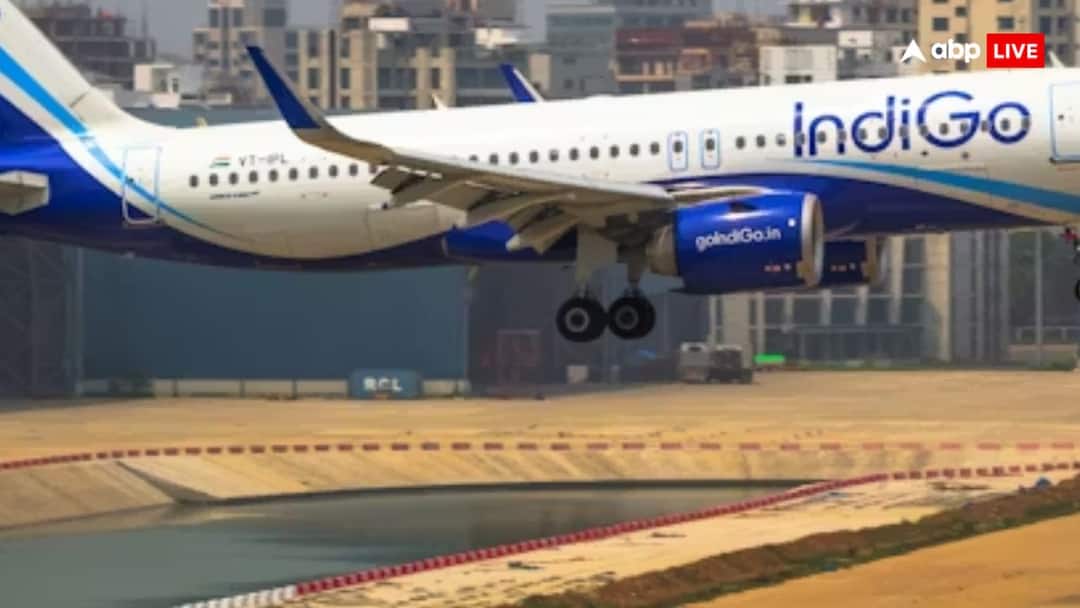
IndiGo Crisis: देश की सबसे बड़ी एयरलाइन इंडिगो पर संकट की वजह से सरकार को एक्शन लेने पर मजबूर होना पड़ा. लगातार रद्द हो रहे विमान, किराए की बढ़ी कीमत और पैसेंजर्स की परेशानी के बीच सरकार की ओर से शो काउज नोटिस जारी कर फेयर कैप तक तय किए गए. इस बीच, रेटिंग एजेंसी मूडीज ने कहा कि आने वाले दिनों में इंडिगो क्राइसिस का कंपनी पर बड़ा निगेटिव असर देखने को मिल सकता है.

इंडिगो पर निगेटिव असर

उड़ानों में हाल ही में उत्पन्न व्यापक अव्यवस्था कंपनी के लिए राजस्व हानि, उड़ानों के रद्द होने से जुर्माने और अन्य क्षतिपूर्ति की वजह से बड़े वित्तीय नुकसान का कारण बन सकती है. मूडीज़ रेटिंग्स ने सोमवार को जारी रिपोर्ट में कहा कि एयरलाइन पिछले एक वर्ष से अधिक पहले लागू किए गए नए विमानन नियमों के लिए प्रभावी योजना नहीं बना पाई, जिसका खामियाज़ा उसे अब भुगतना पड़ रहा है.

रेटिंग एजेंसी के मुताबिक ये स्थिति इंडिगो की साख के लिए भी नकारात्मक है. अत्यधिक व्यस्त शीतकालीन उड़ान सीज़न के बीच अव्यवस्था और बढ़ गई. दो दिसंबर से शुरू हुआ उड़ान रद्दीकरण का सिलसिला पांच दिसंबर को चरम पर पहुंचा, जब इंडिगो को 1,600 से अधिक उड़ानें रद्द करनी पड़ीं. एयरलाइन अब तक सामान्य संचालन पूरी तरह बहाल नहीं कर सकी है और सोमवार को भी 500 से अधिक उड़ानें रद्द हुईं.

कंपनी की प्रतिष्ठा को नुकसान

रेटिंग एजेंसी मूडीज़ ने आगे कहा कि ये अव्यवस्थाएं कंपनी की प्रतिष्ठा को नुकसान पहुंचा सकती हैं, क्योंकि इंडिगो को राजस्व हानि, रिफंड, प्रभावित यात्रियों को मुआवजा और डीजीसीए द्वारा संभावित जुर्मानों का सामना करना पड़ सकता है. एजेंसी ने योजना, निगरानी और संसाधन प्रबंधन में एयरलाइन की बड़ी चूक को इसका मुख्य कारण बताया, जबकि नए नियमों के बारे में उद्योग को काफी समय पहले सूचित कर दिया गया था.

ये भी पढ़ें: पांच साल बाद अब चीन शुरू करने जा रहा भारत में ये सेवा, जानें क्या होगा इसका बड़ा फायदा


Source link

YouTube
Instagram
WhatsApp