निवेश करने से पहले जान लें मंथली बनाम लंपसम SIP का रिटर्न गेम, वरना हो सकता है भारी नुकसान

निवेश करने से पहले जान लें मंथली बनाम लंपसम SIP का रिटर्न गेम, वरना हो सकता है भारी नुकसान


Show Quick Read

Key points generated by AI, verified by newsroom

Mutual Fund SIP vs Lumpsum: भारतीय निवेशकों के बीच म्यूचुअल फंड SIP में निवेश विकल्प आज बहुत फेमस होता जा रहा हैं. एसआईपी में लंबे समय तक छोटी-छोटी राशि में निवेश करके एक बड़ा कॉर्पस बनाया जा सकता है. एसआईपी अच्छा रिटर्न देने वाला एक निवेश ऑप्शन के तौर पर जाना जाता है.

इसमें निवेश करने पर सालाना 12 प्रतिशत या उससे ज्यादा रिटर्न भी मिल सकता है. एसआईपी में दो तरीकों से निवेश किया जाता है. एक तो मंथली और दूसरा लंपसम यानी एकमुश्त राशि का निवेश. बहुत से निवेशकों के मन में यह सवाल होता है कि, इन दोनों निवेश विकल्पों में उन्हें कहां ज्यादा रिटर्न मिल सकता है. आइए, इस विषय की जानकारी लेते हैं…..

12 लाख की एकमुश्त SIP का 10 साल बाद रिटर्न

अगर आप एसआईपी में 12 लाख रुपये का निवेश 10 सालों के लिए करते हैं, और इस दौरान 12 फीसदी का सालाना रिटर्न मिलता है, तो अवधि पूरी होने पर आपका निवेश बढ़कर लगभग 37.27 लाख रुपये तक पहुंच जाएगा.  यानी कुल मिलाकर आपको करीब 25.27 लाख रुपये का लाभ होगा. 

मंथली 10,000 रुपये की SIP

अगर कोई निवेशक हर महीने 10,000 रुपये की SIP शुरू करता है और इसे पूरे 10 सालों तक जारी रखता हैं तो, 10 सालों में कुल निवेश 12 लाख रुपए होगा. 12 फीसदी सालाना रिटर्न की गति से यही रकम बढ़कर लगभग 22.40 लाख रुपये पर पहुंच सकती है. यानी करीब 10.40 लाख रुपये का फायदा होगा.

किसमें मिला ज्यादा रिटर्न

निवेशको को मंथली निवेश की तुलना में लंपसम में ज्यादा रिटर्न मिला. जिसके पीछे कंपाउडिंग को होना है. लंपसम निवेश पर शुरू से ही कंपाउडिंग का लाभ मिलता है और रिटर्न भी बढ़ जाता है.    

डिस्क्लेमर: (यहां मुहैया जानकारी सिर्फ़ सूचना हेतु दी जा रही है. यहां बताना जरूरी है कि मार्केट में निवेश बाजार जोखिमों के अधीन है. निवेशक के तौर पर पैसा लगाने से पहले हमेशा एक्सपर्ट से सलाह लें. ABPLive.com की तरफ से किसी को भी पैसा लगाने की यहां कभी भी सलाह नहीं दी जाती है.)

यह भी पढ़ें: दिसंबर की धमाकेदार बिकवाली! पहले हफ्ते में FPI ने निकाले 12,055 करोड़ रुपये


Source link

Loan Approvals: MNRE shares status of solar PV manufacturing chain with FinMin, NBFCs

Loan Approvals: MNRE shares status of solar PV manufacturing chain with FinMin, NBFCs


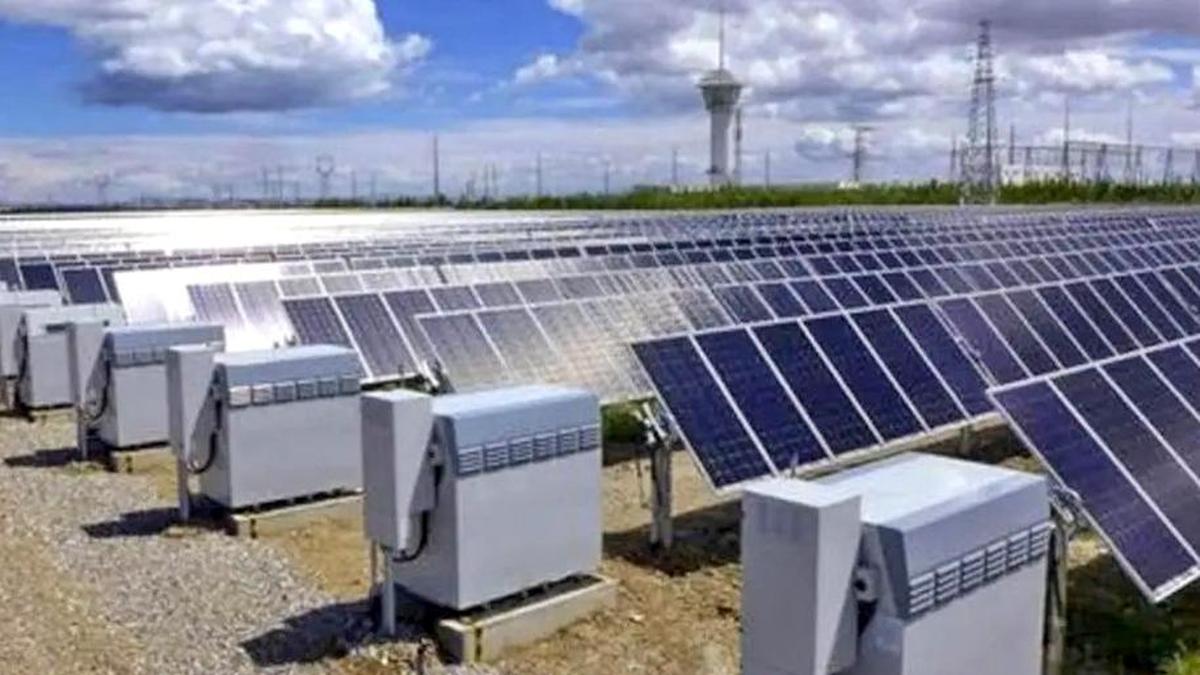
The Ministry of New & Renewable Energy (MNRE) has shared the status of installed domestic manufacturing capacities across various solar PV manufacturing value chains with the Finance Ministry and NBFCs for better evaluation of loan applications for clean energy projects.

MNRE, has circulated to Department of Financial Services and NBFCs like PFC, REC and IREDA, the status of present installed domestic manufacturing capacities across various sectors of solar PV manufacturing, including solar modules and upstream stages like solar cells, ingots-wafers, polysilicon as well as ancillary equipment like solar glass and aluminium frames, the Ministry said.

This will help financial institutions adopt a calibrated and well-informed approach while evaluating proposals for financing any manufacturing facility in the solar PV manufacturing sector and explore as well as expand their solar PV manufacturing portfolio to upstream stages like solar cells, ingots-wafers and polysilicon, it added.

It will also aid in better evaluation of loan applications for solar module ancillaries like solar glass and aluminium frames, etc. as well, rather than being limited to financing solar PV module manufacturing facilities alone.

The MNRE has not issued any advisory to Financial Institutions for stopping lending to either renewable energy power projects or to renewable energy equipment manufacturing facilities, the Ministry said.

The government is committed to make India self-reliant in solar PV manufacturing and establish the country as a major player in the global value chain.

This commitment is supported through a comprehensive set of initiatives, including the PLI Scheme for High Efficiency Solar PV Modules and measures to provide a level playing field for the Indian manufacturers.

The catalytic effect of these interventions has resulted in an expansion in solar module manufacturing capacity, from just 2.3 gigawatt (GW) in 2014 to around 122 GW enlisted in MNRE’s Approved List of Models and Manufacturers (ALMM) at present.

This expansion underscores the success of the Indian solar PV manufacturing story through the collective efforts of industry, various State Governments and the Government of India, while also reinforcing India’s commitment to achieving 500 GW of non-fossil fuel capacity by 2030 and contributing meaningfully to global decarbonization efforts.

The MNRE remains committed to further strengthening the solar manufacturing ecosystem through continued policy support, infrastructure development, and innovation. The Ministry will continue engaging with stakeholders to ensure India’s solar journey remains inclusive, competitive, and future ready.

Published on December 7, 2025


Source link

दिसंबर की धमाकेदार बिकवाली! पहले हफ्ते में FPI ने निकाले 12,055 करोड़ रुपये

दिसंबर की धमाकेदार बिकवाली! पहले हफ्ते में FPI ने निकाले 12,055 करोड़ रुपये


Show Quick Read

Key points generated by AI, verified by newsroom

FIIs Outflow India: भारतीय शेयर बाजार में दिसंबर महीने का पहला सप्ताह विदेशी निवेश के लिए नकारात्मक रहा. दिसंबर के पहले सप्ताह में ही विदेशी पोर्टफोलियो निवेशकों (एफपीआई) ने भारतीय शेयर बाजार से 12,055 करोड़ रुपये की निकासी की है.

विदेशी निवेशकों ने कुल 11,820 करोड़ रुपये के शेयर बेचें और साथ ही 531 करोड़ रुपये के डेट (बॉन्ड) की भी बिक्री की है. हालांकि, नवंबर महीने में एफपीआई ने भारतीय बाजार में भरोसा जताया और 4,113 करोड़ रुपये का निवेश किया था. निवेश पैटर्न में दिखे बदलाव से पता चलता है कि, विदेशी निवेशकों के निवेश का रुख बदल रहा है. आइए आंकड़ों से समझते हैं, इस पूरे गणित को…

विदेशी निवेशक भारतीय बाजार पर कम भरोसा दिखा रहे 

आंकड़ों की बात करें तो, नवंबर महीने में विदेशी निवेशकों ने भारतीय शेयर बाजार से 3,765 करोड़ की निकासी की है. हालांकि, अक्टूबर में निवेशकों ने 14,610 करोड़ रुपये की खरीदारी की थी. इससे पहले जुलाई, अगस्त और सितंबर तीनों महीनों में जोरदार बिकवाली का दौर देखने को मिला था. एफपीआई ने जुलाई में 17,700 करोड़, अगस्त में 34,990 करोड़, और सितंबर में 23,885 करोड़ रुपये की कुल बिकवाली की है.

NSDL के ताजा आंकड़ों के अनुसार, दिसंबर के पहले हफ्ते में हुई बिकवाली को जोड़ने के बाद, साल 2025 में अब तक कुल मिलाकर एफपीआई 1.55 लाख करोड़ रुपये (करीब 17.7 अरब डॉलर) बाजार से निकाल चुके हैं.

घरेलू निवेशकों ने संभाला बाजार 

घरेलू निवेशकों की खरीदारी के कारण विदेशी निवेशकों की इस बिकवाली का ज्यादा असर शेयर बाजार में देखने को नहीं मिला. घरेलू संस्थागत निवेशकों ने इस अवधि में करीब 19,783 करोड़ रुपये की जबरदस्त खरीदारी की.

इसके पीछे पिछले दिनों आई अर्थव्यवस्था की रिपोर्ट हो सकती है. जिसकी वजह से घरेलू निवेशक बाजार पर भरोसा जता रहे हैं. साथ ही पिछले दिनों आरबीआई के द्वारा रेपो रेट में कटौती की घोषणा भी की गई है. जिससे बाजार को मदद मिल सकती है. 

यह भी पढ़ें: मल्टीबैगर का मास्टर! 50 रुपये से कम के शेयरों ने दिया 13,500% का रिटर्न, निवेशकों की हुई बल्ले-बल्ले


Source link

RBI ने Zero-Balance Bank को दी बड़ी सुविधा! BSBD Account अब बनेगा Full-Feature Savings Account

RBI ने Zero-Balance Bank को दी बड़ी सुविधा! BSBD Account अब बनेगा Full-Feature Savings Account


RBI ने Zero-Balance यानी BSBD (Basic Savings Bank Deposit) Account Holders के लिए बड़ा और ऐतिहासिक फैसला लिया है। अब BSBD Accounts को मिलने वाली सुविधाओं का दायरा बढ़ा दिया गया है, जिससे ये खाते अब लगभग Full-Feature Savings Account जैसी सुविधाएँ प्रदान करेंगे—वो भी बिना किसी Minimum Balance और बिना अतिरिक्त चार्ज के। नए नियमों के तहत, अब Zero-Balance खाते में जितनी बार चाहें Cash Deposit कर सकते हैं, इस पर कोई limit नहीं होगी। साथ ही, online या cheque द्वारा पैसा मंगाने की सुविधा भी दी जाएगी। इससे छात्रों, आर्थिक रूप से कमजोर लोगों और basic banking इस्तेमाल करने वालों को बड़ी राहत मिलेगी। ग्राहकों को अब बिना किसी Yearly Charge के ATM या ATM-cum-Debit Card मिलेगा। इसके अलावा, साल में कम से कम 25 पन्नों की cheque book , free internet banking , free mobile banking , और free passbook या monthly statement भी उपलब्ध कराया जाएगा। Cash निकालने के लिए ग्राहकों को हर महीने कम से कम 4 free withdrawal मिलेंगे। खास बात यह है कि digital लेन-देन—UPI, NEFT, RTGS, IMPS, PoS—इन चार free withdrawal की limit में नहीं गिने जाएंगे। सबसे महत्वपूर्ण बदलाव यह है कि बैंक अब BSBD खाताधारकों के साथ किसी तरह का भेदभाव नहीं कर सकेंगे, और उन्हें वही सुविधाएँ देनी होंगी जो अन्य ग्राहकों को मिलती हैं।


Source link

IL&FS to initiate process before NCLT to recover ₹187 cr excess remuneration paid to ex-directors

IL&FS to initiate process before NCLT to recover ₹187 cr excess remuneration paid to ex-directors


 IL&FS has issued 10 letters dated August 13, 2024, IFIN has issued 12 letters dated August 14, 2024 and ITNL sent 12 letters dated August 14, 2024, to their respective erstwhile directors seeking recovery of about ₹187.02 crore as excess monies/remuneration paid to them.
| Photo Credit:
REUTERS/FRANCIS MASCARENHAS

The IL&FS Group will initiate before insolvency tribunal NCLT the process to recover ₹187 crore excess remuneration paid to its former directors and two subsidiaries, who have refused to return the excess managerial remuneration, according to the latest affidavit filed by the debt-ridden firm before NCLAT.

Moreover, IL&FS is also going to reopen the financial statements for 2018-19 and 2019-20. It has received approval from NCLT for incorporating impacts arising from the recast financial statements.

“Such revised financial statements for FY 2018-19 have been prepared and are being audited by statutory auditors appointed by NCLT. The revised financial statements will be finalised before the end of 31st December 2025,” the IL&FS Group said.

Last year, books of accounts and financial statements of IL&FS and its two subsidiaries — IFIN and ITNL — were recast on the directions of the National Company Law Tribunal (NCLT) for five years — FY 2013-14 to FY 2017-18 — and a loss of around ₹9,600 crore was found.

Based on this, IL&FS is in the process of recovering ₹187 crore from the directors and independent directors of the previous board, during whose tenure the company and its two subsidiaries — IFIN and ITNL — were shown in profit of ₹1,869 crore, through financial engineering, though they were in loss.

“IL&FS is now in process of filing an application with the NCLT for recovery of excess managerial remuneration from its erstwhile whole-time directors and is in the process of finalising the next steps with respect to pursuing recovery from the erstwhile Independent Directors in accordance with guidance received from its legal advisors,” according to the latest affidavit filed before the National Company Law Appellate Tribunal.

IL&FS said it will file an application before the NCLT against the erstwhile whole-time directors, who owe nearly 90 per cent of the total dues, and also seek recovery from independent directors of these three companies.

In pursuance of the audited re-casted financial statements of 2013-14 to 2017-18, three IL&FS entities had already issued notices.

IL&FS has issued 10 letters dated August 13, 2024, IFIN has issued 12 letters dated August 14, 2024 and ITNL sent 12 letters dated August 14, 2024, to their respective erstwhile directors seeking recovery of about ₹187.02 crore as excess monies/remuneration paid to them.

In this, two independent directors, each from IL&FS and ITNL, have voluntarily repaid the amounts sought, without admitting liability, while the rest are contesting the demand, according to industry observers.

Moreover, its former executive and whole-time directors have responded stating, among other things, that the provisions of sections 197 and 198 and part II of Schedule V are not applicable to them.

Several other key independent directors who were on the boards of IL&FS and two step-down units are RC Bhargava, Rina Kamath, SB Mathur, among others.

Section 199 of the Companies Act has provisions for recovery by the company in case of fraud or non-compliance from management.

These submissions form part of the affidavit filed by IL&FS to NCLAT, updating its resolution status every six months.

In the latest affidavit, the IL&FS Group said it has discharged ₹48,463 crore to its creditors as of September 2025. This is 7.02 per cent higher than ₹45,281 crore, the amount of debt that stood resolved from its last status report in March 2025.

IL&FS has maintained the target of ₹61,000 crore from the overall debt resolution of its assets, “which aggregates to approximately 61.39 per cent of the total external debt outstanding of ₹99,355 crore”, it said.

At the time of the crisis, the IL&FS Group comprised 302 entities as of October 15, 2018 in which 169 entities are/were domestic group entities, while the remaining were offshore group entities.

IL&aFS Group, as of October 8, 2018, had availed aggregate external fund-based debt of ₹94,215 crore, of the total external debt outstanding of ₹99,355 crore. Of this, ₹48,000 crore (almost 51 per cent) was availed by four key holding companies IL&FS, IFIN, ITNL and IEDCL.

Published on December 7, 2025


Source link

Cong's Tewari introduces bill in LS to free MPs from ‘whip tyranny’

Cong's Tewari introduces bill in LS to free MPs from ‘whip tyranny’


Congress MP Manish Tewari, speaks in the Lok Sabha during the ongoing winter session of Parliament, in New Delhi on Friday
| Photo Credit:
ANI

Congress MP Manish Tewari has introduced a bill in Lok Sabha that seeks to allow parliamentarians to take an independent line in voting on bills and motions other than those affecting the government’s stability in a bid to free them from “whip-driven tyranny” and promote “good lawmaking”.

Tewari, who introduced the private member’s bill on Friday to amend the Anti-Defection Law, said his proposed legislation seeks to flag who has primacy in a democracy — the elector who stands in the sun for hours to elect his or her representative or the political party whose whip the representative becomes the helot of.

The bill, introduced by Tewari for the third time in Lok Sabha after 2010 and 2021, seeks to give parliamentarians the freedom to toe an independent line in voting on bills and motions other than a confidence motion, no-confidence motion, adjournment motion, money bills and financial matters that could affect the stability of a government.

“This bill seeks to return conscience, constituency and common sense to the echelons of the legislature so that an elected representative actually functions as the representative of the people who elected him and not as an instrument of a whip issued by his party, transforming lawmakers into mere lobotomised numbers and dogmatic ciphers responding to a division bell,” Tewari told PTI.

The statement of objects and reasons of the bill state that it proposes to amend the Tenth Schedule to the Constitution with a view to provide for the following – “a member shall incur loss of his membership only when he votes or abstains from voting in the House with regard to a confidence motion, no-confidence motion, adjournment motion, money bill or financial matters, contrary to any direction issued in this behalf by the party to which he belongs to, and in no other case.” “The Chairman or the Speaker of a House shall make an announcement in the House regarding any direction issued by a political party in respect of the aforesaid motions, bill or financial matters, as soon as possible, after such direction has been communicated to him by that political party,” the statement of objects and reasons of the bill said.

“While making such an announcement, the Chairman or the Speaker of House shall also specifically inform the members that the defiance of the direction issued by a political party by any member shall result in automatic cessation of his membership; and a member shall have the right to appeal against cessation of his membership to the Chairman or the Speaker, as the case may be, within a period of fifteen days from the date of such cessation and the appeal shall be disposed of within a period of sixty days from the date of its receipt by the Chairman or the Speaker of a House,” it said.

Speaking about the bill, Tewari said it seeks to achieve twin objectives – the stability of the government is not impacted and parliamentarians and legislators exercise legislative choice.

“What is happening is when Parliament assembles at 2 o’clock in the afternoon, for government business, there is at times not even a quorum in the House. And in fact, there is an unspoken agreement between the treasury benches and the opposition not to raise the quorum issue so that if at all the House is functioning and it is not disrupted, it can continue,” the Congress MP from Chandigarh said.

The reason for this is that parliamentarians do not see a role for themselves in lawmaking which is one of their essential functions, he said.

“So the law is made by some joint secretary in some ministry. It is brought to Parliament, a minister will read out a prepared statement explaining what it is. Then it’s put to a pro forma discussion and then as a consequence of a whip-driven tyranny, those on the Treasury benches invariably vote for it and those on the opposition benches vote against it.

“So good lawmaking where members of Parliament would actually spend time looking at best practices around the world, researching legal precedent and then contributing to the proceedings, that has all become history,” Tewari said.

Asked whether the bill aims to remove the tyranny of the whip and promote good lawmaking, Tewari said “absolutely”.

“It is important to contextualise the bill. From 1950 to 1985, Members of Parliament and members of the state legislatures were subjected to whips by their respective political parties but the whips carried no coercive consequences,” he said.

“In 1967, the ugly spectre of Aaya Ram Gaya Ram started when legislators were crossing the floor with impunity with one legislator in Haryana crossing the floor eight times in one day. The spectre of defections became the bane of Indian democracy. Subsequently, almost 18 years later, then prime minister Rajiv Gandhi brought the anti-defection law as the 10th Schedule to the Constitution of India,” he said.

“It has been 30 years, the anti-defection law, however well intended it may be, has not been able to check the menace of defection. If defections were a retail activity in the 1960s, they became a wholesale activity by the 1990s after the introduction of the anti-defection law and subsequently by the year 2000s, especially after 2014 it has become a mega mall activity where entire parties are bought and sold wholesale, lock, stock and barrel,” Tewari said.

He asserted that the kind of “whip-driven” tyranny that the 10th schedule has inadvertently ended up introducing is not present in any other democracy around the world.

“You have reduced legislators, parliamentarians, parliamentary choice and parliamentary lawmaking to a complete farce- the principal function of Parliament is to appropriate a portion of monies to the government. How can that be done without free choice?” he said.

Tewari also called for setting up a judicial tribunal outside the prescient’s of Parliament consisting of a division bench of the Supreme Court to hear 10th Schedule matters. Appeals of any would lie to a five-judge bench with the provision of a statutory review after that to be heard in open court, he said.

Similarly, for the state legislatures the original appeal must lie to a judicial tribunal consisting of a division bench of the high court with the appeal to a five-judge bench and subsequently to the Supreme Court, Tewari said.

Published on December 7, 2025


Source link

YouTube
Instagram
WhatsApp