IPL 2026 ad rates go up by 25-30%, led by Smart TV slots

IPL 2026 ad rates go up by 25-30%, led by Smart TV slots


As the 2026 edition of the Indian Premier League (IPL) kicks off in Bengaluru on March 28, television advertising rates are up by 25-30 per cent compared to 2025. The higher ad rates are largely led by demand around Smart TV or Connected TV (CTV) slots, which offer a more interactive experience compared to linear TV.

Ad rates in terms of first ask have increased by 20 per cent for CTV to around ₹600 cost per mille (CPM), whereas linear TV ad rates went up 10 per cent from last year’s rates of ₹18-28 lakh, as per Nitro Commerce.

“While inventory volume is soaring, standard entry cost remains surprisingly stagnant. Even with targeting at ₹300 or premium CTV at ₹600, the “commodity” ad space is no longer the primary battlefield,” said Umair Mohammed, founder CEO of Nitro Commerce.

Targeted reach

Advertisers prefer CTV over linear TV as it helps them reach a specific target audience. Linear TV, while more expensive in absolute terms, reaches an unsegregated audience, resulting in a lot of media spend wastage, according to experts.

“Linear TV reaches everyone from metros to remote villages. CTV, by comparison, filters a more top-tier audience – consumers with broadband connections. So, a luxury brand may prefer to buy a more affluent audience via CTV,” said Lloyd Mathias, a business strategist.

Audience Focus

Modern brands focus on “moment marketing” like DRS, tickers, or the Super 4s and 6s. These slots capture peak psychological attention when viewers are most emotionally invested. In this regard, CTV is more measurable with hard digital data as opposed to Linear TV, which relies on TRP numbers.

“CTV offers the premium audience which Jio has been itching to leverage. Also, CTV is where the real battle for content is between Amazon, Netflix, Sony and Jio,” said Ajimon Francis, Managing Director at Brand Finance India.

Ultimately, IPL remains a “Go Big or Go Home” arena, said Mohammed. The real financial weight lies in the massive ₹100–150 crore sponsorship deals. On Thursday, JioStar announced 27 sponsors for 2026 with Google, Campa and Havells & Lloyd as the co-presenting sponsors.

Published on March 27, 2026


Source link

RBI’s ‘Payments Vision 2028’ envisages a switch-on/off facility across digital payment modes, electronic cheques

RBI’s ‘Payments Vision 2028’ envisages a switch-on/off facility across digital payment modes, electronic cheques


The initiative is aimed at bolstering consumer confidence in digital payment methods. 
| Photo Credit:
AMIT DAVE

The Reserve Bank of India (RBI) on Friday released its ‘Payments Vision 2028’, which envisages a switch-on/switch- off facility across all digital payment modes, introducing a Payments Switching Service (PaSS), a Shared Responsibility Framework arising from unauthorised digital payment transactions and launching electronic cheques.

The vision lays out a roadmap for the evolution of India’s payments ecosystem over the next three years. It consists of 15 specific initiatives, which focus on user empowerment, strengthening safeguards against fraud, enhancing efficiency of cross-border payment frameworks and promoting ease of doing business, among others.

The Central bank plans to extend the switch-on and switch-off facility for domestic and international card transactions, currently available to customers and help them exercise greater control over their cards, to all digital payment modes.

This facility would help bolster consumer confidence and contribute towards controlling frauds in digital payment transactions, per the Vision document.

PaSS

To address the challenges faced by customers in managing their payment instructions in case of switching banks , merger of banks, etc., RBI will examine the feasibility of implementing a ‘Payments Switching Service’.

This centralised service would facilitate migration of payment instructions, both incoming and outgoing, from one account to another.

Customers will be able to view all payment flows linked to their accounts and initiate either a full or partial switch with appropriate authorisation.

RBI said the objective is to provide customers with centralised control over their payment instructions, facilitate orderly transitions during systemic changes like bank mergers, and foster healthy competition and service excellence among financial institutions.

Shared responsibility framework

RBI will explore introducing a shared responsibility framework under which both the customer’s bank (issuer) and the beneficiary’s bank jointly bear the liability arising from unauthorised digital payment transactions.

This approach would incentivise both parties to implement robust fraud detection and prevention measures, and strengthen coordination for timely intervention, per the document.

The existing Limiting Liability Framework for safeguarding customers from payment frauds places responsibility and liability exclusively on the issuer.

TreDS

To create a more integrated, efficient, and accessible receivables discounting ecosystem for MSMEs, the RBI is likely to introduce full interoperability across Trade Receivables Discounting System (TReDS) platforms to harness efficiencies, competitive spirits, and avoid duplication of efforts; factoring with recourse; and trade receivables discounting of export MSMEs.

Electronic cheques

The Central bank intends to undertake a comprehensive review of the design and security features of cheques to enhance uniformity, strengthen fraud prevention, and ensure alignment with emerging processes. The review will identify and adopt best practices, making them applicable across all cheque instruments.

Further, cheques offer some unique benefits over other payment methods. To leverage the unique benefits of paper-based instruments and the speed and reliability of electronic payments, and cater to new business use cases, introduction of electronic cheques in India shall be explored.

Published on March 27, 2026


Source link

Cotton prices gain as demand increases on weakening rupee

Cotton prices gain as demand increases on weakening rupee


Cotton prices in India have increased further on demand from spinning mills and the trade. Domestic prices are tracking the upward movement in the global price trend, even as the weakening of the rupee against the dollar is making imports expensive.

On Friday, Cotton Corporation of India (CCI), currently the largest stock holder in the country, increased the natural fibre’s prices by Rs 300 per candy (356 kgs). Including today’s revision, CCI’s price list has improved by Rs 1,900 a candy since the beginning of this month.

CCI chairman-cum-managing director Lalit Gupta told businessline that the upward revision in prices was following the global price trend. There is a good demand for cotton and yarn. “We have been able to sell 39 lakh bales of 170 kg each in March itself out of the total procurement of 1.05 crore bales, which indicates a good demand,” he said.

ICE futures up 14%

Cotton Futures on the ICE market have gained by over 14 per cent since early March and are hovering above 69 cents per pound for May 2026 delivery and above 71 cents for July delivery.

“The way rupee is depreciating and ICE Futures are going up, cotton price for good quality is likely to up in the coming days,” said Atul Ganatra, former president of Cotton Association of India (CAI) the apex trade body.

Ramanju Das Boob, a sourcing agent in Raichur said the demand is going up as strong dollar and rising global prices are making the imports expensive. “There is a good demand for cotton from not only the mills, but also the multinational trading firms as they are finding the Indian prices attractive at current levels as rupee weakens further against the dollar,” he said.

In the recent weeks, the demand for the Indian cotton yarn has also gone up from countries such as China, Bangaldesh and Vietnam amidst the disruption in the global supply chain due to the ongoing war.

Published on March 27, 2026


Source link

High input costs and supply squeeze: The new threat to India’s 2026 kharif income

High input costs and supply squeeze: The new threat to India’s 2026 kharif income


India has produced 24.23 lt of fertilizers —13.55 lt of urea, 7.62 lt DAP/NPK and 3.06 lt SSP, during March 1-24
| Photo Credit:
PTI

India’s Kharif fertilizer supply faces a reality check as the US-Israel-Iran war enters its fourth week. Despite official assurances, a shortage of natural gas and logistics bottlenecks are hitting urea production. With shipping routes diverted and no ceasefire on the horizon, the government’s ‘adequate stock’ claim is being tested by the reality of a global energy and supply chain rupture.

Fertilizer Minister J P Nadda on Friday told Parliament that India has adequate reserves to provide fertilizers to farmers and there is no need to panic.

“I want to assure the citizens of the country that the government has taken steps to ensure fertilizer is available to farmers whenever required. We have sufficient reserves in place. There is no need to panic,” Nadda said.

As on March 23, India has 53.08 lakh tonnes (lt) of urea stock, 21.80 lt of di ammonium phosphate (DAP), 7.98 lt of muriate of potash (MOP) and 48.38 lt of complex (in combination of N, P, K, S nutrients). The fertilizer industry is keenly watching how the stock position will be this year amid threat to domestic production. The stock position as on April 1, 2025 was 55.96 lt of urea, 9.15 lt DAP, 8.83 lt MOP and 34.04 lt complex fertilizer.

In the last kharif season, the requirement of urea was estimated at 185.4 lt whereas the sales rose by 4 per cent to 193.2 lt. The demand for different fertilizers during kharif 2026 is yet to be estimated.

India’s production

The government also said India has produced 24.23 lt of fertilizers — 13.55 lt of urea, 7.62 lt DAP/NPK and 3.06 lt SSP, during March 1-24, notwithstanding the gas supply crunch amid the West Asia crisis. To further augment supplies to the urea plants, an additional 7.31 MMSCMD of natural gas has been procured through bidding process for March 18-31, that is expected to increase gas availability to 80 per cent of their past six-month average consumption, from current 65 per cent supply.

According to Anand Chandra, co-founder and executive director of Arya.ag, when fertilizer prices move globally, the first real impact is felt at the farmgate. For smallholders, even a 10–15 per cent increase in input costs can influence cropping decisions and directly affect income outcomes, he said adding this often translates into tighter input usage, changes in crop planning, and increased pressure on working capital during the season.

Government officials said since key fertilizers’ retail prices are capped in India, there may not be an impact, provided States able to check black marketing when supplies are strained. However, there are a number of non-subsidised fertilizers used by progressive farmers, mainly into commercial cultivation, and those can be affected from global price rise, the officials said adding any increase in diesel or power costs, if happened, for farmers will be an additional burden. The government has not yet raised the prices of diesel and petrol.

Chandra also said in the current environment, any increase in crude prices or supply shortfalls is likely to raise transportation costs, which then flows through the agri value chain. “This can soften demand in certain commodities or delay price transmission, further tightening realisations for farmers, “ he said adding higher input costs and uncertain demand conditions can significantly strain farmer incomes in a single season.

He suggested access to storage, timely finance, and reliable market linkages should be focussed in helping farmers manage this volatility and make more informed selling decisions.

Published on March 27, 2026


Source link

Retail yet to fully arrive, leverage demand won’t fade: Dinesh Thakkar, Chairman, Angel One

Retail yet to fully arrive, leverage demand won’t fade: Dinesh Thakkar, Chairman, Angel One


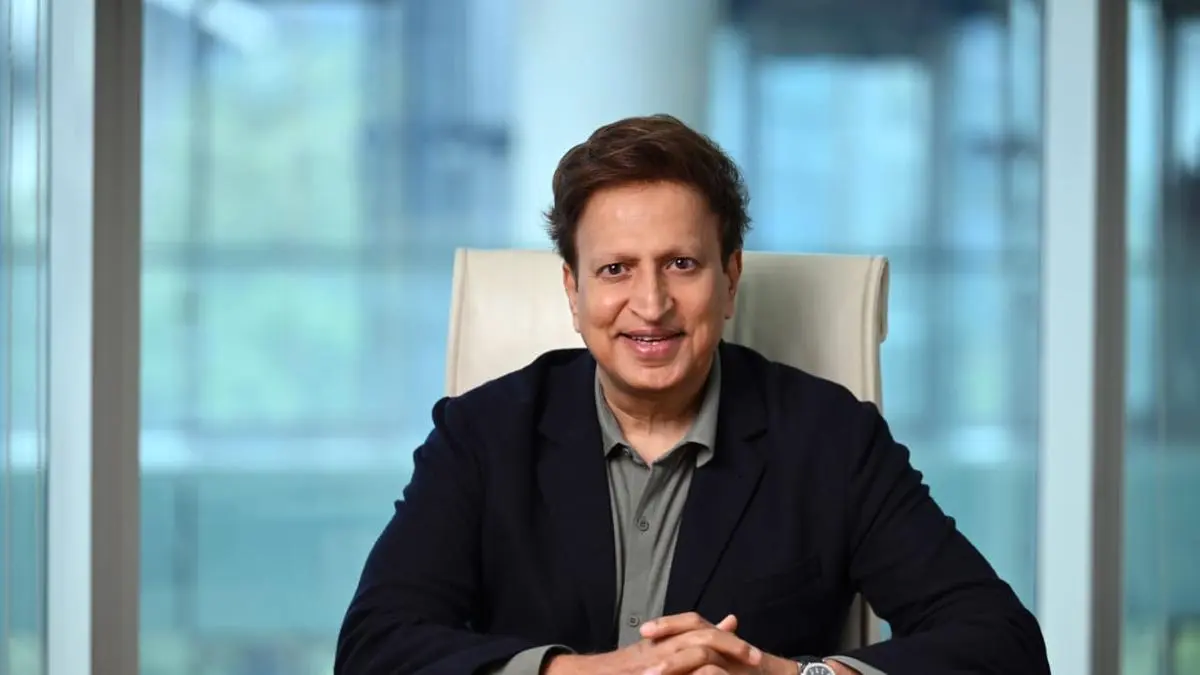
Retail participation in India remains at a very early stage, with shallow investment depth despite a rise in investor accounts, says Dinesh Thakkar, Chairman, founder and CEO of Angel One, pointing to a long runway for deeper market participation. In an interaction with businessline, he said regulatory tightening in derivatives is part of a broader cycle and that “trading is a zero-sum game,” with technology expected to play a key role in moving investors towards long-term wealth creation

How do you see retail participation evolving in India?

Retail participation in India is still at a very early stage, both in terms of the number of investors and the depth of investment. There is potential for 30–40 crore new investors to enter the market over time, but even among those who have already entered, participation remains shallow.

The opportunity is not just about bringing more people into the market, but about enabling deeper participation. The real question is how we position ourselves for the next 10–20 years and move investors from being first-time participants to becoming knowledgeable, long-term investors.

Over the last decade, mutual fund AUM has grown from about ₹11 lakh crore to ₹82 lakh crore. Retail ownership of market capitalisation is now around 19 per cent, higher than FII ownership. That reflects a clear shift towards long-term investing.

Where do you see the biggest opportunity for technology and AI to deepen participation?

Despite equities delivering 14–15 per cent CAGR over the long run, a large part of India is still not investing in equities. The issue is not just affordability — it is trust, awareness and behaviour.

Household equity exposure in India is around 7–8 per cent, compared with about 60 per cent in developed markets like the US. That gap represents the real opportunity. Getting people into the market is one challenge; getting them to allocate meaningfully over time is another.

Technology and AI can help bridge this by improving awareness, building trust and guiding behaviour.

How do you see the recent tightening in derivatives impacting retail?

Trading is a zero-sum game — some people will win and some will lose, and typically those who are newer to the market are more vulnerable.

Policy decisions should be based on long-term investor outcomes, not short-term participation cycles. You have to look at the investor’s overall balance sheet over 5–10 years, not just one product or one phase.

Regulation has always stepped in when excesses build up. The market has moved from badla to futures, then options and now weekly expiries. Whenever speculation becomes excessive, regulation responds. That is part of keeping the market healthy.

How do you see the surge in options trading among retail investors?

A large part of this activity is driven by younger participants taking directional bets. These are not sophisticated investors running hedging strategies. They are looking for leverage, and options are the most accessible regulated product.

Earlier, leverage was more available in the cash market through intraday trading. As that reduced, activity shifted to options. This shows that the segment is fundamentally seeking leverage.

If the market offers a properly designed alternative, such as a leveraged ETF, some of this activity could migrate there. The demand for leverage itself is unlikely to disappear. A customer often starts as a trader and gradually evolves into a long-term investor. SIP inflows have grown from about ₹3,000 crore in 2015 to over ₹30,000 crore now, and that growth has been consistent.

If you shut the gateway product entirely, some investors may not take the next step. Even if they begin with trading, many will, over time, shift towards mutual funds and cash market investing. That is the journey the industry should support.

What role does your platform play in this transition?

Our platform is built to understand the customer by tracking risk appetite, earning patterns and behaviour, and using those insights to support better allocation decisions.

Our role is not just to enable transactions, but to improve investor outcomes over time. Once trust is established, we can guide customers towards the right products and help their journey evolve.

We are building capabilities across wealth and long-term investment solutions so that customers can move beyond smaller investments as they mature. We also see strong demand in this segment, with Ionic Wealth crossing $1 billion in AUM.

AI is a key part of this strategy. By matching solutions to an individual’s profile, tracking behaviour and offering timely guidance, the platform can help investors become more informed and move towards long-term wealth creation.

Do you see tighter regulations having an impact on the broking industry?

Tightening is necessary and is healthy for long-term growth. The industry has adapted to regulatory changes across cycles. Retail participation is still underpenetrated, and investment depth remains low. As long as this underpenetration exists, the growth runway remains strong. What matters is ensuring minimal scope for manipulation and timely regulatory action. That is what builds trust. India also needs a healthy derivatives market. For foreign investment to remain strong, there has to be sufficient participation on both sides. Regulators understand this and have strong surveillance systems. Over time, such interventions strengthen the market.

What is your outlook on markets and FPI participation?

Current market levels offer a reasonable entry point, and volatility should be seen as an opportunity. Geopolitical events create short-term uncertainty, but the broader economy and corporate earnings remain resilient. Over the coming quarters, earnings growth should improve and reflect in stock prices.

Foreign investors may move in and out tactically, but they cannot remain structurally underweight on India for long. Over the past couple of years, flows have fluctuated, but India’s long-term growth story remains strong.


Source link

Geopolitical tensions drive volatile gold prices, hitting jewellery demand

Geopolitical tensions drive volatile gold prices, hitting jewellery demand


Gold prices plunged by ₹3,263 or 2 per cent to ₹142,942 per 10 gram on Friday
| Photo Credit:
REUTERS

A surge in geopolitical tensions in West Asia has jolted India’s gold market, triggering sharp price swings and dampening both domestic buying and export demand at a critical juncture for the jewellery trade.

Gold prices, which had rallied for most of the month, have turned sharply volatile amid global uncertainty, while a weakening rupee and mounting logistical disruptions threaten to further squeeze imports. The combined impact is weighing on sentiment across the value chain, from retailers to exporters, as consumers turn cautious in the face of sudden price corrections.

Gold prices plunged by ₹3,263 or 2 per cent to ₹142,942 per 10 gram on Friday against ₹146,205 in line with the global trend, according to the Indian Bullion Jewellers and Association of India data. In fact, gold prices have declined by ₹24,529 per 10 gram or 15 per cent in March due to uncertainty kicked off by the US attack on Iran.

Similarly, silver prices have fallen to ₹221,647 per kg against ₹234,814 on Thursday. It has dipped by ₹68,201 from ₹289,848 per kg on March 2.

Short-term uncertainty

Avinash Gupta, Vice Chairman, the All India Gem And Jewellery Domestic Council said the ongoing West Asia conflict and the resulting volatility in global gold prices have created short-term uncertainty in jewellery demand.

However, Indian consumers continue to view gold and jewellery as a safe and trusted asset, especially during times of geopolitical tension, he added.

While retail sentiment has been cautious, the long term fundamentals of the industry remain strong, and we expect demand to stabilise as markets adjust to the new price levels, said Gupta.

Interestingly, gold has lost its safe haven status amid the raging West Asia war and dipped along with other assets including equity markets. The destruction of oil producing assets in West Asia has forced investors move their bets from gold to crude oil.

The war has made it difficult to export bullion from Dubai where the flight operations have come to a standstill. This apart, the rupee depreciation has made the cost of imports more costlier.

Anindya Banerjee, Head of Commodity and Currency Research, Kotak Securities said the rupee has depreciated to all-time low near 94.80 with Brent crude moving back to $110 a barrel and exerting renewed pressure on the rupee.

The currency is also facing headwinds from persistent FPI selling in both debt and equity, with outflows crossing $13 billion this month and potentially matching the pace seen in March 2020, he said.

The rupee depreciation will hold gold prices elevated compared to the global markets and this will further depress demand in domestic markets.

Published on March 27, 2026


Source link

YouTube
Instagram
WhatsApp