Ratan Tata's stepmother, Simone Tata, passes away in Mumbai at 95

Ratan Tata's stepmother, Simone Tata, passes away in Mumbai at 95


Ms. Simone Tata, Chairperson of Westside, Trend Ltd
| Photo Credit:
NAGARA GOPAL

Simone Tata, the late Ratan Tata’s stepmother passed away this morning at Breach Candy Hospital in Mumbai after a brief illness, a statement from the Tata group said.

“She will always be remembered for her contribution to the growth of Lakmé as India’s leading cosmetic brand and laying the foundation for fashion retail with the Westside chain,” it said, adding that she also guided the work of many philanthropic organisations including Sir Ratan Tata Institute.

“With her positivity and deep resolve she overcame many challenges in her life while touching many of us deeply.”

Simone Tata, 95, is survived by her son Noel Tata, chairman of Tata Trusts, his wife and grandchildren Neville, Maya and Leah.

Published on December 5, 2025


Source link

Storage in key Indian reservoirs remains below 90% of capacity

Storage in key Indian reservoirs remains below 90% of capacity


The storage will likely be maintained at this level as remnants of cyclone Ditwah and the emergence of La Nina could lead to more showers
| Photo Credit:
GOUTHAM P

The storage in the major 166 Indian reservoirs continued below 90 per cent of the capacity even as the southern region experiencing 47 per cent surplus rainfall since November 27.

Data from the Central Water Commission (CWC) showed that the level in the key reservoirs was 86.41 per cent of 183.565 billion cubic metres (BCM) capacity at 158.624 BCM. Compared with a year ago and the normal storage (last 10 years) it was 7 per cent and 22 per cent higher, respectively. 

Data from the India Meteorological Department (IMD) showed that barring the southern peninsula, the rest of the country received deficient rainfall last week. 

Overall, there was 21 per cent deficient rainfall. However, post-monsoon rainfall from October 1 to December 3 was 23 per cent surplus. Data received from 730 districts showed that 17 per cent of them received deficient rainfall. 

Among the five regions, only in the western region was the storage above 90 per cent. The 53 reservoirs in the western region were filled to 94 per cent or 35.967 BCM of the 38.094 BCM. Goa’s lone reservoir was almost full, while the storage in Maharashtra and Gujarat was 95 per cent and 94 per cent, respectively. 

The level in the southern region’s 47 reservoirs was 84 per cent of the 55.287 BCM capacity at 46.408 BCM.The storage in Tamil Nadu increased to 93 per cent. In Andhra, it was 89 per cent and in Telangana, it was 87 per cent. In Kerala and Karnataka, the level was about 80 per cent.

Madhya Pradesh continued to have a storage of 90 per cent in the central region, where the 28 reservoirs were filled to 88 per cent or 42.820 BCM of the 48.588 BCM capacity. Uttarakhand’s level was nearly 90 per cent, while it was 86 per cent and 79 per cent, respectively, in Chhattisgarh and Uttar Pradesh. 

The 11 reservoirs of the northern region were filled to 82 per cent of the 19.836 BCM capacity at 16.311 BCM. Rajasthan’s dams were filled to 97 per cent, while those in Punjab and Himachal had a storage of 84 per cent and 76 per cent, respectively.

In the eastern region, the level in the 27 reservoirs was 79 per cent of the 

21.759 BCM capacity at 17.118 BCM. Meghalaya’s lone reservoirs continued to brim, but in Assam the level dropped below 45 per cent. The storage in Bengal improved to over 50 per cent and in Odisha, it was nearly 85 per cent. Tripura’s level was 88 per cent, while in Bihar’s lone reservoir it was 55 per cent.

The storage will likely be maintained at this level as remnants of cyclone Ditwah and the emergence of La Nina could lead to more showers.

Published on December 4, 2025


Source link

EU poised to curb rice imports from India, Pakistan and other Asian nations

EU poised to curb rice imports from India, Pakistan and other Asian nations


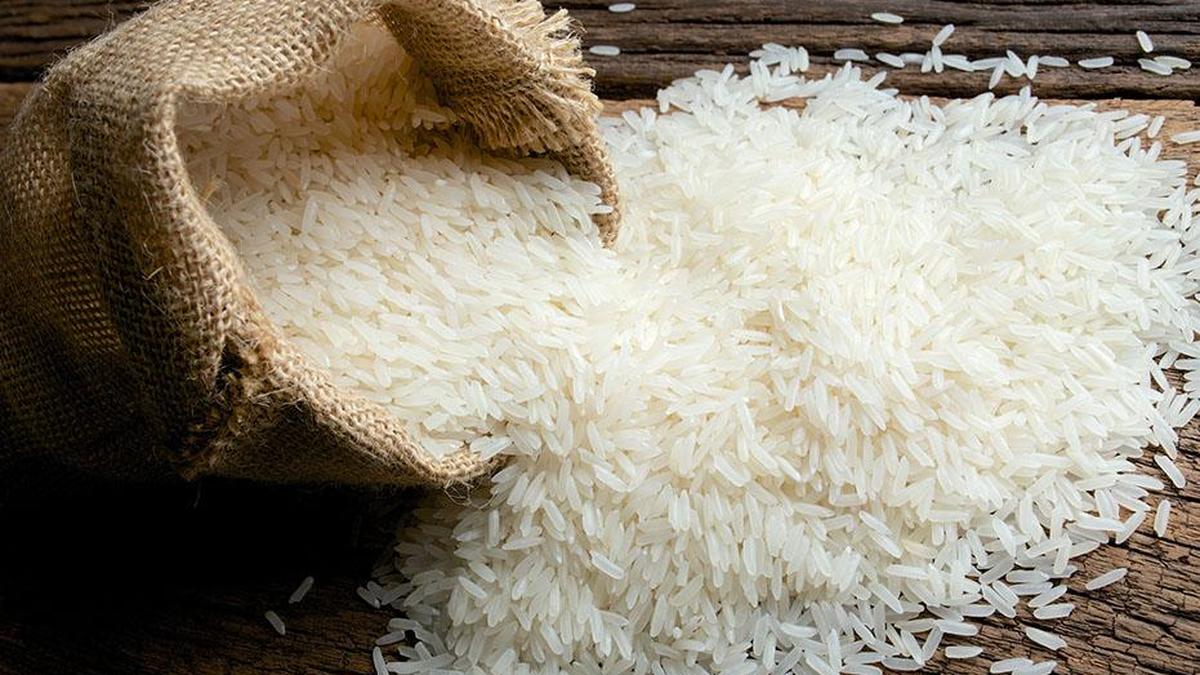
The European Union (EU) is set to curb rice imports from India, Pakistan and other Asian countries as part of its move to protect its growers and millers. The curbs will be imposed through a safeguard mechanism, documents accessed by businessline showed.

The move comes despite the EU committing itself to a free trade agreement (FTA) with India, after 11 of 23 chapters agreed upon already.

“This is like shutting one door, while opening another,” said a rice industry source. 

Latest move

In the latest initiative, the European Council and Parliament have decided to come up with a “specific automatic safeguard mechanism” for basmati and non-basmati rice imports, which targets exports from India and other Asian producers.

On December 1 (Monday), the Council and Parliament agreed to use a specific automatic safeguard mechanism for rice imports, through a tariff rate quota system. 

If there is a significant surge of rice imports above the historical average imports to the EU, the safeguard mechanism will come into play. It will ensure that shipments are subject to most favoured nation (MFN ) tariffs for a specific period to protect the EU rice market.

The provisional agreement will now be endorsed by the Council and Parliament before being formally adopted. The legislation will come into force from January 1, 2027.

Turning oligopolistic?

A note prepared by the Council of the EU on November 12, 2025, said EU imports from third countries are expected to reach 1.5 million tonnes, mainly from India, Pakistan and EBA (“Everything but Arms”) countries — primarily Myanmar and Cambodia — which enjoy a preferential zero customs tariff on all types of rice and for all stages of processing. 

“Looks like the rice market will shift from being free to oligopolistic in Europe. Less than a dozen players in Europe will benefit but exporters of packaged and husked rice from India will likely be affected,” said S Chandrasekaran, a New Delhi-based analyst.

Some 1.42 lakh tonnes (lt) of rice go in packaged form. The move is seen as an effort by European rice millers to promote their own brand. However, sales of packaged basmati or specialty rice such as Ponni or Sona Masuri are around 48,000 tonnes. 

The EU imposed safeguard duty on rice imports from Myanmar and Cambodia in 2019. It expired in 2022. Discussions for the current proposals started in 2022, said Chandrasekaran. 

Main targets

In the Article 28 negotiation of General Agreements on Tariffs and Trade (GATT) in 2004-05, the EU was importing 6 lt. Currently, its rice imports are 2.3 million tonnes (mt). 

When the negotiations for access to the EU rice rice market were held, Cambodia and Myanmar were not in the global market. They now together ship 10 lt. 

The note referred to violations such as human rights and higher levels of tricyclazole. “Nonetheless, in some exporting countries there are cases of violations of human rights (e.g., child labour exploitation) or use of active substances banned in the EU or applied in quantities that exceed EU regulatory limits (e.g., high levels of tricyclazole),” the note said. 

 “These are targeted at India, Pakistan, Myanmar and Cambodia,” another source in the rice trade said. 

Going defensive

The problem for India and Pakistan is that during 2004-05, brown or husked rice exports made up 80-90 per cent of total shipments. Now, they are down to 50 per cent with milled rice making up the rest. At the same time, exports from India and Pakistan are up five times since 2004. Only shipments from Thailand and Vietnam have remained unchanged and they may not be affected much.

Minutes of the Civil Dialogue Group (CDG) on Agricultural Markets – Rice held in July this year show that the European Union “will maintain a very defensive position and not make any concessions that would negatively impact the rice sector in the EU”. 

“In the rice sector, it was made clear to India that rice is a highly sensitive product,” the European Council told the CDG.

Though the EU is pointing to protection of its rice growers, mainly dominated by Italy and Spain, rice production has dropped about 10 per cent in the past two decades from 1.64 mt to 1.47 mt . However, the acreage remains intact at 4 lakh hectares (lh). 

No impact on farmers

“This means imports, which are up over four times since the EU signed GATT pact, have not affected farmers,” said the industry source.

Amid these developments, the European Commission will take up the GSP Safeguard Clause for rice imports from EBA countries as mooted by the Federation of European Rice Millers (FERM) on Friday.

The federation has called for an urgent revision of the common customs tariff that “has remained unchanged since 2004” to strengthen the protection for EU rice production. 

FERM has sought a hike in duty for packaged rice imports into the EU, providing targeted safeguards for finished consumer goods. It has sought a higher tariff for husked and milled rice that current World Trade Organisation (WTO) schedules would “reflect modern market realities”.

New body EURice

Pointing out that the WTO-bound rates for semi-milled and wholly-milled rice were less than €200 a tonne for semi and wholly milled rice, the federation said the EU should consider imposing €416. FERM has sought raising duty on husked (brown) rice by over four times to €264/tonne. 

FERM said continuous concessions on rice made by the European Union to third countries generated “dramatic distortions” in the internal market. 

In a related development, eight rice-producing countries in Europe have decided to form an alliance, EURice, to meet the “range of challenges” they are currently facing in trade-related issues.

They have decided on a rotating annual presidency among the members, meeting regularly as a permanent coordination group to address the sector’s issues.

Eyeing opportunity

Industry sources said the targets are husked rice which make up 5 lt, broken rice (6 lt) and milled rice that makes up 1.2 mt. 

“FERM sees this as an opportunity to force importers to ship in paddy and convert it to paddy. In turn, the EU millers will package the rice and sell it in retail,” said the source. 

The latest move could force large exporters to set up processing plants like Dawat, which has installed a unit in the Netherlands. 

“We still have a window to work through the India-EU FTA to protect our interests.  To defend our exports, we need a close watch on big developments in market access. We should count such classic cases, which have become barriers to market access for our exports,” said Chandrasekaran. 

Published on December 4, 2025


Source link

Let market forces decide MF investment in IPOs, says Nilesh Shah, MD, Kotak MF

Let market forces decide MF investment in IPOs, says Nilesh Shah, MD, Kotak MF


Nilesh Shah, MD, Kotak Mahindra AMC

Investors should not be perturbed about the social media debate on mutual fund investments in new age companies; they should allow market forces to function, says Nilesh Shah, Managing Director, Kotak Mahindra AMC .

Shah told businessline that a mutual fund would not invest in a sector or a company where they expect losses.

He was referring to the high valuation of the Meesho IPO and MFs’ scramble to invest in it, which had the market experts on social media calling for regulatory intervention.

The Meesho IPO, priced between ₹105 and ₹111 per share, values the company at ₹50,096 crore at the top end.

“There were a lot of social media comments about one stock, but 140 institutional investors invested in that. Does a ‘Tom, Dick and Harry’ on social media have more knowledge or 140 institutional investors?” he asks.

Forget institutional investors, a seasoned investor like Radhakishan Damani, has invested in that stock.

“Now, whom should I give more importance to? Someone like Damani, who has proven himself. Or a guy with 10 followers on social media complaining,” he asked.

Speaking about anchor allotment, he said people invest based on their research, and of this, some will be right and some may go wrong. As long as market forces prevail, it should be fine, said Shah, who is also a part-time member of the Prime Minister’s Economic Advisory Council (EAC-PM).

“Please remember that anchor allotment comes with a lock-in. A fund manager is not going to take that risk until he believes there is an opportunity to make money,” said Shah.

On MFs providing lucrative exits to early investors in IPOs, he said mutual funds invest based on business prospects and its value. “How much money an existing investor has made or lost, I do not care. I am bothered only about my return,” he said.

However, he said: “I am a little bit worried about a few financial investors walking away with a huge profit without adding any value to business”.

Maruti Suzuki has created the automobile industry in India and if Suzuki monetizes, that is understandable, but there are many exits in which foreign companies take thousands of crores out without doing any value add, he said.

“Just because you were lucky to be in some place at the right time, you are today reaping benefits. We should not allow it. Exit to foreigners should be in proportion to the value add,” said Shah.

“Our net FPI has become zero and $80 billion has gone out from our residence and promoter exits. If this is allowed unabated, tomorrow, that number could be much higher. We have to think about it. I do not have solutions. I know there is a problem,” he said.

Published on December 4, 2025



Source link

Crude oil futures rise as Ukraine continues attacks on Russian oil infrastructure

Crude oil futures rise as Ukraine continues attacks on Russian oil infrastructure


Market players feel that an end to the war between Russia and Ukraine would help increase crude oil supplies to the global markets. 
| Photo Credit:
istock.com

Crude oil futures traded higher on Thursday morning following continued Ukrainian attacks on Russian oil infrastructure.

At 9.57 am on Thursday, February Brent oil futures were at $62.92, up by 0.40 per cent, and January crude oil futures on WTI (West Texas Intermediate) were at $59.26, up by 0.53 per cent. December crude oil futures were trading at ₹5,359 on Multi Commodity Exchange (MCX) during the initial hour of trading on Thursday against the previous close of ₹5356, up by 0.06 per cent, and January futures were trading at ₹5,358 against the previous close of ₹5,346, up by 0.22 per cent.

Quoting a Ukrainian military intelligence source on Wednesday, a Reuters report said Ukraine hit the Druzhba oil pipeline in Russia’s central Tambov region. This is the fifth attack on the pipeline that sends Russian oil to Hungary and Slovakia. The pipeline operator and Hungary’s oil and gas company later said supplies were moving through the pipeline as normal, it said.

Meanwhile, the talks between the US and Russia to end Ukraine war ended without any result. However, US President Donald Trump said the meeting between Russian President Vladimir Putin and US envoys was reasonably good.

Speaking to reporters at the Oval Office, Trump said the US special envoy Steve Witkoff and his son-in-law Jared Kushner briefed him about the talks. Their impression from the meeting was that Putin would like to make a deal. “What happens now, however, is unclear,” Trump said.

Market players feel that an end to the war between Russia and Ukraine would help increase crude oil supplies to the global markets.

The weekly petroleum status report released by the US EIA (Energy Information Administration) showed an increase in crude oil inventories in the US for the week ending November 28.

According to EIA, US commercial crude oil inventories increased by 0.6 million for the week ending November 28. Total motor gasoline inventories increased by 4.5 million barrels from last week, and distillate fuel inventories increased by 2.1 million barrels last week.

Total products supplied in the US over the last four-week period averaged 20.3 million barrels a day, down by 0.5 per cent from the same period last year. Over the past four weeks, motor gasoline product supplied averaged 8.7 million barrels a day, down by 1.2 per cent from the same as the last year period. Distillate fuel product supplied averaged 3.7 million barrels a day over the past four weeks, down by 2 per cent from the same period last year. Jet fuel product supplied was down 1.9 per cent compared with the same four-week period last year.

December nickel futures were trading at ₹1,346 on MCX during the initial hour of trading on Thursday against the previous close of ₹1329.60, up by 1.23 per cent.

On the National Commodities and Derivatives Exchange (NCDEX), December jeera contracts were trading at ₹21,705 in the initial hour of trading on Thursday against the previous close of ₹21,600, up by 0.49 per cent.

December dhaniya futures were trading at ₹10,382 on NCDEX in the initial hour of trading on Thursday against the previous close of ₹10530, down by 1.41 per cent.

Published on December 4, 2025



Source link

Nepal, India to discuss supply of aviation fuel through pipeline

Nepal, India to discuss supply of aviation fuel through pipeline


An Indian Oil Aviaton fuel tanker seen with a row of Aircrafts at the IGI domestic terminal
| Photo Credit:
KRISHNAN VV

Nepal is holding discussions with India on supplying aviation fuel through the cross-border petroleum pipeline to Nepal, officials said.   Officials from the two countries are set to hold a meeting next week in New Delhi, said an official at the Ministry of Commerce and Industry.

The Nepal government approved the participation of a Nepali delegation led by Joint Secretary at the Ministry of Industry, Commerce and Supplies, Shivaram Pokhrel, to take part in the fifth meeting of the Nepal-India Joint Working Group on Oil and Gas Cooperation, said Minister for Communication and Information Technology Jagadish Kharel on Tuesday.

  The meeting is scheduled to take place in New Delhi, India, on Monday.

Government-owned Nepal Oil Corporation (NOC) currently imports petrol and diesel from the Indian Oil Corporation through pipeline. The NOC has been transporting diesel via the Motihari-Amlekhgunj petroleum pipeline since 2017, and it has expanded its use to include petrol since March 2025.

Published on December 4, 2025


Source link

YouTube
Instagram
WhatsApp