House panel asks govt to revive Durgapur, Haldia, Korba urea plants to meet demand

House panel asks govt to revive Durgapur, Haldia, Korba urea plants to meet demand


A parliamentary panel, led by TMC MP Kirti Azad, has recommended the government to revive three closed urea plants out of which two (Durgapur and Haldia) are located in West Bengal, which is scheduled to go to poll in March-April next year, to meet the future demand which is estimated to rise by 56 lakh tonnes (lt) in next 10 years.

However, the government has informed the panel that any decision on revival of these three units, including the one at Korba in Chhattisgarh, will depend on demand-supply gap after operationalisation of five revived plants (out of which Ramagundam, Gorakhpur, Sindri and Barauni have already been commissioned while work is going on at Talcher unit).

Referring to the government’s projection that urea demand is set to increase to 444 lt by 2035-36 from 388 lt in 2024-25, the Standing Committee on Chemicals and Fertilizers in its report, tabled in Parliament on December 1, has said that there is need for urgency to revive the closed plants.

“With a view to enhance the Urea production in the country and achieve self-reliance in its production, the Committee strongly recommends for taking timely effective policy initiatives to facilitate early revival of Durgapur and Haldia units of HFCL and Korba unit of FCIL by leveraging their strategic locations and existing infrastructure, and utilising the coal-gasification route, which would reduce the demand supply gap of urea,” it said.

According to the report, the government said that in 2024-25 India’s fertiliser consumption crossed 700 lt, for the first time. Further, out of that 708 lt, about 388 lt is only urea whereas DAP (96 lt), MOP (22 lt), NPK (150 lt) and SSP (52 lt) put together were another 320 lt. In terms of share of major nutrients in he consumption, Nitrogen had 221.5 lt, Phosphate 83.9 lt and Potash 23.80 lt.

As farmers have been complaining about inadequate availability of urea, the report shows that its import dropped to 56.47 lt in 2024-25 from a record 98.28 lt in 2020-21.

There are 33 urea manufacturing units — 9 PSUs (60.69 lt), 6 cooperatives (54.19 lt), 4 joint ventures (50.80 lt) and 14 in private sector (103.72 lt) — in the country with an annual production capacity of 269.40 lt. But, as these factories produce higher than capacity, the urea output was about 306.67 lt in 2024-25.

The Cabinet in March 2025 approved to set up a new brownfield ammonia-urea complex of 12.7 lt urea capacity in Assam through a Joint Venture (JV). The government also informed the panel that one new urea plant with 12.70 lt capacity needs about Rs 10,000 crore investment where “the longevity of that plant is 35-40 years. (Investors) they will have to take a lot of decisions in terms of adjusting to reality.”

As urea is presently sold to farmers at a highly subsidised rate of Rs 266 per bag (of 45 kg).

The panel has also urged the Department of Fertilizers “to constitute a task force to chalk out a time bound targeted strategy with required budgetary support so as to enhance domestic urea production through proactive implementation and promotion of the New Investment Policy (NIP)–2012 and its amendments; New Urea Policy, 2015 and also expand production capacity of P&K fertilizers through fiscal and tax incentives for setting up of new units and securing long term agreements with the resource rich countries to ensure secure supply chain, at most competitive rates.”

Published on December 2, 2025



Source link

Bank of Maharashtra OFS opens, govt to offload up to 6pc stake

Bank of Maharashtra OFS opens, govt to offload up to 6pc stake


The Offer for Sale (OFS) of Bank of Maharashtra opened on Tuesday for non-retail investors at a floor price of Rs 54 per share.

At the floor price the government would mop up about Rs 2,492 crore by divesting its 6 per cent stake in the state-owned lender.

The OFS will open for retail investors on Wednesday, as per the prospectus of the share sale.

The floor price for the Bank of Maharashtra OFS has been set at ₹54 per share, reflecting a 6.34 per cent discount from its Monday’s closing price of ₹57.66 apiece on the BSE.

The base offer comprises 38,45,77,748 shares, representing 5 per cent of paid up equity share capital of the Bank, with an additional 7,69,15,549 shares, or 1 per cent stake, available under the green-shoe option, taking the total to over 46.14 crore shares, or 6 per cent of the stake in the Pune-based lender.

The government currently holds a 79.60 per cent stake in the Pune-based bank.

With the stake dilution, the bank would be able to meet the minimum public shareholding norm of 25 per cent as the government stake will come down below 75 per cent.

This is in line with the Securities Contract (Regulation) Rules issued by the Securities and Exchange Board of India, which mandate that all listed companies, including those in the public sector, must have a minimum public shareholding of 25 per cent.

Capital market regulator SEBI has given forbearance to CPSEs and public sector financial institutions till August 2026.

Other four lenders where the government’s stake is more than minimum public shareholding threshold are Indian Overseas Bank at 94.6 per cent, Punjab & Sind Bank 93.9 per cent, UCO Bank 91 per cent, and Central Bank of India 89.3 per cent.

Published on December 2, 2025



Source link

Meesho IPO opens tomorrow (Dec 3):Brokerages see strong long-term potential

Meesho IPO opens tomorrow (Dec 3):Brokerages see strong long-term potential


The upcoming initial public offering of Meesho Ltd has sparked keen interest among market watchers, as many expect strong long-term potential from the rapidly expanding e-commerce platform.

SBI Securities, in a detailed IPO note, has issued a subscribe for long-term investment horizon recommendation, citing Meesho’s large and growing user base, technology-first business model and improving cash flows.

₹5,421-cr Meesho IPO opens tomorrow

The ₹5,421 crore IPO will open tomorrow, December 3, 2025, at a price band of ₹105-111 per share, valuing Meesho at ₹50,096 crore ($5.6 billion) at the upper end. The market lot size is 135. The IPO concludes on December 5, 2025.

The offer comprises a fresh issue of ₹4,250 crore and an offer for sale of up to 10.55 crore shares by existing shareholders.
Meesho plans to utilise proceeds for investment in cloud infrastructure; marketing and brand initiatives as well funding inorganic growth through acquisitions and other strategic initiatives and general corporate purposes. As per the draft IPO papers, the SoftBank-backed e-commerce company will use ₹480 crore from the public offer proceeds towards payment of salaries of AI and technology teams.

Kotak Mahindra Capital Company Ltd, JP Morgan India Pvt Ltd, Morgan Stanley India Company Pvt Ltd, Axis Capital, Citigroup Global Markets India Pvt Ltd are the book running lead managers, and KFin Technologies is the registrar to the issue.

The stock will likely debut on bourses on December 12, 2025.

Brokerages highlight scale, tech strengths and profitability challenges

SBI Securities noted that the company’s multiple self-reinforcing flywheels—spanning commerce, logistics and content—create network effects that enhance platform liquidity. The brokerage highlighted Meesho’s significant scale, including roughly 23 crore annual transacting consumers and over 7 lakh sellers as of the trailing twelve months ending September 2025.

The brokerage observed Meesho’s tech-driven approach, including integration of GenAI tools to boost engineering productivity, as a key differentiator. It noted Meesho’s focus on “everyday low prices,” which has enabled it to attract mass-market consumers without relying heavily on festival-driven discounting. Despite reporting net losses, the company has turned positive free cash flow over the past two financial years, a development brokerages see as a positive shift in its financial trajectory

However, the brokerage warned that the path to profitability remains a key monitorable, especially as Meesho continues to invest aggressively in technology, logistics and brand expansion.

Key risks include customer and seller retention, operational dependence on third-party logistics partners and rising competition from established e-commerce giants and offline retailers.

Brokerages also flagged vulnerabilities such as technology infrastructure outages, operational inefficiencies linked to cash-on-delivery orders, intense competitive pressures.

Published on December 2, 2025


Source link

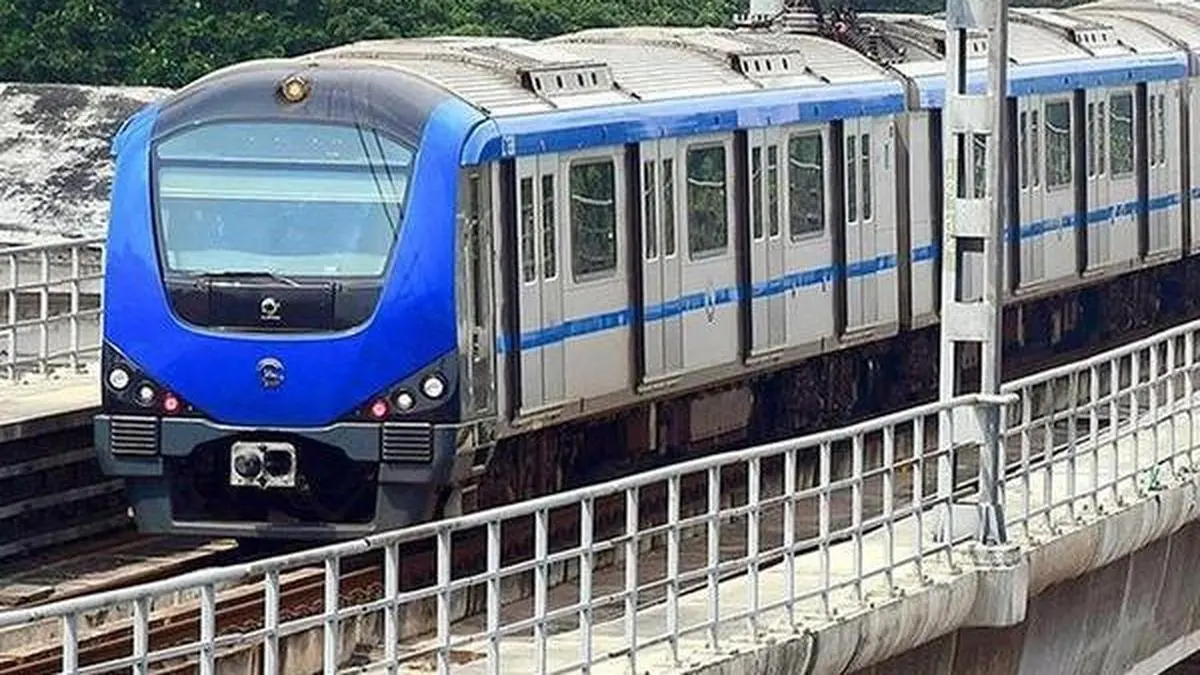
Chennai Metro train halts midway due to glitch, 20 passengers rescued

Chennai Metro train halts midway due to glitch, 20 passengers rescued


As many as 20 early morning passengers were stranded between two stations when the Chennai Metro train halted midway due to a glitch on Tuesday. They were however safely rescued, the authorities said.

The incident that happened between the High Court and Central Stations caused apprehension among the commuters. They were rescued later and the train services resumed from 6.30 am.

“Due to a technical issue, the Metro train halted between the High Court station and Puratchi Thalaivar Dr M G Ramachandran Central Metro Station. Immediate evacuation was done, and the train was promptly withdrawn from the line,” the Chennai Metro Rail said in a release.

Normal operations resumed at 6.20 am, it said and regretted the inconvenience caused to the passengers.

“Metro train services between Airport and Wimco Nagar Depot on Blue Line have resumed normal Operations. Central Metro to St. Thomas Mount on the Green Line are also running as per the normal schedule,” the Chennai Metro Rail said in a post on the social media platform X.

Published on December 2, 2025


Source link

Crude oil markets react to impact of Ukraine strikes, Trump’s Venezuela threat

Crude oil markets react to impact of Ukraine strikes, Trump’s Venezuela threat


Crude oil futures traded higher on Tuesday morning as markets analysed the impact of Ukrainian attacks on Russian energy infrastructure over the weekend and US President Donald Trump’s threat to close airspace over Venezuela.

At 9.57 am on Tuesday, February Brent oil futures were at $63.24, up by 0.11 per cent, and January crude oil futures on WTI (West Texas Intermediate) were at $59.43, up by 0.19 per cent. December crude oil futures were trading at ₹5346 on Multi Commodity Exchange (MCX) during the initial hour of trading on Tuesday against the previous close of ₹5324, up by 0.41 per cent, and January futures were trading at ₹5340 against the previous close of ₹5321, up by 0.36 per cent.

Following the Ukrainian attacks on Russian energy infrastructure over the weekend, the Caspian Pipeline Consortium (CPC) had suspended loadings at its terminals after one of the two single point moorings (SPM) was damaged by attacks.

A Reuters report, which quoted Russia’s Kommersant daily, said the CPC has resumed oil shipments from one SPM at its Black Sea terminal. It said that oil loadings had resumed via the SPM 1, while SPM 2 was damaged.

ING Think’s Commodities Feed said on Monday that the CPC terminal, which is located at Novorossiysk port in Russia, predominantly ships Kazakhstan crude oil. Shipments from the CPC terminal have averaged around 1.48 million barrels a day so far this year, up roughly 200,000 barrels a day from last year, it said.

Meanwhile, Trump’s threat on Venezuela to close airspace over the nation has increased oil supply risks for Venezuelan crude oil. According to ING Think’s Commodities Feed, Venezuela exports around 800,000 barrels a day of crude oil, of which most of the crude oil will head to China.

December natural gas futures were trading at ₹439 on MCX during the initial hour of trading on Tuesday against the previous close of ₹433.50, up by 1.27 per cent.

On the National Commodities and Derivatives Exchange (NCDEX), December dhaniya contracts were trading at ₹10,436 in the initial hour of trading on Tuesday against the previous close of ₹10,568, down by 1.25 per cent.

December jeera futures were trading at ₹21,525 on NCDEX in the initial hour of trading on Tuesday against the previous close of ₹21,710, down by 0.85 per cent.

Published on December 2, 2025


Source link

RBI governor releases five-year national financial inclusion strategy

RBI governor releases five-year national financial inclusion strategy


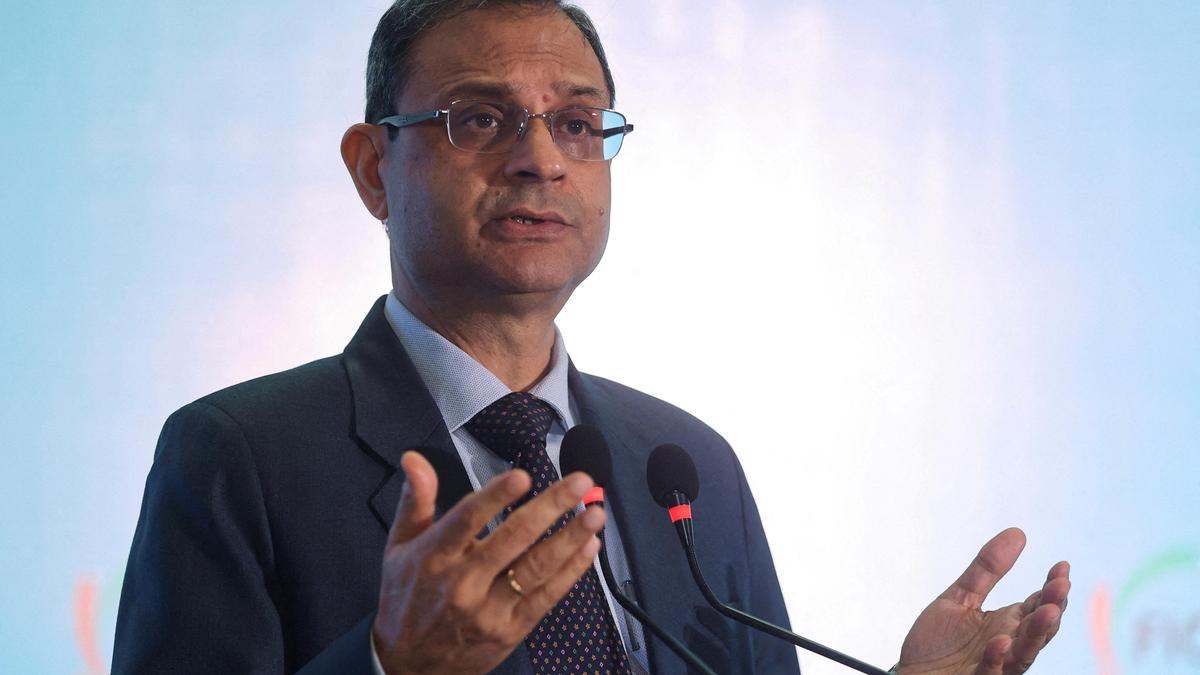
Sanjay Malhotra, Governor of the Reserve Bank of India
| Photo Credit:
FRANCIS MASCARENHAS

Reserve Bank Governor Sanjay Malhotra on Monday released a national strategy aimed to deepen financial inclusion over the next five years.

The ‘National Strategy for Financial Inclusion (NSFI): 2025-30 emphasises a synergistic ecosystem approach, improving the quality and consistency of last-mile access and effective usage of financial services.

The strategy lists out five objectives called ‘Panch-Jyoti’ that are aimed at elevating the state of financial inclusion in the country and 47 action points to achieve.

These include adopting a gender-sensitive approach for women-led financial inclusion and differentiated strategies for improving the financial resilience of households, especially for the underserved and vulnerable segments, as per an official statement.

Efforts are also centred around improving the availability and use of an equitable, responsible, suitable, and affordable bouquet of financial services to achieve financial safety and financial security for households and micro enterprises, the RBI said.

The Panch-Jyoti strategy is also focusing on synergising livelihood, skill development and support ecosystem and its linkages with financial inclusion, the central bank said.

In his foreword, Malhotra said that the earlier five-year strategy ending in 2024 has achieved its objectives.

Efforts will also be made to leverage financial education as a tool for promoting financial discipline, and strengthen the quality and reliability of customer protection and grievance redressal measures.

The five-year strategy has been framed under the aegis of Technical Group on Financial Inclusion and Financial Literacy (TGFIFL) following country-wide discussions with various stakeholders by the RBI and consultations involving the Department of Economic Affairs and Department of Financial Services, Ministry of Finance, Securities and Exchange Board of India, Insurance Regulatory and Development Authority of India, Pension Fund Regulatory and Development Authority, National Bank for Agriculture and Rural Development, National Skill Development Corporation, and National Centre for Financial Education.

Published on December 2, 2025


Source link

YouTube
Instagram
WhatsApp