ट्रंप के टैरिफ से हुए नुकसान से भारत ने कैसे किया कमबैक? GDP ग्रोथ देख चौंक गई पूरी दुनिया

ट्रंप के टैरिफ से हुए नुकसान से भारत ने कैसे किया कमबैक? GDP ग्रोथ देख चौंक गई पूरी दुनिया


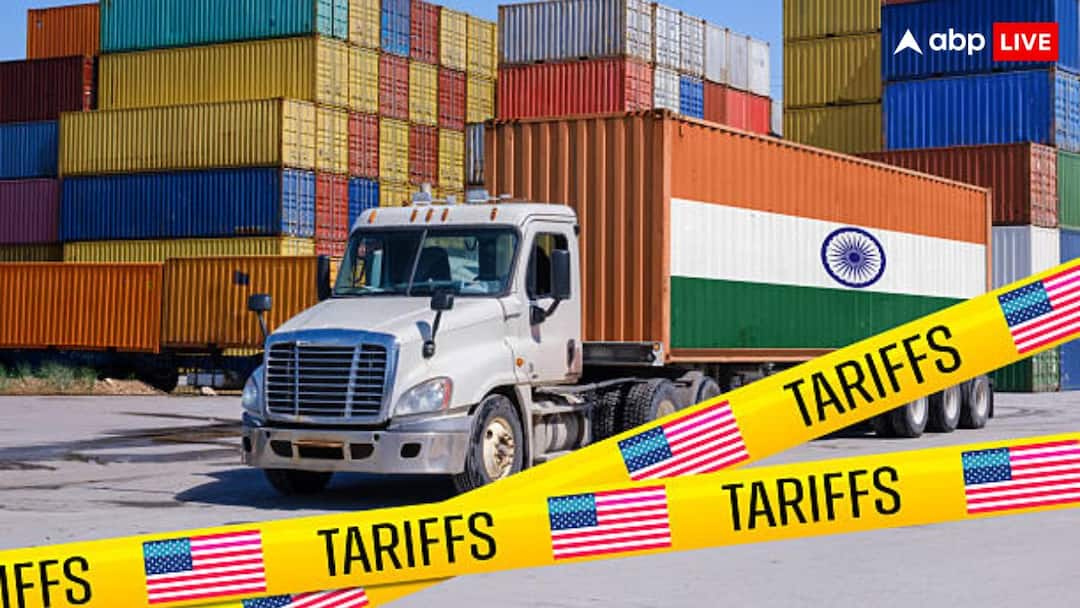
India Export to US: ट्रंप के टैरिफ से भारत को बड़ा झटका लगा है. इससे अमेरिका को होने वाले एक्सपोर्ट में भारी कमी आई है. थिंक-टैंक ग्लोबल ट्रेड रिसर्च इनिशिएटिव (GTRI) के मुताबिक, अमेरिकी टैरिफ के चलते अमेरिका को भारत का निर्यात मई से अक्टूबर 2025 के बीच 28.5 परसेंट घटा है, जो 8.83 बिलियन डॉलर से घटकर 6.31 बिलियन डॉलर हो गया है.

अमेरिका ने पहले 2 अप्रैल को भारत पर 10 परसेंट का बेसलाइन टैरिफ लगाया, जिसे  7 अगस्त को बढ़ाकर 25 परसेंट कर दिया गया और अगस्त के आखिर तक इसे डबल बढ़ा दिया गया. अमेरिका में रूस से तेल की खरीद को लेकर भारत पर 25 परसेंट एक्स्ट्रा टैरिफ पेनाल्टी के तौर पर लगाया. भारतीय सामानों पर ट्रंप के बढ़ाए गए टैक्स ने इसे अमेरिकी बाजारों में महंगा बना दिया.

अमेरिका सबसे बड़ा एक्सपोर्ट मार्केट

अमेरिका भारत के लिए निर्यात का सबसे बड़ा बाजार है. इससे अमेरिका के लिए भारत के निर्यात पर तगड़ा असर पड़ा. GTRI के मुताबिक, इसका असर टैरिफ-फ्री प्रोडक्ट्स पर भी पड़ा. भारत अमेरिका में बड़े पैमाने पर स्मार्टफोन एक्सपोर्ट करता है, जिसमें टैरिफ लगने के बाद 36 परसेंट की गिरावट आई. यह मई में 2.29 बिलियन डॉलर से घटकर अक्टूबर में 1.50 बिलियन रह गया.

इसी तरह से जेम्स और ज्वेलरी, सोलर पैनल, टेक्सटाइल, गारमेंट्स, केमिकल्स और सीफूड्स जैसे लेबर-इंटेंसिव प्रोडक्ट्स का एक्सपोर्ट भी मई से अक्टूबर के बीच में 4.78 बिलियन डॉलर से 31.2 परसेंट गिरकर 3.29 बिलियन डॉलर रह गया. टैरिफ का असर मेटल से लेकर ऑटो पार्ट्स पर भी देखा गया. इसके अलावा, दुनिया भर में एक जैसे टैरिफ वाले प्रोडक्ट्स आयरन, स्टील, एल्युमीनियम, कॉपर के एक्सपोर्ट्स पर भी 23.8 परसेंट की गिरावट आई. 

GDP Growth ने सबको चौंकाया

इस बीच जब दूसरी तिमाही में GDP Growth का आंकड़ा सामने आया, तो इसने सबको चौंका दिया. इस दौरान भारत का जीडीपी ग्रोथ रेट 8.2 परसेंट रहा. यह चौंकानेवाला इसलिए रहा क्योंकि टैरिफ से हुए नुकसान के बावजूद भारतीय अर्थव्यवस्था की इस तेजी ने लोगों को हैरान कर दिया. बेशक अमेरिका के लिए भारत का निर्यात घटने से देश के तमाम इंडस्ट्रीज को नुकसान उठाना पड़ा.

इससे उबरने के लिए भारत ने निर्यात के और विकल्प तलाशना शुरू कर दिया. अपने देश का सामान बेचने के लिए भारत ने दूसरे बाजारों को ढूंढ़ा जैसे कि हांगकांग, बेल्जियम और UAE में जेम्स और ज्वेलरी बड़े पैमाने पर भेजे गए. इसी तरह से जर्मनी और थाइलैंड जैसे देशों से ऑटो पार्ट्स की अच्छी डिमांड रही. देश के जीडीपी ग्रोथ को सपोर्ट मिलने की एक और बड़ी वजह GST Reforms है. इससे घरेलू स्तर पर मांग बढ़ी, जिसे पूरा करने के लिए मैन्युफैक्चरिंग में तेजी आई. इससे सर्विस सेक्टर को भी मजबूती मिली और कुल मिलाकर देश की इकोनॉमी को बूस्ट मिला.


ये भी पढ़ें:

क्या सच में ट्रंप भारत पर टैरिफ को घटाकर कर देंगे 20 परसेंट? ब्रोकरेज ने कर दी भविष्यवाणी


Source link

Supreme Court questions legal status of Rohingyas and rights of illegal entrants in India

Supreme Court questions legal status of Rohingyas and rights of illegal entrants in India


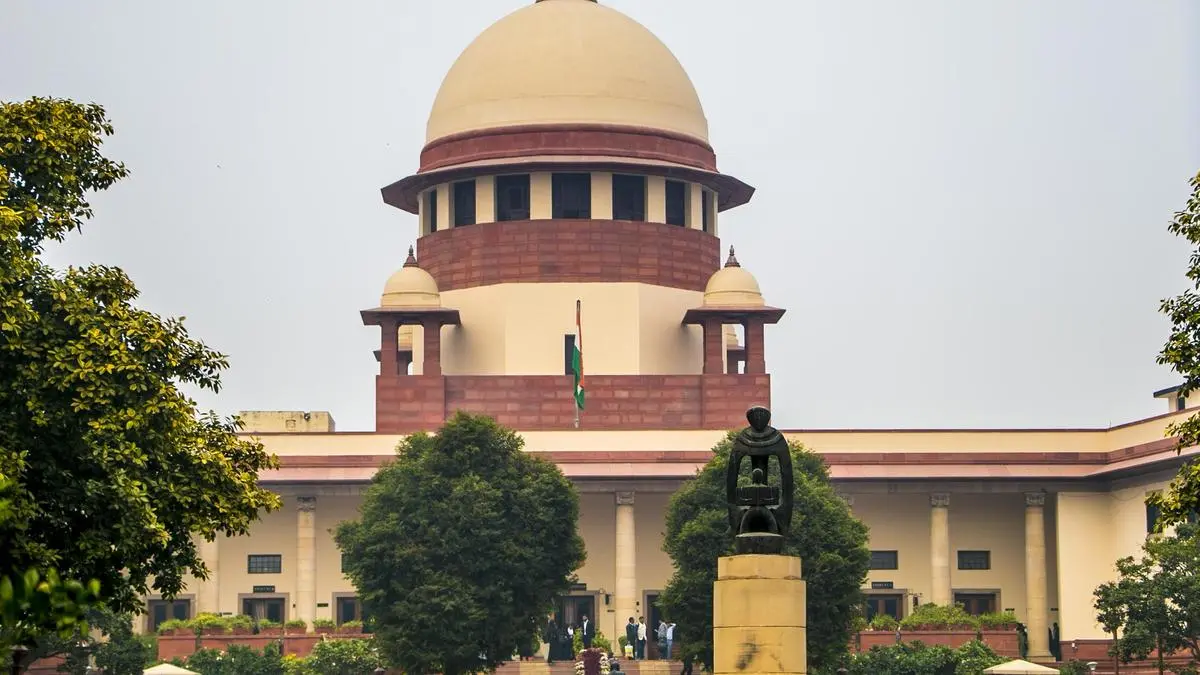
The Supreme Court on Tuesday questioned the legal status of Rohingyas living in India, asking whether people who entered the country illegally should be given protection when many Indian citizens still struggle with poverty.
| Photo Credit:
Subhashish Panigrahi

The Supreme Court on Tuesday sharply questioned the legal status of Rohingyas living in India and asked whether “intruders” should be given a “red carpet welcome” while the country’s own citizens grapple with poverty.

A bench comprising Chief Justice Surya Kant and Justice Joymalya Bagchi made sharp observations while hearing a habeas corpus (bring the person) petition filed by rights activist Rita Manchanda alleging disappearance of few Rohingyas from the custody of authorities here.

Now, the hearing in the case has been adjourned to December 16.

The counsel alleged certain Rohingyas were picked up by Delhi Police in May and there was no information about their whereabouts.

“If they do not have legal status to stay in India, and you are an intruder, we have a very sensitive border in the north India side. If an intruder comes, do we give them a red carpet welcome saying we would like to give you all facilities” the CJI asked, adding, “What is the problem in sending them back.” He said India is a country with a lot of poor people, and we should rather focus on them.

“First you enter, you cross the border illegally. You dug a tunnel or crossed the fence and entered India illegally. Then you say, now that I have entered, your laws must apply to me and say, I am entitled to food, I am entitled to shelter, my children are entitled to education. Do we want to stretch the law like this,” the CJI asked.

The petitioner referred to an apex court order of 2020 in which it was said that Rohingyas must be deported only according to procedure.

“We also have poor people in the country. They are citizens. Are they not entitled to certain benefits and amenities? Why not concentrate on them? It is true, even if somebody has entered illegally, we should not subject them to third-degree methods…You are asking writ of habeas to bring them back,” CJI Kant asked.

The bench said if repatriation is sought then it may give rise to “logistical issues”.

Solicitor General Tushar Mehta, appearing for the Centre, said the plea has not been filed by an affected person and the petitioner has no locus to file such a plea.

Refugee vs entrant

On July 31, the top court, while hearing a batch of pleas concerning Rohingyas in the country, had said the first major issue to be dealt with in cases concerning Rohingyas is whether they are refugees or illegal entrants.

It said once that is decided, the other issues might be consequential.

“The first major issue is simple, are they refugees or illegal entrants,” Justice Kant observed.

The bench took note of the broad issues that arose for its consideration in the pleas relating to Rohingyas.

“Whether the Rohingyas are entitled to be declared as refugees? If so, what protections, privileges or rights are they entitled to,” the bench asked.

It said the second issue is if the Rohingyas are not refugees and are illegal entrants, whether the action of the Centre and states in deporting them was justified.

“Even if the Rohingyas have been held to be illegal entrants, can they be detained indefinitely or they are entitled to be released on bail, subject to such conditions as the court may deem fit to be imposed,” it asked.

The court said the other issue raised in the petitions is whether the Rohingyas, who have not been detained and are living in refugee camps, have been provided basic amenities like drinking water, sanitation and education.

“If the Rohingyas are illegal entrants, whether the government of India and the states are obligated to deport them in accordance with law,” it noted.

The bench segregated the pleas in three groups — one relating to Rohingyas, another not pertaining to the issue of Rohingyas and one plea that it said pertains to a different matter altogether.

It said the three groups of matters would be determined separately and it would fix those for hearing on consecutive Wednesdays.

The bench indicated that on the point of those who were found to be illegal entrants and on the question of the State’s responsibility to deport them, it could only lay down the principles.

Deportation principles

On May 16, the apex court had rapped some petitioners who had claimed that 43 Rohingya refugees, including women and children, were dropped in the Andaman sea for deportation to Myanmar and said “when the country is passing through a difficult time, you come out with fanciful ideas”.

It had questioned the authenticity of the material placed before it by petitioner Mohammad Ismail and others and refused to stay any further deportation of Rohingyas, saying a similar relief was denied by the court earlier.

On May 8, the top court had said if the Rohingya refugees in the country were found to be foreigners under Indian laws, they would have to be deported.

The court had then referred to its earlier order and remarked that the identity cards issued by the United Nations High Commissioner for Refugees (UNHCR) may not be of any help to them under the laws.

Published on December 2, 2025


Source link

Today’s Gold Rate in India – December 2: Gold prices down in Ahmedabad, Mumbai, Kolkata, Bengaluru, Delhi & Chennai

Today’s Gold Rate in India – December 2: Gold prices down in Ahmedabad, Mumbai, Kolkata, Bengaluru, Delhi & Chennai


Today’s Gold Rate in India – December 2, 2025
| Photo Credit:

Gold prices in India saw decrease today across all cities. The price for 8 grams of 24-carat gold also dropped in all cities compared to yesterday. Below is a detailed breakdown of gold prices in key cities.

Gold rates in India:

Gold prices in India today were ₹11,980 for 1 gram of 22-carat gold (down by ₹30) and ₹95,840 for 8 grams of 22-carat gold (down by ₹240).

Gold Rate in Mumbai:

22 Carat: The gold prices in Mumbai today were ₹11,980 for 1 gram of 22-carat gold (down by ₹30) and ₹95,840 for 8 grams of 22-carat gold (down by ₹80).

24 Carat: The gold prices in Mumbai today were ₹12,579 for 1 gram of 24-carat gold (down by ₹32) and ₹1,00,632 for 8 grams of 24-carat gold (down by ₹256).

Gold Rate in Chennai:

22 Carat: The gold prices in Chennai today were ₹12,040 for 1 gram of 22-carat gold (down by ₹30) and ₹96,320 for 8 grams of 22-carat gold (down by ₹240).

24 Carat: The gold prices in Chennai today were ₹12,642 for 1 gram of 24-carat gold (down by ₹32) and ₹1,01,136 for 8 grams of 24-carat gold (down by ₹256).

Gold Rate in Hyderabad:

22 Carat: The gold prices in Hyderabad today were ₹12,040 for 1 gram of 22-carat gold (down by ₹30) and ₹96,320 for 8 grams of 22-carat gold (down by ₹240).

24 Carat: The gold prices in Hyderabad today were ₹12,642 for 1 gram of 24-carat gold (down by ₹32) and ₹1,01,136 for 8 grams of 24-carat gold (down by ₹256).

Gold Rate in Delhi:

22 Carat: The gold prices in Delhi today were ₹12,030 for 1 gram of 22-carat gold (down by ₹30) and ₹96,240 for 8 grams of 22-carat gold (down by ₹240).

The gold prices in Delhi today were ₹12,632 for 1 gram of 24-carat gold (down by ₹31) and ₹1,01,056 for 8 grams of 24-carat gold (down by ₹248).

Gold Rate in Ahmedabad:

22 Carat: The gold prices in Ahmedabad today were ₹12,034 for 1 gram of 22-carat gold (down by ₹30) and ₹96,272 for 8 grams of 22-carat gold (down by ₹240).

24 Carat: The gold prices in Ahmedabad today were ₹12,636 for 1 gram of 24-carat gold (down by ₹31) and ₹1,01,088 for 8 grams of 24-carat gold (down by ₹248).

Gold Rate in Bengaluru:

22 Carat: The gold prices in Bengaluru today were ₹1,01,088 for 1 gram of 22-carat gold (down by ₹30) and₹96,3200 for 8 grams of 22-carat gold (down by ₹240).

24 Carat: The gold prices in Bengaluru today were ₹12,642 for 1 gram of 24-carat gold (down by ₹32) and ₹1,01,136 for 8 grams of 24-carat gold (down by ₹256).

Gold Rate in Kolkata:

22 Carat: The gold prices in Kolkata today were ₹12,080 for 1 gram of 22-carat gold (down by ₹30) and ₹96,640 for 8 grams of 22-carat gold (down by ₹240).

24 Carat: The gold prices in Kolkata today were ₹96,640 for 1 gram of 24-carat gold (down by ₹32) and ₹1,01,472 for 8 grams of 24-carat gold (down by ₹256).

Gold Rates Courtesy: bankbazaar.com

Published on December 2, 2025


Source link

House panel asks govt to revive Durgapur, Haldia, Korba urea plants to meet demand

House panel asks govt to revive Durgapur, Haldia, Korba urea plants to meet demand


A parliamentary panel, led by TMC MP Kirti Azad, has recommended the government to revive three closed urea plants out of which two (Durgapur and Haldia) are located in West Bengal, which is scheduled to go to poll in March-April next year, to meet the future demand which is estimated to rise by 56 lakh tonnes (lt) in next 10 years.

However, the government has informed the panel that any decision on revival of these three units, including the one at Korba in Chhattisgarh, will depend on demand-supply gap after operationalisation of five revived plants (out of which Ramagundam, Gorakhpur, Sindri and Barauni have already been commissioned while work is going on at Talcher unit).

Referring to the government’s projection that urea demand is set to increase to 444 lt by 2035-36 from 388 lt in 2024-25, the Standing Committee on Chemicals and Fertilizers in its report, tabled in Parliament on December 1, has said that there is need for urgency to revive the closed plants.

“With a view to enhance the Urea production in the country and achieve self-reliance in its production, the Committee strongly recommends for taking timely effective policy initiatives to facilitate early revival of Durgapur and Haldia units of HFCL and Korba unit of FCIL by leveraging their strategic locations and existing infrastructure, and utilising the coal-gasification route, which would reduce the demand supply gap of urea,” it said.

According to the report, the government said that in 2024-25 India’s fertiliser consumption crossed 700 lt, for the first time. Further, out of that 708 lt, about 388 lt is only urea whereas DAP (96 lt), MOP (22 lt), NPK (150 lt) and SSP (52 lt) put together were another 320 lt. In terms of share of major nutrients in he consumption, Nitrogen had 221.5 lt, Phosphate 83.9 lt and Potash 23.80 lt.

As farmers have been complaining about inadequate availability of urea, the report shows that its import dropped to 56.47 lt in 2024-25 from a record 98.28 lt in 2020-21.

There are 33 urea manufacturing units — 9 PSUs (60.69 lt), 6 cooperatives (54.19 lt), 4 joint ventures (50.80 lt) and 14 in private sector (103.72 lt) — in the country with an annual production capacity of 269.40 lt. But, as these factories produce higher than capacity, the urea output was about 306.67 lt in 2024-25.

The Cabinet in March 2025 approved to set up a new brownfield ammonia-urea complex of 12.7 lt urea capacity in Assam through a Joint Venture (JV). The government also informed the panel that one new urea plant with 12.70 lt capacity needs about Rs 10,000 crore investment where “the longevity of that plant is 35-40 years. (Investors) they will have to take a lot of decisions in terms of adjusting to reality.”

As urea is presently sold to farmers at a highly subsidised rate of Rs 266 per bag (of 45 kg).

The panel has also urged the Department of Fertilizers “to constitute a task force to chalk out a time bound targeted strategy with required budgetary support so as to enhance domestic urea production through proactive implementation and promotion of the New Investment Policy (NIP)–2012 and its amendments; New Urea Policy, 2015 and also expand production capacity of P&K fertilizers through fiscal and tax incentives for setting up of new units and securing long term agreements with the resource rich countries to ensure secure supply chain, at most competitive rates.”

Published on December 2, 2025


Source link

Bank of Maharashtra OFS opens, govt to offload up to 6pc stake

Bank of Maharashtra OFS opens, govt to offload up to 6pc stake


The Offer for Sale (OFS) of Bank of Maharashtra opened on Tuesday for non-retail investors at a floor price of Rs 54 per share.

At the floor price the government would mop up about Rs 2,492 crore by divesting its 6 per cent stake in the state-owned lender.

The OFS will open for retail investors on Wednesday, as per the prospectus of the share sale.

The floor price for the Bank of Maharashtra OFS has been set at ₹54 per share, reflecting a 6.34 per cent discount from its Monday’s closing price of ₹57.66 apiece on the BSE.

The base offer comprises 38,45,77,748 shares, representing 5 per cent of paid up equity share capital of the Bank, with an additional 7,69,15,549 shares, or 1 per cent stake, available under the green-shoe option, taking the total to over 46.14 crore shares, or 6 per cent of the stake in the Pune-based lender.

The government currently holds a 79.60 per cent stake in the Pune-based bank.

With the stake dilution, the bank would be able to meet the minimum public shareholding norm of 25 per cent as the government stake will come down below 75 per cent.

This is in line with the Securities Contract (Regulation) Rules issued by the Securities and Exchange Board of India, which mandate that all listed companies, including those in the public sector, must have a minimum public shareholding of 25 per cent.

Capital market regulator SEBI has given forbearance to CPSEs and public sector financial institutions till August 2026.

Other four lenders where the government’s stake is more than minimum public shareholding threshold are Indian Overseas Bank at 94.6 per cent, Punjab & Sind Bank 93.9 per cent, UCO Bank 91 per cent, and Central Bank of India 89.3 per cent.

Published on December 2, 2025


Source link

Meesho IPO opens tomorrow (Dec 3):Brokerages see strong long-term potential

Meesho IPO opens tomorrow (Dec 3):Brokerages see strong long-term potential


The upcoming initial public offering of Meesho Ltd has sparked keen interest among market watchers, as many expect strong long-term potential from the rapidly expanding e-commerce platform.

SBI Securities, in a detailed IPO note, has issued a subscribe for long-term investment horizon recommendation, citing Meesho’s large and growing user base, technology-first business model and improving cash flows.

₹5,421-cr Meesho IPO opens tomorrow

The ₹5,421 crore IPO will open tomorrow, December 3, 2025, at a price band of ₹105-111 per share, valuing Meesho at ₹50,096 crore ($5.6 billion) at the upper end. The market lot size is 135. The IPO concludes on December 5, 2025.

The offer comprises a fresh issue of ₹4,250 crore and an offer for sale of up to 10.55 crore shares by existing shareholders.
Meesho plans to utilise proceeds for investment in cloud infrastructure; marketing and brand initiatives as well funding inorganic growth through acquisitions and other strategic initiatives and general corporate purposes. As per the draft IPO papers, the SoftBank-backed e-commerce company will use ₹480 crore from the public offer proceeds towards payment of salaries of AI and technology teams.

Kotak Mahindra Capital Company Ltd, JP Morgan India Pvt Ltd, Morgan Stanley India Company Pvt Ltd, Axis Capital, Citigroup Global Markets India Pvt Ltd are the book running lead managers, and KFin Technologies is the registrar to the issue.

The stock will likely debut on bourses on December 12, 2025.

Brokerages highlight scale, tech strengths and profitability challenges

SBI Securities noted that the company’s multiple self-reinforcing flywheels—spanning commerce, logistics and content—create network effects that enhance platform liquidity. The brokerage highlighted Meesho’s significant scale, including roughly 23 crore annual transacting consumers and over 7 lakh sellers as of the trailing twelve months ending September 2025.

The brokerage observed Meesho’s tech-driven approach, including integration of GenAI tools to boost engineering productivity, as a key differentiator. It noted Meesho’s focus on “everyday low prices,” which has enabled it to attract mass-market consumers without relying heavily on festival-driven discounting. Despite reporting net losses, the company has turned positive free cash flow over the past two financial years, a development brokerages see as a positive shift in its financial trajectory

However, the brokerage warned that the path to profitability remains a key monitorable, especially as Meesho continues to invest aggressively in technology, logistics and brand expansion.

Key risks include customer and seller retention, operational dependence on third-party logistics partners and rising competition from established e-commerce giants and offline retailers.

Brokerages also flagged vulnerabilities such as technology infrastructure outages, operational inefficiencies linked to cash-on-delivery orders, intense competitive pressures.

Published on December 2, 2025



Source link

YouTube
Instagram
WhatsApp