RBI's policy battle amid oil shock, rupee pressure to be complex as many challenges ahead: Report

RBI's policy battle amid oil shock, rupee pressure to be complex as many challenges ahead: Report


The Reserve Bank of India’s (RBI) policy response to the ongoing energy price shock is likely to be challenging due to multiple trade-offs involving inflation, growth, liquidity and currency stability, according to a report by Emkay Research.

The report highlighted that there is no straightforward policy approach to deal with an energy-driven shock, especially when inflation remains relatively benign but risks are rising due to second-round effects. It stated “RBI’s battle unlikely to be easy, FX and rates trade-offs.” It noted that before the conflict, the RBI’s focus was on improving monetary policy transmission, particularly in the bond market, supported by ample liquidity that kept overnight rates below the policy rate.

However, the current situation has become more complex as rising oil prices are now influencing inflation expectations, growth outlook and financial conditions. While direct pass-through of oil prices remains limited due to managed fuel pricing, indirect effects are becoming more significant.

The report said that the central bank faces a difficult choice between supporting growth and controlling inflation, while also managing currency pressures.The bar for a conventional rate hike remains high given that the shock is supply-driven, but at the same time, the RBI may need to reassess its liquidity stance.It added that the Indian rupee continues to remain under pressure despite consistent foreign exchange interventions, largely through forward markets.

While these interventions have helped stabilise the currency, they have also delayed liquidity tightening. At the same time, the RBI has been supporting bond markets through purchases, keeping yields in check. However, the report noted that a sharp policy response in the form of raising interest rates to defend the currency appears unlikely at this stage.

The report also highlighted that prolonged disruptions in energy supply due to the Iran conflict could significantly impact India’s macroeconomic outlook. It revised its baseline forecast for FY27, assuming an average Brent crude price of $80 per barrel, with higher pressure expected in the first quarter.As a result, GDP growth for FY27 has been trimmed by 0.4 percentage points to 6.6 per cent, while inflation has been revised upward to 4.3 per cent.

The current account deficit (CAD) is also expected to widen to 1.7 per cent of GDP. It added that the final impact on growth, inflation and fiscal position will depend on how the burden of higher oil prices is shared among oil marketing companies, the government and consumers. So the report outlined that the RBI’s policy path will remain complex amid rising external risks, currency pressures and the need to balance growth and inflation concerns.

Published on March 24, 2026


Source link

India's iron ore imports set to hit 7-year high in 2025–2026

India's iron ore imports set to hit 7-year high in 2025–2026


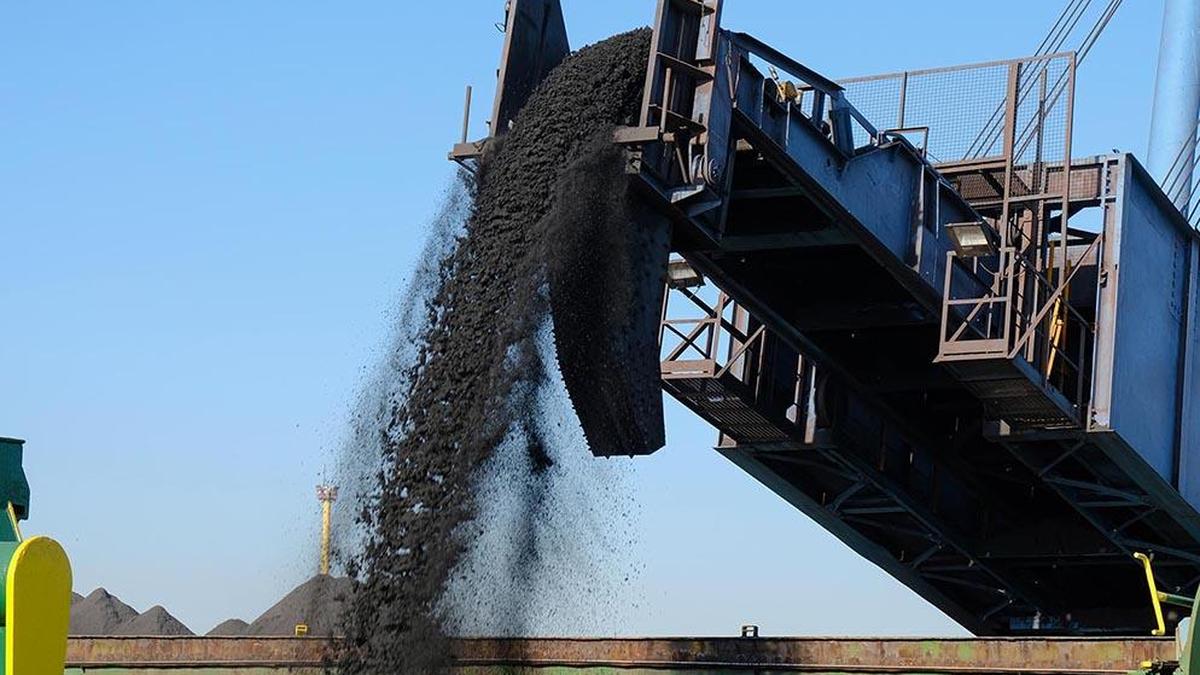
India’s imports of iron ore, a key raw material in steelmaking, ​are set to rise to a
seven-year high in the ⁠fiscal year ending on March 31, driven by
a shortage of high-grade ore and demand from JSW Steel
, analysts and industry executives said.

Overall imports are likely ‌to reach 12 million to 14 million
metric tons in 2025-26, more than doubling from a year earlier,
analysts and trade ‌officials said.

JSW Steel, India’s biggest steelmaker by capacity, was a ‌key
driver ⁠of iron ore imports for its mills in the ⁠western state of
Maharashtra and the southern state of Karnataka, said Lalit
Ladkat, a senior analyst at London-basedconsultancy CRU.

A cargo of BHP’s Jimblebar Fines iron ore is
heading to India ​in a rare sale, driven ‌by discounts on the
product that was banned for sale in China, Reuters reported last
week.

The bulk of India’s iron ore imports in the fiscal year
originated from Brazil and Oman, which together accounted for
about ‌70% of total shipments, Ladkat said.

Iron ore output in ​India, the world’s second-largest crude
steel producer, is expected to reach 305 million tons in the
2025–26 fiscal year, up from ⁠289 million metric tons a year
earlier, according to commodities consultancy BigMint.

But exports of iron ore are expected to reach 29 million
metric tons, up ‌26% from a year earlier, with 85% of shipments
going to China, Ladkat said.

India mainly exports low-grade iron ore that is generally
not used by steel mills in the country, mining officials said.

In the fiscal year that begins on April 1, India’s iron ore
output is expected to rise as mines ramp up production, although
imports may continue depending ‌on grade requirements and
plant-level supply dynamics, said Sumit Jhunjhunwala, vice
president at ICRA Ratings.

IRON ​ORE PELLET IMPORTS SET TO DROP

India, which has been importing cheaper iron ore pellets –
processed or value-added products – from ⁠Iran since last year,
is likely to see volumes decline due to the ⁠conflict in the
Middle East, analysts said.

“Indian pellet imports from Iran could decline amid
heightened geopolitical tensions and associated trade
uncertainties, while ample ‌domestic pellet availability is
likely to constrain import demand,” BigMint said.

From April to February, India imported 1.88 million metric
tons of iron ore ​pellets, up six times from a year earlier.

Published on March 24, 2026


Source link

Markets surge 2% at midday; Nifty reclaims 23,000 on Iran ceasefire hopes

Markets surge 2% at midday; Nifty reclaims 23,000 on Iran ceasefire hopes


Equity benchmarks extended their morning gains into the afternoon session on Tuesday, with the BSE Sensex and Nifty 50 holding firm above key levels around midday, driven by a sharp pullback in crude oil prices after US President Donald Trump postponed strikes on Iran’s power infrastructure.

At 12:55 pm, the Sensex was trading at 74,295.40, up 1,599.01 points or 2.20 per cent. The Nifty 50 stood at 23,012.00, up 499.35 points or 2.22 per cent as of 12.54 pm. The indices had opened gap-up in the morning — Sensex at 74,212.47 against a previous close of 72,696.39, and Nifty at 22,878.45 against a previous close of 22,512.65 — and have built on those gains through the session.

The trigger was Trump’s announcement of a five-day halt to planned strikes on Iranian energy infrastructure, citing “productive conversations.” Brent crude fell around 11 per cent, retreating from above $112 to below $105. US markets had closed higher overnight, with the S&P 500 gaining 1.4 per cent and the CBOE VIX easing 5.9 per cent to 25.2, providing a supportive global backdrop.

On the Nifty 50, IndiGo led the gainers, rising 5.25 per cent to ₹4,152.40 from a previous close of ₹3,945.30. Shriram Finance gained 5.22 per cent to ₹923.50 from ₹877.70. Eternal advanced 5.09 per cent to ₹238.51 against its previous close of ₹226.96. Larsen & Toubro climbed 4.63 per cent to ₹3,497.00 from ₹3,342.40, while UltraTech Cement rose 4.30 per cent to ₹10,808.00 from ₹10,362.00.

The sectoral spread of the gains — aviation, financial services, quick commerce, infrastructure, and cement — points to a broad-based recovery rather than a narrow crude-driven bounce. The breadth data on BSE reinforced this: of 4,252 stocks traded, 3,016 advanced against 1,056 declines, with 180 unchanged. As many as 440 stocks hit 52-week lows, however, while 39 reached 52-week highs, reflecting that Monday’s damage has not been fully reversed across the broader market. Stocks in upper circuit numbered 96, against 161 in lower circuit.

On the losing side, Coal India slipped 2.39 per cent to ₹444.35 from its previous close of ₹455.25, while Power Grid Corporation fell 0.86 per cent to ₹299.50 from ₹302.10. The decline in Coal India comes even as the broader market rallied, with analysts flagging the stock’s sensitivity to energy policy shifts. Power Grid has now declined in both sessions this week.

Oil marketing companies remained in focus through the session, with the fall in crude improving their refining margin outlook. InvestorAi’s morning note flagged BPCL and Hindustan Petroleum as its highest-conviction calls of the day, noting that downstream oil marketing names offer “pricing resilience that pure upstream names lack.” Power infrastructure name Tata Power, life insurer Max Financial, and industrials player Supreme Industries were also flagged as conviction picks, pointing to a broadening of the relief rally beyond direct oil beneficiaries.

India VIX, which had spiked to 26.73 on Monday — up 17.17 per cent — remained elevated, keeping traders cautious about the durability of the move. With the weekly Nifty F&O expiry falling today, accelerated time decay and volatility-driven swings remain a risk through the afternoon session. Trump’s five-day window on Iran closes by Saturday, and any breakdown in diplomatic momentum could push crude back above $115 and test Monday’s low of 22,512 on the Nifty once more.

Published on March 24, 2026


Source link

शेयर बाजार की जोरदार वापसी, सेंसेक्स 1000 अंक तक उछला; जानें इसके पीछे की वजह

शेयर बाजार की जोरदार वापसी, सेंसेक्स 1000 अंक तक उछला; जानें इसके पीछे की वजह


Show Quick Read

Key points generated by AI, verified by newsroom

Stock Market Rally: भारतीय शेयर बाजार में मंगलवार 24 मार्च के कारोबारी दिन तेजी देखने को मिल रही है. शुरुआती कारोबार में प्रमुख बेंचमॉर्क इंडेक्स बीएसई सेंसेक्स 1,000 अंक उछल गया था. वहीं निफ्टी में भी तेजी देखने को मिल रही है. 

दोपहर करीब 11:50 बजे तक सेंसेक्स 814 अंक उछलकर 73,511 के लेवल पर ट्रेड कर रहा था. वहीं, निफ्टी भी 255 अंक की तेजी के साथ 22,768 अंक पर कारोबार कर रही थी. वैश्विक अनिश्चितताओं के बीच आज निवेशकों ने शेयर बाजार पर अपना भरोसा दिखाया है. आइए जानते हैं, आखिर इस तेजी के पीछे की वजह क्या है…

डोनाल्ड ट्रंप के नरम रुख से बाजार को राहत

मिडिल ईस्ट में तनाव के बीच हालात थोड़े शांत होते नजर आए जब अमेरिकी राष्ट्रपति ट्रंप ने ईरान के ऊर्जा ढांचे पर संभावित कार्रवाई को फिलहाल टालने का संकेत दिए. साथ ही उन्होंने बातचीत की संभावना भी जताई.

इस बयान से वैश्विक स्तर पर तनाव कम होने की उम्मीद बनी है. जिसका असर बाजार पर देखने को मिला है. अमेरिकी शेयर बाजार में तेजी देखने को मिली थी. निवेशकों का भरोसा फिर से बाजार की ओर लौटता दिख रहा है. 

India VIX में गिरावट से निवेशकों का भरोसा बढ़ा

बाजार में घबराहट को दर्शाने वाला इंडेक्स India VIX आज 4 फीसदी से ज्यादा गिरकर 25.60 के लेवल पर पहुंच गया. इंडेक्स में गिरावट इस बात का संकेत है कि निवेशकों के बीच घबराहट कम हो रही है और बाजार को लेकर भरोसा बढ़ रहा है. 

आमतौर पर VIX में कमी को पॉजिटिव संकेत माना जाता है. निवेशक बाजार पर अपना भरोसा दिखाने लगते है. आज शेयर मार्केट में आई तेजी के पीछे यह भी एक कारण है. 

डॉलर के मुकाबले मजबूत हुआ रुपया

मंगलवार के कारोबारी दिन भारतीय रुपये में हल्की मजबूती देखने को मिली है. जिसने बाजार को सपोर्ट पहुंचाने का काम किया है. 24 मार्च को रुपया 93.64 प्रति डॉलर के स्तर पर खुला.

जबकि इससे पहले यह 93.98 के अपने निचले स्तर तक पहुंच गया था. शुरुआती कारोबार में रुपये में आई इस मजबूती की वजह से शेयर बाजार में तेजी देखने को मिली है.

वैश्विक संकेत और खरीदारी

शेयर बाजार में कल की भारी गिरावट का फायदा उठाते हुए आज निवेशकों ने खरीदारी पर जोर दिया है. जिससे बाजार को सपोर्ट मिला. एशियाई बाजारों में भी तेजी देखने को मिली है. साथ ही ब्रेंट क्रूड लगभग 100 डॉलर प्रति बैरल के आस-पास ट्रेड कर रहा था. जिससे बाजार को सपोर्ट मिला है.  

डिस्क्लेमर: (यहां मुहैया जानकारी सिर्फ़ सूचना हेतु दी जा रही है. यहां बताना जरूरी है कि मार्केट में निवेश बाजार जोखिमों के अधीन है. निवेशक के तौर पर पैसा लगाने से पहले हमेशा एक्सपर्ट से सलाह लें. ABPLive.com की तरफ से किसी को भी पैसा लगाने की यहां कभी भी सलाह नहीं दी जाती है.)

यह भी पढ़ें: Gold Silver Price Today: सोने-चांदी की कीमतों में जारी है गिरावट, चांदी 8500 रुपये फिसली; जानें आज कितना सस्ता हो गया सोना…


Source link

क्या होम लोन पर कम होगी EMI या जस का तस रहेगा रेपो रेट? 8 अप्रैल को खुलने जा रहा RBI का पिटारा

क्या होम लोन पर कम होगी EMI या जस का तस रहेगा रेपो रेट? 8 अप्रैल को खुलने जा रहा RBI का पिटारा


RBI MPC Meeting 2026: भारतीय रिजर्व बैंक (RBI) ने सोमवार को कारोबारी साल 2026-27 के लिए मौद्रिक नीति समिति (MPC) की बैठकों का पूरा शेड्यूल जारी कर दिया है. अगली MPC की बैठक 6-8 अप्रैल के बीच होगी. रिजर्व बैंक के गवर्नर की अध्यक्षता वाली छह-सदस्यीय दर-निर्धारण समिति (MPC) साल में कम से कम चार बार मिलती है. आमतौर पर यह हर दो महीने में एक बार (द्वि-मासिक) आयोजित की जाती है. 1 अप्रैल से नया वित्तीय वर्ष शुरू होने जा रहा है. ऐसे में आइए देखते हैं कि साल 2026 के लिए कब-कब मौद्रिक नीति समिति की बैठक होगी. 

किस-किस तारीख को होगी बैठक? 

  • 6-8 अप्रैल- पहली द्वि-मासिक नीति समीक्षा 
  • 3-5 जून- दूसरी द्वि-मासिक नीति समीक्षा 
  • 3-5 अगस्त- तीसरी द्वि-मासिक नीति समीक्षा 
  • 5-7 अक्टूबर- चौथी द्वि-मासिक नीति समीक्षा 
  • 2-4 दिसंबर- पांचवी द्वि-मासिक नीति समीक्षा
  • 3-5 फरवरी- वित्त वर्ष की अंतिम नीति समीक्षा

2025-26 में रेपो रेट में हुआ बदलाव

फरवरी 2025- 0.25 बेसिस पॉइंट की कटौती के साथ रेपो रेट को 6.50 परसेंट से घटाकर 6.25 परसेंट किया गया. 

अप्रैल 2025- 0.25 बेसिस पॉइंट की कटौती के साथ रेपो रेट को 6.00 परसेंट पर लाया गया. 

जून 2025- रेपो रेट में 0.50 अंकों की बड़ी कटौती की गई और इसी के साथ यह 5.50 परसेंट पर आ गया. 

अगस्त और अक्टूबर 2025- इन दोनों ही महीनों में हुई बैठक में रेपो रेट को 5.50 परसेंट पर बरकरार रखा गया. 

दिसंबर 2025- दरों में फिर से 0.25 बेसिस पॉइंट की कटौती की गई और रेपो रेट 5.25 परसेंट पर आ गया. 

फरवरी 2026- वित्त वर्ष की आखिरी बैठक में रेपो रेट में कोई बदलाव नहीं किया गया और यह 5.25 परसेंट पर बना रहा. 

क्यों रेपो रेट में की गई कटौती? 

  • वित्त वर्ष 2025-26 में रेपो रेट में कटौती इस मकसद के साथ की गई कि कम हुई महंगाई के बीच आर्थिक विकास (GDP Growth) को बढ़ावा मिल सके.
  • दिसंबर 2025 तक रिटेल महंगाई दर घटकर लगभग 2.0 परसेंट के लेवल पर आ गई थी. इसके चलते आरबीआई को रेपो रेट घटाने की गुंजाइश मिली. 

कैसे काम करती है MPC? 

मौद्रिक नीति समिति देश में ब्याज दरों को तय करने वाली एक प्रमुख संस्था है. इनका काम महंगाई को काबू में रखते हुए आर्थिक विकास को बढ़ावा देना है. MPC में कुल छह सदस्य होते हैं. इनमें से तीन सदस्य RBI से और तीन बाहरी सदस्या होते हैं, जिन्हें भारत सरकार नियुक्त करती है. इनमें आमतौर पर अर्थशास्त्री या प्रोफेसर होते हैं. समिति की बैठक साल में हर दो महीने में एक बार यानी कि कुल छह बार होती है. बैठक आमतौर पर तीन दिनों तक चलती है. बैठक के आखिरी दिन वोटिंग के आधार पर लिए फैसले की जानकारी RBI गवर्नर प्रेस कॉन्फ्रेंस के जरिए देते हैं. 

ये भी पढ़ें:

आईपीओ मार्केट में धमाका! इस हफ्ते 3 मेनबोर्ड IPO देंगे बाजार में दस्तक, निवेशकों के लिए मौका…


Source link

India’s drug regulatory authority steps up surveillance on generic GLP-1 weight-loss drugs

India’s drug regulatory authority steps up surveillance on generic GLP-1 weight-loss drugs


With generic versions of semaglutide being launched over the weekend at lower prices, the Indian drug regulatory authority has upped surveillance on the supply chain and unauthorised sale and promotion of the GLP-1 drugs, used to treat obesity and Type II diabetes.  

“India’s Drugs Controller, in collaboration with State Regulators, has initiated a series of targeted actions to curb possible malpractices across the pharmaceutical supply chain and prevent unauthorized sales and use,” a note from the Union Health Ministry said.

With more options now in the market, “concerns have emerged regarding their on-demand availability through retail pharmacies, online platforms, wholesalers, and wellness clinics,” the Ministry said, adding, “These drugs, when used without proper medical supervision, may lead to serious adverse effects and related health risks.”

In the recent weeks, enforcement activities have been scaled up, it said. “Audits and inspections were conducted at 49 entities, including: Online pharmacy warehouses, Drug wholesalers, Retailers, Wellness and slimming clinics.” The  inspections were across the country and focused on “identifying violations related to unauthorised sale, improper prescription practices, and misleading marketing. Further, notices have also been sent to defaulting entities,” it added.

Semaglutide is the active ingredient in Novo Nordik’s globally popular in weightloss and diabetes drugs Wegovy and Ozempic, respectively. A patent on semaglutide expired in markets including India last Friday, leading to over a handful of generic companies launching their less expensive versions of the drug in multiple delivery devices (vials with dose-specific syringes, pre-filled pens, injectables and tablets). The generic versions of the product are between 50 to 80 percent less than the innovator’s price.    

Intensified surveillance

The regulatory surveillance will continue to be intensified in the coming weeks, the ministry said, and “non-compliances will be dealt strictly with actions including cancellation of licenses, penalties, and prosecution under applicable laws,” it added.

“The misuse of weight loss drugs without clinical oversight can lead to severe health complications,” the note reiterated, urging citizens to take treatment only on the prescription of qualified medical practitioners. The drug can be prescribed by endocrinologists, internal medicine specialists and for some indications by cardiologists, the note said.

More Like This

Published on March 24, 2026


Source link

YouTube
Instagram
WhatsApp