Iron ore rises on high freight rates, energy prices

Iron ore rises on high freight rates, energy prices


Loading of iron ore concentrate on board of cargo ship using conveyor belt
| Photo Credit:
Ievgen Postovyk

Iron ore futures rose on Monday, supported by elevated freight rates, while other steelmaking ingredients coking coal and coke also gained as countries booked coal cargoes for their energy requirements due to a spike in global oil and gas prices.

The most-traded May iron ore contract on China’s Dalian Commodity Exchange (DCE) traded 0.92 per cent higher at 819 yuan ($118.57) a metric ton.

The benchmark April iron ore on the Singapore Exchange was 0.02 per cent higher at $108.25 a ton, as of 0706 GMT.

Amid the West Asia conflict, iron ore and coke held up well, supported by rising ocean freight rates and transmission from coal-coke energy substitution, a note from Shanghai Metals Market said.

However, market sentiment was cautious while BHP negotiated with state-backed iron ore buyer China Mineral Resources Group, leading to some investors taking profit, the note added.

Iron ore inventory at major Chinese ports fell 0.74 per cent week-on-week, as of March 20, data from consultancy Steelhome showed, as hot metal output picks up.

In Australia, severe tropical cyclone Narelle brushed past the country’s northeast coast, stoking fears of a disruption of supplies from the iron ore hub.

Port Hedland, a primary iron ore hub, is expected to experience strong winds this week, according to Australia’s Bureau of Meteorology.

South Africa has imposed steep import duties on structural steel imports from China after finding evidence of dumping, according to a government notice dated March 19.

Imports make up about 36 per cent of South Africa’s total steel consumption, and China accounts for 73 per cent of that, per the South African Iron and Steel Institute.

DCE coking coal and coke spiked 10.97 per cent and 6.92 per cent, respectively.

Steel benchmarks on Shanghai Futures Exchange gained. Rebar strengthened 0.9 per cent, hot-rolled coil lifted 0.97 per cent, wire rod advanced 1.86 per cent and stainless steel firmed 0.25 per cent.

Published on March 23, 2026


Source link

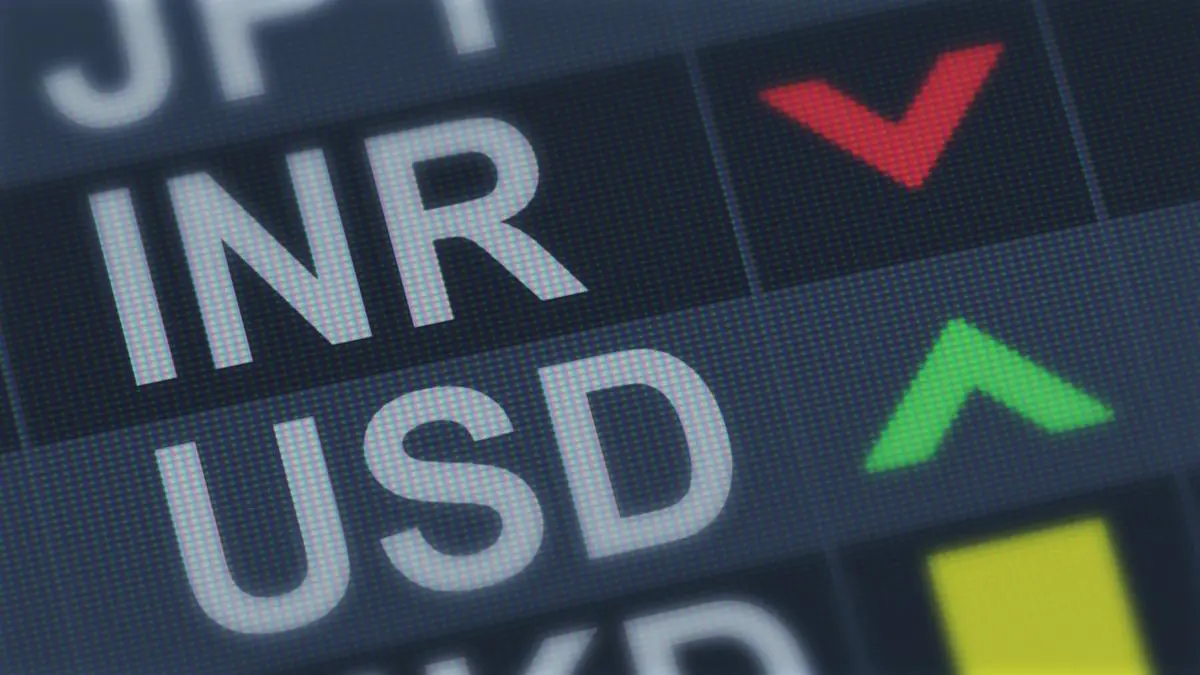
Rupee fast moving towards 94/$ mark

Rupee fast moving towards 94/$ mark


Opening about 14 paise weaker at 93.8475, the Indian currency has tested a high/low of 93.81/93.95 per USD in intraday trades so far. It is currently trading at 93.9175 so far.
| Photo Credit:
istock.com

The intensifying West Asian war, with the US-Israel alliance pounding Iran and the latter retaliating with drone/missile strikes is having a telling effect on the Rupee, which is fast depreciating towards the 94 to the US Dollar mark.

Soaring energy prices, re-routing of trade routes and FPIs pulling out of the domestic equity markets is weakening the Rupee.

Opening about 14 paise weaker at 93.8475, the Indian currency has tested a high/low of 93.81/93.95 per USD in intraday trades so far. It is currently trading at 93.9175 so far.

Amit Pabari, MD, CR Forex Advisors, said: “As uncertainty rises, the U.S. dollar has strengthened. This is not just because of its safe-haven status, but also because the U.S. is a net energy exporter, unlike most of Asia and Europe. In an environment of rising oil prices, this gives the dollar a clear advantage.

“For the rupee, this creates a double impact. Higher oil prices increase India’s demand for dollars, while a stronger global dollar makes it more expensive to access. As a result, the war brings nothing but pressure for the rupee in the near term.”

Pabari noted that the rupee is now approaching an important level — the 94.00 mark is expected to act as a strong resistance, given its psychological significance. On the downside, support is seen in the 92.80–93.00 range.

Published on March 23, 2026


Source link

Gold futures plunge ₹8,089 to ₹1.36 lakh/10g on global selloff, inflation fears

Gold futures plunge ₹8,089 to ₹1.36 lakh/10g on global selloff, inflation fears


Gold prices plunged sharply by ₹8,089 to ₹1.36 lakh per 10 grams in futures trade on Monday, tracking a global selloff amid rising inflation fears and a firm US dollar.

On the Multi Commodity Exchange, the yellow metal for April delivery slumped by ₹8,089, or 5.6 per cent, to ₹1,36,403 per 10 grams.

Last week, gold had dropped ₹13,974, or 8.82 per cent, to close at around ₹1.44 lakh per 10 grams on the commodities bourse.

Analysts said the precious metal opened with a sharp gap down and is likely to extend its losing streak for the fourth consecutive week.

In the international market, gold futures on the Comex continued to decline for the fifth straight session. The April contract depreciated $202.4, or 4.42 per cent, to $4,372.5 per ounce.

“Gold fell below $4,400 per ounce as the ongoing Middle East conflict intensified inflation fears, while major economies face pressure to boost liquidity, including through gold sales, to offset the war’s impact,” Jigar Trivedi, Senior Research Analyst at IndusInd Securities, said.

During the past week, gold futures in overseas markets plunged $486.8, or 9.6 per cent, to settle at $4,574.9 per ounce.

Trivedi noted that gold dropped around 10 per cent as surging oil prices fuelled inflation concerns, prompting markets to price in a prolonged pause or potential rate hikes by major central banks.

Makda of Choice Broking said the dollar index has remained firm above the 99 level, putting pressure on the Indian rupee, which has weakened near the 94-level against the US dollar.

Elevated crude prices and rising import costs are likely to widen India’s trade deficits and stoke domestic inflation, he added.

This could keep pressure on safe-haven assets such as gold in the near term, Makda said.

Published on March 23, 2026


Source link

Innovision shares list at sharp 10% discount, extend losses after market debut

Innovision shares list at sharp 10% discount, extend losses after market debut


Shares of Innovision made a weak debut on the stock exchanges, listing at a steep discount and falling further in early trade.

The stock opened on the National Stock Exchange at ₹467.70, marking a 9.8 per cent decline from its issue price of ₹519. On the BSE Limited, the shares debuted at ₹466, down 10.2 per cent. Selling pressure intensified after listing, dragging the stock to an intraday low of ₹407.10, representing a sharp 21.5 per cent fall below the offer price.

The initial public offering of the Haryana-based manpower and toll plaza management services provider saw moderate investor interest, with the issue subscribing 3.32 times on the final day of bidding. The company had earlier extended the IPO closing date to March 17 and trimmed its price band following a muted response during the initial days of the share sale.

The public issue, which opened for subscription on March 10, was originally set to close on March 12. However, amid tepid participation, the company revised the price band to ₹494–519 per share from the earlier ₹521–548 range and extended the bidding window. Subscription levels had remained subdued during the first three days.

The IPO comprised a fresh issue of shares worth ₹255 crore along with an offer for sale of 12.38 lakh equity shares by existing shareholders. Proceeds from the fresh issue are slated to be used for debt repayment, meeting working capital requirements, and general corporate purposes.

Published on March 23, 2026


Source link

A web of sensors: How the US spots missiles and drones from Iran

A web of sensors: How the US spots missiles and drones from Iran


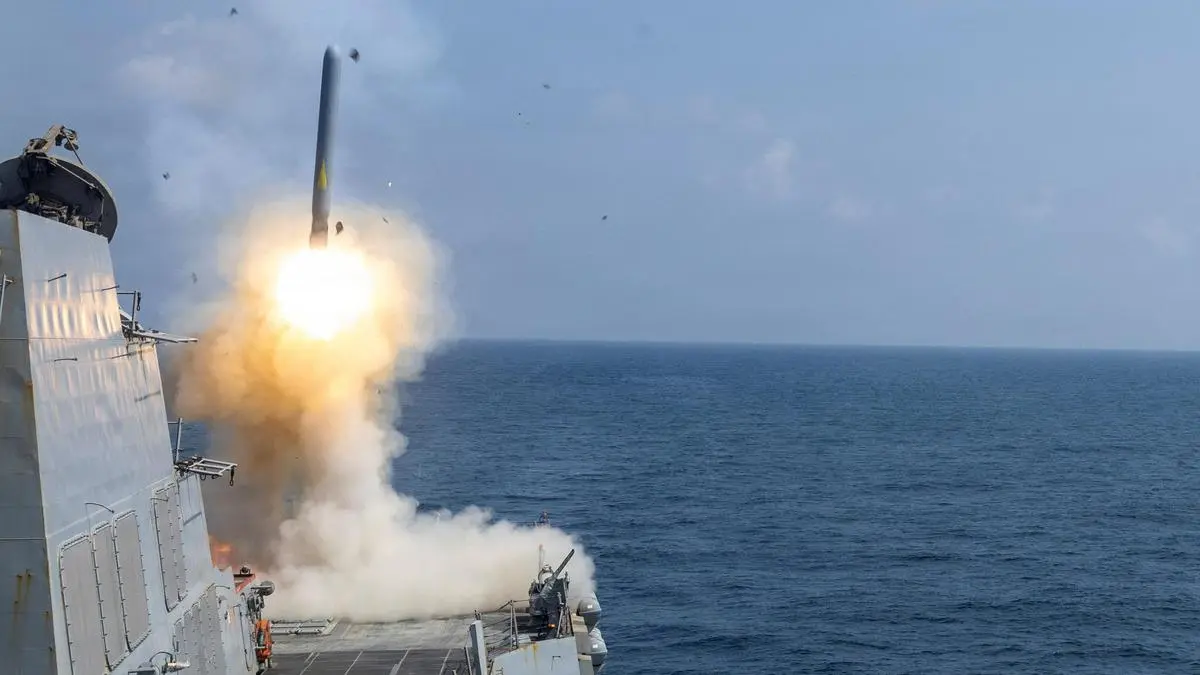
The global price of oil continues to skyrocket as Iran’s missiles and drones hit vital infrastructure in Arab Gulf states. Billion-dollar American radar systems have also been targeted and destroyed across the Middle East by Iran, seemingly degrading US defenses.

US military presence near Iran includes dozens of locations and tens of thousands of troops in harm’s way. This raises the question: If a missile is launched from Iran toward a US military base in the region, how do service members know in time to stay safe? The United States and its allies have built a layered system to watch the skies day and night. This system uses satellites in space, radar on the ground, ships at sea and aircraft in the air.

It also depends on well-trained military members from US Space Command who make quick decisions with the data. As a former US Air Force officer and now aerospace and national security law professor at the University of Mississippi, I’ve studied the vast network of alliances and systems that make this happen.

Together, these tools form a missile defense network that can spot danger early and give warnings. The fastest way to spot a missile is from space. US satellites, like the US Space Force’s Space-Based Infrared System, circle high above Earth. These billion-dollar satellites, the crown jewels of missile defense, can spot the bright heat from a missile launch almost instantly.

When a missile is fired, it creates a strong enough heat signal to be seen in space. The satellites detect this heat using sensitive, infrared sensors and send an alert within seconds. This early warning is critical. It gives the military on the ground or at sea time to get defense systems ready.

The warning signal from space is then received on the ground by systems known as the US Space Force’s Joint Tactical Ground Stations. The signal is sent from space using secure satellite communications, received by these ground stations, and then quickly distributed to other parts of the missile defense network.

Radar to detect and track missiles

But satellites cannot do everything to detect and track missiles. They need help from systems on Earth. After a missile is launched, ground-based radars take over from the initial satellite signal. Radars work by sending out radio waves. When those waves hit an object, like a missile, they bounce back. The radar then uses that information to track where the object is and where it is going throughout its flight.

The US uses both short and long-range radars together. One powerful, long-range radar is the AN/FPS-132 Upgraded Early Warning Radar. It can see missiles from over 3,000 miles (4,828 km) away and track them as they travel. Another key system is the US Army’s AN/TPY-2 Surveillance Transportable Radar. This radar has a range of almost 2,000 miles (3,219 km) and looks more closely at the missile to provide more information about the threat. TPY-2 systems typically sit right next to weapons systems that will destroy the missile to ensure the timely relay of tracking data.

In sum, satellites spot the launch and radars follow the missile through the sky until defense systems destroy it.

However, Iranian forces recently struck both a TPY-2 in Jordan and a FPS-132 in Qatar. These systems are expensive and difficult to quickly replace. This has required the US to move an additional TPY-2 from Korea to place it in the Middle East.

US missile defense tracking was certainly degraded by losing these resources, but other radars are still part of the network. For example, the US Space Force operates another FPS-132 in the U.K., which could potentially provide radar support to the Middle East.

In addition to ground and space-based sensors, US Navy ships carry powerful radar systems as part of their Aegis Combat System, known as the AN/SPY-1, which can provide up to 200 miles (322 km) of coverage. Ships can sail closer to areas where threats may come from and help fill gaps that land-based radars cannot cover.

US Air Force aircraft also play a big role. Planes like the E-3 Sentry can watch large areas using radar from the sky. Drones such as the MQ-9 Reaper can stay in the air for long periods and track activity below with radar and sensors. These moving sensors help the system stay flexible. If one area needs more coverage or is degraded, ships and aircraft can move there to fill in.

Why drones are harder to catch

Drones require a different set of tracking tools and have proven more difficult to destroy than missiles from Iran. The legacy systems are simply better suited to missiles than new drone technology. To detect drones, the US typically uses several tools: radar; radio signal tracking, which can pick up control signals; and cameras and other sensors, which can see drones directly.

Missiles are fast and hot, which makes them easier to detect with the current systems. Iranian drones, such as the Shahed system, are different. Their heat signature is often minimal due to using gas-powered engines not easily detected by infrared sensors. Without this heat signature, that initial warning cue is delayed, making it difficult for radar to know what to track.

Drones are usually smaller and fly low to the ground, making them hard to see on radar. They can be hidden by buildings or tough to distinguish from birds and other objects. Some are made of materials that do not show up well on radar, such as fiberglass and plastic. Others move slowly, which can make them harder to notice or stand out.

Many of Iran’s drones do not show up on radio signal detection systems because they cannot be remotely controlled. These drones are programmed with GPS coordinates and navigate themselves to a target.

Multiple methods

No single method works all the time to defend against drone attacks. Instead, these tools work together to find and track drones. The US and its allies continue to improve their systems to catch both missiles and drones. For example, the US is in discussions to buy acoustics sensors from Ukraine, which can hear drones coming when they cannot be seen using other methods.

New sensors, better software and faster communication will all help strengthen defenses. The goal is simple: Detect threats earlier, respond faster and hit the target faster. (The Conversation) AMS

Published on March 23, 2026


Source link

निवेशकों के लिए मौका… इन शेयरों में आ सकती है 47% तक की अपसाइड

निवेशकों के लिए मौका… इन शेयरों में आ सकती है 47% तक की अपसाइड


Show Quick Read

Key points generated by AI, verified by newsroom

Brokerage Stock Recommendations: मिडिल ईस्ट तनाव और कच्चे तेल की कीमतों में जारी हलचल से भारतीय घरेलू बाजार में पिछले कुछ दिनों से उतार-चढ़ाव देखने को मिल रहा है. हालांकि, ब्रोकरेज फर्म कुछ चुनिंदा शेयरों पर अभी भी अपना दांव लगा रहे हैं.

उन्हें भरोसा है कि, इन शेयरों की खरीदारी से निवेशकों को लाभ हो सकता है. आइए जानते हैं, आखिर किन कंपनियों के शेयरों पर ब्रोकरेज फर्म अपना भरोसा जता रहे हैं…

रिलायंस इंडस्ट्रीज लिमिटेड

ब्रोकरेज हाउस Jefferies और मोतीलाल ओसवाल ने Reliance Industries Limited को लेकर पॉजिटिव रुख बनाए रखा है. ब्रोकरेज फर्म ने स्टॉक के लिए 1750 रुपये प्रति शेयर का टारगेट तय किया है.

यह मौजूदा स्तर से करीब 26 फीसदी तक की संभावित बढ़त को दर्शाता है. ब्रोकरेज का मानना है कि कंपनी के टेलीकॉम, रिटेल और डिजिटल बिजनेस में ग्रोथ से कमाई बढ़ सकती है. साथ ही कंपनी का कारोबार मॉडल इसे स्थिरता प्रदान करता है.

HDFC बैंक पर ब्रोकरेज का मजबूत भरोसा

हाल के समय में HDFC Bank को लेकर ब्रोकरेज हाउस पॉजिटिव नजर आ रहे हैं. Jefferies ने स्टॉक पर 1240 रुपये का टारगेट दिया है. जो मौजूदा स्तर से करीब 47 प्रतिशत तक की संभावित तेजी को दिखाता है. 

इसके अलावा Motilal Oswal और Antique Stock Broking भी बैंक की फाइनेंशियल स्थिति को लेकर सकारात्मक नजर आ रहे हैं. उनका मानना है कि मजबूत बैलेंस शीट, बेहतर एसेट क्वालिटी और ROE आने वाले समय में बैंक के प्रदर्शन को सहारा देने का काम कर सकते हैं.

ICICI बैंक में आगे भी मजबूत प्रदर्शन की उम्मीद

आईसीआईसीआई बैंक को लेकर मोतीलाल ओसवाल ने अपना भरोसा बनाए रखा है. फर्म ने इसके लिए 1750 रुपये का टारगेट तय किया है, जो मौजूदा स्तर से करीब 40 फीसदी तक की संभावित बढ़त का संकेत देता है.

ब्रोकरेज का मानना है कि बैंक की मजबूत मैनेजमेंट, डिजिटल क्षमता और लगातार बढ़ती लोन ग्रोथ इसकी बड़ी ताकत हैं. वहीं Antique Stock Broking ने भी बैंक के शेयरों को अपने पसंदीदा स्टॉक की लिस्ट में शामिल किया हैं.

डिस्क्लेमर: (यहां मुहैया जानकारी सिर्फ़ सूचना हेतु दी जा रही है. यहां बताना जरूरी है कि मार्केट में निवेश बाजार जोखिमों के अधीन है. निवेशक के तौर पर पैसा लगाने से पहले हमेशा एक्सपर्ट से सलाह लें. ABPLive.com की तरफ से किसी को भी पैसा लगाने की यहां कभी भी सलाह नहीं दी जाती है.)

यह भी पढ़ें: IOC, BPCL और HPCL पर दांव लगाने वाले हो जाएं सावधान! 20 परसेंट तक क्रैश हो सकते हैं शेयर


Source link

YouTube
Instagram
WhatsApp