SBI faces ₹6,337.5 crore Income Tax demand for AY 2023-24

SBI faces ₹6,337.5 crore Income Tax demand for AY 2023-24


The lender said it will contest the order before appellate authorities within prescribed timelines.
| Photo Credit:
DANISH SIDDIQUI

State Bank of India has received a tax demand of ₹63,37,52,52,550 (approximately ₹6,337.5 crore), including interest, from the Assessment Unit of the Income Tax department, the bank disclosed to stock exchanges on Friday.

The order, dated March 19, 2026, was issued under Section 143(3) read with Sections 144C(3) and 144B of the Income Tax Act, 1961, and pertains to scrutiny assessment proceedings for Assessment Year 2023-24. The Assessment Unit has made disallowances on various grounds, the bank said.

SBI noted that it is already in litigation on similar grounds for earlier assessment years. The bank said the aggregate demand exceeds its materiality threshold, necessitating the disclosure.

The lender said it will contest the order before appellate authorities within prescribed timelines. It also clarified that the order has no impact on its operations or other activities.

Published on March 20, 2026


Source link

Accenture lifts IT sentiment; AI-driven transformation gains traction

Accenture lifts IT sentiment; AI-driven transformation gains traction


Indian IT stocks rose following Accenture’s Q2 results and guidance upgrade, which pointed to a largely unchanged demand environment, with growth increasingly driven by AI-led transformation, ecosystem partnerships and a broader services scope.

In Q2 of FY26, Accenture reported new bookings of $22.1 billion, up 6 per cent in USD and 1 per cent in local currency. Revenue came in at $18.0 billion, at an 8 per cent increase in USD terms and 4 per cent growth in local currency. Of the total bookings, consulting accounted for $11.33 billion, while Managed Services contributed $10.78 billion. The company has revised its full-year revenue growth outlook to 3-5 per cent in local currency.

Following the announcement, the Nifty IT index closed at 29,199.60 on Friday, up 2.17 per cent. Shares of Indian IT firms gained across the board, with LTM up 3.73 per cent, Infosys – 2.88 per cent, TCS – 1.77 per cent and Wipro – 1.32 per cent.

An Emkay Global Financial Services report noted that Nifty IT has corrected by around 25 per cent in CY26TD and underperformed the broader markets by about 13 per cent due to potential risks to growth, including the advancement of AI and increased macro uncertainties, which led to lower terminal growth assumptions. Stable performance and a guidance upgrade may support valuations, but neither Accenture’s Q2 results nor its commentary signals a meaningful near-term growth rebound.

Critical support

“From a technical standpoint, CNX IT is nearing a critical support zone around 26,000 on a monthly closing basis. The sector has been under pressure for a while, so this move is more of a potential stabilisation rather than a confirmed trend reversal. While global cues like Accenture may influence short-term sentiment, the bigger structural question for Indian IT remains around AI. The key variables are not just demand, but how AI-led efficiencies, rising chip costs and evolving client spending patterns impact revenue visibility,” Tushar Badjate, Director of Badjate Stock & shares, explained.

He added that valuations have corrected meaningfully, and parts of the IT space are beginning to look attractive from a risk-reward perspective. The real question is whether this becomes a cyclical bounce or the start of a more sustainable re-rating.

“Accenture’s commentary suggests that the demand environment for IT Services is stable rather than sharply improving, with clients still prioritising large, strategic transformation programs while keeping overall spending patterns in CY26 broadly similar to those in CY25,” the Emkay report said.

The company indicated improvement in pricing in some of its business areas, though the business environment remains competitive. Over 60 per cent of Accenture’s revenue was driven by the top-10 ecosystem partners in Q2, with growth outpacing the company’s average. It remains on track to more than double bookings from partnerships with key emerging AI and data ecosystem partners in FY26 over FY25.

Services scope

For Indian IT Services, AI is widening the ‘services’ scope. Accenture is positioning itself as an enterprise orchestrator—guiding deployment, integration, and transformation rather than owning models. Delivery is shifting toward a mix of FTE and outcome-based models, while clients pursue end-to-end AI-led transformations, driving spillover demand in data, cloud and security.

As clients move from pilots to production, new workstreams are emerging across cybersecurity, core operations, and modernisation. However, limited quantitative disclosure on AI adoption and monetisation continues to constrain visibility on scalable, long-term growth.

A Motilal Oswal Financial Services report shared that while Accenture noted that foundational work in AI is picking up, it is insufficient to drive the acceleration in demand anticipated in earlier scenarios. On AI deflation, software engineering remains ground zero for AI invasion, but deploying AI in large, complex enterprises is proving to be difficult. From an IT services perspective, the firms may have to contend with a complex macro and geopolitical backdrop in the near term.

Key highlights from the management commentary include clients implementing foundational programs with ecosystem partners to capture the full AI opportunity, involving cloud, security and data modernisation, with operating model and talent transformation. AI is acting as a tailwind, enabling Accenture to win market share and create new growth opportunities. While early AI adoption is driven by efficiency use-cases, growth-oriented use-cases are emerging. AI-led productivity improvements reduce technical efforts, but expand the overall scope of transformation work.

Published on March 20, 2026


Source link

Lower maize prices may see Indian farmers switch back to oilseeds, pulses this kharif

Lower maize prices may see Indian farmers switch back to oilseeds, pulses this kharif


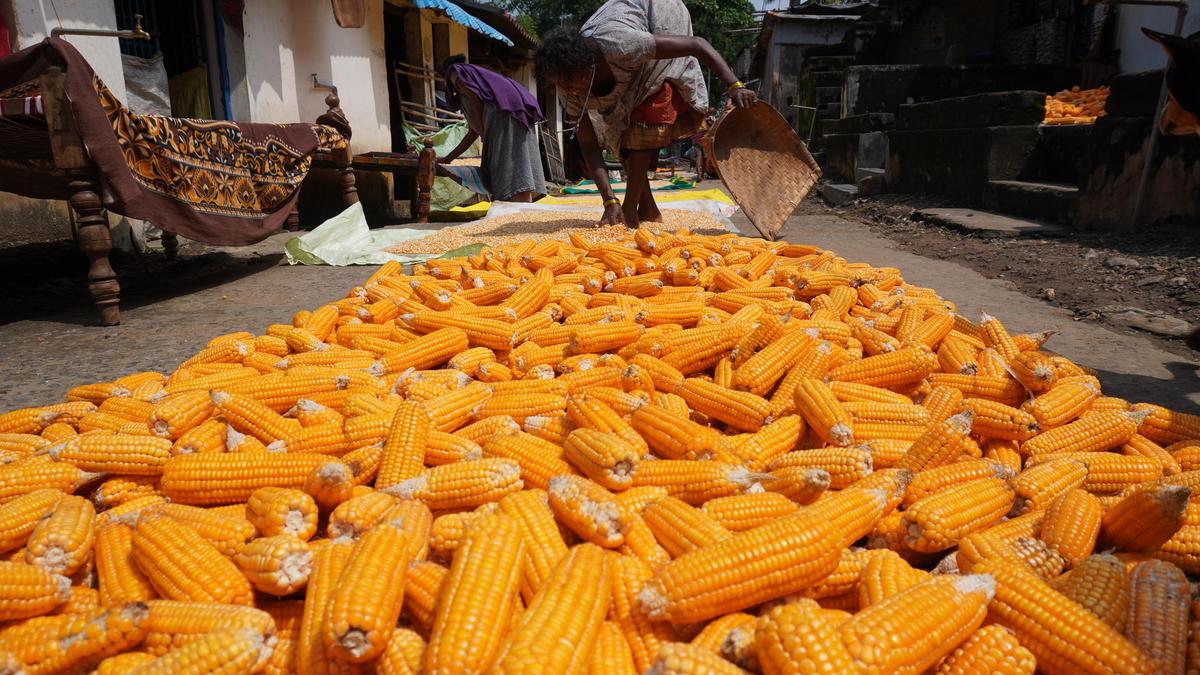
The pan-India average price of maize was ₹1,781/quintal on March 18, according to Agmarknet portal
| Photo Credit:
APPALA NAIDU T

A section of Indian farmers is likely to return to cultivating oilseeds and pulses in the upcoming kharif season as growers have realised lower prices this year. The government is confident that there may be some change in the kharif season.

However, the sowing decision will depend mainly on guaranteed price for oilseeds and pulses as the procurement has highly been insignificant compared with FCI’s purchase of rice and paddy, a senior official said.

During the kharif harvest season (October-December) in 2025-26, when farmers sold their maximum produce, the all-India average maize price was ₹1,684/quintal, down by 30 per cent from the minimum support price (MSP) of ₹2,400. Still, in the hope of a better price, farmers expanded the area in the rabi season to 30.18 lakh hectares (lh) from 27.80 lh in 2024-25.

Record high output

The pan-India average price of maize was ₹1,781/quintal on March 18, according to Agmarknet portal. In its second advanced estimates, the government projected maize production a record high for the kharif season at 302.47 lakh tonnes (lt) and in the rabi season at 159.03 lt.

“Oilseeds and pulses production plan will be discussed with States in the annual kharif conference, and accordingly, an action plan will be prepared based on the targets set by their respective mission. Prices will be a key factor, and recently Madhya Pradesh announced bonus of ₹600/quintal on summer season’s urad as more and more farmers were going for moong crop in the Zaid (summer crop) season. Such intervention may help influence the sowing decision of farmers,” the senior official said.

Earlier, it was expected that there would be demand for maize from ethanol since over 2,000 crore litres of capacity have been created by distilleries. However, the oil marketing companies bought only about 1,000-1,100 crore litres to meet the 20 per cent blending target, resulting in under utilisation of plants. Besides, the government also allotted rice for ethanol, limiting the scope for grain-based plants. The sugar industry also make ethanol and sell to OMCs, though its share was low this year.

Grains’ procurement soon

The Economic Survey also mentioned the point that as per policy decision it was expected that rice farmers would shift to maize, but while rice area increased, maize area too increased because of shifting from pulses and oilseeds.

Meanwhile, Agriculture Minister Shivraj Singh Chouhan on Friday said that government purchase of wheat and paddy would commence shortly, noting that rabi crop production has been exceptionally high this season.

He said agencies including NAFED and NCCF would procure tur, masur and urad, and whatever farmers wished to sell entire quantity would be bought so that market prices do not fall below MSPs.

He also directed officials to coordinate with State governments for accurate assessment of crop losses after unseasonal rainfall and hailstorms damaged standing rabi crops, including wheat in some states.

Chairing a review meeting, Chouhan said the adverse weather had hit several States at a time when crops were ripe and ready for harvest. “Not only did it rain, but many areas also experienced hailstorms, resulting in damage to the crops,” he told reporters after the meeting.

The minister directed officials to immediately establish contact with state governments to identify specific locations where crop damage has occurred due to hailstorms and excessive rainfall, which often leads to crops lodging or flattening on the ground.

“If a farmer has suffered losses, the damage must be assessed accurately and scientifically so that insurance claims can be processed effectively,” he said.

Published on March 20, 2026



Source link

Norges Bank sells 0.6% stake in Zee Entertainment for ₹44.4 crore

Norges Bank sells 0.6% stake in Zee Entertainment for ₹44.4 crore


Norges Bank Investment Management, acting for the Government Pension Fund Global, sold a 0.6% stake in Zee Entertainment Enterprises Ltd, offloading 60.98 lakh shares at ₹72.32 each for ₹44.4 crore.
| Photo Credit:
Dado Ruvic

Norges Bank Investment Management sold 60.98 lakh shares, or a 0.6 per cent stake, in Zee Entertainment Enterprises Ltd at an average price of ₹72.32 on Friday, for a total value of ₹44.4 crore.

Norges acted on behalf of the Government Pension Fund Global, which held 3.99 per cent of the company’s shares in December. Norges Bank acts as the overseer of the world’s largest sovereign wealth fund, the Government Pension Fund Global. Earlier, Norges had supported Zee’s proposal to issue convertible warrants on a preferential basis to its promoters.

Zee consolidated net profit in the December-ending quarter fell 5 per cent, primarily due to muted advertising revenue, while revenue grew 15 per cent, driven by positive growth in subscriptions and other sales and services. The broadcaster reported a net profit of ₹ 154.8 crore on revenue of ₹2,280 crore in the third quarter. The EBITDA margin stood at 10.5 per cent.

Zee’s share price fell by 1.51 per cent as per the BSE closing on Friday evening.

Published on March 20, 2026


Source link

India secures LPG supplies from Russia and Japan; cargoes expected by mid-April

India secures LPG supplies from Russia and Japan; cargoes expected by mid-April


The government is actively sourcing cargoes from Russia, Japan, and the United States while prioritising domestic use over commercial supply. West Asia disruptions have tightened global LPG availability, forcing India to diversify its import routes.
| Photo Credit:

As the conflict in West Asia intensifies, throttling 60 per cent of India’s consumption, the government is scouting for cargoes of the key cooking fuel from Russia and Japan, while also depending on the United States for a major share of the lost cargoes.

Besides prioritising domestic liquefied petroleum gas (LPG) consumption over commercial use, sources said that India has also intensified diplomatic efforts to secure cargoes of the critical commodity—the main cooking fuel for more than 33 crore consumers.

Talks underway with Russia and Japan

“Cargoes are being sought from Russia, which are expected to start from next month. Talks are ongoing. Deliberations are also on to explore LPG from Japan, albeit the quantities will be low. Japan cargoes, if fixed, should reach India by mid-April. At this point the objective is to arrange as much as possible from wherever possible,” said one of the sources.

On Thursday, Randhir Jaiswal, spokesperson for the Ministry of External Affairs, said that India aims to secure LPG from all available sources, including Russia, to meet domestic fuel needs.

Global LPG market tight amid Middle East disruptions

The global LPG market is facing cargo scarcity, as disruptions in the West Asia have temporarily sidelined a region that represents roughly 30 per cent of worldwide LPG availability, squeezing the spot cargo pool and tightening overall supplies, S&P Global Energy analysts said.

“The silver lining is the ongoing diplomatic dialogue between Iran and India. This engagement helped enable Indian-flagged LPG carriers to transit the region, setting a positive precedent,” said Charles Kim, associate director for LPG at S&P Global Commodities at Sea.

Continued cooperation could support the passage of additional Indian-linked ships, keeping vital supply routes workable for India and offering some relief to the broader market, he added.

US-origin LPG to supplement domestic demand

Besides, India is already in talks with the US to procure more propane cargoes. The world’s second-largest importer procured nearly 480,000 tonnes of US-origin LPG in the first two months of 2026, corresponding to around 11 very large gas carriers (VLGCs).

Besides, it has already secured a term tender for 2.2 million tonnes of US-origin LPG for 2026—equivalent to about four VLGCs per month, S&P said.

Import data shows shift from Middle East

According to S&P Commodities At Sea (CAS), India’s weekly LPG imports fell to 265,000 tonnes in the week to March 19, from 322,000 tonnes on March 5. West Asia inflows to India declined to just 89,000 tonnes in the week to March 19, representing only 34 per cent of total imports, the lowest share since January.

Alternative regional supplies increased to 176,000 tonnes in the week to March 19, up from zero the previous week when the West Asia accounted for 100 per cent of imports, CAS data showed.

LPG prices rise amid supply disruptions

LPG prices have also risen amid persistent supply disruptions. Platts, part of S&P Global Energy, assessed FOB AG propane and butane cargoes $9 per tonne higher day over day at $648 per tonne and $642 per tonne, respectively, on March 18, following deals concluded on the Intercontinental Exchange during the end-of-day trading window.

The International Energy Agency (IEA) has said that the war in West Asia is creating the largest supply disruption in the history of the global oil market.

Published on March 20, 2026


Source link

RBI’s Central Board assesses emerging global and domestic economic scenario

RBI’s Central Board assesses emerging global and domestic economic scenario


Economists say the economy faces challenges on imported inflation via the energy route, possibility of widening current account deficit and rising fiscal deficit
| Photo Credit:
FRANCIS MASCARENHAS

The Central Board of Directors of the Reserve Bank of India on Friday assessed the emerging global and domestic economic scenario, including the evolving geopolitical developments and their impact on financial markets, along with associated challenges.

The meeting comes in the backdrop of Brent crude oil prices vaulting over the $100 per barrel mark amid the West Asia war and the rupee depreciating beyond the 93 per US dollar level.

Given the aforementioned backdrop, economists say the Indian economy faces challenges on three-fronts – imported inflation via the energy route, possibility of widening current account deficit and rising fiscal deficit.

The Central Board of Directors approved RBI’s budget for the accounting year 2026-27 and also the bank’s Medium Term Strategy Framework (Utkarsh 3.0) for the 2026-29. The Board met in Patna under the Chairmanship of Sanjay Malhotra, Governor.

Abhishek Bisen, Head of Fixed Income, Kotak Mahindra AMC, said the rupee breaching the 93-mark against the US dollar reflects a sharp rise in external vulnerabilities amid heightened geopolitical tensions.

“Disruption to global energy supplies following the escalation in the Middle East has pushed up Brent crude oil price and is currently close to $108 (peaked at $119 on March 19, 2026) per barrel, adversely impacting India’s terms of trade. Since the onset of the US-Iran conflict, the rupee has depreciated nearly 2 per cent, driven by a stronger dollar, risk-off sentiment and higher import costs.

“Sustained elevation in oil prices could pose challenges to India’s growth-inflation dynamics leading to pressures in the current account deficit and complicating monetary policy trade-offs,” he said.

Published on March 20, 2026


Source link

YouTube
Instagram
WhatsApp