Credit score: Equifax now offers lenders’ 2-year trend in customer score movement

Credit score: Equifax now offers lenders’ 2-year trend in customer score movement


Movement of credit score over a two-year period can give lenders better insights into a prospective borrower’s credit behaviour than a point in time score. Keeping this in view, credit information company (CIC) Equifax India has come up with a product that tells lenders how a prospective borrower’s credit score has moved over the last eight quarters.

This product is aimed at helping lenders with better borrower selection as well as reducing the risk of delinquency.

Currently, when lenders pull a credit information report from a CIC, they get a three-digit customer credit score, which is a point in time representation of his/her creditworthiness.

Aditya B Chatterjee, Managing Director, Equifax India, observed that the handicap of a credit score is that it’s a point in time representation of a customer’s credit behaviour.

“Suppose a lender taps the bureau, pulls a prospective customer’s credit score and the score comes to 800 out of 900. So, this is a wonderful score. But what it doesn’t tell the lender is what has been the trend of the score – whether it has gone up from 750 to 800 or gone down from 850 to 800.

“If a customer’s credit score is at 800, but it has come down from 850. The downward pattern indicates a risk. The standalone score never tells the lender that,” Chatterjee said.

So, the innovation that Equifax India has come up with is that instead of giving a point in time credit score, it now give trends in credit score movement. Chatterjee underscored that the trend in credit score movement gives more richer information, based on which the lenders can underwrite better.

Equifax India introduced the credit score trend offering for lenders a couple of months back. It is now trying to make it more comprehensive by giving lenders insights into the proportion of secured and unsecured loans in a borrower’s overall loan outstanding.

Published on March 16, 2026


Source link

India seeks safe passage for six LPG tankers through Strait of Hormuz

India seeks safe passage for six LPG tankers through Strait of Hormuz


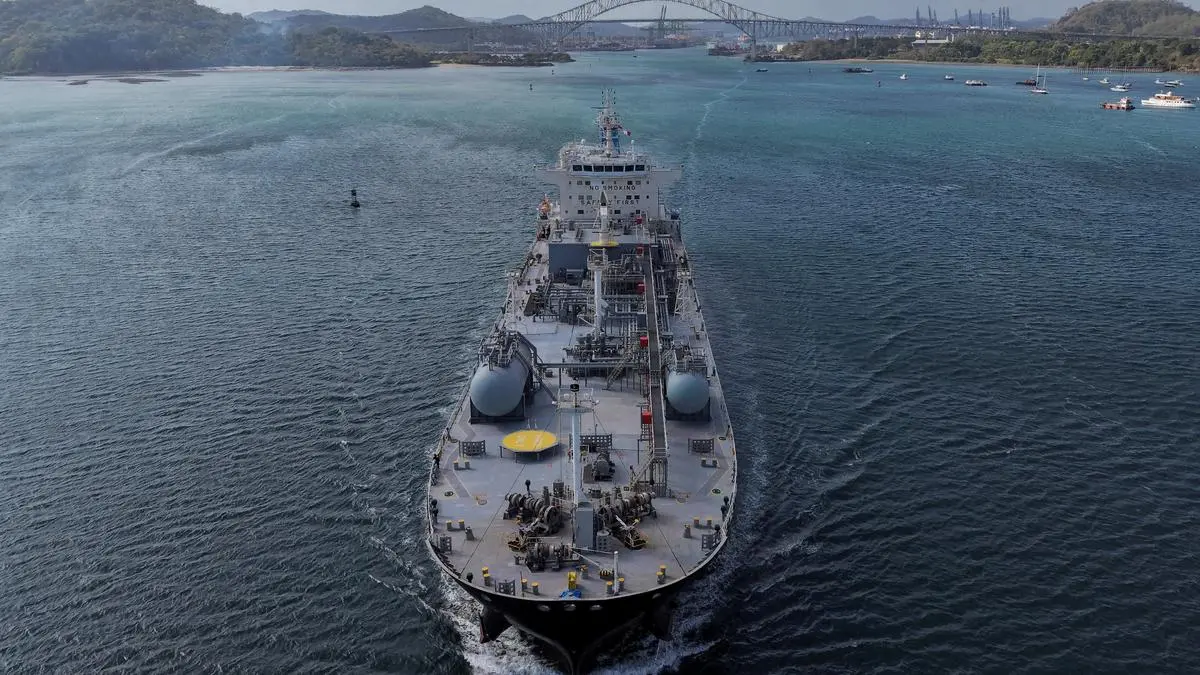
India is negotiating with Iran to secure safe passage for six LPG tankers carrying about 270,000 tonnes of cooking fuel through the Strait of Hormuz, amid disruptions caused by regional conflict. (a file picture)
| Photo Credit:
Enea Lebrun

India’s government is focused on ensuring safe passage for six tankers carrying liquefied petroleum gas through the Strait of Hormuz in negotiations with Iran, according to people familiar with the matter.

Government prioritises LPG shipments amid supply crunch

The vessels are carrying a combined 270,000 tonnes of the cooking fuel, with the government prioritizing them over ships carrying crude oil and liquefied natural gas due to the acute shortage of LPG in the country, said the people, asking not to be named as the discussions aren’t public.

India gets about 90% of its LPG imports from the Middle East, and the effective closure of the Strait of Hormuz is hitting restaurants, households and petrochemical producers who use it to make plastics. The latest diplomatic effort comes after New Delhi secured safe transit through the waterway for two tankers carrying a combined 92,000 tons of LPG, enough to meet roughly one day’s demand in the nation of more than 1.4 billion people.

Several Indian-flagged vessels stranded in Persian Gulf

The country still has 22 India-flagged vessels stuck in the Persian Gulf, Rajesh Kumar Sinha, special secretary at the shipping ministry, told reporters on Saturday. That includes the six LPG ships, four crude oil tankers and one LNG carrier, he said.

Four of the LPG ships were chartered by Bharat Petroleum Corp. Ltd. and one each by Hindustan Petroleum Corp. Ltd. and Indian Oil Corp., the people said.

India’s shipping ministry, IOC, BPCL and HPCL didn’t immediately respond to emails seeking comment.

Efforts underway to secure transit for crude and LNG tankers

Beyond those vessels, the Indian government is also trying to get safe passage for the crude and LNG tankers, they said, adding those ships have been chartered by companies including Petronet LNG Ltd., IOC, HPCL and Reliance Industries Ltd.

Hormuz has been effectively shut since shortly after the US and Israel attacked Iran at the end of February. India also takes a large proportion of its crude from the Middle East, but has had some of the pressure taken off by the US’s granting of a waiver allowing the country’s refiners to buy Russian oil. It’s been forced to ration supplies of LNG to industrial users after the world’s largest export plant in Qatar halted production.

Diplomatic engagement with Iran to secure energy supplies

Prime Minister Narendra Modi said late last week that he’d discussed the “serious situation in the region” with Iranian President Masoud Pezeshkian, including a way to secure the passage of the ships through Hormuz.

Several of the vessels remain stranded in the Gulf region and India proposes “to continue to remain in touch and coordinate with all concerned countries to ensure safe and unimpeded transit for them in an effort to ensure our energy security,” Randhir Jaiswal, a spokesperson for India’s foreign affairs ministry, said on Saturday.

More stories like this are available on bloomberg.com

Published on March 16, 2026


Source link

Sensex, Nifty swing as Citi, Nomura trim Nifty 50 targets amid West Asia conflict: UltraTech, Grasim, HDFC Bank & Hindalco lead Nifty 50 gainers

Sensex, Nifty swing as Citi, Nomura trim Nifty 50 targets amid West Asia conflict: UltraTech, Grasim, HDFC Bank & Hindalco lead Nifty 50 gainers


Broader markets remained under pressure, with the smallcap index declining nearly 2% and the midcap index falling over 1%, indicating risk aversion among investors.

Equity benchmark indices saw sharp swings on Monday as persistent foreign portfolio investor selling and heightened global uncertainty stemming from the West Asia crisis rattled investor sentiment. The BSE Sensex plunged as much as 1,034 points intraday, while the NSE Nifty 50 dropped 329 points, reflecting broad-based nervousness across sectors.

Sensex, Nifty 50 volatile

BSE Sensex plunged as much as 1,034 points intraday, while the NSE Nifty 50 dropped 329 points

Citi and Nomura cut Nifty targets; warn of earnings risks from West Asia crisis

UltraTech, Grasim, Hindalco, HDFC Bank lead Nifty 50 gainers; BEL, Shriram Finance, Coal India, Wipro top losers

MRPL jumps; IDBI, ATGL, Bandhan Bank drag

By 12.57 pm, losses narrowed marginally. The Sensex traded lower by 60.65 points, or 0.08 per cent, at ₹74,503.27, while the Nifty 50 slipped 32.30 points, or 0.14 per cent, to 23,118.80, supported by selective buying in defensive counters.

Citi and Nomura trims Nifty 50 target

Global brokerage Citi Research cut its year-end target for the Nifty 50, flagging rising risks to economic growth and corporate earnings as surging oil prices and supply disruptions linked to West Asia conflict cloud the outlook for India’s economy. The firm lowered its target to 27,000 from 28,500 earlier, implying an upside of about 17 per cent from the previous close. It also reduced the valuation multiple to 19x from 20x one-year forward price-to-earnings.

In a similar move, Nomura slashed its December 2026 Nifty target by 15 per cent to 24,900 from 29,300, citing risks to consensus earnings estimates due to the prolonged West Asia conflict.

Broader markets remained under pressure, with the smallcap index declining nearly 2 per cent and the midcap index falling over 1 per cent, indicating risk aversion among investors.

Sectorally, only FMCG, auto and select financial stocks registered marginal gains, offering limited support to the benchmarks. Realty and oil & gas counters emerged as the biggest drags amid concerns over demand and input cost pressures.

UltraTech, Grasim, Hindalco lead Nifty 50 gainers

Among Nifty 50 stocks, UltraTech Cement, Grasim Industries, Hindalco Industries, HDFC Bank and JSW Steel led the gains. On the losing side, Bharat Electronics, Shriram Finance, Wipro, Coal India and Dr. Reddy’s Laboratories weighed on the index.

Market breadth remained sharply negative, reflecting broad selling pressure across the exchanges. Out of 3,263 stocks traded on the National Stock Exchange at the time of writing, only 723 advanced while 2,447 declined and 93 remained unchanged.

Just 16 stocks touched their 52-week highs compared with a steep 725 stocks hitting 52-week lows. In addition, 40 stocks were locked in the upper circuit, whereas 123 counters hit the lower circuit amid heavy selling.

Top movers today: ATGL, MRPL, IDBI, Bandhan Bank, TTK Prestige

Midcap weakness was pronounced after shares of Adani Total Gas tumbled nearly 9 per cent. Other notable laggards included Hindustan Petroleum Corporation, Cochin Shipyard, Steel Authority of India Limited and KPIT Technologies.

In the smallcap space, Mangalore Refinery and Petrochemicals Limited, Tejas Networks, Aadhar Housing Finance, Jindal Saw and Poonawalla Fincorp gained between 1.5 per cent and 10 per cent. However, Bandhan Bank, Devyani International, GE Shipping, Firstsource Solutions and Swan Energy declined 5–10 per cent.

On the BSE, ITI, CSB Bank and MRPL shares surged 6–14 per cent. In contrast, IDBI Bank, Bandhan Bank, Adani Total Gas, TTK Prestige and Devyani International plunged between 5 per cent and 16 per cent amid heavy selling pressure.

Investor sentiment remains fragile as geopolitical tensions, volatile crude prices and sustained FPI outflows continue to drive sharp swings in domestic equities, keeping traders cautious despite intermittent recoveries.

Published on March 16, 2026



Source link

More leaf teas unsold at Coonoor auctions on subdued export demand

More leaf teas unsold at Coonoor auctions on subdued export demand


A slowdown in export demand has resulted in a rise in unsold quantities of tea, particularly leaf varieties, at the Coonoor Tea auctions.

Traders said that in Sale 11, nearly 22 per cent of the leaf grades remained unsold as many exporters deferred purchases amid the ongoing crisis in West Asia. The weak export interest has also weighed on prices, with certain leaf grades registering a decline.

However, domestic buyers stepped in to support the market for dust grades, leading to better demand in that segment.

Global Tea Auctioneers said that the quantity offered in leaf was 8,20,499 kg, witnessing a sales percentage of 75, while for dust, it was 84 per cent out of the offered quantity of 2,73,671 kg.    

The high-priced teas and better liquoring sorts were lower by ₹3 to ₹4 and more at times, occasionally some quality lots sold dearer by ₹2 to ₹3. The better medium was lower by ₹1 to ₹2, occasionally some quality lots sold dearer by ₹2 to₹3. Generally a less demand was noticed in the overall CTC leaf sale.

In CTC dust, high-priced and better liquoring sorts were barely steady to occasionally dearer by ₹3 to ₹4. The better medium sorts were lower by ₹2 to ₹3.

The primary orthodox dust grades were sold dearer by ₹4 to ₹5 and more at times in line with quality. The secondaries and finer dusts were barely steady to easier by ₹1 to ₹2 and more at times.

Published on March 16, 2026



Source link

ईरान वॉर के लंबा खिंचने के साथ ही रुपये का निकला दम, डॉलर के सामने क्यों सहम रही भारतीय करेंसी?

ईरान वॉर के लंबा खिंचने के साथ ही रुपये का निकला दम, डॉलर के सामने क्यों सहम रही भारतीय करेंसी?


Dollar vs Rupee: पश्चिम एशिया में तनाव चरम पर है और इसके लंबे समय तक खिंचने की आशंका जताई जा रही है. इस बीच एक तरफ जहां भारतीय शेयर बाजार में तेजी देखी जा रही है और बीएसई सेंसेक्स करीब 400 अंक तक उछलकर ऊपर चला गया. वहीं दूसरी ओर कच्चे तेल की बढ़ती कीमतों के चलते भारतीय करेंसी में जबरदस्त गिरावट देखी जा रही है. हफ्ते के पहले कारोबारी दिन की शुरुआत होते ही रुपया 13 पैसे टूटकर अमेरिकी डॉलर के मुकाबले 92.43 पर पहुंच गया.

क्यों टूट रहा रुपया?

भू-राजनीतिक अनिश्चितताओं के बीच विदेशी पूंजी की भारी निकासी और कच्चे तेल की बढ़ती कीमतों से घरेलू मुद्रा दबाव में है. विदेशी मुद्रा कारोबारियों (Forex Traders) का कहना है कि घरेलू शेयर बाजारों में अस्थिर माहौल के कारण रुपया और कमजोर हुआ है. अंतरबैंक विदेशी मुद्रा विनिमय बाजार (Interbank Forex Market) में रुपया 92.44 प्रति डॉलर पर खुला और अपने अब तक के सबसे निचले स्तर के करीब 92.43 प्रति डॉलर पर कारोबार करता रहा, जो पिछले बंद भाव से 13 पैसे की गिरावट दर्शाता है.

रुपया शुक्रवार को रिकॉर्ड निचले स्तर 92.30 प्रति डॉलर पर बंद हुआ था. इस बीच, छह प्रमुख मुद्राओं के मुकाबले अमेरिकी डॉलर की स्थिति को दर्शाने वाला U.S. Dollar Index 0.13 प्रतिशत की गिरावट के साथ 99.98 पर रहा. घरेलू शेयर बाजारों में BSE Sensex शुरुआती कारोबार में 139.28 अंक या 0.19 प्रतिशत चढ़कर 74,703.20 अंक पर पहुंच गया, जबकि Nifty 50 51.10 अंक या 0.22 प्रतिशत की बढ़त के साथ 23,202.20 अंक पर पहुंच गया.

विदेशी मुद्रा भंडार में गिरावट

अंतरराष्ट्रीय मानक Brent Crude Oil का भाव 1.03 प्रतिशत की बढ़त के साथ 104.22 डॉलर प्रति बैरल रहा. शेयर बाजार के आंकड़ों के मुताबिक, विदेशी संस्थागत निवेशक (FII) शुक्रवार को बिकवाल रहे और उन्होंने 10,716.64 करोड़ रुपये के शेयर बेचे.

दूसरी ओर, Reserve Bank of India (आरबीआई) के आंकड़ों से पता चलता है कि देश का विदेशी मुद्रा भंडार 11.683 अरब डॉलर घटकर 6 मार्च को समाप्त सप्ताह में 716.810 अरब डॉलर रह गया. इससे पहले, विदेशी मुद्रा भंडार 4.885 अरब डॉलर बढ़कर अपने सर्वकालिक उच्च स्तर 728.494 अरब डॉलर पर पहुंच गया था.

ये भी पढ़ें: सोने-चांदी की कीमतों में जारी है गिरावट का दौर, आज फिर इतना सस्ता हुआ सोना; जानें अपने शहर का ताजा रेट…


Source link

Saudis give oil buyers Red Sea option as Hormuz crisis persists

Saudis give oil buyers Red Sea option as Hormuz crisis persists


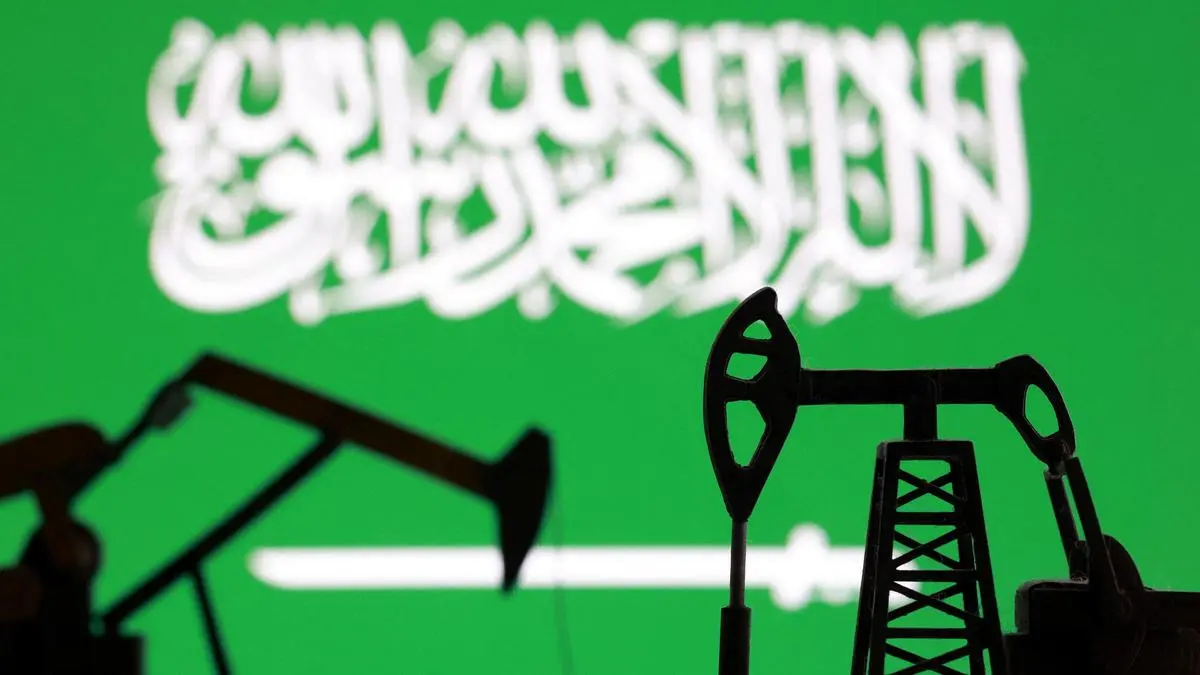
3D-printed oil pump jacks and a Saudi Arabian flag appear in this illustration taken March 2, 2026.
| Photo Credit:
Dado Ruvic

Saudi Arabia is giving long-term oil customers the option of receiving their allocations for April via the Red Sea port of Yanbu as it prepares for lengthy disruptions in the Strait of Hormuz.

Buyers who choose Yanbu will only get a portion of their monthly supply due to constraints on how much crude the pipeline to the port can carry, said traders who have been informed by state-run Saudi Aramco. The other option is to receive oil from the Persian Gulf, but at the risk of not getting any if the Strait remains closed, said the traders, who asked not to be named as they’re not allowed to speak to media. 

Aramco, the world’s biggest oil exporter, shipped 7.2 million barrels of crude last month, before Iran effectively blocked Hormuz, most of which was exported from its Gulf terminals of Ras Tanura and Juaymah. The Saudis have a 5 million barrel-a-day pipeline that runs across the country to the Red Sea, although export capacity at Yanbu may be smaller than that. 

Aramco didn’t respond to an emailed request for comment outside regular business hours.

The Saudis typically sell all of their oil via long-term contracts, the bulk of which goes to Asia. Sinopec, China’s biggest refiner, is cutting run rates by 10 per cent to cope with the shortages, while Japan has started to release crude from its national reserves. 

The choices reflect uncertainty over how long the conflict in West Asia will last and when Hormuz might reopen. US President Donald Trump’s shifting explanations of why the US went to war has left allies and adversaries unsure when he’ll seek to end it, and even if he does, Iran has shown little willingness to go along.

If the war continues, the traders said that oil loaded at Yanbu and headed to Asia would likely be marketed on a delivered basis — which means Aramco handles the transport logistics — rather than being sold on the usual loading basis, where customers arrange the shipping themselves. The oil that refiners are being offered via Yanbu is only the Arab Light grade, they said.

Aramco has been ramping up shipments via Yanbu since the beginning of the war, now into its third week. The Saudi producer has also taken the unusual step of offering crude loaded from the port through spot market tenders. However, this is the first time it’s offering contracted supply from the Red Sea terminal.

Beyond Asia, some European refiners have reported receiving less contractual volumes of crude from Aramco. One major processor received no volumes for loading next month, while a another was allocated less than what was requested.

More stories like this are available on bloomberg.com

©2026 Bloomberg L.P.

Published on March 16, 2026



Source link

YouTube
Instagram
WhatsApp