शेयर बाजार में निवेशकों की लगी लंका, 5.5 लाख करोड़ स्वाहा, 961 अंक गिरकर बंद हुआ सेंसेक्स

शेयर बाजार में निवेशकों की लगी लंका, 5.5 लाख करोड़ स्वाहा, 961 अंक गिरकर बंद हुआ सेंसेक्स


Show Quick Read

Key points generated by AI, verified by newsroom

Stock Market Crash Reasons: भारतीय शेयर बाजार में सप्ताह के आखिरी कारोबारी दिन जबरदस्त गिरावट देखने को मिली है. प्रमुख बेंचमार्क इंडेक्स सेंसेक्स 961.42 अंक फिसलकर 81,287.19 के लेवल पर दिन की समाप्ति की. वहीं, निफ्टी भी टमाटर की तरह लाल हो गई. 

निफ्टी 317.90 अंक की गिरावट के साथ 25,178.65 के लेवल पर बंद हुई. एफएमसीजी, ऑटो, रियल्टी और फार्मा सेक्टर के स्टॉक्स में बिकवाली का दौर रहा. जानकारी के अनुसार, बाजार में इस गिरावट से निवेशकों के करीब 5.5 लाख करोड़ रुपये डूब गए. आइए जानते हैं, आखिर इस गिरावट की वजह क्या है?

1. अमेरिका-ईरान विवाद से उपजी अनिश्चितता

यूएस और ईरान के बीच गुरुवार को न्यूक्लियर प्रोग्राम को लेकर बातचीत का कोई पॉजिटिव रिजल्ट नहीं निकला. दोनों देशों के बीच दूरियां अभी भी बनी हुई है. इस बीच अमेरिकी राष्ट्रपति डोनाल्ड ट्रंप की सरकार ने ऐसे माहौल में एयरक्राफ्ट और वॉरशिप का एक बड़ा बेड़ा इकट्ठा करने की बात कही है.

जिससे अनिश्चितता का माहौल बना हुआ है. इस बीच निवेशकों ने घरेलू बाजार से दूरी बनाई है. बाजार में गिरावट के पीछे यह भी एक कारण माना जा रहा है. 

2. भारतीय करेंसी का निकल रहा दम

डॉलर के मुकाबले रुपया कारोबारी दिन के दौरान फिसल गया. दिन की शुरुआत रुपये ने 90.9475 डॉलर पर की थी. विदेशी निवेशकों की बिकवाली और घरेलू शेयर बाजारों की कमजोर शुरुआत के कारण रुपये पर दबाव देखने को मिला. 

3. विदेशी निवेशकों की बिकवाली

विदेशी निवेशकों ने पिछले कारोबारी दिन की सुबह करीब 3,466 करोड़ रुपए के शेयर बेचे थे. जिसका असर आज के बाजार पर दिखा. विदेशी निवेशकों की बिकवाली भी इस गिरावट की वजह बनी.

4. वैश्विक कमजोरी बनी वजह

अमेरिका के वॉल स्ट्रीट का टेक-हैवी नैस्डैक कंपोजिट इंडेक्स गुरुवार को गिरावट के साथ बंद हुआ था. टेक्नोलॉजी की दुनिया में जारी उथल-पुथल का प्रभाव भारतीय बाजार तक भी पहुंचा. दुनिया की जानी मानी कंपनी एनवीडिया के शेयर 5 फीसदी तक लुढ़क गए. वहीं, अल्फाबेट के शेयर करीब 2 फीसदी और अमेजन के शेयर करीब 1 प्रतिशत तक टूट गए.

डिस्क्लेमर: (यहां मुहैया जानकारी सिर्फ़ सूचना हेतु दी जा रही है. यहां बताना जरूरी है कि मार्केट में निवेश बाजार जोखिमों के अधीन है. निवेशक के तौर पर पैसा लगाने से पहले हमेशा एक्सपर्ट से सलाह लें. ABPLive.com की तरफ से किसी को भी पैसा लगाने की यहां कभी भी सलाह नहीं दी जाती है.)

यह भी पढ़ें: Emergency Fund Rule: नौकरीपेशा या बिजनेस वालों के लिए कितना होना चाहिए इमरजेंसी फंड? सही नियम जानें, नहीं होगी कोई दिक्कत


Source link

Indian poultry sector sees no impact from Saudi import curbs

Indian poultry sector sees no impact from Saudi import curbs


Industry stakeholders said that trade volumes to Saudi Arabia have historically been minimal, with Indian shipments largely directed to other markets in the region.

Saudi Arabia’s ban on poultry imports will not have any material impact on India’s poultry sector, as the West Asian nation accounts for only a negligible share.

Saudi Arabia’s food safety regulator had recently banned imports of poultry meat and table eggs from 40 countries, including India, as a precaution against bird flu and other animal diseases.

Industry stakeholders said that trade volumes to Saudi Arabia have historically been minimal, with Indian shipments largely directed to other markets in the region. Consequently, the restriction is not expected to disrupt domestic production, pricing, or export realisations in any meaningful way.

“There will not be any impact of the Saudi ban on Indian poultry sector. Saudi is not importing from us,” said Valsan Parameswaran, Secretary, All India Poultry Product Exporters Association.

As per the DGCIS data, India’s poultry exports to Saudi Arabia during 2024-25 stood at 79.74 tonnes valued at $0.10 million, accounting for a fraction of the overall poultry exports. India’s overall poultry exports during financial year 2024-25 were over 10.34 lakh tonnes valued at $168.77 million.

Small share

India exports around 10 million eggs to West Asian countries daily largely from Namakkal, Tamil Nadu. “Our markets are mainly Oman, Turkey, the UAE and Qatar,” Parameswaran said. The exports constitute a very small share in overall poultry meat and egg productions in the country.

“This restriction on imports of poultry products by Saudi Arabia would not impact the Indian poultry sector as shipments to Saudi Arabia are limited as well as local demand and consumption are rising steadily,” says Ricky Thaper, Joint Secretary, Poultry Federation of India.

Thaper stated that the Indian poultry industry is currently valued at $30 billion and employs 6 million people directly or indirectly. The broiler (meat purpose) bird population is 5.5 billion annually and the layer (for eggs) population is 350 millions. In addition, there are 40 million backyard birds.

India is the world’s largest producer of eggs with annual production of 142.6 billion eggs.

Published on February 27, 2026


Source link

पाकिस्तान में भुखमरी की नौबत? खाने को नहीं दाने, चले अफगानिस्तान से जंग लड़ने

पाकिस्तान में भुखमरी की नौबत? खाने को नहीं दाने, चले अफगानिस्तान से जंग लड़ने


Pakistan Food Crisis: एक ओर Pakistan और Afghanistan के बीच बढ़ते तनाव की खबरें हैं, तो दूसरी ओर पाकिस्तान के सामने गंभीर खाद्यान्न संकट का खतरा मंडरा रहा है. रिपोर्ट्स के मुताबिक इस वर्ष देश में गेहूं उत्पादन में भारी गिरावट की आशंका है, जिससे आम लोगों पर सीधा असर पड़ सकता है.

United States Department of Agriculture (USDA) की रिपोर्ट के अनुसार, पिछले साल की तुलना में इस वर्ष पाकिस्तान में गेहूं उत्पादन 2 से 2.2 मिलियन टन तक कम हो सकता है. पड़ोसी मुल्क पाकिस्तान की बड़ी आबादी रोटी, नान, ब्रेड और अन्य गेहूं आधारित खाद्य पदार्थों पर निर्भर है, इसलिए उत्पादन में कमी से आपूर्ति और कीमतों पर दबाव बढ़ना तय माना जा रहा है.

पाकिस्तान के सामने बड़ा संकट

स्थिति इसलिए भी चिंताजनक है क्योंकि पाकिस्तान पहले ही चावल और बाजरा जैसी अन्य फसलों का बड़े पैमाने पर निर्यात कर चुका है. ऐसे में घरेलू खाद्य सुरक्षा काफी हद तक गेहूं पर निर्भर हो गई है. यदि अनुमानित गिरावट होती है, तो सरकार को आयात बढ़ाने, भंडारण प्रबंधन मजबूत करने या सब्सिडी जैसे कदम उठाने पड़ सकते हैं, अन्यथा महंगाई और खाद्य संकट गहरा सकता है.

इसके अलावा देश आंतरिक और सीमावर्ती चुनौतियों से भी जूझ रहा है. Balochistan और Khyber Pakhtunkhwa जैसे क्षेत्रों में अस्थिरता का असर कृषि गतिविधियों पर पड़ा है. इन इलाकों में अशांति और सुरक्षा संबंधी समस्याओं के कारण उत्पादन और आपूर्ति श्रृंखला प्रभावित हुई है.

कई मोर्चे पर घिरा पाकिस्तान

Pakistan में गेहूं उत्पादन में गिरावट के पीछे कई कारण हैं. सबसे बड़ा कारण लंबे समय से पड़ा सूखा है, खासकर वे क्षेत्र जो पूरी तरह वर्षा पर निर्भर हैं. पर्याप्त वर्षा न होने से सिंचाई प्रभावित हुई, जिसका सीधा असर फसल के रकबे और उत्पादन पर पड़ा है. वित्तीय वर्ष 2025–26 में गेहूं की खेती का रकबा घटकर 10.37 मिलियन हेक्टेयर से 9.1 मिलियन हेक्टेयर रह गया है. खेती योग्य क्षेत्र में यह कमी उत्पादन में संभावित गिरावट का बड़ा संकेत है.

Pakistan Meteorological Department के अनुसार, वर्ष 2025 की शुरुआत में औसत से लगभग 39 प्रतिशत कम वर्षा दर्ज की गई. बारिश में यह भारी कमी उन इलाकों के लिए खास तौर पर नुकसानदेह रही, जहां सिंचाई के सीमित साधन हैं और किसान मानसून या मौसमी वर्षा पर निर्भर रहते हैं. कम वर्षा, घटता रकबा और सिंचाई संकट. इन सभी कारकों ने मिलकर देश के गेहूं उत्पादन पर दबाव बढ़ा दिया है, जिससे आने वाले समय में खाद्य आपूर्ति और कीमतों पर असर पड़ सकता है.

कुल मिलाकर पाकिस्तान इस समय दोहरी चुनौती का सामना कर रहा है. एक ओर संभावित गेहूं की कमी और दूसरी ओर सुरक्षा संबंधी तनाव. आने वाले समय में सरकारी नीतियां और वैश्विक बाजार से आयात की उपलब्धता ही स्थिति की दिशा तय करेंगी.


Source link

Meghalaya targets to bring 1 lakh hectares under organic farming by 2028

Meghalaya targets to bring 1 lakh hectares under organic farming by 2028


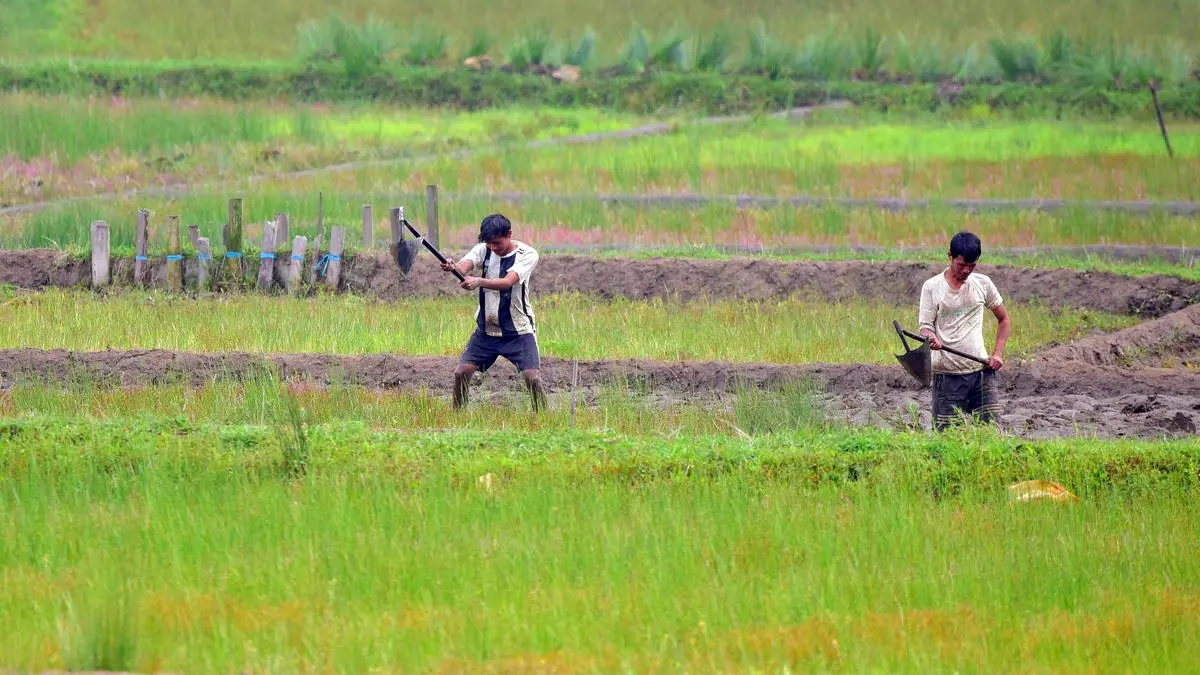
File Photo: Agricultural labourers ploughing a paddy field with traditional farming instruments, in West Khasi Hills, Meghalaya
| Photo Credit:
ANI

Meghalaya state wants to take the total area under organic farming to 1 lakh hectares by 2028 from the existing 27,000 hectares.

A media statement by the Meghalaya Department of Agriculture and Farmers’ Welfare said the area under organic farming increased from 18,000 hectares in 2018 to 27,000 hectares in 2025, and is projected to reach 1 lakh hectares by 2028. Strong certification systems and farmer collectives ensure quality, traceability and consistency.

Mentioning that Meghalaya’s spices are largely organic by default, supported by rich soils and high rainfall, the statement said the state produces over 16,000 tonnes of spices annually, with organic cultivation steadily expanding across districts.

Turmeric

Giving details about Lakadong turmeric grown in the hills of West and East Jaintia, the statement said this GI-tagged turmeric is globally recognised for its rich colour, aroma and exceptionally high curcumin content, ranging between 7 per cent and 12 per cent. Scientific testing by ICAR confirms that Lakadong turmeric ranks among the highest curcumin varieties in the world. The Central government has described it as the ‘Miracle Spice of Meghalaya’.

Under the Lakadong mission, turmeric cultivation expanded to 2,190 hectares, supported by more than 20 processing units that benefited over 13,000 farmers and enabled exports of dried turmeric slices.

Ginger

The Ginger Mission has played a key role in strengthening ginger cultivation and value addition across the State.

It said that more than 19,000 farmers have received free ginger seeds over the last four years, helping expand production at the grassroots level. In 2025 alone, 348 tonnes of ginger were processed, generating ₹1.74 crore through the sale of sliced and dried ginger, with over 1,700 farmers directly benefiting from the initiative.

Highlighting that ginger and black pepper are contributing strongly to rising farm incomes, the statement said ginger production increased from 66,156 tonnes in 2018-19 to 71,413 tonnes in 2024-25, placing Meghalaya among the top ten producers in the country, with clear targets to reach the top five by 2032.

The state has already exported its first ginger consignment of 15 tonnes to Dubai. Black pepper production has grown from 801 tonnes in 2018-19 to 2,267 tonnes in 2024-25, securing a top three national ranking.

In districts such as West and South Garo Hills, integrated village cooperative societies cooperatives have improved price realisation through aggregation, quality grading and direct market access.

Referring to the market access for spices, the statement said over 420 tonnes of ginger, turmeric, black pepper, bay leaf and cinnamon were traded across domestic and export markets between 2022 and 2025. This included value-added forms such as sliced and dried ginger and processed turmeric.

It said that agriculture’s contribution to Meghalaya’s Gross State Domestic Product has more than doubled over the past six years. Under the leadership of the Chief Minister, Conrad K Sangma, it has increased from ₹5,977.91 crore in 2018-19 to ₹12,332.26 crore in 2024-25.

This growth reflects a deliberate shift in approach. Meghalaya have moved beyond subsistence farming to focus on high-value crops, better processing and stronger market access.

Strategy

State’s strategy has focused on crops that reflect Meghalaya’s identity and ecological strengths, including Lakadong turmeric, ginger, black pepper, bay leaf, Kew pineapples and Khasi Mandarin oranges. These products are valued for their quality and are increasingly finding space in premium domestic and international markets. To support this transition, the State government has invested in infrastructure and branding initiatives such as Meghalaya Collectives and Meghalayan Age, while establishing large food processing facilities such as PRIME Hubs under the community public private partnership model.

These interventions enable aggregation, value addition and direct market access for farmers. The objective is to help farmers earn more by selling better, not just by producing more, the statement added.

Published on February 27, 2026


Source link

तौबा-तौबा! बांग्लादेश से दूर भाग रहे विदेशी पर्यटक, भारतीय सैलानियों ने भी मोड़ा मुंह

तौबा-तौबा! बांग्लादेश से दूर भाग रहे विदेशी पर्यटक, भारतीय सैलानियों ने भी मोड़ा मुंह


Bangladesh Tourism: BNP नेता तारिक रहमान ने नए प्रधानमंत्री बनने के बाद भारत के साथ रिश्ते सुधरने के कयास लगाए जा रहे हैं. दोनों देशों के बीच पिछले कुछ समय से रिश्ते तल्ख बने हुए हैं. बांग्लादेश में साल 2024 के अगस्त महीने से राजनीतिक उथल-पुथल का माहौल है.

बांग्लादेश से पर्यटक बना रहे दूरी

पहले छात्र आंदोलन, उसके बाद शेख हसीना के इस्तीफे की मांग, उनके खिलाफ विरोध प्रदर्शन, अंतरिम सरकार के सत्ता पर आसीन होने, अल्पसंख्यकों पर लगातार हो रहे हिंसक हमले- एक के बाद होती एक घटनाएं लगातार सुर्खियों में हैं. इन सबका असर यह है बांग्लादेश में विदेशी पयर्टकों की संख्या में कमी आई है.

पिछले साल यानी कि 2025 में यहां विदेशी पर्यटकों की संख्या में 9 परसेंट से ज्यादा की गिरावट आई है. खासतौर पर, भारत से आने वाले पर्यटकों की संख्या में 73 परसेंट की भारी कमी आई है. बांग्लादेश में अस्थिरता के माहौल को ध्यान में रखते हुए भारत सरकार ने वीजा को लेकर पाबंदिया लगा रखी है, जिसका टूरिज्म पर असर पड़ा है. 

वर्ल्ड इकोनॉमिक फोरम (WEF) के 2024 के ‘ट्रैवल एंड टूरिज्म डेवलपमेंट इंडेक्स’ में बांग्लादेश 119 देशों की लिस्ट में 109वें स्थान पर है, जो एशिया-पैसिफिक रीजन में सबसे निचला स्थान है. यह आंकड़ा बांग्लादेश के लिए इसलिए अहम है क्योंकि बांग्लादेश की जीडीपी में टूरिज्म का योगदान लगभग 3.02 परसेंट है.  

सरकार की कोशिशों के बाद भी घाटा 

बांग्लादेश में सरकार टूरिज्म को मजबूत करने और रोजगार बढ़ाने के लिए पर्यटन को 12 सब-सेक्टर्स में बांटा है. यानी कि सरकार ने टूरिज्म को सिर्फ होटल तक नहीं, बल्कि कैफे, रिसॉर्ट्स, क्रूज शिप, एयरलाइन, ट्रैवल एजेंसी, म्यूजियम, हैंडिक्राफ्ट्स जैसे कई अलग-अलग क्षेत्रों में बांटकर रखा है, जिससे ड्राइवर से लेकर कुक, कारीगर हर किसी को रोजगार मिले.

साल 2024 में पर्यटन को हुए नुकसान के बाद बांग्लादेश के विदेशी आय में भी भारी कमी आई है. 2024 में बांग्लादेश को विदेशी कमाई में 13 मिलियन डॉलर यानी कि 100 करोड़ रुपये से ज्यादा का घाटा हुआ है. 

भारतीय सैलानियों ने किन देशों का किया रूख? 

वहीं, दूसरी तरफ 2025 में विदेश जाने वाले भारतीयों की संख्या 6.6 परसेंट बढ़कर रिकॉर्ड 3.3 करोड़ हो गई. हालांकि, सऊदी अरब और अमेरिका जाने वालों की संख्या में कमी आई है. पिछले साल कनाडा जाने वाले भारतीयों की संख्या भी लगभग 16 परसेंट घटकर 8 लाख रह गई.

रिपोर्ट के मुताबिक, एक ट्रैवल एजेंट ने बताया, ”नॉन-पीक सीजन में घरेलू हवाई किराया ठीक-ठाक होने के बावजूद होटल महंगे होने के चलते भारतीय मिडिल क्लास को अब गोवा या केरल के बजाय UAE, श्रीलंका, थाईलैंड, वियतनाम और मलेशिया जैसी जगहों पर जाना सस्ता लग रहा है.”

ये भी पढ़ें:

84 परसेंट क्रैश हुआ यह शेयर, 157 रुपये से 25 पर आया भाव; दांव लगाने वाले गंवाए 57000 करोड़ 


Source link

Pakistan–Afghanistan conflict explained: Airstrikes, TTP role and what happens next

Pakistan–Afghanistan conflict explained: Airstrikes, TTP role and what happens next


Taliban soldiers carry a rocket launcher in a vehicle, following exchanges of fire between Pakistan and Afghanistan forces, near Torkham border in Afghanistan, February 27, 2026.
| Photo Credit:
REUTERS/Stringer

Pakistan carried out air
strikes on Afghanistan’s major cities overnight, officials in
Islamabad and Kabul said on Friday, escalating months of border
clashes between the Islamic neighbours.

The air ​and ground strikes, which hit Taliban military
posts, headquarters and ammunition depots in multiple sectors
along the border, came after Afghanistan ‌launched an attack on
Pakistani border forces, the officials said.

Both sides reported heavy losses in ​the fighting, which
Pakistan’s defence minister said amounted to an “open war”.

Tensions have heated up ⁠since Pakistan launched air strikes
on militant targets in Afghanistan last weekend.

Earlier, border clashes between the two countries killed
dozens of soldiers in October until negotiations facilitated by
Turkey, Qatar and Saudi Arabia ceased the hostilities and a
fragile ceasefire was put ‌in place.

WHY ARE THE NEIGHBOURS AT ODDS?

Pakistan welcomed the return to power of the Taliban in
2021, with then-Prime Minister Imran Khan saying that Afghans
had “broken the shackles of slavery”.

But Islamabad ‌soon found that the Taliban were not as
cooperative as it had hoped.

Islamabad says that the ‌leadership ⁠of militant group
Tehreek-e-Taliban Pakistan (TTP) and many of its fighters are
based in Afghanistan, and that ⁠armed insurgents seeking
independence for the southwestern Pakistani province of
Balochistan also use Afghanistan as a safe haven.

Militancy has increased every year since 2022 with attacks
by the TTP and Baloch insurgents growing, according to Armed
Conflict Location & Event Data, a global monitoring
organization.

Kabul for its part ​has repeatedly denied allowing militants
to use Afghan ‌territory to launch attacks in Pakistan.

The Afghan Taliban say Pakistan harbours fighters from its
enemy, Islamic State, a charge Islamabad denies.

Islamabad says the ceasefire did not hold long due to
continued militant attacks in Pakistan from Afghanistan, and
there have been repeated clashes and border closures since then
that have disrupted trade ‌and movement along the rugged
frontier.

WHAT SPARKED THE LATEST CLASHES?

The day before last weekend’s strikes, Pakistani ​security
sources said they had “irrefutable evidence” that militants in
Afghanistan were behind a recent wave of attacks and suicide
bombings which targeted Pakistani military and police.

The sources listed seven planned ⁠or successful attacks by
militants since late 2024 that they said were connected to
Afghanistan.

One attack last week that killed 11 security personnel and
two civilians in Bajaur district was undertaken by an Afghan
national, according to Pakistani security ‌sources. This attack
was claimed by the TTP.

WHO ARE THE PAKISTANI TALIBAN?

The TTP was formed in 2007 by several militant outfits
active in northwest Pakistan. It is commonly known as the
Pakistani Taliban.

The TTP has attacked markets, mosques, airports, military
bases, police stations and also gained territory – mostly along
the border with Afghanistan, but also deep inside Pakistan,
including the Swat Valley. The group was behind the 2012 attack
on then schoolgirl Malala Yousafzai, who received the Nobel
Peace Prize two years later.

The TTP also fought alongside the Afghan Taliban against
U.S.-led forces in ‌Afghanistan and hosted Afghan fighters in
Pakistan. Pakistan has launched military operations against the
TTP on its own soil with limited success, ​although an offensive
that ended in 2016 drastically reduced attacks till a few years
ago.

WHAT HAPPENS NEXT?

Pakistan is likely to intensify its military campaign,
analysts say, while Kabul’s retaliation could come ⁠in the way of
raids on border posts and more cross-border guerrilla attacks to
target security forces.

On paper, there is ⁠a wide mismatch between the military
capabilities of two sides. At 172,000, the Taliban have less
than a third of Pakistan’s personnel.

The Taliban do possess at least six aircraft and 23
helicopters but ‌their condition is unknown and they have no
fighter jets or effective air force.

Pakistan’s armed forces include more than 600,000 active
personnel, have more than 6,000 armoured fighting vehicles and
more than 400 combat aircraft, ​according to 2025 data from the
International Institute for Strategic Studies. The country is
also nuclear armed.

Published on February 27, 2026


Source link

YouTube
Instagram
WhatsApp