दुनिया का सबसे महंगा परफ्यूम; दाम सुन उड़ जाएंगे होश, 11 करोड़ से ज्यादा में आती है एक बोतल

दुनिया का सबसे महंगा परफ्यूम; दाम सुन उड़ जाएंगे होश, 11 करोड़ से ज्यादा में आती है एक बोतल


Show Quick Read

Key points generated by AI, verified by newsroom

World Most Expensive Perfume: 17 फरवरी को हर साल परफ्यूम डे मनाया जाता है. इस दिन लोग अपने करीबियों को परफ्यूम गिफ्ट करके रिश्तों में मिठास और खुशबू जोड़ने की कोशिश करते हैं. आमतौर पर बाजार में मिलने वाले ज्यादातर परफ्यूम की कीमत कुछ हजार रुपयों में होती है.

वहीं, कुछ लग्जरी परफ्यूम की कीमत लाख रुपये तक पहुंच जाती है. लेकिन दुनिया में ऐसे भी परफ्यूम मौजूद हैं, जिनकी छोटी सी बोतल खरीदने के लिए 1 करोड़ रुपये से ज्यादा खर्च करने पड़ सकते हैं. यह रकम इतनी बड़ी है कि, सामान्य लोगों की जीवन भर की बचत भी इससे ज्यादा है. इतनी कीमत में तो खुद का एक अच्छा खासा घर आ सकता है. आइए जानते हैं, दुनिया के सबसे महंगे परफ्यूम के बारे में….

दुनिया का सबसे महंगा परफ्यूम

दुनिया का सबसे महंगा परफ्यूम शुमुख है. इसकी कीमत करीब 12.9 लाख डॉलर यानी करीब 11.7 करोड़ रुपये होने की बात कही जाती है. दुबई स्थित नबील परफ्यूम्स ने इसे लॉन्च किया है. यह परफ्यूम 3 लीटर के बोतल में आती है.

इस बोतल को 3,500 से अधिक हीरे, मोती और सोना-चांदी से सजाया गया है. परफ्यूम में ऊद, चंदन, कस्तूरी और तुर्की गुलाब आदि से बनाया गया है. विशेषज्ञों का मानना है कि, इस परफ्यूम की कीमत का बड़ा हिस्सा इसके बोतल को बनाने में खर्च किया गया है.  

दूसरे सबसे महंगे परफ्यूम की कीमत है 9 करोड़

दुनिया के दूसरे सबसे महंगे परफ्यूम की कीमत करीब 9 करोड़ रुपए है. जिसका नाम गोल्डन डिलिशियस मिलियन डॉलर फ्रेगरेंस बॉटल है. परफ्यूम को सेब की बोतल में 2011 में पेश किया गया था. इस बोतल को दुनिया के 3,000 कीमती पत्थरों से बनाया गया है. जिससे इसकी कीमत इतनी ज्यादा हो गई है.

हीरे और सोने से सजी खास बोतल नंबर 3 पर

दुनिया के सबसे महंगे परफ्यूम्स की लिस्ट में तीसरे स्थान पर क्लाइव क्रिश्चियन नंबर 1 इम्पीरियल मैजेस्टी का नाम आता है. इस खास एडिशन की केवल 10 बोतलें ही तैयार की गई थी. इसकी हर बोतल बकारा क्रिस्टल से बनाई गई थी और उसमें पांच कैरेट का हीरा जड़ा गया था.

साथ ही 18 कैरेट सोने का कॉलर लगाया गया था. लॉन्च के समय इसकी कीमत 2.15 लाख डॉलर प्रति बोतल बताई गई थी, जो मौजूदा एक्सचेंज रेट के हिसाब से करीब 1.9 करोड़ रुपये के बराबर होती है. 

यह भी पढ़ें: फार्मा सेक्टर की इस कंपनी ने दिया डिविडेंड का तोहफा, निवेशकों में खुशी की लहर; जानें रिकॉर्ड डेट समेत अन्य डिटेल


Source link

India needs to embrace new tech, AI can save ₹20,000 cr in cargo handling: EAC-PM member

India needs to embrace new tech, AI can save ₹20,000 cr in cargo handling: EAC-PM member


Member of Economic Advisory Council to PM Gourav Vallabh  (file photo)
| Photo Credit:
SHIV KUMAR PUSHPAKAR

India needs to embrace new technology and can save up to ₹20,000 crore by using AI for cargo handling at ports, said Member of Economic Advisory Council to PM Gourav Vallabh on Tuesday.

Speaking at session ‘AI-Powered Ports: Reimagining Efficiency and Operations’ at the AI Impact Summit here, Vallabh said India is emerging as a global leader in the field of new technology.

“There is an approximate saving by uses of AI of ₹20,000 crore in our handling.. And every year we can save ₹15,000 crore as far as the logistic cost is concerned,” he said.

The question is not whether AI will transform India’s ports, Vallabh said adding “the question is whether we are going to lead it or not.” He noted that India’s logistics cost at 7.97 per cent of GDP is competitive, “but for Viksit Bharat 2047 aim, our ports should be intelligent and should have intelligent ecosystem.” He said India needs accelerated policy initiatives to reduce the logistics cost.

He pointed out that 95 per cent of total volumes of India’s trading is by maritime, but “in spite of annual growth of 13.5 per cent, our ports are not comparable to the biggest ports of the world as far as the handling capacity is concerned”. So, gap is both of infrastructure as well as intelligence, he added.

Vallabh listed out several areas of AI application in ports to improve performance. “AI is right now in front of us, it is up to us, we have to accept it,” Vallabh noted.

Subrat Tripathy, President Business Development APSEZ Ltd, shared idea of introducing virtual concierge in the ports industry.

“We’ve been thinking of developing what is called a virtual concierge… in all interactions on a platform which are not human-based. This is not about replacing human beings, but having a particular tool where we bring in the multiplicities of interactions, vessels, agents, transporters, multiple stakeholders that we have,” Tripathy said.

He said AI can also help in predicting weather conditions, navigation and safe operations of ports.

Susanta Kumar Purohit, Chairperson, VO Chidambaranar Port Authority, said, “Artificial intelligence is not merely a technological upgrade for ports; it is a structural shift in how we plan, operate and govern maritime infrastructure.” Aprajita Rana, AZB & Partners, spoke on legal aspects on usage of AI in the industry including safety and authenticity of the data.

“I think, going forward, what we really need to promote in the industry is having some sort of AI governance mechanism…You actually need to have some governance standards about how you’re going to deploy AI and to what extent, what kind of functionalities,” Rana said.

Published on February 17, 2026



Source link

Replacing Russian crude with US, Venezuela & Middle East supplies to increase average cost of oil by .5-2/bbl

Replacing Russian crude with US, Venezuela & Middle East supplies to increase average cost of oil by $1.5-2/bbl


Replacing Russian crude oil with a combination of barrels from the United States, Venezuela and the Middle East will increase the weighted average cost of crude oil by $1.5–2 per barrel for Indian refiners, impacting their gross refining margins (GRMs).

Ratings agency CareEdge in a commentary pointed out that the strategic advantage derived from procuring discounted Russian crude oil—at one point accounting for nearly 35-40 per cent of India’s crude oil import portfolio—is now expected to moderate significantly going forward.

This will be due to shifting geopolitical developments triggered by the US sanctions on major Russian crude oil entities, including Rosneft and Lukoil, in November 2025, as well as the European Union’s ban on products refined from Russian crude oil, which came into effect in January 2026, it added.

“Going forward, a compelled shift away from Russian crude toward a blend of Venezuelan, US and Middle Eastern grades is likely to increase the weighted average cost of India’s crude oil sourcing by $1.5–2 per barrel, directly compressing the GRM premium that Indian refiners have enjoyed in recent years,” CareEdge anticipated.

Hardik Shah, Director at CareEdge Ratings, said the performance of the Indian downstream oil sector is currently driven by the dual engines of high GRMs and healthy marketing margins.

“As we transition into FY27, the narrative is likely to shift from high GRMs to moderate but sustainable GRMs. While GRMs are expected to moderate from their recent peak levels due to global supply pressures and realignments in crude oil sourcing, they are likely to settle at $6–$8 per barrel, which is accretive to the historical average,” he explained.

However, the durability of this trend will depend on global crude prices remaining benign, though they can be susceptible to sudden geopolitical trade dynamics. With an expected moderation in GRMs and steady fuel retail prices, marketing margin is expected to improve going forward in the medium-term, Shah projected.

Indian Oil Marketing Companies (OMCs) have navigated a highly volatile margin environment over the past three fiscal years, marked by sharp fluctuations in GRMs amid rapidly evolving global market dynamics, CareEdge said.

GRMs declined from a high of $10–12 per barrel in FY24 to $4–6 per barrel in FY25 and further bottomed out to $2–4 per barrel in Q1 FY26. This downturn was driven by narrowing discounts on Russian crude oil, weaker product cracks, and heightened geopolitical uncertainties, it added.

“Thereafter, GRMs rebounded significantly to $8–10 per barrel in Q2 FY26 and further to $9-13 per barrel in Q3 FY26, thereby outperforming the Singapore benchmark. This improvement was supported by agile inventory management, a decline in crude oil prices, healthy product cracks, and wider discounts on Russian crude due to US restrictions on Russian crude oil trade,” it pointed out.

A defining theme in the latter half of FY26 is the gradual unwinding of the “Russian pivot,” which significantly supported India’s refining margins in FY23 and FY24.

India’s crude oil procurement profile has shifted markedly—from elevated dependence on Russian crude in FY24 (around 36 per cent) to about 30 per cent in Q3 FY26. This share is expected to fall further in Q4 FY26, the ratings agency projected.

Published on February 17, 2026



Source link

Infosys stock rises over 3% after strategic tie-up with Anthropic

Infosys stock rises over 3% after strategic tie-up with Anthropic


Shares of IT major Infosys rose more than 3 per cent on Tuesday after the company said it has entered into a strategic collaboration with Anthropic to develop and deliver advanced enterprise artificial intelligence (AI) solutions.

On the BSE, the scrip of company increased 3.27 per cent to ₹1,410.95 per piece.

BSE-focussed IT index gained 1.45 per cent, with Infosys emerging as the top performer.

Markets are trading in the positive territory, with the 30-share BSE Sensex rising 126.19 points, or 0.15 per cent, to 83,403.34.

Infosys on Tuesday announced a strategic collaboration with Anthropic, an AI safety and research company, to develop and deliver advanced enterprise AI solutions to companies across telecommunications, financial services, manufacturing, and software development.

The Bengaluru-based Infosys said the collaboration with Anthropic will focus initially on the telecommunications sector through a dedicated Anthropic Center of Excellence to build and deploy AI agents tailored to industry-specific operations.

The partnership will further expanded across industries, including financial services, manufacturing, and software development, the company said in a regulatory filing.

At its core, the strategic alliance integrates Anthropic’s Claude models, including Claude Code, with Infosys Topaz AI offerings to help enterprises automate workflows, accelerate software delivery, and adopt AI with governance and transparency for regulated industries.

The collaboration will also help organisations modernise legacy systems, combining Infosys Topaz and Claude to accelerate migration and reduce the cost of updating aging infrastructure, it added.

“Our collaboration with Anthropic marks a strategic leap toward advancing enterprise AI, enabling organisations to unlock value and become more intelligent, resilient, and responsible,” Salil Parekh, Chief Executive Officer, Infosys said.

Anthropic Co-Founder and CEO Dario Amodei said, “Infosys has exactly that kind of expertise across important industries: telecom, financial services, and manufacturing. Their developers are already using Claude Code to accelerate their work and to create AI agents for industries that demand precision, compliance, and deep domain knowledge.”

Published on February 17, 2026


Source link

Banks shouldn't charge fees for non-maintenance of minimum balance: Parliament Panel

Banks shouldn't charge fees for non-maintenance of minimum balance: Parliament Panel


The Committee on Petitions has recommended that public sector banks (PSBs) and private sector banks (PvSBs) should encourage accumulation of higher balances through incentives such as reward points, fee waivers, and higher interest rate for customers maintaining consistent deposits.  
| Photo Credit:
REUTERS/AJAY VERMA

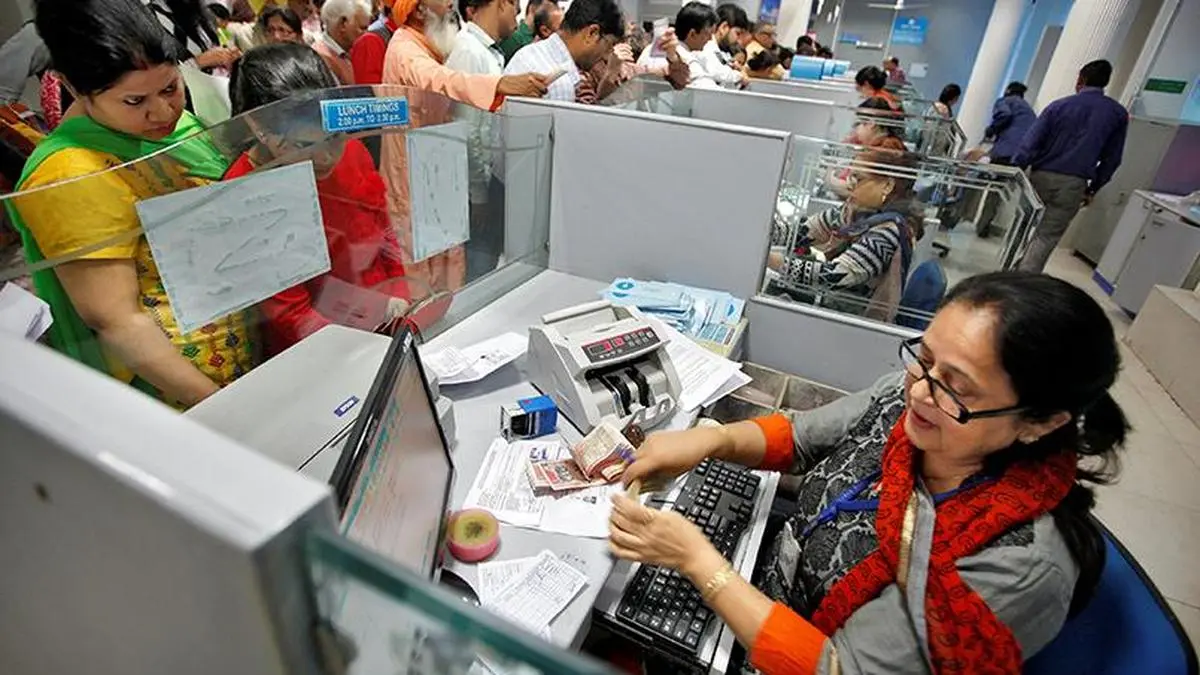
Banks should adopt a “positive reinforcement approach” to encourage customers to maintain higher balances in savings bank (SB) accounts instead of penalising them for not maintaining minimum balance, according to a Parliament Committee.

The Committee on Petitions has recommended that public sector banks (PSBs) and private sector banks (PvSBs) should encourage accumulation of higher balances through incentives such as reward points, fee waivers, and higher interest rate for customers maintaining consistent deposits.

The panel is of the view that this positive reinforcement approach is more compatible with financial inclusion.

After carefully evaluating the fine balance between the autonomy given to banks and the interest of account holders, especially those belonging to the economically vulnerable sections of the society, the Committee proposed that all banks — whether private sector or public sector — should adopt a uniform policy of not charging penalties for failure to maintain minimum balance in all regular savings bank accounts.

In this regard, the Department of Financial Services (DFS) and the Reserve Bank of India (RBI) may consider issuing necessary guidelines to all banks, including Cooperative Banks and Regional Rural Banks (RRBs).

The 15-member Committee, chaired by Chandra Prakash Joshi, Member of Parliament (BJP) from Chittorgarh, Rajasthan, underscored that although most PSBs have decided to waive the minimum SB account balance charges, leading PvSBs have not followed suit. It noted that no direction or guideline on the subject has been issued by the RBI in this regard so far.

Penalty waiver: SBI leads the way

The panel highlighted the case of State Bank of India (SBI), which was the first among the major PSBs to waive charges for non-maintenance of minimum balance with effect from March 11, 2020.

In its reply to the Committee, SBI said: “MAB (monthly average balance) charges were waived to improve customer service standard, to encourage saving habit among small customers and incentivise customers to stay with SBI.”

While the aforementioned move impacted short-term profitability, it has been beneficial for the Bank in the long-run by improving customer satisfaction, thereby attracting more customers and potentially increasing overall business.

The Committee noted that SBI offset the loss of revenue on account of waiver of charges for non-maintenance of minimum balance in SB accounts through cost reduction via digital push and migrating customers to digital channels, acquiring more customers and increasing business level. SBI’s revenue almost doubled and net profit increased more than three times since 2020.

Following SBI’s footsteps, most of the PSBs, including Canara Bank, Punjab National Bank, Bank of India, Union Bank of India, Central Bank of India and Bank of Baroda, have waived charges for non-maintenance of minimum balance in all kinds of savings accounts.

According to the information provided by the Department of Financial Services to the Committee, the remaining PSBs are also exploring the possibility of removing the penalty.

Small entrepreneurs need customised current account

The Committee suggested that all PSBs and PvSBs may consider the feasibility of offering a customised current account product, especially for the use of small entrepreneurs. This is to ensure that the entrepreneurs’ capital and savings are not diminished by penalties and their involvement with the bank is fruitful in the growth of their business.

It noted that micro-entrepreneurs, self-employed individuals and small traders maintain current accounts which typically do not offer interest and carry higher minimum balance requirements compared to savings accounts.

The panel observed that for individuals or small entrepreneurs whose business income is low, seasonal, or inconsistent, maintaining such balances may be challenging. It cautioned that repeated penalties for not maintaining sufficient balance, combined with the absence of interest accrual can significantly erode the working capital of small entrepreneurs, which may inhibit business growth.

Published on February 17, 2026



Source link

India AI Summit 2026: Discussions encouraging, consensus near on 7 pillars: MeitY

India AI Summit 2026: Discussions encouraging, consensus near on 7 pillars: MeitY


File Photo: Abhishek Singh, Additional Secretary, MeitY, CEO, IndiaAI Mission

“We are very near to achieving consensus on most of the objectives, and we should leave it to the top leaders to announce it on the main day,” Abhishek Singh, Additional Secretary, MeitY, CEO, IndiaAI Mission, said.

“Across all of the seven pillars we have moved forward, we have a considerable degree of consensus on the way forward. And most countries have agreed to it,” Singh told businessline on Tuesday.

Added to that, we are also launching all our sovereign models, and Sarvam is showcasing its model today, he added.

The 2026 India AI Impact Summit, taking place from February 16-20 in New Delhi, is structured around seven core pillars — and it aims to achieve consensus from all participating global delegations on these. These seven areas are Human Capital, Inclusion for Social Empowerment, Safe and Trusted AI, Resilience, Innovation and Efficiency, Science, Democratising AI Resources, and AI for Economic Growth and Social Good.

Speaking about the hassles faced by the invitees on day 1, Singh said that the buzz was very big and had been overwhelming. “We did expect (the kind of interest) but not as much. Yesterday was in fact a low-key day with no star speakers, so it seems there was a lot of curiosity on day 1,” he said.

“But the quality of discussions in the sessions has been absolutely brilliant,” he said, urging people to catch up on as many sessions as they could online.

Published on February 17, 2026



Source link

YouTube
Instagram
WhatsApp