ED imposes ₹184 crore FEMA penalty on NewsClick and editor Prabir Purkayastha

ED imposes ₹184 crore FEMA penalty on NewsClick and editor Prabir Purkayastha


The Enforcement Directorate has imposed a ₹184 crore penalty on NewsClick and its editor-in-chief Prabir Purkayastha for alleged violations of the Foreign Exchange Management Act
| Photo Credit:
PTI

The Enforcement Directorate has slapped a Rs 184-crore FEMA penalty against news portal NewsClick and its editor-in-chief, Prabir Purkayastha, official sources said on Monday.

The order specifies that the company that owns the portal — PPK NEWSCLICK Studio Private Limited — has been penalised for an amount of Rs 120 crore while Purkayastha has been issued the same order for Rs 64 crore of alleged violations, the sources told PTI.

The entities have been found “contravening” the provisions of the Foreign Exchange Management Act (FEMA) on essentially two counts — misrepresentation of FDI funds apart from misdeclaration of services and exports.

A response from NewsClick on the development is awaited.

The ED had first raided the premises of NewsClick located in the Saidulajab area of the national capital in September, 2021 on charges of money laundering.

The agency has recorded the statements of more than 25 people in this case, including that of Purkayastha.

The BJP, in 2023, had quoted a New York Times news article to allege wrongdoing by the portal and its promoters. The news article had stated the portal was part of a global network that received funding from American billionaire Neville Roy Singham, who allegedly works closely with the Chinese government media machine.

The 2009 founded portal states on its website that it is an independent media organisation dedicated to covering news from India and elsewhere with a focus on progressive movements.

Published on February 16, 2026


Source link

AI in defence needs to have the rationality of a human being: Experts

AI in defence needs to have the rationality of a human being: Experts


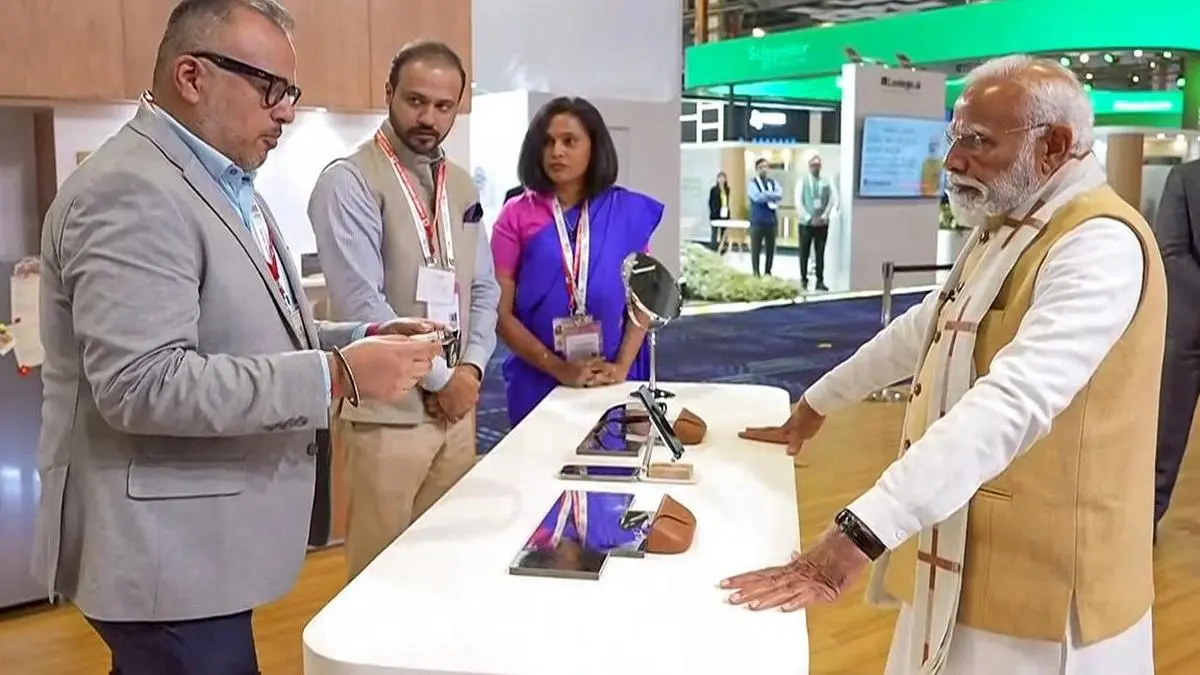
Prime Minister Narendra Modi during the inaugural event of AI Impact Expo 2026 in New Delhi on Monday
| Photo Credit:
ANI

As AI becomes relevant in defence applications, experts have said it has the capacity to synthesise a very large volume of data, but on the flip side it does not have a rationality of a human being, and that is of prime concern when military decision-making is involved.

Speaking at the Sovereign AI for National Security: India’s path to digital Sovereignty session, Lt. General Harsh Chibber, Director General Information Systems, Indian Army said: “The current AI is based on inductive logic. It does not have that objective rationality of a human being and that is of prime concern when military decision-making is involved because military decisions are very costly, primarily because of the human cost.”

He said currently the defence systems have multi-sensor, multi data, multi source fusion, which is the only way to analyse it to reach a decision if they have an AI interface in between.

“So, in this kind of persistent surveillance, the key concern is sovereignty. I think if we have to trust a system in such a scenario, the risk is that we will fall into automation bias …there’s a tendency of the human mind to trust automated output more than than your instinct. So, that automation becomes very threatening in we are not sure of the system we are implementing,” he noted.

Therefore, a persistent surveillance guided by AI is a must, he said. Another point he raised was that of AI in cognitive warfare. AI can build narratives very efficiently at lightning speed, and in a narrative warfare where cognition will play a very important role, there requires a superior algorithm.

“So our sovereignty, our capability to produce a superior algorithm, which is not only a defensive against an enemy cognitive offensive, but also can create a narrative which we can support for our other actions in the military application of par. So, in this superior algorithm creation, I think we have an edge and show that military application will have many sovereign solutions to deal with it,” he highlighted.

The third area is autonomous systems, and this is a cause of great worry because people are talking about how much of autonomy should be given to military application. As far as autonomy is concerned, every military system becomes autonomous at a certain stage, he added.

Speaking on the same lines, Brijesh Singh IPS with the government of Maharashtra said be it defence, government or private sector, one should not go for any of these “AI rappers because you cannot give the brain of your sovereignty at some place because it doesn’t understand you. The way we own the digital public infrastructure in India, we will have to create a cognitive public infrastructure, however difficult it may be. That’s why the challenge feels visceral and existential; we simply have to do it, and probably it’s time that we do it. This is the architecture of independence. India has no dearth of experts or talent in India — the only challenge is compute. Geopolitically, this must be addressed because GPUs are being used to control geopolitics, and that is why must ensure sovereignty across all layers of the cake,” he added.

Published on February 16, 2026


Source link

MSMEs should pursue formalisation, maintain credit discipline: RBI Guv

MSMEs should pursue formalisation, maintain credit discipline: RBI Guv


Reserve Bank of India (RBI) Governor Sanjay Malhotra
| Photo Credit:
ANI

MSMEs (micro, small and medium enterprises) should pursue formalisation, maintain credit discipline and adopt digital payments to build their long-term resilience and competitiveness, according to RBI Governor Sanjay Malhotra.

In his remarks, at a meeting with select MSMEs and representatives of MSME associations in Mumbai, the Governor underscored the pivotal role of the MSME sector in India’s economic landscape contributing significantly to GDP, exports and livelihoods.

Malhotra emphasised that improving access to timely and adequate formal credit for MSMEs remains a key policy priority of the Reserve Bank. He also outlined several policy and regulatory measures undertaken for the sector by Government of India and Reserve Bank.

MSMEs accounted for 33 per cent of Banks’ credit to the “industry” segment as at December-end 2025, with large enterprises accounting for 67 per cent.

Formalisation of MSMEs, which lack mandatory documents such as PAN or Goods and Services Tax Identification Number (GSTIN), entails registering these enterprises on Udyam Assist Platform (UAP).

Once these enterprises obtain the Udyam Registration Certificate from UAP, which is being managed by SIDBI, they become eligible to avail of loans under banks’ priority sector lending norms.

Published on February 16, 2026


Source link

RBI issues liberalised ECB guidelines

RBI issues liberalised ECB guidelines


The Reserve Bank of India (RBI) has issued liberalised external commercial borrowing (ECB) guidelines, whereby India Inc can benefit from higher borrowing limit at prevailing market related conditions, change currency of an ECB, and convert the ECB into a non-debt instrument, among others.

Further, a borrower under a restructuring scheme or corporate insolvency resolution process can tap this route to raise funds.

This move comes at a time when the Indian financial markets are seeing outflows amid geopolitical uncertainties and fragmentation in global trade. This, in turn, is weakening the Rupee. But the liberalised ECB norms may prompt India Inc to tap overseas markets and bring in Dollars, helping stabilise the Rupee.

ECBs are commercial loans raised by eligible resident entities from recognised non-resident entities. These borrowings have conform to parameters such as minimum maturity, permitted and non-permitted end-uses, maximum all-in-cost ceiling, etc.

An eligible borrower can raise ECB up to the higher of outstanding ECB up to USD 1 billion; or total outstanding borrowing (external and domestic) up to 300 per cent of net worth as per the last audited standalone balance sheet of the borrower.

There are no caps on cost of borrowing. The cost of borrowing shall be in line with prevailing market conditions.

However, in case of eligible ECBs with average maturity period of less than three years, the cost of borrowing shall be in compliance with cost ceiling specified for Trade Credit under these regulations. In the case of fixed rate loans, the floating rate plus spread of the corresponding swap shall not be more than the ceiling.

Prepayment charges or penal interest, if any, for default or breach of covenants shall be in line with prevailing market conditions.

RBI said ECBs may be secured by creation of charge on immovable assets, movable assets, financial assets and intangible assets (including intellectual property rights) in favour of the non-resident lender or security trustee; and issue of guarantee in favour of the lender or security trustee in accordance with the Foreign Exchange Management (Guarantees) Regulations, 2026, subject to conditions.

The RBI has expanded the eligible borrowers list to also include a borrower against whom any investigation, adjudication or appeal by a law enforcement agency for contravention of any rule, regulation or direction issued under the Act is pending.

Such borrowers may raise ECB notwithstanding the pending investigation or adjudication or appeal and without prejudice to the outcome of such investigation or adjudication or appeal. The borrower shall, however, disclose information about the pending investigation, adjudication or appeal.

An eligible borrower can raise ECB from – a person resident outside India; a branch outside India of an entity whose lending business is regulated by RBI; and a financial institution or a branch of a financial institution set up in IFSC.

While an eligible borrower may raise ECB denominated in foreign currency (FCY) or Indian Rupee (INR), the currency of such borrowing may be changed from one FCY to another FCY, a FCY to INR and INR to a FCY.

An eligible borrower shall raise ECB with minimum average maturity period (MAMP) of three years.

Published on February 16, 2026


Source link

Brokers plan representations to RBI as tighter norms squeeze funding for proprietary desks

Brokers plan representations to RBI as tighter norms squeeze funding for proprietary desks


The new framework mandates 100 per cent collateral backing for bank lending to capital market intermediaries and prohibits banks from funding proprietary trading positions.

Brokerage firms are preparing to make representations to the Reserve Bank of India (RBI) seeking clarifications and possible changes to the new capital market exposure norms, even as the industry braces for a structural reset in funding for proprietary trading operations from April 1, 2026.

The revised framework mandates that all bank lending to capital market intermediaries be fully backed by eligible collateral and continuously monitored. More significantly, banks will no longer be allowed to finance proprietary trading or brokers’ investment positions. Credit support for operational requirements, such as working capital, settlement mismatches, market-making, and margin trading undertaken by clients through stockbrokers, will continue to be permitted.

Proprietary Trading Impact

While brokers say the rules improve transparency and financial stability, firms with large proprietary books argue that the blanket restriction could raise funding costs and reduce trading intensity, at least in the near term, prompting them to approach the regulator with implementation-related concerns.

“The new RBI capital market exposure norms for banks are another step in that direction. By mandating 100 per cent collateral and higher capital backing for broker exposures, the framework is expected to meaningfully restrict proprietary trading activity. This is largely constructive for the broader market,” said Feroze Azeez, joint CEO of Anand Rathi Wealth.

Funding Cost Pressure

Higher capital commitments will increase the cost of funds for brokers, making highly leveraged proprietary positions less attractive and, in some cases, forcing firms to raise additional capital. In the short term, he said, the transition could lead to selective unwinding of positions, marginally lower liquidity and higher funding costs, even as the longer-term impact points to reduced volatility and stronger market resilience.

Collateral Haircut Norms

At the operating level, the norms introduce uniform collateral haircuts, 40 per cent on listed equities; 25 per cent on sovereign gold bonds, mutual funds and REITs/ETF units; and 15–40 per cent on debt mutual funds and debt instruments. Market participants said this could marginally reduce the funding value of pledged assets for some brokers but removes ambiguity around valuation and risk management.

Ajay Garg, director & CEO at SMC Global Securities, said: “The tightening of capital market exposure norms by the RBI marks a structural shift in how brokers, particularly those with significant proprietary trading operations, will access funding from April 1, 2026.”

“This can lead to a moderate reduction in leverage among brokerage firms. Proprietary desks that earlier relied on bank funding may either scale down trading activity or increasingly depend on internal capital and alternative funding sources. However, brokers largely focused on client-based activities are unlikely to see any meaningful impact on their core operations,” Garg said.

Margin Trading Clarity

One area where the rules offer clarity is margin trading. Earlier, banks lacked a clear regulatory framework for extending margin trading funding to brokers. The revised norms explicitly allow banks to provide funding for margin trading undertaken by clients through stockbrokers, a move seen as positive for client-facing businesses and lender comfort.

Ajay Kejriwal, executive director at Choice Broking, said: “The Reserve Bank of India’s recent guidelines are a prudent step toward reinforcing systemic stability. For the broader broking ecosystem, the impact remains largely contained. However, proprietary desk brokers may experience a marginal effect in terms of capital allocation, leverage calibration and treasury efficiency.”

Published on February 16, 2026


Source link

Muthoot Microfin is back to its normalised disbursements, says CEO

Muthoot Microfin is back to its normalised disbursements, says CEO


Muthoot Microfin expects to sustain monthly loan disbursement of ₹1,000 crore through the fourth quarter of FY26 and beyond, against about ₹830 crore monthly average in the third quarter, even as its portfolio diversification efforts are gathering momentum, according to MD & CEO Sadaf Sayeed.

He noted that the NBFC-MFI (non-banking finance company – microfinance institution) is back to its normalised disbursements.

The company disbursed ₹2,492 crores in the third quarter, translating into an average monthly disbursement of around ₹830 crores. Prior to that, it was disbursing around ₹650 crores per month.

“..And in quarter 4, we will be back to around ₹1,000 crores of disbursement per month. So we are looking at healthy disbursements taking place,” Sayeed told analysts.

As at December-end 2025, the company’s assets under management reached ₹13,078 crores, which is a growth of around 5.4 per cent year-on-year (y-o-y) and 4.1 per cent quarter-on-quarter (q-o-q).

Portfolio diversification

As at December-end 2025, JLG (joint liability group) and non-JLG loans composition accounted for 88 per cent and 12 per cent, respectively, in the overall loan portfolio. In March 2025, the proportion of JLG loans stood at 97 per cent, with the balance being non-JLG loans.

“So it’s a good progress, and we are quite confident that, as we had guided, we would be able to reach at around 85:15 kind of a ratio in terms of our JLG and non-JLG mix. And in the long run, as we have guided, we would like to maintain a 65%-35% kind of a ratio. This will help streamline the risk in the portfolio that is there,” Sayeed said.

JLGs are informal groups of 4-10 individuals, usually women, engaged in similar economic activities. The members offer mutual guarantees for loans taken from lenders. JLG members avail of collateral-free loans to farmers, tailors, small dairies, small vegetable vendors, and teashop owners, among others.

Non-JLG loans include secured products such as gold loans and micro loan against property.

Published on February 16, 2026



Source link

YouTube
Instagram
WhatsApp