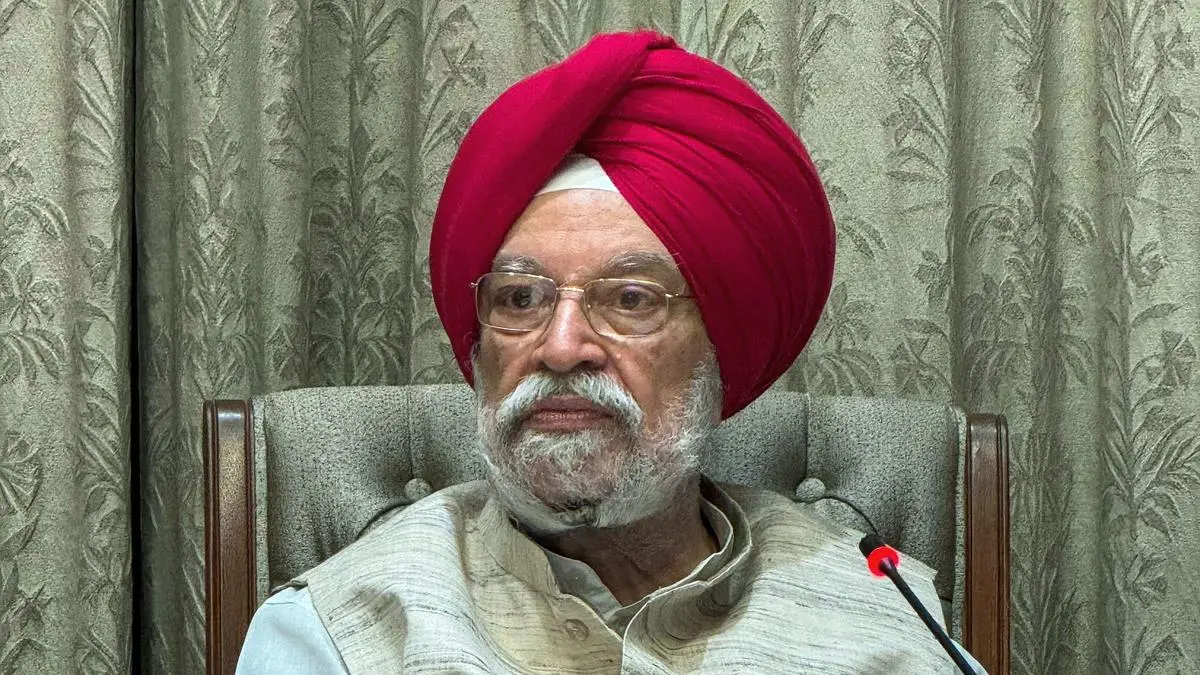
Modi makes historic landing at NE's first emergency landing facility

Modi makes historic landing at NE's first emergency landing facility


Prime Minister Narendra Modi on Saturday made a historic landing at the first Emergency Landing Facility (ELF) of the northeast aboard the C-130J aircraft in Assam’s Dibrugarh district.

Modi took off from the Chabua airfield after his arrival, and landed at the ELF in Moran on a stretch of National Highway-37.

In a post on X after the inauguration, the PM said “it is a matter of immense pride that the Northeast gets an Emergency Landing Facility.”

“From a strategic point of view and during times of natural disasters, this facility is of great importance,” he said.

The ₹100-crore ELF, a 4.2-km reinforced stretch on the Moran Bypass, which was inaugurated by the PM, will act as a strategic and multi-functional runway for IAF fighter jets and transport aircraft, strengthening defence, logistics and disaster response, officials said.

The facility is designed for both civil and military use, serving as an alternative to the Dibrugarh airport in case of emergency, they said.

The PM was received at the ELF by Chief Minister Himanta Biswa Sarma, Union minister Sarbananda Sonowal, Air Chief Marshal A P Singh and other ministers of the Assam cabinet.

After landing on the runway, Modi drove to the venue nearby from where he witnessed an aerial display of IAF fighter and transport aircraft along with helicopters.

The PM was seen waving to the huge crowd that had gathered at the venue to witness the historic event.

Modi was welcomed with a traditional ‘Muga gamosa’ (scarf), and felicitated by Sarma with the Assamese ‘Japi’ (headgear) and a portrait of the last Chutia queen Sati Sadhini, along with a memento from the IAF by the Air Chief Marshal.

”Today, as Adarniya @narendramodi ji touched down on the Moran Emergency Landing Facility, built on the Dibrugarh-Moran Highway, it marks a PARADIGM shift in how Bharat is decisively securing the North East Frontier, where the wounds of 1962 are etched in many of our memories,” Sarma said in a post on X.

”We are exceptionally grateful to Adarniya @narendramodi Ji for pushing the frontiers of possibility when it comes to Assam. We’re witnessing milestones which not long ago was unthinkable and unimaginable. This would have been impossible without his leadership,” he added.

Published on February 14, 2026


Source link

Bangladesh में Change of Power, India के लिए मौका या चुनौती? | Paisa Live

Bangladesh में Change of Power, India के लिए मौका या चुनौती? | Paisa Live


Bangladesh में आम चुनावों के बाद Tarique Rahman की party Bangladesh Nationalist Party को पूर्ण बहुमत मिला है, जिससे stable सरकार बनी है। यह बदलाव India-Bangladesh relations के लिए अहम है। 2024 में दोनों देशों के बीच $13.51 Billion का trade रहा, जिसमें India को $9.2 Billion+ surplus मिला। नई सरकार से $8 Billion की Line of Credit projects को गति मिल सकती है। हालांकि BNP का झुकाव China और Belt and Road Initiative की ओर रहा है, जिससे strategic competition बढ़ सकता है। India को अपनी Neighborhood First policy को effectively reset करना होगा।                     


Source link

FPIs pour ₹14,160 crore into Indian markets this week

FPIs pour ₹14,160 crore into Indian markets this week


Equity markets remained the primary focus for foreign investors throughout the week. 

Foreign portfolio investors (FPI) invested ₹14,159.82 crore in Indian markets during the week ended February 13, marking sustained buying interest across five consecutive sessions, according to data from the National Securities Depository Limited.

The week started strong with FPIs pumping in ₹4,069.09 crore on Tuesday, the highest single-day inflow of the week. Monday saw inflows of ₹3,094.88 crore, while Thursday recorded nearly identical buying at ₹3,113.09 crore. Friday and Wednesday saw relatively modest inflows of ₹2,408.18 crore and ₹1,473.68 crore respectively.

Equity markets remained the primary focus for foreign investors throughout the week. FPIs invested ₹11,545.81 crore in equities across the five trading days, with Tuesday recording the highest equity inflow of ₹3,697.55 crore. Monday saw equity buying of ₹3,511.64 crore, followed by Thursday at ₹3,112.85 crore. Friday’s equity inflow stood at ₹903.46 crore, while Wednesday witnessed the weakest equity appetite with just ₹320.31 crore coming in.

Debt markets attracted ₹2,896.21 crore during the week across all debt categories. Friday witnessed the strongest debt buying with ₹1,511.86 crore flowing in across debt-general, debt-VRR and debt-FAR segments. Thursday saw debt inflows of ₹30.58 crore, while Wednesday recorded ₹1,133.86 crore. Tuesday’s debt segment attracted ₹435.70 crore, and Monday saw ₹448.91 crore coming in.

Trade deal clarity

“The clarity surrounding the India-US trade deal has played an important role in improving risk sentiment and reducing policy uncertainty, which has encouraged this shift,” said Pranay Aggarwal, Director and CEO of Stoxkart. “However, this appears to be a cautious reallocation rather than a decisive structural reversal.”

Hybrid instruments witnessed net outflows of ₹1,146.75 crore for the week, with Monday recording the steepest selling at ₹1,012.12 crore. Mutual fund schemes received cumulative inflows of ₹199.95 crore across the five sessions.

The week’s buying comes after FPIs had sold Indian equities for three consecutive months. However, the cumulative picture for February remains mixed. Dr V K Vijayakumar, Chief Investment Strategist at Geojit Investments Limited, noted that despite buying on seven out of eleven trading days in February till the 13th, FPIs remained net sellers of ₹1,374 crore for the month.

“The net figure has been skewed by the big sell figure of ₹7,395 crore on 13th when the Nifty fell by 336 points and the week witnessed massive selling in IT stocks reeling under the Anthropic shock,” Vijayakumar said.

Akhil Puri, Partner at Financial Advisory, Forvis Mazars India, cautioned that while February’s inflows reflect improving sentiment, sustainability depends on several factors. “Key elements are still being negotiated. These include the depth of tariff cuts for sectors such as textiles and auto components, the scope and timeline of India’s proposed $500 billion purchase of US goods, digital trade rules and reduction of non-tariff barriers,” Puri said.

“Sustained FII inflows will ultimately depend on earnings delivery, policy clarity and India’s resilience amid global geopolitical uncertainties,” he added.

More Like This

Wall Street is grappling with mounting fears that rapid advances in artificial intelligence could disrupt multiple industries, triggering a sweeping stock selloff. The downturn began in software stocks but quickly spread to financial brokerages, data analytics firms, insurers, real estate services and logistics companies.
The IPO will consist of fresh issue of equity shares with no offer-for-sale component.

Published on February 14, 2026


Source link

वैलेंटाइन डे के दिन सोना-चांदी खरीदने के लिए प्रेमियों को कितना करना होगा खर्च, जानें अपने शहर

वैलेंटाइन डे के दिन सोना-चांदी खरीदने के लिए प्रेमियों को कितना करना होगा खर्च, जानें अपने शहर


Show Quick Read

Key points generated by AI, verified by newsroom

Gold Silver Price Today: सोने-चांदी जैसे बहुमूल्य धातुओं की कीमतों में लगातार उतार-चढ़ाव देखने को मिल रहा है. सोना और चांदी के भाव आज यानी 14 फरवरी वैलेंटाइन डे वाले दिन फिसल गए है. भारत में शादियों का सीजन चल रहा हैं, ऐसे में कम हुई कीमतों से लोगों को राहत मिल सकती है. आइए जानते हैं, आज आपको अपने शहर में इन धातुओं को खरीदने के लिए कितना खर्च करना होगा…. 

चांदी की कीमत

शनिवार, 14 फरवरी को चांदी की कीमतों में गिरावट देखने को मिल रही है. चांदी पिछले दो दिनों से लगातार फिसल रही है. आंकड़ों के अनुसार चांदी 16,700 टूटकर 2,42,433 रुपये (प्रति किलो) पर कारोबार कर रही है.

दिल्ली, मंबई और कोलकाता में 10 ग्राम चांदी 2,750 रुपये की दर पर बिक रहा है. वहीं, 100 ग्राम चांदी खरीदने के लिए ग्राहकों को 27,500 रुपये खर्च करने होंगे. चेन्नई में 10 ग्राम चांदी की कीमत 2,800 रुपये चल रही है.

आपके शहर में सोने का भाव (गुड रिटर्न के अनुसार)

दिल्ली में सोने के दाम  (प्रति 10 ग्राम)

24 कैरेट – 1,57,900 रुपए
22 कैरेट – 1,44,750 रुपए
18 कैरेट – 1,18,460 रुपए

मुंबई में सोने के दाम  (प्रति 10 ग्राम)

24 कैरेट – 1,57,750 रुपए
22 कैरेट – 1,44,600 रुपए
18 कैरेट – 1,18,310 रुपए

चेन्नई में सोने के दाम (प्रति 10 ग्राम)

24 कैरेट – 1,58,840 रुपए
22 कैरेट – 1,45,600 रुपए
18 कैरेट – 1,24,500 रुपए

कोलकाता में सोने के दाम  (प्रति 10 ग्राम)

24 कैरेट – 1,57,750 रुपए
22 कैरेट – 1,44,600 रुपए
18 कैरेट – 1,18,310 रुपए

अहमदाबाद में सोने के दाम  (प्रति 10 ग्राम)

24 कैरेट – 1,57,800 रुपए
22 कैरेट – 1,44,650 रुपए
18 कैरेट – 1,18,360 रुपए

लखनऊ में सोने के दाम  (प्रति 10 ग्राम)

24 कैरेट – 1,57,900 रुपए
22 कैरेट – 1,44,750 रुपए
18 कैरेट – 1,18,460 रुपए

पटना में सोने के दाम  (प्रति 10 ग्राम)

24 कैरेट – 1,57,800 रुपए
22 कैरेट – 1,44,650 रुपए
18 कैरेट – 1,18,360 रुपए

हैदराबाद में सोने के दाम  (प्रति 10 ग्राम)

24 कैरेट – 1,57,750 रुपए
22 कैरेट – 1,44,600 रुपए
18 कैरेट – 1,18,310 रुपए

निवेशकों को सर्तक रहने की सलाह

बाजार जानकारों के अनुसार, सोने-चांदी की कीमतों में बहुत तेजी से उतार-चढ़ाव देखने को मिल रहा है. अभी भी सोने की कीमतें 1,60,000 रुपये (प्रति 10 ग्राम) के नीचे बनी हुई है.  अगर सोने का भाव इस आंकड़े के ऊपर नहीं जाता है तो, इनके दाम गिर भी सकते हैं.

हालांकि, अब निवेशकों की नजर अमेरिकी महंगाई (CPI) आंकड़ों पर टिकी है. जिससे सोने की कीमतों पर प्रभाव पड़ सकता हैं. ऐसे में निवेशकों को सर्तक रूख अपनाकर निवेश की सलाह दी जा रही है. 

यह भी पढ़ें: तिमाही नतीजों के साथ निवेशकों को खुशखबरी; यह रेटिंग एजेंसी देगी 28 रुपये का डिविडेंड, हो गई मौज


Source link

Widespread arrests roil Iran weeks after security forces crushed protests

Widespread arrests roil Iran weeks after security forces crushed protests


The Iranian security agents came at 2 am, pulling up in a half-dozen cars outside the home of the Nakhii family. They woke up the sleeping sisters, Nyusha and Mona, and forced them to give the passwords for their phones. Then they took the two away.

The women were accused of participating in the nationwide protests that shook Iran a week earlier, a friend of the pair told The Associated Press, speaking on condition of anonymity for her security as she described the Jan. 16 arrests.

Such arrests have been happening for weeks following the government crackdown last month that crushed the protests calling for the end of the country’s theocratic rule.

Reports of raids on homes and workplaces have come from major cities and rural towns alike, revealing a dragnet that has touched large swaths of Iranian society.

University students, doctors, lawyers, teachers, actors, business owners, athletes and filmmakers have been swept up, as well as reformist figures close to President Masoud Pezeshkian.

They are often held incommunicado for days or weeks and prevented from contacting family members or lawyers, according to activists monitoring the arrests. That has left desperate relatives searching for their loved ones.

The US-based Human Rights Activists News Agency has put the number of arrests at more than 50,000. The AP has been unable to verify the figure. Tracking the detainees has been difficult since Iranian authorities imposed an internet blackout, and reports leak out only with difficulty.

Other activist groups outside Iran have also been working to document the sweeps.

“Authorities continue to identify people and detain them,” said Shiva Nazarahari, an organiser with one of those groups, the Committee for Monitoring the Status of Detained Protesters.

So far, the committee has verified the names of more than 2,200 people who were arrested, using direct reports from families and a network of contacts on the ground. The arrestees include 107 university students, 82 children as young as 13, as well as 19 lawyers and 106 doctors.

Nazarahari said authorities have been reviewing municipal street cameras, store surveillance cameras and drone footage to track people who participated in the protests to their homes or places of work, where they are arrested.

Held for weeks with no contact

The protests began in late December, triggered by anger over spiralling prices, and quickly spread across the country. They peaked on Jan. 8 and 9, when hundreds of thousands of people in more than 190 cities and towns across the country took to the streets.

Security forces responded by unleashing unprecedented violence. The Human Rights Activists News Agency has so far counted more than 7,000 dead and says the true number is far higher. Iran’s government offered its only death toll on Jan. 21, saying 3,117 people were killed. The theocracy has undercounted or not reported fatalities from past unrest.

Gholamhossein Mohseni Ejehi, a hard-line cleric who heads Iran’s judiciary, became the face of the crackdown, labelling protesters “terrorists” and calling for fast-tracked punishments.

Since then, “detentions have been very widespread because it’s like a whole suffocation of society,” said one protester, reached by the AP in Gohardasht, a middle-class area outside the Iranian capital. He said two of his relatives and three of his brother’s friends were killed in the first days of the crackdown, as well as several neighbours. The protester spoke on condition of anonymity for fear of being targeted by authorities.

The Nakhii sisters, 37-year-old Nyusha and 25-year-old Mona, were first taken to Tehran’s notorious Evin prison, where they were allowed to contact their parents, their friend said. Later, she said, they were moved to Qarchak, a women’s prison on the outskirts of Tehran, where rights groups reported conditions that included overcrowding and lack of hygiene even before the crackdown.

Other people whose arrests were documented by the detainees committee have disappeared into the prisons. The family of Abolfazl Jazbi has not heard from him since his Jan. 15 arrest at a factory in the southern city of Isfahan. Jazbi suffers from a severe blood disorder that requires medication, according to the committee.

Atila Sultanpour, 45, has not been heard from since he was taken from his home in Tehran on Jan. 29 by security agents who beat him severely, according to Dadban, a group of Iranian lawyers based abroad who are also documenting detentions.

Authorities have also moved to suspend bank accounts, block SIM cards and confiscate the property of protesters’ relatives or people who publicly express support for them, said Musa Barzin, an attorney with Dadban, citing reports from families.

In past crackdowns on protests, authorities sometimes adhered to a veneer of due process and rule of law, but not this time, Barzin said. Authorities are increasingly denying detainees access to legal counsel and often holding them for days or weeks before allowing any phone calls to family. Lawyers representing arrested protesters also have faced court summons and detention, according to Dadban.

“The following of the law is in the worst situation it has ever been,” Barzin said.

Signs of defiance continue

Despite the crackdown, many civic groups continue to issue defiant statements.

The Writers’ Association of Iran, an independent group with a long tradition of dissent, issued a statement describing the protests as an uprising against “47 years of systemic corruption and discrimination.” It also announced that two of its members had been detained, including a member of its secretariat.

A national council representing schoolteachers urged families to speak out about detained children and students. “Do not fear the threats of security forces. Refer to independent counsel. Make your children’s names public,” it said in a statement.

A spokesman for the council said Sunday that it has documented the deaths of at least 200 minors who were killed in the crackdown. That figure is up several dozen from the count just days before.

“Every day we tell ourselves this is the last list,” Mohammad Habibi wrote on X. “But the next morning, new names arrive again.” Bar associations and medical groups have also spoken out, including Iran’s state-sanctioned doctors’ council, which called on authorities to stop harassing medical staff.

Anger over the bloodshed now adds to the bitterness over the economy, which has been hollowed out by decades of sanctions, corruption and mismanagement. The value of the currency has plunged, and inflation has climbed to record levels.

The Iranian government has announced gestures such as launching a new coupon program for essential goods. Labour and trade groups, including a national retirees’ syndicate, have issued statements condemning the economic and political crisis.

Meanwhile, US President Donald Trump has moved an aircraft carrier and other military assets to the Persian Gulf and suggested the US could attack Iran over the killing of peaceful demonstrators or if Tehran launches mass executions over the protests. A second American aircraft carrier is on its way to the Mideast.

Iran’s theocracy has faced down protests and US threats in the past, and the crackdown showed the iron grip it holds over the country. This week, authorities organised pro-government rallies with hundreds of thousands of people to mark the anniversary of the 1979 Islamic Revolution.

Still, Barzin said, he sees the ferocity of the crackdown as a sign that Iran’s leadership “for the first time is afraid of being overthrown.”

Published on February 14, 2026


Source link

Gore Verbinski’s new film mixes comedy and sci-fi to warn about AI apocalypse

Gore Verbinski’s new film mixes comedy and sci-fi to warn about AI apocalypse


Director Gore Verbinski and cast members Sam Rockwell, Haley Lu Richardson, Michael Pena and Zazie Beetz, screenwriter Asim Chaudhry pose during a photocall to promote the movie ‘Good Luck, Have Fun, Don’t Die’ at the 76th Berlinale International Film Festival in Berlin, Germany February 13, 2026.
| Photo Credit:
REUTERS/Axel Schmidt

Gore Verbinski hopes his film “Good
Luck, Have Fun, Don’t Die” will be therapeutic, ​while also
cautioning against the deteriorating effect of technology and
artificial ‌intelligence on society, the Oscar-winning director
said ​at the Berlin Film Festival on ⁠Friday.

The film, screened as part of the festival’s non-competition
Special section, stars Sam Rockwell as a raggedy, unnamed ‌time
traveller from the future who bursts into a diner one night with
a costume ‌of tubes and wires and one goal: ‌choosing ⁠who among
the confused patrons will join ⁠him on a mission to stop a future
AI apocalypse.

The result is an action-packed sci-fi comedy-drama, which
aims to entertain ​while also making people ‌reflect on the risks
of an over-digitalized society.

“Comedy is really, in many ways, the harshest critic,”
Verbinski said. “And I think if you are getting ‌the laugh,
there’s a little medicine in ​the cake, right?”

While some people are picking up on the social commentary in
the ⁠film in a dramatic way, others “are just eating cake,” he
added.

Verbinski, famous for directing films including ‌Pirates of
the Caribbean: Curse of the Black Pearl and 2002’s horror The
Ring, said he also sees humour as a way of illustrating how
society has “normalized some of this insanity.”

The film alternates action and comedy with some of the
characters’ ‌more dramatic back-stories, which dab at other
current themes in ​a manner reminiscent of dystopian sci-fi
series “Black Mirror”.

“As far as the political aspects to ⁠the film, obviously one
school shooting is too many,” ⁠57-year-old Rockwell said, nodding
to the story of Juno Temple’s character Susan.

However, “the first priority ‌of the film is to entertain,”
said Academy Award winner Rockwell. “And then if you come ​away
with a message, that’s great.”

Published on February 14, 2026


Source link

YouTube
Instagram
WhatsApp