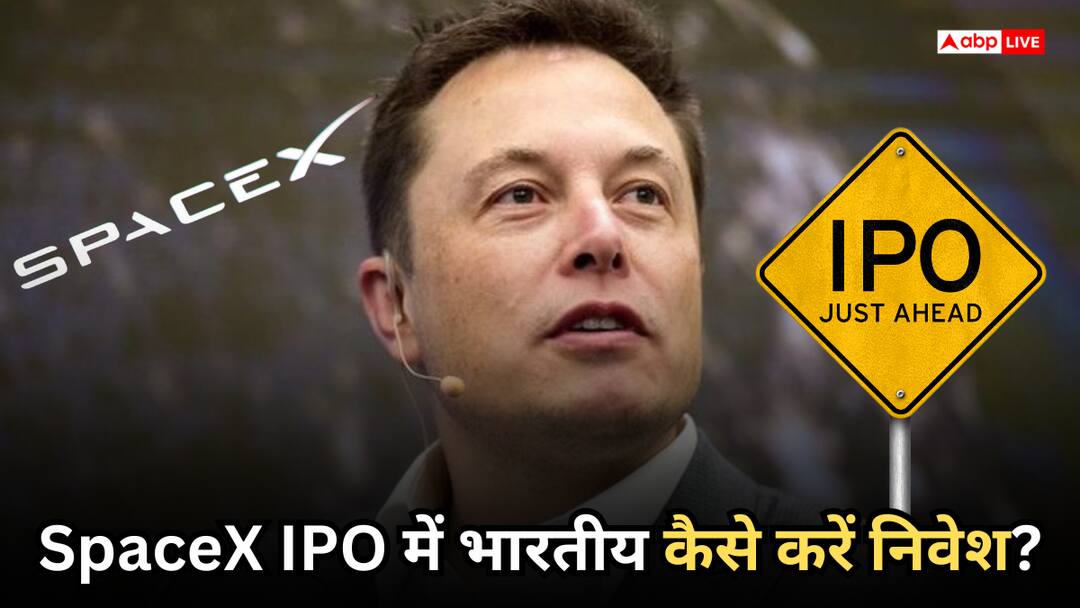
SpaceX IPO: दुनिया की सबसे चर्चित निजी कंपनियों में शामिल SpaceX जल्द ही शेयर बाजार में कदम रखने जा रही है. Elon Musk की इस कंपनी के संभावित IPO को लेकर निवेशकों में काफी ज्यादा एक्साइटमेंट है. ये इतिहास के सबसे बड़े IPO में से एक हो सकता है. ऐसे में भारत के रिटेल निवेशकों के मन में भी सवाल है कि क्या वे इस IPO में सीधे निवेश कर पाएंगे या नहीं. साथ ही इसमें क्या- क्या रिस्क हो सकते हैं.
SpaceX IPO क्यों है इतना खास?
SpaceX रॉकेट लॉन्च, सैटेलाइट इंटरनेट सेवा Starlink और अंतरिक्ष तकनीक के क्षेत्र में दुनिया की अग्रणी कंपनियों में गिनी जाती है. मीडिया रिपोर्ट्स के मुताबिक कंपनी का संभावित वैल्यूएशन 1.75 ट्रिलियन डॉलर तक पहुंच सकता है, जो इसे दुनिया की सबसे मूल्यवान कंपनियों में शामिल कर देगा. IPO के जरिए कंपनी करीब 75 अरब डॉलर जुटाने की तैयारी में है.
बता दें कि भारत में रहने वाले रिटेल निवेशकों के लिए सीधे अमेरिकी IPO में हिस्सा लेना आसान नहीं है. अमेरिकी IPO आमतौर पर वहां के संस्थागत निवेशकों और स्थानीय रिटेल निवेशकों को प्राथमिकता देते हैं. भारतीय निवेशकों को आम तौर पर कंपनी के शेयर बाजार में लिस्ट होने के बाद ही शेयर खरीदने का मौका मिलता है.
लिस्टिंग के बाद कैसे खरीद सकते हैं शेयर?
अगर SpaceX अमेरिकी शेयर बाजार में लिस्ट होती है, तो भारतीय निवेशक विदेशी शेयरों में निवेश की सुविधा देने वाले प्लेटफॉर्म्स के जरिए इसके शेयर खरीद सकते हैं. इसके लिए निवेशकों को भारतीय रिजर्व बैंक की Liberalised Remittance Scheme के नियमों का पालन करना होगा. इसके अलावा GIFT City के माध्यम से भी विदेशी शेयरों में निवेश के ऑप्शन आ सकते हैं.
SpaceX ने साल 2025 में 18.67 अरब डॉलर का कुल राजस्व दर्ज किया, जिसमें सबसे बड़ा योगदान Starlink कनेक्टिविटी बिजनेस का रहा. हालांकि, कंपनी को 2025 में करीब 4.9 अरब डॉलर का घाटा हुआ, जबकि 2024 में उसे 791 मिलियन डॉलर का मुनाफा हुआ था. लेकिन ये घाटा मुख्य रूप से भारी पूंजी निवेश की वजह से हुआ. कंपनी ने 2025 में xAI/Grok के AI इंफ्रास्ट्रक्चर और Starlink सैटेलाइट नेटवर्क के विस्तार पर 20.7 अरब डॉलर का निवेश किया, जो पिछले साल के मुकाबले दोगुना है. SpaceX के प्रॉस्पेक्टस के मुताबिक, उसके स्पेस, AI डेटा सेंटर और कनेक्टिविटी कारोबार का कुल संभावित बाजार 28.5 ट्रिलियन डॉलर का है.
2. कंपनी के पास Bitcoin में बड़ा निवेश
SpaceX के निवेश पोर्टफोलियो में 8,285 बिटकॉइन शामिल हैं, जिनकी मौजूदा कीमत लगभग 642 मिलियन डॉलर है. ये बिटकॉइन Coinbase Prime की कस्टडी में रखे गए हैं. कंपनी ने बताया है कि भविष्य में उसकी आय पर बिटकॉइन की कीमतों का बड़ा असर पड़ सकता है. Bitcoin की कीमत में हर 10,000 डॉलर के उतार-चढ़ाव से कंपनी की तिमाही शुद्ध आय में करीब 83 मिलियन डॉलर का बदलाव आ सकता है.
3. Elon Musk के पास 85.1% वोटिंग पावर
Elon Musk के पास Class B शेयरों के जरिए कंपनी की कुल वोटिंग पावर का 85.1% हिस्सा है. पब्लिक को मिलने वाले Class A शेयरों में प्रति शेयर 1 वोट का अधिकार होगा, जबकि Class B शेयरों में प्रति शेयर 10 वोट का अधिकार होगा. इसके अलावा Class B शेयरधारकों के पास कंपनी के बोर्ड ऑफ डायरेक्टर्स के अधिकांश सदस्यों को चुनने का विशेष अधिकार भी रहेगा.
4. SpaceX के पास xAI और Starlink जैसे कारोबार
SpaceX ने फरवरी 2026 में Elon Musk के AI स्टार्टअप xAI का ऑल-स्टॉक अधिग्रहण पूरा किया था. वहीं Starlink भी तेजी से अपने कारोबार का विस्तार कर रहा है. 31 मार्च 2026 तक Starlink के 164 देशों, क्षेत्रों और बाजारों में 1.03 करोड़ (10.3 मिलियन) सक्रिय ग्राहक हो चुके थे. कंपनी लगातार दुनिया के कई देशों में अपनी सेवाएं शुरू कर रही है, जिससे उसके कारोबार के और बढ़ने की उम्मीद है.
डिस्क्लेमर: (यहां मुहैया जानकारी सिर्फ़ सूचना हेतु दी जा रही है. यहां बताना जरूरी है कि मार्केट में निवेश बाजार जोखिमों के अधीन है. निवेशक के तौर पर पैसा लगाने से पहले हमेशा एक्सपर्ट से सलाह लें. ABPLive.com की तरफ से किसी को भी पैसा लगाने की यहां कभी भी सलाह नहीं दी जाती है.)
The Ministry of Heavy Industries (MHI) is set to decide in the coming days on removing Rajesh Exports from the list of beneficiaries under the production-linked incentive (PLI) scheme for advanced chemistry cell (ACC) battery storage, after the SEBI last week passed an interim order alleging massive financial fraud by the Bengaluru-based firm.
Sources in the ministry told PTI that there is a “strong view” within the department that the company should be dropped from the scheme.
The matter will be placed before Minister of Heavy Industries H D Kumaraswamy, who has returned from an official trip to Kyrgyzstan. “A final call will be taken in the coming days,” a source said.
In a 109-page ex parte interim order dated June 3, SEBI alleged that Rajesh Exports – primarily a gold jewellery manufacturer and exporter – inflated revenues by ₹15.15 lakh crore between FY21 and FY25, amounting to approximately 99.8 per cent of the revenues attributed to its subsidiaries over the period being materially misrepresented.
The regulator also alleged fund diversion, opaque related-party transactions, and disclosure failures involving two entities linked to the company’s lithium-ion cell business: Elest Pvt Ltd and ACC Energy Storage Pvt Ltd.
SEBI has barred Rajesh Exports promoter and Chairman Rajesh Mehta from buying, selling, or dealing in the company’s securities pending further proceedings, and has ordered a fresh forensic audit of its books.
The MHI administers the battery storage PLI programme and is now examining the SEBI order to determine next steps.
Mehta and Rajesh Exports have denied SEBI’s findings and stated they are cooperating with the investigation.
The Reserve Bank of India’s survey of professional forecasters (SPF) has projected FY27 real GDP growth a tad lower at 6.5 per cent against the central bank’s projection of 6.6 per cent.
The SPF projected FY27 CPI inflation to be 20 basis points (bps) softer at 4.9 per cent against RBI’s projection of 5.1 per cent.
The aforementioned projections show that while professional forecasters are slightly bearish on growth, they have a better outlook on inflation as compared to RBI.
Forty panellists participated in the 100th round of the bi-monthly SPF, which was conducted during May 2026.
“So, this (difference in SPF and RBI estimates on real GDP growth and inflation) is a matter of perception….if you go back in the data and check, there will always be some difference because their methodologies may be different, their sample may be different.
“But, the elephant in the room is the Middle East situation. So, everything boils down to when this war ends. If it ends within, let’s say, 15-20 days, everything is on track. If it goes on for, let’s say, six months or eight months, all these calculations/ estimates could be under some kind of a strain,” said Manoranjan Sharma, Chief Economist, Infomerics Ratings.
In his second bi-monthly monetary policy review statement on June 5th, Governor Sanjay Malhotra observed that CPI inflation remains below the (4 per cent) target despite global shock as the pass-through to domestic prices has been limited.
“While the baseline projections point towards headline inflation firming up towards the upper tolerance level (6 per cent) in Q3 (October-December) FY27, the impact of the supply shock is expected to wane Q4 (January-March) onwards. The underlying inflation pressures continue to remain benign at this juncture,” he said.
However, generalisation of inflation through second-round effects on expectations and wages is a distinct possibility, warranting a close vigil. The outlook also remains clouded due to the sub-normal south-west monsoon forecast and El Niño risks, the Governor said.
As for growth, Malhotra noted that the MPC (monetary policy committee) noted that elevated energy prices coupled with global supply constraints are having adverse spillovers on economic activity.
“While domestic demand remains resilient and manufacturing and services sectors activity continue to expand, there are incipient signs of moderation in some sectors as suggested by high frequency indicators,” he said.
For FY28, the SPF projected real GDP growth and CPI inflation at 6.9 per cent and 4.5 per cent, respectively.
The forecasters assigned highest probability to real GDP growth in the range of 6.5-6.9 per cent for both FY27 and FY28
In terms of quarterly path, real GDP growth (year-on-year/ yoy) is expected at 7.3 per cent during Q4 (January-March): FY26; and between 6.4-7.0 per cent in the four quarters of FY27.
CPI inflation
Headline CPI inflation (yoy) is expected at 4.0 per cent during Q1 (April-June) FY27 (RBI’s projection: 4.2 per cent).
Thereafter, it is expected to increase to 4.9 per cent in Q2 (July-September; RBI’s projection: 5.1 per cent) and further to 5.5 per cent in Q3 (October-December; 5.9 per cent) and then moderate to 5.2 per cent during Q4 (January-March; 5.4 per cent).
Core CPI (excluding food and fuel) inflation is expected at 3.9 per cent during Q1FY27; thereafter it is projected to remain between 4.4-4.7 per cent in the subsequent three quarters.
Current Account Deficit
Current account deficit (CAD) is expected at 2.1 per cent (of GDP at current market prices) for FY27 (against 1.5 per cent estimated in the last round) and at 1.2 per cent for FY28 (unchanged).
With the RBI’s revised deadline for tightened bank lending norms for brokers’ proprietary trading coming into effect from July 1, the leading brokers associations have submitted a proposal to the Industry Standards Forum (ISF) to allow bank funding only for non-speculative portion of their proprietary trading that is substantially hedged.
ISF is a forum that formulates standards for implementation of regulations in consultation with SEBI.
Raising concern over banks’ funds being used for speculations in equity markets, RBI has directed banks to seek full collateral against credit facilities for proprietary trading by brokers.
Interestingly, RBI has provided concessions for market makers in the new lending norms. However, capital market regulator SEBI’s market-maker framework is restricted to boost liquidity in SME platform and does not apply to equity derivatives markets.
Following the development, the Commodity & Capital Markets Participants Association of India, Association of NSE Members of India and Bombay Stock Exchange Brokers’ Forum have submitted a representation to RBI. Subsequently, CPAI also submitted a note to the ISF requesting it to formally define and register liquidity providers (LP) like in global equity markets.
Under the proposed framework, each LP can be assigned a dedicated unique trading code exclusively for LP activity, said sources privy to the development.
Once SEBI recognises LPs officially, banks can treat them more like market makers — with less stringent cash collateral requirements, they added.
A proprietary trader qualifies as an LP only if its trading portfolio is substantially hedged and carries limited market risk.
LP risk can be measured using the ratio of SPAN (Standard Portfolio Analysis of Risk) margin to total margin. To qualify as an LP, the SPAN margin should be less than 50 per cent of the total margin requirement.
A trading on the equity cash and derivatives markets in India attracts SPAN Margin and Extreme Loss Margin (ELM).
For instance, a trader taking a long NIFTY position at 25,000 may require to maintain a total margin of 11.3 per cent, comprising 9.3 per cent SPAN margin and 2 per cent ELM. In this case, SPAN represents about 82 per cent of the total margin, indicating a largely unhedged position with significant market exposure. To qualify as an LP, the SPAN component needs to be less than 2 per cent (ie, below 50 per cent of the total margin). Such a low SPAN is possible only with substantially hedged portfolio, sources said.
With SEBI recognition, banks can treat LP as market-maker whose guarantees require only 50 per cent cash collateral instead of 100 per cent as newly proposed.
The CPAI has requested the ISF to recommend this framework. LPs benefit the market by improving liquidity, narrowing bid-ask spreads and enabling more efficient price discovery.
Major markets such as Hong Kong (HKEX), USA (CME, CBOE), Europe (Eurex, ICE) and Singapore (SGX) already have LP frameworks.
रूसी तेल कंपनी Rosneft के सीईओ इगोर सेचिन ने भारत को लेकर एक बड़ी भविष्यवाणी की है. उन्होंने कहा है कि आने वाले एक दशक में दुनिया में जितनी भी नई तेल मांग बढ़ेगी, उसका लगभग 50 प्रतिशत हिस्सा अकेले भारत से आएगा. यानी भारत धीरे-धीरे ग्लोबल एनर्जी मार्केट का सबसे बड़ा ड्राइविंग फोर्स बन सकता है.
भारत क्यों बनेगा सबसे बड़ा तेल उपभोक्ता?
इगोर सेचिन के मुताबिक भारत की तेजी से बढ़ती अर्थव्यवस्था, बढ़ती आबादी, शहरीकरण और वाहन उपयोग में वृद्धि इसके मुख्य कारण हैं. उन्होंने बताया कि 2035 तक भारत का तेल खपत लगभग 44% बढ़कर करीब 8 मिलियन बैरल प्रति दिन तक पहुंच सकता है. उनका कहना है कि विकासशील देशों में ऊर्जा की मांग सबसे तेज़ी से बढ़ रही है, लेकिन इनमें भारत सबसे आगे है. इसलिए आने वाले वर्षों में ग्लोबल ऑयल मार्केट में भारत की भूमिका और भी अहम हो जाएगी.
Rosneft CEO ने यह भी संकेत दिया कि दुनिया का ऊर्जा ढांचा बदल रहा है. विकसित देशों में तेल की मांग स्थिर या धीमी हो सकती है, लेकिन भारत जैसे विकासशील देशों में मांग तेजी से बढ़ेगी. इसी वजह से ग्लोबल ऑयल डिमांड ग्रोथ का बड़ा हिस्सा भारत से जुड़ जाएगा. उन्होंने यह भी कहा कि भारत सिर्फ तेल उपभोक्ता ही नहीं बल्कि वैश्विक ऊर्जा रणनीति का केंद्र बनता जा रहा है.
रूस-भारत ऊर्जा साझेदारी का बढ़ता असर
सेचिन ने यह भी बताया कि रूस से भारत को मिलने वाले तेल सप्लाई ने दोनों देशों के बीच आर्थिक सहयोग को मजबूत किया है. 2022 के बाद से भारत और चीन को सस्ते रूसी तेल से अरबों डॉलर का फायदा हुआ है. इससे यह साफ होता है कि वैश्विक ऊर्जा बाजार अब सिर्फ सप्लाई और डिमांड का खेल नहीं रहा, बल्कि इसमें भू-राजनीति की भूमिका भी काफी बढ़ गई है.
हालांकि भारत के लिए यह ग्रोथ एक अवसर है, लेकिन इसके साथ चुनौतियां भी हैं. तेल की बढ़ती मांग का मतलब है कि देश की आयात निर्भरता और बढ़ सकती है. अगर अंतरराष्ट्रीय बाजार में कीमतें ऊपर जाती हैं तो इसका सीधा असर पेट्रोल-डीजल और महंगाई पर पड़ेगा. विशेषज्ञों के अनुसार भारत को अपनी ऊर्जा सुरक्षा मजबूत करने के लिए रिन्यूएबल एनर्जी और वैकल्पिक ईंधन पर भी तेजी से काम करना होगा.
Stock market this week will track simmering tensions in West Asia, its impact on crude oil prices, and trading activity of foreign investors, analysts said.
The trading week may begin on a cautious note following a sharp decline in the US markets over the weekend, an expert said.
Besides, progress of monsoon and inflation data announcement will also be important factors to watch out for.
“This week will be driven by key inflation, and global macroeconomic data releases. In India, investors will closely track inflation data for May, scheduled for release on June 12, along with foreign exchange reserves data on the same day.
“Globally, developments around the US-Iran negotiations and their implications for crude oil prices, currency movements, and overall risk sentiment will remain in focus,” Ajit Mishra, SVP, Research, Religare Broking Ltd, said.
US markets ended sharply lower on Friday, with the Nasdaq Composite tumbling 4.18 per cent. The S&P 500 dived 2.64 per cent and Dow Jones Industrial Average declined 1.35 per cent.
“The week ahead is likely to begin on a cautious note following a sharp decline in global markets, particularly AI-related technology stocks. On the positive side, domestic markets have some supportive factors in the form of resilient GDP growth, strength in the rupee following the RBI policy announcement, and a meaningful decline in crude oil prices,” Santosh Meena, Head of Research at Swastika Investmart Ltd, said.
Developments on the US-Iran front remain highly fluid and continue to generate volatility in global markets, he said.
“This week will also be data-heavy, with several important macroeconomic releases from both the US and China. Among them, the US inflation data scheduled for Wednesday will be particularly critical, as it could significantly influence expectations regarding the Federal Reserve’s future policy path and set the tone for global markets,” Meena added.
Last week, the BSE benchmark Sensex declined 532.4 points, or 0.71 per cent, and the NSE Nifty dipped 181.05 points, or 0.76 per cent.
“The Nasdaq fell 4 per cent, marking its worst single-day decline since April 2025, as investors aggressively reduced exposure to semiconductor and technology stocks. Given the significant weight of IT in Indian indices, this weakness could spill over into domestic markets and keep sentiment under pressure during the early part of the week,” Hariprasad K, Research Analyst and Founder, Livelong Wealth, said.
Globally, the key event to watch will be the US CPI inflation data, he said, adding that a softer-than-expected reading could revive hopes of future Federal Reserve rate cuts and improve risk appetite across global markets.