Affordable hi-res thermal cameras

Affordable hi-res thermal cameras


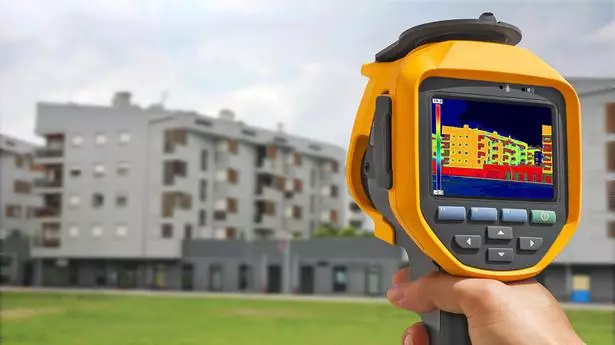
Researchers have developed an algorithm that can make high-resolution thermal cameras affordable for the masses. While visible-range cameras have become common, thermal cameras still cost a premium. Thermal cameras, which capture the scene temperature in the far-infrared region, find specialised use in fields such as the military, surveillance, firefighting, automation, and pedestrian tracking.

At present, low-resolution thermal cameras are available at affordable prices, but the image captured is very small and barely usable. A positive aspect is that these cameras usually come with a high-resolution visible-range camera, similar to smartphones. As such, guided super-resolution techniques can be used to create an illusion of a high-resolution thermal camera. The biggest challenge here is that the captured low-resolution thermal images are not aligned with the high-resolution visible images. There is a pixel-to-pixel misalignment.

Feature-based matching techniques fail for thermal-visible image pairs because of the difference in the spectral ranges. A group of IIT-Madras researchers, led by Dr Kaushik Mitra, Assistant Professor, Department of Electrical Engineering, have resolved this problem by developing two algorithms to correct the misalignment. The research has the potential to help increase the reach of thermal imaging technology to general consumers. It provides a direct solution for improving the quality of thermal camera outputs, making it more accessible and affordable, according to a press release.

Antibiotic adjuvants

Scientists at Jawaharlal Nehru Centre for Advanced Scientific Research, Bengaluru, have come up with a method of revitalising the efficacy of antibiotics by using them in combination with antibiotic adjuvants — ingredients that help counter resistance to the antibiotics. This can help strengthen and bring back obsolete antibiotics for treating complicated infections — effectively countering the rising menace of anti-microbial resistance.

Geetika Dhanda and Prof Jayanta Haldar incorporated cyclic hydrophobic moieties (portion of a molecule) in a triamine-containing compound; the adjuvants thus developed “weakly perturbed the membrane of bacteria”, says a press release. This resulted in countering membrane-associated resistance elements like permeability barrier and expulsion of antibiotics by efflux pumps.

The combination of the adjuvant with antibiotics like fusidic acid, minocycline, and rifampicin inactivates multidrug-resistant Gram-negative bacteria such as Acinetobacter baumannii, Pseudomonas aeruginosa, and Enterobacteriaceae. The choice of non-active adjuvant would also put less pressure on the bacteria to develop resistance to it. Moreover, weak membrane perturbation would result in less toxicity.

Published on

July 24, 2022


Source link

Five images and a million new questions

Five images and a million new questions


The first five images sent by NASA’s James Webb Space Telescope created a buzz of excitement among scientists, astronomy enthusiasts, and laypeople alike. One of them, a deep-field image of a galaxy that is five billion light years away, shows in the background other galaxies that are 13 billion light years away, very close to the beginning of the universe and time. Then there are images of an exoplanet, a planetary nebula, a cluster of five galaxies called ‘Stephan’s Quintet’, and a galaxy called Carina. The infrared telescope has since sent a few more images — grist for further research. To make better sense of all this,  Quantum spoke with Dr Dipankar Bhattacharya, Professor of Astrophysics at Ashoka University, Delhi. Excerpts:

We have seen a lot, but have we learnt anything new?

Let me first say that these pictures are samples to demonstrate what the Webb can do. Research and learning will follow. If you take the deep-field image, with a telescope like the Hubble, it would take a month-long exposure to get pictures of lesser resolution and depth; with the Webb, it was just half-a-day.

We have been able to see galaxies that are 13.1 billion light years away. We have seen objects in a very early stage of evolution. However, we have also learnt quite a lot. For example, we have spectrally imaged an exoplanet and found there is water vapour in its atmosphere. We have learnt that in the centre of the planetary nebula, there are two stars, not one — one dying and the other in an early stage of evolution. This will lead to further studies. We have seen an infrared jet in one of the galaxies in Stephan’s Quintet, which leads to the inference that there is some material being ejected from around a black hole at the centre of the galaxy, from just outside the event horizon.

So, yes, we have seen a lot and also learnt a lot.

How far back in time will the Webb be able to see?

Right now, the galaxy spectra Webb has released go up to 5 microns (wavelength), but it is designed to go up to 28 microns. Our current theory says that the first light-emitting object will be within the 28-micron range. You don’t need to go any further. We can do spectroscopy of the very first light-emitting object. From a red shift of 1,100 till about 20, the universe was just neutral gas, no luminous object, so nothing was emitting light.

Can you please explain what is ‘red shift of 1,100’?

Red shift of 1,100 means that the universe was 1,101 times smaller than now. Similarly, red shift of 20 means, 21 times smaller than now.

So, the universe began emitting light from the time the red shift was around 20?

Yes. Before that it was dark.

How long ago was that?

About 200 million years after the big bang.

Then, is it not possible to look deeper into the past?

You cannot look deeper using infrared. From red shift of 20 to, say, 1,100, you would need radio telescopes. The Square Kilometer Array Observatory intends to do that.

And beyond red shift of 1,100?

Before the red shift of 1,100 the universe was opaque to electromagnetic radiation.

So, you can never ‘see’ the first few seconds after the big bang or the big bang itself?

It is not possible with electromagnetic radiation. You would have to look for particulate radiation, perhaps neutrinos, or gravitational waves.

For infrared, Webb is the best we have?

Yes, unlike other telescopes, the Webb can see through dust. That is how we are able to see into the planetary nebula (catalogued NGC 3132), which is about 2,500 light years away.

Planets form in very dusty regions, so if you want to probe the early stage of formation of stars, you have to look inside the dust cloud. Unless you go to long wavelength infrared, you would never be able to do that. Webb has the capability to penetrate dust clouds and look at newly forming stars.

Like the one in the middle of the nebula?

Exactly. It was never seen before. Also, in the planetary nebula picture, you see the second star — the star from which matter has been ejected to form the nebula. Only in the MIRI picture (taken by the mid-infrared instrument in the Webb) do you see the second star.

Which is the dying star?

Yes, it is the dying star that has caused the nebula. The other is in an early stage of evolution.

What are we seeing in Stephan’s Quintet?

The Stephan’s Quintet picture really demonstrates Webb’s capabilities. It is not one picture, but a thousand exposures, from different positions, stitched together to form a wide-field image. In the topmost galaxy there is a vertical line, a jet emanating from the centre of the galaxy. It means there is some material being ejected from around the black hole there. Webb has also measured the spectrum of the gas surrounding the black hole, which is a first. That will tell us the composition of the material.

Webb is an infrared telescope. Then, how are we getting these pretty pictures, as though taken by an optical camera?

Basically, it is an artist-like job. You see how intense the radiation is and from which part of the image. Then you ‘assign’ different colours for different intensities, or for different wavelengths. So, you build up an image that looks like a photograph.


Source link

YouTube
Instagram
WhatsApp




