Breakthrough in desalination technology, using carbon ‘flowers’

Breakthrough in desalination technology, using carbon ‘flowers’


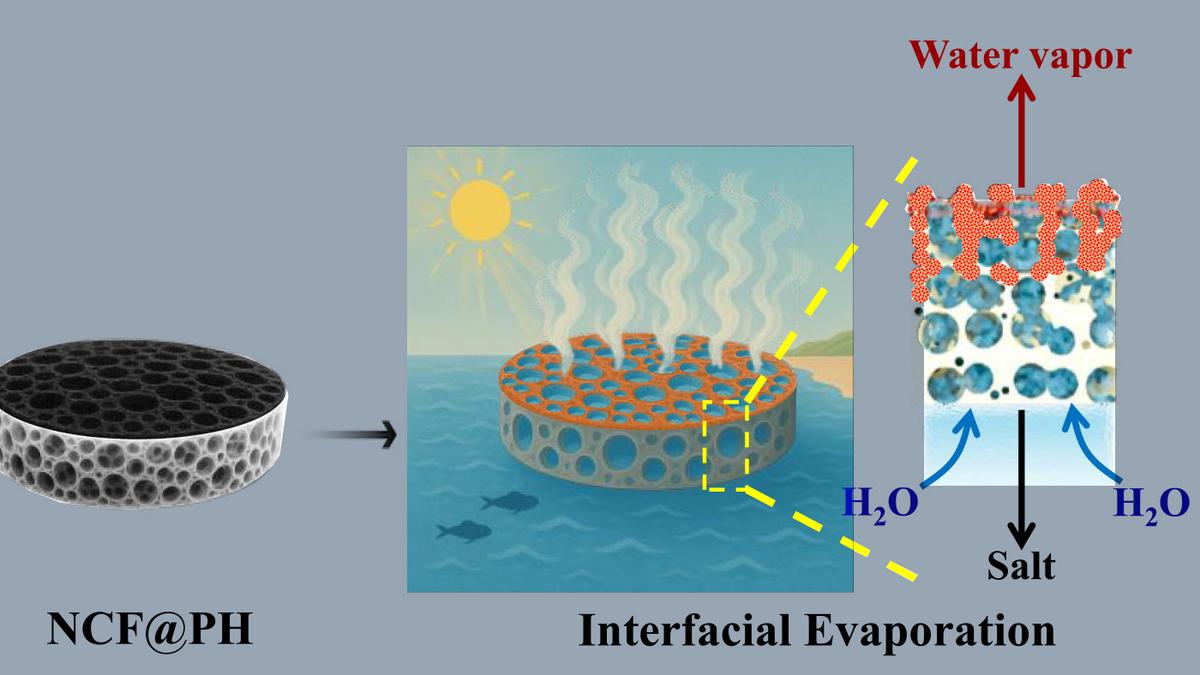
JANUS-FACED FLOATING FILM: Schematic representation of the steps involved in the fabrication of an NCF@PH solar–thermal interfacial evaporator

A group of researchers have reported a breakthrough in desalination that could dramatically change the economics of producing freshwater from the sea and brackish water.

The innovation centres on an engineered material — an ultra-thin floating film called NCF@PH, described as “Janus-faced” because it has two distinct sides, like the Roman god. One side contains nano-carbon florets (NCF) — nano-carbon structures shaped like tiny marigold flowers — which are optimised to trap sunlight and minimise reflection. The other side is made of a special porous polymer (porosity-tuned high internal phase emulsion polymer).

Imagine a tank of seawater covered by a glass sheet. The NCF@PH film floats on the water, covering it. When sunlight strikes the system, the NCF on the sun-facing side absorbs large amounts of light.

The underside of the film — in contact with the water — acts as a scaffold for the NCF coating. The NCF heats the water, causing it to evaporate. Water vapour passes through the film into the space between the film and the glass lid, from where it is directed to a Peltier cooler for condensation.

Evaporation boost

Researchers from the departments of chemistry and mechanical engineering at IIT-Bombay collaborated with Monash University in Australia to build a prototype system called SunSpring. The core of the system is the NCF material.

Two years ago, Prof Subramaniam Chandramouli of IIT-Bombay, who is part of the SunSpring team, had synthesised these nano-carbon florets using silica “moulds”. As reported in Quantum on February 10, 2023, he demonstrated that when coated on porcelain or copper and exposed to sunlight, the material could heat up to 160 degrees C within minutes.

In a recent paper in Advanced Science, the researchers describe how the NCF is integrated onto a porosity-engineered, hydrophobic polymer to create an ultra-thin (200 micrometre), unsinkable solar-thermal evaporator. This design boosts the water evaporation rate to 4.5–6.5 kg per sqm per hour, compared with 1.29 kg in conventional systems.

As a result, SunSpring can produce 18 litres of freshwater per sqm per day — more than double the 7 litres typical of standard evaporation-based desalination systems. The combination of NCF and polymer channels the solar-thermal energy to the water for evaporation and prevents heat loss to the environment.

Tests at IIT-Bombay showed that SunSpring could convert seawater containing 35,000 ppm of salt into freshwater with less than 10 ppm of salt. According to Mohammed Aslam and Amrutha Suresh, the lead authors of the work, the device can run continuously for up to 225 hours.

Efficient condensation

A major improvement is in the way SunSpring handles condensation. In conventional solar stills, the same glass surface is used both to admit sunlight and to condense vapour. Once condensation begins, droplets form on the glass, scattering light and reducing heating — and therefore reducing efficiency.

SunSpring avoids this problem by separating the evaporation and condensation chambers. The condensation surface is a Peltier cooler, a thermoelectric device that becomes cold on one side and hot on the other when powered. “An important aspect of the SunSpring design lies in the decoupling of the sunlight-admitting surface from the water-collection surface,” the paper notes. In addition, salt accumulates only on the water-facing underside of the film, from where it can be easily washed away.

The research is supported by The Green Energy and Sustainability Hub at IIT-Bombay and Anusandhan National Research Foundatuon (ANRF).

Cost factor

Prof Chandramouli estimates that SunSpring can produce freshwater at thrice the cost of a typical RO system. However, costs will fall when the NCF@PH film is produced at an industrial scale.

The team, after two years of development work, now plans to set up a pilot plant in the Rann of Kutch, Gujarat, where groundwater salinity is extremely high and affects local health. The pilot, to be installed in a school, will provide 300 litres of pure water per day for the children.

More Like This

Published on November 17, 2025


Source link

Tiny heater to kill tumours

Tiny heater to kill tumours


Cancer treatments like radiation and chemotherapy are powerful because they target and destroy cancer cells that other methods cannot reach. Yet, doctors often use an additional treatment after these — called adjuvant therapy — to eliminate any remaining cancer cells. One such promising adjuvant treatment is hyperthermia therapy, which uses heat to make tumours more sensitive to radiation and chemotherapy.

In hyperthermia treatment, doctors raise the temperature of the tumour to about 40–44 degree C for up to an hour. This weakens cancer cells while leaving healthy tissue relatively unharmed. It works especially well for superficial cancers — those on or near the body’s surface, such as cancers of the breast, neck, or skin.

However, heating small, curved areas of the body — like the face or nose — poses a major challenge. Existing hyperthermia devices are too large and often fail to deliver heat evenly to small, localised tumours.

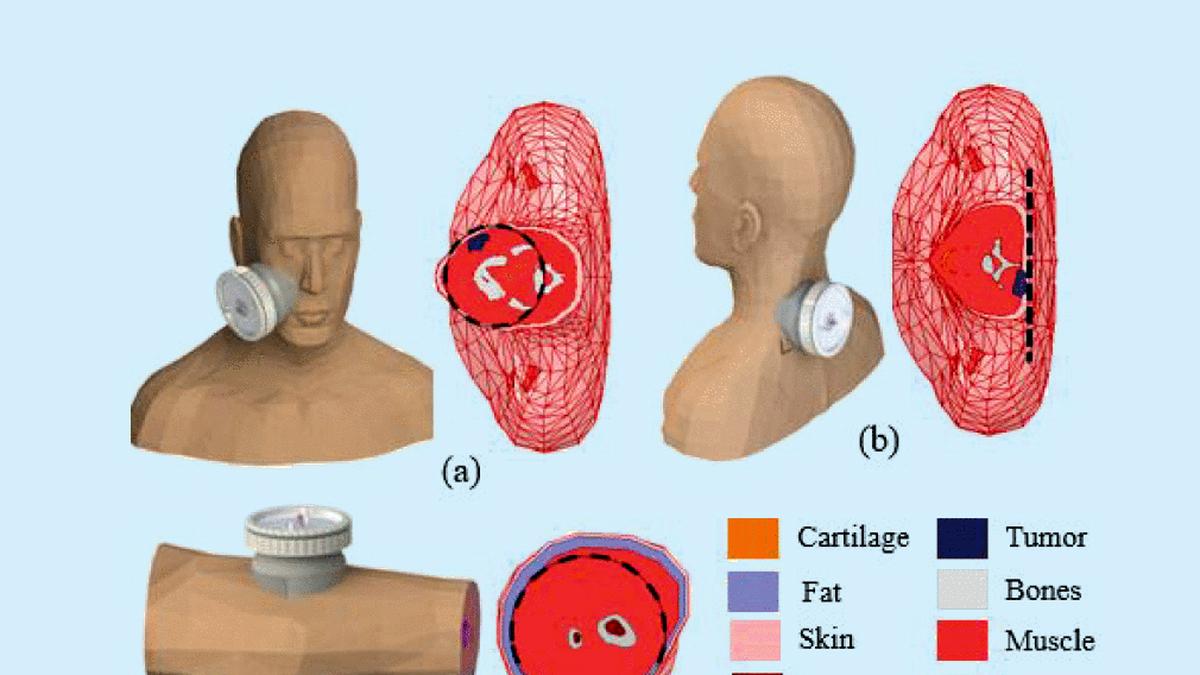
To solve this, Rahul Choudhury and Prof Kavita Arunachalam, at the Department of Engineering Design at IIT-Madras, have developed a compact hyperthermia applicator that operates at 434 MHz, a frequency used for cancer treatment. Their design features a single small antenna with an integrated water bolus — a thin, water-filled layer that helps the device conform perfectly to curved surfaces and ensures even heating without air gaps.

Tests conducted on artificial tissue models and real chicken and bovine samples showed highly efficient heating, with over 96 per cent power coupling and stable, targeted energy delivery. The device is significantly smaller than current models and offers a way to treat small, localised tumours that were previously difficult to reach.

Diamond in quantum sensor

Under the National Quantum Mission (NQM) of the Department of Science and Technology (DST), researchers at IIT-Bombay’s PQuest Group have built India’s first quantum diamond microscope (QDM) — a device that can capture magnetic fields in real time at the microscopic level. This marks a major step for the country in the field of quantum sensing and has earned its first patent in this area.

Formally announced at the Emerging Science Technology and Innovation Conclave (ESTIC 2025), the QDM has exciting potential in neuroscience, materials research, and non-destructive testing of semiconductor chips. It can map magnetic fields across multiple 3D layers inside an encapsulated chip, making it a powerful tool for the semiconductor industry.

Developed by a team led by Prof Kasturi Saha, the QDM is based on nitrogen-vacancy (NV) centres in diamonds — tiny atomic defects that make diamonds extremely sensitive to changes in magnetic, electric, and thermal fields. The NV centres use light to detect magnetic fields through a process called optically detected magnetic resonance (ODMR). By creating a thin diamond layer rich in NV centres, the QDM can perform widefield imaging of magnetic activity, much like a high-resolution optical microscope.

As electronic devices move toward 3D chip designs, traditional diagnostic tools can no longer ‘see’ inside complex, multi-layer circuits. The QDM solves this challenge by offering direct, high-resolution 3D magnetic mapping of chips, batteries, and microelectronic systems.

Prof Saha’s team now plans to combine the QDM with AI and machine learning to create a next-generation imaging platform for chip diagnostics, biological imaging, and geological magnetic studies — all enabled by precise, 3D magnetic field visualisation.

More Like This

Published on November 17, 2025


Source link

At a regulatory crossroads

At a regulatory crossroads


LIFE-GIVING GRAFT: Genetic engineering of pigs makes xenotransplantation more feasible
| Photo Credit:
wildpixel

Some years ago, a patient with a failed liver was given a genetically modified liver of a pig. The patient passed away after 171 days. However, the case held out the promise of extended survival rates. The cross-species organ transplantation — xenotransplantation — was discussed in a paper published in the Journal of Hepatology.

Research into xenotransplantation holds hope for patients who require transplants but have too few human donor options. India faces a severe crisis in organ availability.

More than half a million people are estimated to need organ transplantation annually. However, the country has one of the lowest rates of deceased donors globally — about 0.5 per million population.

Xenotransplantation is seen as one way to solve organ shortages.

Advances in the genetic engineering of pigs have made this process more feasible internationally.

In another paper, published in the journal Transplantation Reports and titled ‘Xenotransplantation in India: Ethical challenges, historical lessons, and future prospects’, the authors (Soumyadip Sain and Trisha Chattoraj) highlight examples of US surgeons who successfully implanted gene-edited pig kidneys into patients. China has also performed a gene-edited pig liver transplant.

They point out that India’s context is unique due to a historical event that continues to influence public trust. In January 1997, Dr Dhaniram Baruah attempted a pig-to-human heart transplant in Assam. The recipient, a 32-year-old man, died within a week due to organ failure.

This transplant was unauthorised. It lacked ethical approval, governmental authorisation, and institutional oversight. Dr Baruah was arrested under the Transplantation of Human Organs and Tissues Act (THOTA), 1994, and his licence was later revoked. This episode established xenotransplantation in the Indian public consciousness as ‘controversial’.

Missing policy

India has no existing clinical research or regulatory policy on transplantation of organs from animals to humans. THOTA, too, does not address cross-species transplants.

Neither the Central Drugs Standard Control Organisation (CDSCO) nor the Indian Council of Medical Research (ICMR) have published any related guidelines, unlike their US and European counterparts.

The paper also points to India’s lack of regulatory preparedness for interspecies grafts, and the absence of a national registry to enable follow-ups on xenograft recipients or track long-term outcomes, which are critical to estimate safety for prospective patients. A new ‘Xenotransplantation Act’ or major amendments to THOTA are needed to address these gaps.

The use of animal, particularly pig, organs poses significant challenges in India’s multi-religious society. While some Indians could consider xenografts unacceptable due to religious beliefs, others could view porcine sources as unclean, not to mention viewing the killing of animals for organ transplant as an act of violence. Introducing pig organs into clinical use requires transparent communication and careful religious consultation.

Reinforcing equity

Critical, and as a prerequisite to cross-species transplants, are trials that help estimate efficacy.

The paper asserts that India lacks the infrastructure to begin trials. Currently, the country does not have ‘specific pathogen-free’ (SPF) pig colonies, which are essential for xenograft suitability. “Establishing these colonies requires extensive bio-secure facilities and specialised genetic engineering capabilities.”

Xenotransplantation could also prove expensive — $300,000 to $1 million per organ, according to US estimates. In India, where more than 70 per cent of health expenditure is out of pocket, this technology risks widening existing healthcare inequities.

The authors argue that, to move forward, India needs to fund SPF animal facilities, establish dedicated research centres, and initiate a public dialogue involving religious scholars and ethicists. The country, they say, must also establish centralised ethical oversight and incorporate xenotransplantation in the ICMR’s priority research agenda.

As important and urgent would be the establishment of a legal framework addressing animal rights, zoonotic risk, and trial safety; centralised ethical oversight panels and biosafety committees; and fast-track research pathways within ICMR and CDSCO.

More Like This

Published on November 17, 2025


Source link

Epidemiology-ML collab decodes India’s struggles with air quality

Epidemiology-ML collab decodes India’s struggles with air quality


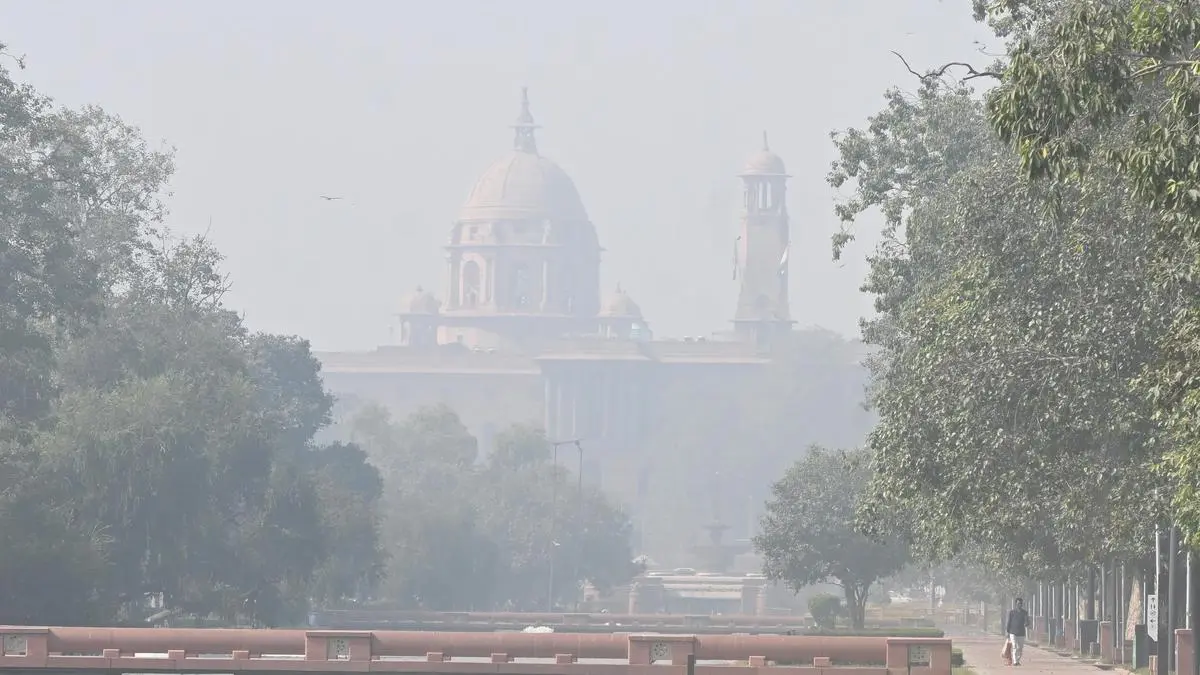
WINTER WOE: Delhi’s annual date with smog and respiratory illness
| Photo Credit:
SUSHIL KUMAR VERMA

Asthma has long been one of India’s public health burdens, a condition that markedly worsens with heightened pollution levels. Each winter, when smog settles over the northern plains and cities like Delhi record some of the world’s highest particulate concentrations, hospital admissions rise and millions struggle to breathe.

A recent study uses artificial intelligence to map the link between polluted air and asthma. The research team — Gauresh Bhandary, Gurleen Kaur and Chandra Mohan Kumar — used a type of AI known as ‘physics-informed neural network’ (PINN) to reconstruct the unseen, time varying forces that link pollution and asthma. Their approach blends epidemiological modelling with machine learning, allowing the system to learn from data while remaining rooted in concepts of asthma biology and environmental behaviour.

They began by building a mathematical model that divides the population into sub-groups such as susceptible individuals, smokers, those exposed to pollution, undiagnosed and diagnosed asthma cases, and people who have recovered. The model also tracks ambient pollutants, treating particulate concentration as a dynamic quantity that rises, falls and influences the movement of people between the health states. Parameters such as the rate at which pollution leads to new asthma cases, or the pace at which pollutants accumulate, were allowed to vary over time. These are quantities that cannot be directly observed in real settings.

While a conventional neural network attempts to learn patterns directly from data, a PINN follows the scientific laws that govern the system under study. In this study, the asthma model is expressed as a set of differential equations that specify how people move between the health states and how pollutants change over time.

The researchers trained the model on synthetic data, which allowed them to control the ground truth while introducing realistic levels of measurement error. They used a numerical solver inside the neural network itself, which made the entire forecasting process differentiable. The PINN learns continuous curves that describe how the pollution-related parameters evolve through the year. These curves must allow the differential equations to generate trajectories that match the observed data and remain physically plausible.

The PINN recovered the time varying pollution effects with an accuracy rarely seen in epidemiological inverse problems. It correctly reproduced the oscillations in pollution-induced asthma during the post-monsoon and winter seasons. It captured the gradual depletion of pollutants through natural processes and the slow build-up associated with agricultural burning, industrial output and heavy traffic. Errors stayed well below two per cent. The PINN was reconstructing the hidden environmental drivers.

By linking real-time pollution readings to evolving asthma risks, the model offers a way to anticipate seasonal surges, to support hospital preparedness and pollution-control policies. Since it works even with limited or imperfect data, it can support regions where health reporting remains sparse.

More Like This

Published on November 17, 2025



Source link

Chip design and AI-driven engineering emerge as niche growth bets for IT sector

Chip design and AI-driven engineering emerge as niche growth bets for IT sector


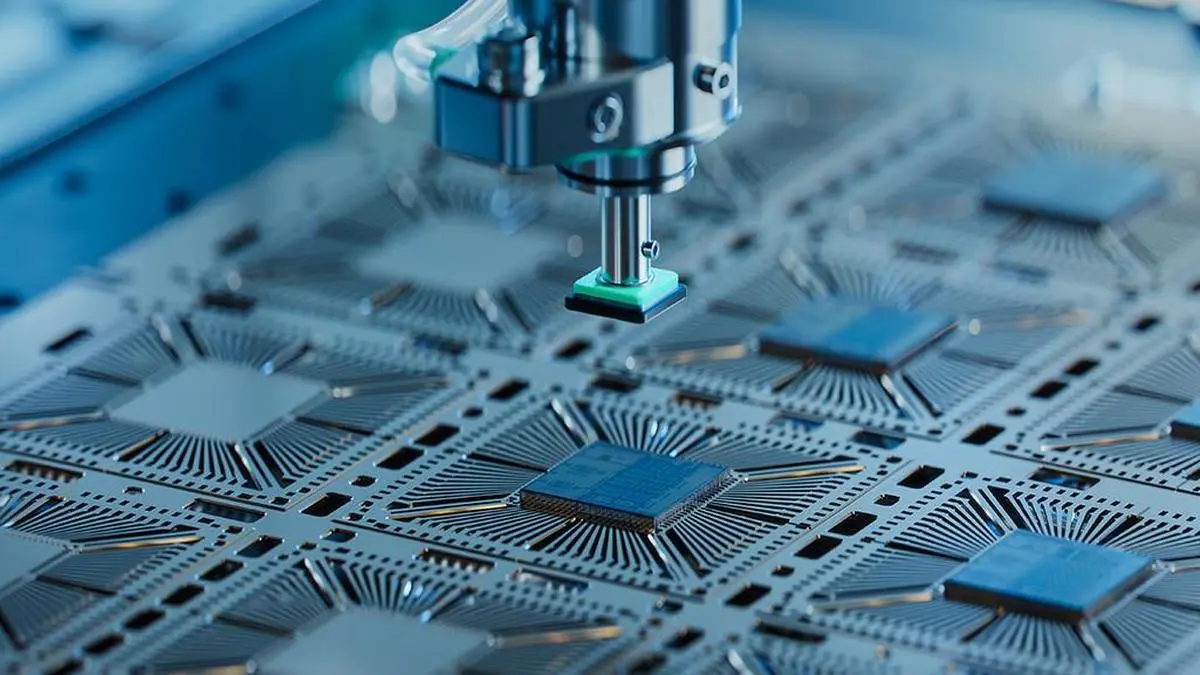
Semiconductor tools generate a vast amount of data, which can be leveraged to build efficient machine learning and AI-based predictive maintenance systems that help reduce tool downtime and improve overall fab yield
| Photo Credit:

India’s IT services leaders are ramping up their semiconductor design and AI-driven engineering capabilities as global chipmakers deepen their presence in the country. While analysts expect this to remain a specialised niche — centred on chip design, verification and fab-level AI systems rather than a cloud- or AI-scale breakout — the segment is steadily expanding and poised for much larger growth.

Semiconductors are the foundation of modern technology, from AI and cloud to automotive and industrial automation. Global chip shortages and the surge in demand for advanced electronics have created a strategic inflection point.

Gilroy Mathew, COO of UST, shared that semiconductors represent one of its fastest-growing verticals, alongside healthcare and the BFSI sector.

“This segment is projected to deliver double-digit growth within our ER&D portfolio over the next five years. We have been a pioneer in the semiconductor business for the last 15 years. As of today, we have a dedicated 10,000-member team serving 15 out of the top 20 semiconductor companies globally; it provides world-class engineering solutions to our clients on R&D, Hardware, Software, and ATE,” he noted.

Expertise

Globally, the company serves semiconductor companies, with expertise in design, verification and embedded systems. Domestically, India’s semiconductor mission and PLI/DLI schemes have opened new opportunities for the company, he said.

“Our recent ₹3,330 crore OSAT joint venture with Kaynes Semicon in Gujarat is aimed at strengthening India’s semiconductor value chain. This partnership enables us to provide a full ATE solution to our global clients, including OSAT. We are providing an alternative back-end manufacturing option to our clients. UST is building end-to-end capabilities, including pre-silicon design (ASIC, FPGA, SoC architecture), post silicon validation, advanced EDA automation and manufacturing process support through OSAT partnerships,” Mathew explained.

Alongside, semiconductor tools generate a vast amount of data, which can be leveraged to build efficient machine learning and AI-based predictive maintenance systems that help reduce tool downtime and improve overall fab yield.

Omprakash Subbarao, CEO at IISc’s FSID CORE Labs, highlighted that AI-driven defect inspection during wafer production and packaging will further enhance yield, benefiting both individual tools and the fab as a whole. The development of advanced digital twins of both tools and fabs will support better training for fab engineers and enable real-time remote monitoring of processes and equipment.

“This space is set to become a much larger market, and its growth is already well underway. A growing number of companies are now focusing on advanced tool development, moving beyond purely service-oriented work. Start-ups mentored by established tool makers, fabs, and VLSI design houses can accelerate innovation and strengthen the overall ecosystem far more effectively,” he said.

ISM is building a semiconductor manufacturing ecosystem that includes production, assembly, packaging, and testing at scale, which will create opportunities for IT services in enabling smart manufacturing, digital transformation and automation across semiconductor fabs and OSAT facilities. With advanced machinery, robotics, and AI-driven workflows becoming integral to these setups, technology will play a critical role in optimising operations, ensuring quality, and driving efficiency.

Biswajeet Mahapatra, Principal Analyst, Forrester, explained that while India’s IT services firms are unlikely to gain a broad competitive edge across the semiconductor value chain because core manufacturing and fabrication remain capital-intensive and dominated by global giants. However, they can carve out a niche in design, verification, and software-driven aspects of chip development, leveraging their engineering talent and experience in complex systems integration. This will likely remain a specialised play rather than a mainstream focus.

“While semiconductor design and engineering could emerge as a meaningful growth vertical, it will not match the scale of cloud or AI in the near term. The opportunity lies in high-value design services, embedded software, and verification, driven by global demand for advanced chips in AI, automotive, and IoT. Growth will depend on partnerships with semiconductor firms and building domain expertise, making it more of an adjacent vertical than a dominant pillar,” he said.

Revenue potential will be modest compared to cloud or AI, likely in the low single-digit percentage of overall IT services revenue over the next 3–5 years. For large players, this could translate into hundreds of millions of dollars rather than billions, driven by specialized design and verification projects for global semiconductor clients.

Published on November 16, 2025


Source link

YouTube
Instagram
WhatsApp