Why even BSNL wants to take a nuclear plunge

Why even BSNL wants to take a nuclear plunge


CROSSED LINES: With its telecom business tottering, State-owned BSNL eyes options
| Photo Credit:
SUBRAMANIUM S

The adage “small is beautiful” is finding new relevance in India’s nuclear energy sector, drawing in even rank outsiders to explore the technology. Bharat Sanchar Nigam Ltd (BSNL), the State-owned telecom giant, which is tottering in its own business, has expressed interest in the field.

Yes, you read it right. BSNL wants to take a nuclear plunge.

BSNL is among several entities responding to a ‘request for proposal’ (RFP) issued by the Nuclear Power Corporation of India Ltd (NPCIL) for setting up two 220 MW Bharat Small Reactors (BSRs) as captive power units.

In its response, BSNL submitted several queries, including whether reactors of capacity below 220 MW can be installed, the minimum land requirement, the feasibility of using urban land for the plant, entitlement to carbon credits and potential government funding support.

Terms of business

NPCIL clarified that the proposed reactor capacity is fixed at 220 MW, and land requirements are detailed in the RFP. The suitability of city sites would be evaluated by the Atomic Energy Regulatory Board (AERB). Regarding funding, NPCIL stated that financing is the responsibility of the project developer, while it remained silent on carbon credit entitlements.

For now, BSNL and others interested in smaller capacities will have to wait. India is still developing next-generation technologies, like the 50 MW Bharat Small Modular Reactor (BSMR), a 5 MW (approximately 2 MWe) gas-cooled micro modular reactor (GCMMR), and other innovations, as part of its broader goal of achieving 100 GW of nuclear power by 2047.

India Inc’s interest

Meanwhile, the RFP has drawn interest from a wide spectrum of India’s public and private sector groups/corporates, including the Indian Railways (via REMC Ltd), Tata, Reliance, Adani, Aditya Birla, Torrent, Vedanta, Godrej, JSW, ITC and BHEL.

Nearly 687 queries have been submitted.

Some of the key issues raised include:

Transfer of ownership of the nuclear asset to NPCIL for a token amount of ₹1, and its implications on financing and taxation.

The RFP’s reliance on data from a 15-year-old 2×200 MW plant in Rajasthan, which cost ₹2,361.81 crore, for project cost estimation (NPCIL responded that updated data would be shared after the signing of a non-disclosure agreement).

Reduction of the exclusion zone from 1 km to 0.5 km, and its utilisation (NPCIL clarified that the land could be used for solar/wind power projects, subject to hazard assessments and regulatory approval).

High cost of operations and maintenance, including the need for developers to meet the cost of spent fuel management, even though the fuel remains the Department of Atomic Energy’s property.

Expertise fee of 60 paise per kWh payable to NPCIL.

NPCIL will be the plant operator under the Civil Liability for Nuclear Damage Act, 2010, and will handle compliance through insurance or financial security, reimbursable by the promoter.

Low plant load factor (PLF) of 68.5 per cent mentioned in the RFP (NPCIL stated this is expected to be revised to 72.5 per cent, and actual performance is likely to be higher, based on historical data).

NPCIL also clarified that project promoters may propose multiple locations across different States; additionally, an amendment to the Electricity Rules to allow captive consumption of nuclear power is under consideration.

It will be interesting to see how many of the business groups will go ahead, even as some argue that the RFP conditions are loaded in favour of NPCIL.

(The writer is a senior business journalist based in Chennai)

More Like This

Published on June 1, 2025


Source link

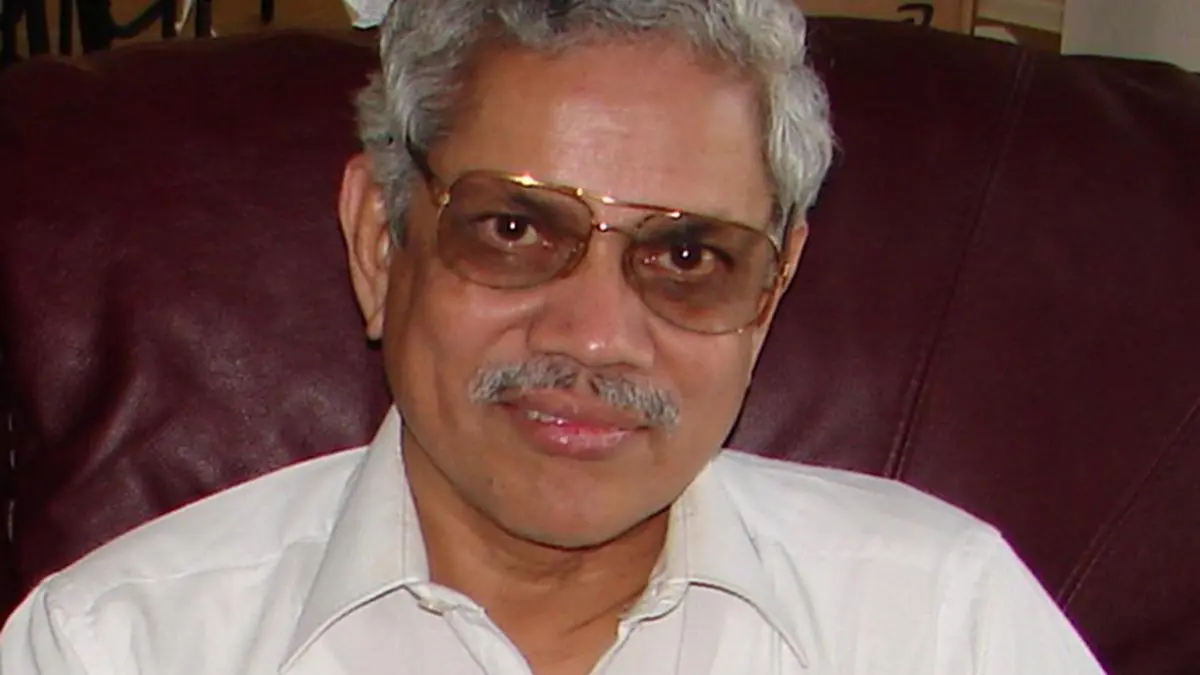
Dr M R Srinivasan, renowned nuclear scientist, passes away at 95

Dr M R Srinivasan, renowned nuclear scientist, passes away at 95


Around the time the India-US civil nuclear agreement was being hammered out, this writer was witness to an unusual incident, at a meeting organised by the Triplicane Cultural Academy, Chennai, on the agreement. Two tall individuals, both highly accomplished in their fields, got into a heated personal exchange on the dais, in full view of the audience. One was the celebrated bureaucrat, B S Raghavan; the other was Dr M R Srinivasan, former Chairman, Atomic Energy Commission. The two had never met before. Raghavan was completely against the proposed agreement with the US, fearing “swarms of inspectors” from the US nosing around India’s nuclear power plants. Srinivasan, the principal speaker of the evening, on the other hand, was fully in favor of the agreement. 

As Raghavan was speaking, Srinivasan fidgeted uneasily and smiled, as though saying, “oh, this man does not understand the nuclear deal”, but as Raghavan went on and on, Srinivasan got visibly angry and told the speaker to stop, and not to try to hijack the proceedings. Raghavan told Srinivasan that he was 80 and “standing next to God” and had no desire to hog the limelight and continued with his speech. 

When Raghavan finished his speech and took his seat, Srinivasan gave him a friendly smile, shook hands with him and said, “we like to spar, don’t we?” 

This incident gives a glimpse into the mind of Malur Ramasamy Srinivasan (and indeed of Bahukutumbi Srinivasa Raghavan) who breathed his last this morning, at the ripe age of 95. (Raghavan passed away last year.) Srinivasan, who was as affable as he was intensely intellectual, was not one given to impulsive fulminations, but he could not stand someone try to stop a development that he believed was in India’s favor. On that evening, his love for his country got the better of his cool. 

Immense contributions

From the time Srinivasan joined the Department of Atomic Energy in 1955, as a young man of 25, armed with a fresh PhD in physics from McGill University, Montreal, Canada, till his technical superannuation as the Chairman of Atomic Energy Commission in 1990, his contributions were everywhere in the nuclear energy space. He was, for instance, involved in the building India’s first nuclear reactor, Apsara. Though after his retirement, Srinivasan took up residence in the pristine hills of Ooty, Tamil Nadu, (where he continued to live till his passing today), he was actively involved in public life for many years, such as Member, (erstwhile) Planning Commission (1996-98) and Member, National Security Advisory Board (2002-04 and 2006-08). 

Much of what we see in India’s nuclear energy sector today owes its existence to Srinivasan. Kamlesh Nilkanth Vyas, another former Chairman of AEC, observes that Srinivasan contributed immensely to India’s nuclear energy program in its formative years, working alongside the legendary nuclear scientist, Dr Homi Bhabha. In 1974, Srinivasan was appointed as Director, Power Projects Engineering Division, Department of Atomic Energy; he successfully lobbied for converting the division into Nuclear Power Board, which later, in 1987, became the Nuclear Power Corporation of India Ltd, with Srinivasan as its Founder-Chairman. Vyas told businessline today Srinivasan was involved in thinking behind India and Russia for setting up nuclear power plants in India—the 2×1000 MW Kudankulam Nuclear Power Plant is a result of that thinking. 

Srinivasan is survived by his wife Geetha and their daughter, Sharada. Srinivasan, a recipient of several awards and honours, was recognised for his services by the government of India, which gave him the Padma Vibhushan award, the country’s second highest civilian award, in 2015. 


Published on May 20, 2025


Source link

Benign hydrogen production through piezocatalysis

Benign hydrogen production through piezocatalysis


Piezocatalysis has emerged as a promising catalytic technology that harvests mechanical perturbations with a piezoelectric material to generate charge carriers, which are used to catalyse water splitting. This is an environmentally benign method of hydrogen production and, overall, water splitting stands out as an efficient and scalable technique relying on catalysis.

In recent groundbreaking work, a team of researchers, led by Prof Tapas K Maji from the Chemistry and Physics of Materials Unit at Jawaharlal Nehru Centre for Advanced Scientific Research, Bengaluru, has developed a metal-free donor-acceptor based covalent-organic framework (COF) for piezocatalytic water splitting. This study, published in Advanced Functional Materials, demonstrates a COF built from imide linkages between organic donor molecule tris(4-aminophenyl)amine (TAPA) and acceptor molecule pyromellitic dianhydride (PDA), exhibiting unique ferrielectric (FiE) ordering, which showed efficient piezocatalytic activity for water splitting to produce hydrogen.

This discovery breaks the traditional notion of solely employing heavy or transition metal-based ferroelectric (FE) materials as piezocatalysts for water splitting. Conventional FE materials have limited charges confined at the surface, which usually leads to quick saturation of their piezocatalytic activity. In contrast, FiE ordering in a COF provides a multifold enhanced number of charges at the pore surfaces, owing to the large local electric fields. The sponge-like porous structure of a COF allows the diffusion of water molecules to efficiently access and utilise these charge carriers for catalysis, giving ultra-high hydrogen production yields and outperforming all oxide-based inorganic piezocatalysts.

Cheaper cholesterol testing tool

Excess cholesterol build-up on artery walls hinders blood flow
| Photo Credit: Rasi Bhadramani

A point-of-care (POC) device has been developed for detecting cholesterol in trace amounts, even below the preferred range. It can be an efficient tool for routine monitoring of cholesterol levels.

It is a highly sensitive, eco-friendly and cost-effective optical sensing platform that can help identify early symptoms of diseases like atherosclerosis, venous thrombosis, cardiovascular disease, heart disease, myocardial infarction, hypertension and cancer.

Detecting fatal diseases at their earliest symptoms is essential, as abnormal biochemical markers may sometimes accompany such disorders. Therefore, reliable POC detection of biomarkers associated with these diseases is necessary for personalised health monitoring.

Cholesterol is an essential lipid in humans, produced by the liver. It is the precursor for vitamin D, bile acids and steroid hormones. Cholesterol is necessary for animal tissues, blood and nerve cells, and it is transported by blood in mammals. There are two types of cholesterol: LDL (low-density lipoprotein), often referred to as ‘bad’ cholesterol because it can accumulate in the walls of arteries and contribute to severe diseases, and HDL (high-density lipoprotein), known as ‘good’ cholesterol.

However, maintaining a balance in cholesterol levels is crucial. Both high and low cholesterol levels can lead to disease. Atherosclerotic plaques form when excess cholesterol builds up on artery walls, hindering proper blood flow.

A team of interdisciplinary researchers at the Institute of Advanced Study in Science and Technology, Guwahati, has developed the optical sensing platform for cholesterol detection based on silk fibre, which is functionalised using phosphorene quantum dots.

More Like This

Published on May 18, 2025


Source link

India is rapidly progressing in drone technology, says IIT-Kanpur’s Director

India is rapidly progressing in drone technology, says IIT-Kanpur’s Director


The recent India-Pakistan armed skirmish has sensitised everyone to the fact that drones are at the forefront of today’s wars. India started work on drone technology decades ago but fell behind in the race, presumably because its priorities were elsewhere — missiles and space — where it has been successful. But in drones, the country is still playing catch-up.

Thanks, perhaps, to a 60-year-old kilometre-long airstrip and a ‘flight lab’ on its premises, IIT-Kanpur has turned out to be a major centre of development in drone technology. It has spawned a number of start-ups that are already supplying to India’s armed forces.

Prof Manindra Agrawal, Director, IIT-Kanpur, a celebrated technologist who was awarded the Padma Shri when he was just 37, envisions making the institution a “national drone technology hub”. In a conversation with Quantum, Prof Agrawal described how India is “rapidly catching up” with the rest of the world in drone technology and how IIT-Kanpur is positioning itself to drive this pivot.

India seems to have let other countries like Turkiye, Iran and even Pakistan take a lead in drone technology. Where does India stand today?

If you asked this question 2-3 years ago, I would have said we are way behind the world in the drone space. But today, things are changing rapidly. In small-weight (40-50 kg) classes of drones, I would say we are doing very well. But we are lagging in large-weight drones — 500 kg, 1,000 kg and 2,000 kg. We are yet to have drones of that size, which can carry missiles and travel long distances. But there are initiatives in this direction and, hopefully, we’ll see the results in the next few years.

What will it take to get there?

It takes a lot of effort. You need to design the drone with proper aerodynamics. You also need (to give it) stealth properties — because it is not a very fast-moving object. It could be a sitting duck for a shooter.

Then, we need good engines. You want it to be lightweight. The material you use is not the same as (for) an airplane. A drone is useful only if it can carry significant payload but the higher the payload the more power and thrust it needs to fly. So, we need to reduce the rest of the weight as much as possible. You need specialised engines, made of aluminium or composite alloys, which can produce enough thrust.

Do we have them?

We don’t… We don’t have engines for large or even medium drones. Here, of course, I am talking about gasoline engines, not battery-powered drones.

It’s a completely new domain for us (India). We have the ability to make engines for two-wheelers, four-wheelers … and rockets, but in between we don’t — so that is a domain we must address.

How long do you think we will take to get there?

I believe there is good progress in this direction. I’d say, in a couple of years, we should be producing engines.

Are there other challenges?

Apart from engines, the other challenge is with ‘communication systems’. We may put together the systems but at their heart are the chips, which are imported. We may produce a circuit board putting them together, but we don’t have full control over the supply chain for that.

We have to design our own chips… We can then get them manufactured by TSMC or others. I know that some work is on in this area but I am not too familiar with that. And the third challenge is with cameras.

Don’t we make sophisticated cameras for satellites?

Yes. Making cameras for large drones with expensive equipment is one thing. But if you are looking at a swarm of drones, each with its own camera with good resolution — we have to be able to make good cameras at low cost.

What is IIT-Kanpur doing with respect to drones?

IIT-Kanpur started pretty early, when ‘drones’ were not the in-thing. Interestingly, it happened because an alumnus, Prabhu Goel, gave us significant funding ($1 million) about 20 years ago. Around 2012 — I was the dean of alumni — I spoke to him and we decided to use the money for a technology that India needs but doesn’t have. We decided on ‘drones’.

So, we funded three projects to develop drones of three kinds — fixed, rotary and flapping wings. The ‘flapping wing’ didn’t pan out, but that’s okay; in the other two, we now have a lot of strength. Two major startups have emerged — EndureAir in rotary and VU Dynamics in fixed wing. Both have attracted funds, and I believe they have started supplying to the armed forces.

One uniqueness with IIT-Kanpur is that we have our own airstrip, with a ‘flight lab’. We also have our own wind tunnel (both are helpful in testing drones). We have also developed full-scale prototyping facilities for drones, with 3D printing. We can make a prototype, fly it and do all tests in-house. Saderla (Prof Subrahmanyam Saderla, founder of VU Dynamics) has developed a very good flight simulator for drones.

Anyone who wishes to test their products can use these facilities. My ambition is to make IIT-Kanpur a national drone technology hub.

A couple of months ago, we had a stakeholder meeting attended by people from the armed forces, Ministry of Defence, Manohar Parrikar Institute of Defence Studies… Everybody agreed this is the right place for setting up such a hub. We are presenting a report to the government to request for funding — for bigger prototyping facilities, more testing facilities.


Source link

How India’s prowess in space is its ‘fourth dimension’ of warfare

How India’s prowess in space is its ‘fourth dimension’ of warfare


India possesses a 50-plus-strong diverse satellite fleet dedicated to communication, earth observation, navigation (NavIC) and scientific research.

While the armed forces directly operate 10-12 of these, the entire national constellation can be leveraged for defence during heightened conflict situations.

As highlighted earlier by a former ISRO chairman, nearly any satellite equipped with a camera possesses inherent surveillance potential, underscoring the dual-use nature of these space assets.

Recognising space as a critical “fourth dimension” of warfare, India has developed significant capabilities.

In 2019, under ‘Mission Shakti’, India successfully demonstrated its anti-satellite (ASAT) weapon capability by destroying one of its own satellites in low-earth orbit with a ground-launched missile.

This complex feat placed India among a select group of nations (including the US, China and Russia) with proven ASAT technology.

Beyond direct missile attacks, India’s space capabilities offer a range of potential applications in conflict.

Surveillance: Utilising earth observation and other kinds of satellites for intelligence gathering.

Electronic warfare: Jamming or degrading enemy satellite transmissions.

Cyber warfare (spoofing): Targeting navigation satellite systems to broadcast false position, navigation and timing (PNT) data, potentially disrupting enemy logistics and guidance systems.

Kinetic attacks: Theoretically using a low-cost or end-of-life satellite to collide with and disable an adversary’s satellite, though this is practically challenging due to extensive space monitoring and the target’s ability to manoeuvre.

Protecting India’s assets, particularly the indigenous NavIC navigation system, is crucial.

NavIC, currently maintained by four fully operational satellites (with others providing messaging services), is increasingly integrated into Indian defence platforms, vehicles and missile systems.

While officials note there is redundancy, and even three satellites can provide the needed data, the system remains vulnerable to spoofing attempts, which are a recognised threat globally.

Despite many advancements, India’s satellite fleet remains considerably smaller than that of the US or neighbouring China. The government plans to significantly enhance its space-based surveillance infrastructure, aiming to launch 52 satellites over a 10-year period.

In a setback, however, the launch of a radar imaging satellite, RISAT 1B, on May 18 could not be accomplished due to a technical failure.

Meanwhile, India is fostering international collaboration, as evident from the letter of intent signed with France to partner on space defence matters, including the potential development of dedicated military satellites.

This signifies a clear intent to bolster India’s capabilities in the vital domain of space security.

(The writer is an independent journalist based in Chennai)

More Like This

Published on May 18, 2025


Source link

YouTube
Instagram
WhatsApp