How senior Indians can build resilience against frailty

How senior Indians can build resilience against frailty


WELLNESS BUFFERS: Aerobic exercise and social engagement
| Photo Credit:
triloks

A viral infection. A fall. A minor surgery. Most people can recover from these in a few days. For senior citizens, however, each of these could be a major setback to health and lifestyle.

In 2011, the country had 104 million seniors, or 10 per cent of the population. By 2050, that number will jump to 340 million, or 20 per cent of the population. This would mean that many more elderly Indians will face heightened health vulnerabilities in the coming decades.

A recent paper from doctors at Vardhman Mahavir Medical College (VMMC) and Safdarjung Hospital in New Delhi analyses the prevalence of frailty among India’s older adults using data from sources that include national surveys, research articles and primary data collection. It reports that 36 per cent of Indian seniors are frail, and 48 per cent are in the pre-frailty stage. This suggests many seniors may be on the cusp of a decline in health and independence.

Frailty is not simply about getting older. In some ways, the body’s “reserve tank” is running low — even small health challenges can cause major problems when there is less reserve strength to fight back.

Measuring frailty

Signs of frailty include loss of muscle mass, walking more slowly, feeling exhausted easily and becoming less active. This happens when multiple body systems gradually decline over time, leaving a person more vulnerable to health setbacks.

The paper mentions that several methods can be used to measure frailty. The Fried Phenotype, for instance, looks for physical signs like unintended weight loss, slow walking and exhaustion. Studies using this approach found 31 per cent of Indian seniors are frail.

Alternatively, researchers and doctors use the Frailty Index, which looks at 40-70 variables such as activity level and mobility, vision, hearing and ability to complete daily activities and cognitive tasks. The finding here is that nearly 50 per cent of Indian senior citizens are frail.

The paper notes that several factors increase frailty risk. Women show higher rates (45 per cent) compared with men (34 per cent). Poor nutrition, low physical activity and low BMI are the other major contributors. Medical conditions like diabetes, hearing problems, cognitive decline and depression are contributing factors. Living alone correlates with higher frailty rates.

The study found that regions with poorer healthcare infrastructure show higher frailty prevalence, suggesting system-level factors play an important role.

For individuals in their 50s and 60s, regular physical activity, combining strength training and aerobic exercise, is essential. Maintaining proper nutrition, particularly adequate protein intake, builds resilience against frailty. Social engagement appears protective as well.

Response to frailty

For policymakers, addressing frailty requires both individual and systemic approaches. Early screening can identify those at risk, focusing on the 48 per cent who are pre-frail and can still recover. Healthcare worker training in frailty management and community-based prevention programmes are needed, especially in States with higher prevalence.

Research priorities include developing India-specific assessment tools and conducting longitudinal studies. Understanding frailty’s economic impact could help guide resource allocation as India’s population ages.

With proper intervention, many seniors can avoid the transition from pre-frailty to frailty, maintaining independence and quality of life for more years.

(S Yasaswini is a writer based in Guwahati)

More Like This

Published on April 6, 2025


Source link

ISRO successfully completes 1000-hr life test of Stationary Plasma Thruster for satellites

ISRO successfully completes 1000-hr life test of Stationary Plasma Thruster for satellites


ISRO has announced the successful completion of a 1,000-hour life test on its 300mN (millinewton) Stationary Plasma Thruster that is developed for induction in the Electric Propulsion System of satellites.

The Electric Propulsion System is proposed to replace the chemical propulsion system in future satellites of the space agency and pave the way for communication satellites which use only electric propulsion systems for orbit raising and station keeping.

The induction of these thrusters will result in extensive mass savings thereby enabling the enhancement of transponder capacity in communication satellites, it said.

Noting that these thrusters use Xenon as the propellant, the ISRO said the Specific Impulse of the Electric Propulsion System, which is a major performance indicator of a space propulsion system, is at least 6 times that of the conventional propulsion system.

“The life test was carried out under the full power level of 5.4kW in a chamber that simulates the vacuum conditions of space and the erosion of the electrode liners was periodically monitored,” it added.

Highlighting that the erosion data collected during the life test is essential for predicting the future erosion and determining the lifespan of the thruster, ISRO said this information will be an important role in satellite orbit management.

“This test is a major milestone to demonstrate the reliability and robustness of the thrusters before induction into the satellites. The Electric propulsion System is proposed to be inducted and validated in the upcoming Technology Demonstration Satellite (TDS-01) of ISRO and will be used for orbit raising to the Geostationary orbit,” it added.


Source link

New single photon emitter

New single photon emitter


Researchers at Indian Institute of Science, Bengaluru, along with collaborators at the Centre for Nano Science and Engineering (IISc), the National Centre for Scientific Research (France) and the National Institute for Materials Science (Japan), have developed a new approach to generating single photon emitters (SPEs) in a single layer of 2D semiconducting molybdenum disulphide. Led by PhD student Ajit Kumar Dash and assistant professor Akshay Singh, the team used ultra low-energy electron beam irradiation to create stable SPEs with high spatial resolution. This can enable novel fundamental physics concerning defect- defect coupling and electron-matter interactions, says a write-up on the IISc website.

Berkelium-carbon bond

A research team, led by the US Department of Energy’s Lawrence Berkeley National Laboratory (Berkeley Lab), has discovered ‘berkelocene’, the first organometallic molecule to be characterised as containing the heavy element berkelium.

Organometallic molecules, which consist of a metal ion surrounded by a carbon-based framework, are relatively common for early actinide elements like uranium (atomic number 92) but are scarcely known for later actinides like berkelium (atomic number 97).

“This is the first time that evidence for the formation of a chemical bond between berkelium and carbon has been obtained. The discovery provides new understanding of how berkelium and other actinides behave relative to their peers in the periodic table,” said Stefan Minasian, a scientist in Berkeley Lab’s Chemical Sciences Division and one of the four co-corresponding authors of a new study published in the journal Science.

Synthesised synaptic link

Scientists have developed a new hybrid material that mimics the work of biological synapses — the junction between two nerve cells (neurons), where signals are transmitted — paving the way for more efficient and adaptive AI systems. Inspired by the human brain’s energy-efficient computing, they created memristor devices — electronic components that regulate current flow and replicate neural communication.

A research team from the SN Bose National Centre for Basic Sciences and the National Institute of Technical Teachers’ Training and Research developed a material called AgCN, which combines mesoporous graphitic carbon nitride with silver nanoparticles. This structure enables gradual resistance changes, essential for neuromorphic computing — AI that learns and adapts like the human brain. Their study, published in Advanced Functional Materials, demonstrated AgCN’s ability to replicate Morse code and even mimic associative learning, like Pavlov’s dog experiment.

By strengthening or weakening metallic pathways under an electric field, these devices efficiently process and transmit information, making them ideal for next-gen AI applications, such as image recognition and real-time decision-making. This breakthrough could lead to smarter, faster and more energy-efficient computing.

“The utilisation of biomimicry principles in neuromorphic computing devices has yielded unparalleled capabilities. Contrary to conventional computing systems that employ rigid algorithms, neuromorphic systems emulate the brain’s capacity for learning and adaptation. AgCN-based memristors exhibit remarkable versatility and adaptability in this domain,” says a press note.


Source link

Adding new India-specific dimensions to obesity diagnosis

Adding new India-specific dimensions to obesity diagnosis


For decades, body mass index (BMI) has been the primary tool for diagnosing obesity worldwide. BMI is calculated by dividing a person’s weight (in kg) by the square of their height (in metre).

BMI is often used as a quick screening tool to categorise individuals as underweight, healthy weight, overweight, or obese.

However, research shows that Indians develop type-2 diabetes and other obesity-related conditions at lower BMI levels, compared with Western populations.

Now, some Indian doctors have suggested new guidelines to classify and treat obesity. They have added important new dimensions to diagnosis, including waist size, ratio of waist to height, daily physical limitations, and related health problems. This approach better addresses the unique health risks that Indians face even at lower weights, compared with Western populations.

“All patients with BMI above more than 23 kg/m² are at risk for type-2 diabetes due to excess body fat,” says Dr Anoop Misra, Chairman, Fortis-CDOC Center of Excellence for Diabetes, Metabolic Diseases and Endocrinology. “But BMI alone doesn’t always reflect true risk. Conditions beyond BMI (abdominal obesity, obesity-related mechanical dysfunction and related diseases) are important to classify obesity in stages,” he adds.

In a recent paper, which examines the applicability of globally accepted BMI definition to India, Dr Misra and colleagues have suggested new guidelines to make obesity management more rational.

The new classification system begins with ‘stage 1 obesity’, defined as BMI above 23 kg/m² without noticeable effects on organ functions or limitations in daily activities.

Patients at this stage have normal blood glucose, blood pressure, and lipid profiles with no cardiovascular issues. The focus for these patients is implementing dietary and exercise interventions aimed at weight reduction to prevent the onset of obesity-associated diseases.

Stage 2 obesity represents a more advanced condition, characterised by increased fat — both general and abdominal. At this stage, there are limitations in day-to-day activities and co-morbid diseases.

According to the proposed guidelines, stage 2 obesity is BMI exceeding 23 kg/m² in addition to one of the following criteria: excess waist circumference (equal to or more than 90 cm for men, 80 cm for women) and excess waist-to-height ratio (more than 0.5).

Additionally, patients must have symptoms indicating limitations in daily activities such as shortness of breath or joint pain or obesity-related conditions such as type-2 diabetes.

The importance of assessing waist circumference is underlined by Dr R Bhuvaneshwari, a primary care physician with over 40 years of experience. “Fat cells in the abdominal wall seem to cause insulin resistance,” she says. She has observed that abdominal fat not only correlates with type-2 diabetes, but also reproductive disorders.

Varying treatments

The suggested guidelines recommend a nuanced approach to treating obesity.

For instance, in stage 1, lifestyle interventions include nutrition therapy, physical activity, and behavioural changes. These are typically sufficient. Pharmacotherapy may be considered for those at risk of progressing to stage 2. This will include patients experiencing substantial weight gain despite lifestyle measures, or with a BMI equal to or more than 27.5 kg/m².

For stage 2 obesity, patients often need stricter lifestyle changes, such as tailored dietary plans and regular physical activity. They may also require medical interventions like weight-loss medications. Surgery is also considered for a smaller subset of patients with co-morbidities or uncontrolled diabetes.

By moving beyond simple BMI measurements, the new guidelines view obesity as a complex condition requiring individualised treatment approaches rather than a simple weight classification.

(S Yasaswiniis a writer based in Guwahati)


Source link

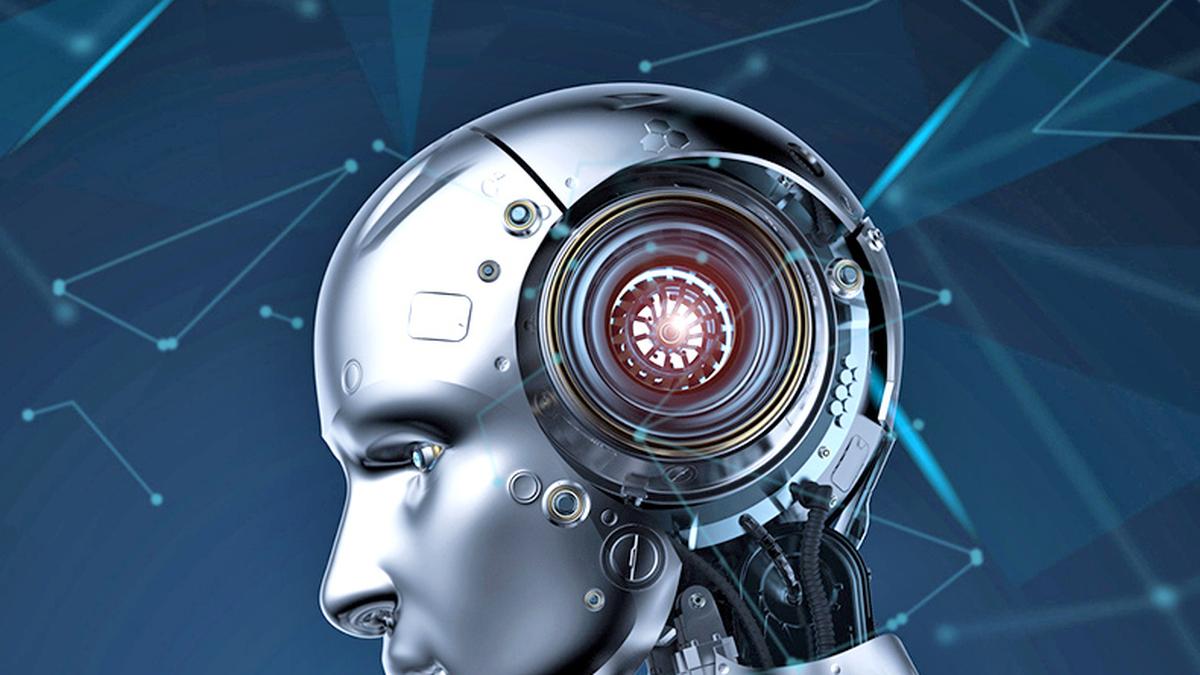
Reviving the Modi script

Reviving the Modi script


Few outside Maharashtra may have heard of the Modi script, which was used in administrative and legal documents between the 13th and early-20th centuries. About 40 million handwritten documents are scattered across places, including government archives, the Institute of Oriental Studies, and the Bharat Itihas Sansodhan Mandal, Pune.

On first glance, the writings in them appear to be gibberish. But who knows what knowledge resides within them?

Three researchers from the College of Engineering, Pune — Harshal Kausadikar, Tanvi Kale and Onkar Susladkar — and one from IIT-Roorkee — Sparsh Mittal — decided to find a way to decipher them. They built a computer program, which they call MoScNet, a novel vision-language model (VLM) framework for transliterating Modi script images into Devanagari text. “MoScNet leverages ‘knowledge distillation’, where a ‘student model’ learns from a ‘teacher model’ to enhance transliteration performance,” the authors say in their yet-to-be-peer-reviewed paper.

With this, the researchers have built a collection of 2,043 images of Modi script documents with their transliterations in Devanagari. “Our work is the first to perform direct transliteration from the handwritten Modi script to the Devanagari script,” their paper says.

This was not easy because the Modi script changed six times during its lifetime. There is an era-wise classification of the script, such as Aadyakalin, Shivakalin, and so on. Further, the script’s cursive nature, differing writing styles, and issues like angular strokes, broken lines and blurring make the task of deciphering them even more difficult. However, it would be interesting to learn what the documents say because the texts deal with medieval sciences, medicine, land records and Indian history. Now, we have a tool to bring to life the 40 million documents that speak to us from the distant past.


Source link

Game theory and the China-India water conflict

Game theory and the China-India water conflict


Over the past two decades, China and India have engaged in a cycle of limited cooperation and recurring disputes over the management of the Brahmaputra river. The paper ‘Game theoretical analysis of China-India interactions in the Brahmaputra river basin’ by Anamika Barua, Tanushree Baruah and Sumit Vij reveals a pattern of strategic calculations, whereby trust deficits and unilateral actions have maintained a fragile status quo rather than fostering cooperation.

Game theory, a mathematical framework used to analyse strategic interactions, helps explain why China and India have struggled to move beyond minimal cooperation.

Prisoner’s dilemma

The first step towards cooperation was taken in 2002, when both countries signed an MoU on hydrological data sharing. This agreement was triggered after the bursting of glacial lakes in Tibet led to flash floods in India’s northeastern states in 2000. India accused China of failing to provide advance warning and, in response, China agreed to share water level, discharge and rainfall data from three hydrological stations in Tibet.

In game theory, this agreement fits the ‘prisoner’s dilemma’ model, where both players could have benefited from sustained cooperation but had strong incentives to prioritise unilateral advantages. China, as the upstream country, had a dominant strategic position while India, as the downstream country, was vulnerable to flood risks and water flow variations.

In 2006, an expert-level mechanism (ELM) was introduced as a platform to facilitate discussions. This created an institutional setting for repeated games, where interactions between the two nations could build trust over time. However, for this approach to succeed, both players needed to perceive benefits from cooperation.

Shifting payoffs

When the MoU was renewed in 2008, China wanted India to start paying for the data, signalling that China was leveraging its upstream position to extract economic benefits. India had little choice but to accept the new terms.

By 2013, more concerns emerged. While China extended the data-sharing period, India questioned the relevance of the data since all three monitoring stations were in a rain-shadow region of Tibet, limiting their usefulness in flood forecasting. Also, border tensions escalated, particularly during the 2013 Depsang standoff, which further eroded trust between the two countries.

Game theory explains this phase as a shift from cooperation to a mixed-strategy equilibrium, where both nations engaged in partial cooperation while simultaneously hedging against each other’s actions in other strategic areas. The lack of trust and unresolved border disputes meant neither side was willing to expand cooperation beyond technical data-sharing agreements.

Defection

During the 73-day Doklam standoff in 2017, China suspended the sharing of hydrological data with India, citing “technical issues” at its monitoring stations, while continuing to provide data to Bangladesh. This fits into the tit-for-tat strategy in game theory, where one player retaliates against another’s defection with a countermove.

The temporary defection from the cooperative framework resulted in a reset of the game, restoring the power asymmetry that existed before 2002.

Chicken game

Following the 2020 Galwan Valley clash, China and India both adopted more aggressive policies regarding the Brahmaputra. In 2021, China announced plans to construct a massive 60 GW dam at the Great Bend of the Brahmaputra, which could potentially alter water flow to India. In response, India accelerated its own dam-building initiatives in Arunachal Pradesh.

This phase of interaction aligns with the ‘chicken game’ model, where both players escalate their actions, expecting the other to back down. If neither yields, the worst outcome — a major environmental or geopolitical crisis — becomes increasingly likely. The risk of uncoordinated dam-building in a seismically active region is high, with potential consequences for flooding, water shortages and long-term ecological damage. Yet, neither country is willing to compromise.

Breaking deadlock

The expiry of the MoU in June 2023 left the future of China-India water cooperation uncertain. The game remains locked in a status quo equilibrium, where both nations maintain minimal cooperation but refuse to venture beyond past agreements. Without a fundamental shift in incentives, the Brahmaputra will continue to be managed through unilateral decisions rather than cooperative strategies.

Game theory suggests that breaking this deadlock would require a new equilibrium shift. Possible ways include establishing a binding river treaty that moves beyond data-sharing to include mechanisms for joint water management; using issue linkage, where cooperation on water is tied to economic or trade agreements to create mutual incentives; and implementing confidence-building measures, such as joint hydrological monitoring stations, to increase transparency.


Source link

YouTube
Instagram
WhatsApp