Nuclear scientist, R Chidambaram passes away at 88 

Nuclear scientist, R Chidambaram passes away at 88 


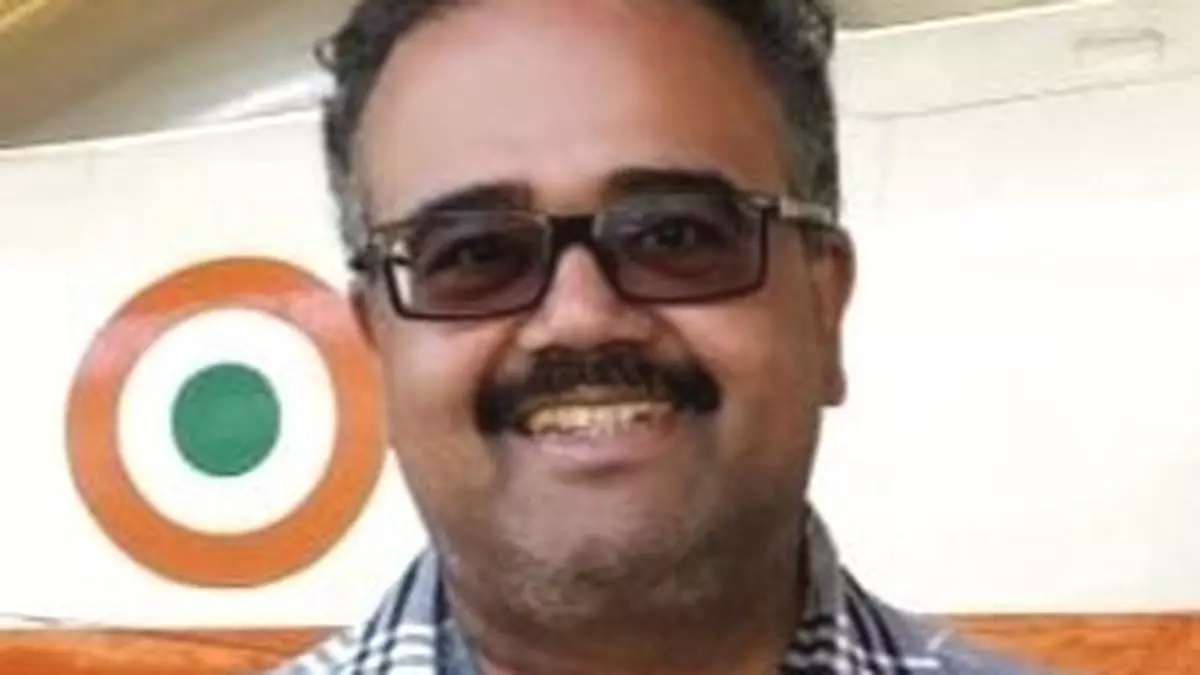
Dr Rajagopala Chidambaram, who was the Chairman of the Atomic Energy Commission and the Principal Scientific Adviser to the Government of India, when India did the crucial Pokhran-II nuclear tests, passed away today. He was 88. 

Born in Chennai in 1936 to C Rajagopal Aiyar, a Controller of Defence Accounts and Ananthalakshmi, Chidambaram became a first ranker in Madras University, passing B.Sc (Honours). He later joined the Indian Institute of Science, Bengaluru, in 1956, picked up his masters in one year and PhD in 1961. After that, Chidambaram recalls in his memoirs, “Many of my friends went to the US for post doctoral studies. I was however not interested in going abroad. Instead, I joined Bhabha Atomic Research Centre in 1962.” That is how India got one of its brightest nuclear scientists. 

Though Chidambaram’s name is usually associated with Pokhran-II (India’s second nuclear tests, in May 1998), he did play a big role in the 1974 Pokhran-I – for which he was recognized with Padma Shri award in 1975. 

After Pokhran-II, as the Principal Scientific Adviser to Government of India – a post he held for 17 years – Chidambaram was involved in managing the fallout of the tests, which had created global consternation. 

“It can be concluded that the May 1988 tests were fully successful in terms of achieving their scientific objects,” Chidambaram wrote in his memoirs, giving a point-by-point response to doubts raised by Dr P K Iyengar, a former Chairman of Atomic Energy Commission and a few others. 

“Shook the world” 

After Pokhran-II, in the same year 1998, Chidambaram chanced to meet Bill Richardson, the Energy Secretary of the US. At the introduction, Richardson, a tall man, held Chidambaram by his shoulders and gave it a friendly shake, saying, “Oh, you are Dr Chidambaram, who shook the whole world?” Chidambaram replied, “Now you are the one who is shaking me who shook the whole world.” Both had a laugh and the ice was broken. 

Chidambaram was also instrumental in the installation of the bust of Dr Homi Bhabha outside the boardroom in IAEA headquarter in Vienna, says Dr K Raghuraman, a former BARC scientist. 

Chidambaram’s scientist-nephew, Dr S Kailas, who has written an essay in Chidambaram’s memoirs, says in it that Chidambaram “is a spiritual person and a follower Kanchi and Shakatapuram Acharyas” and a “strong supporter of bharatnatyam and carnatic music. 


Source link

SwetchaSAT takes flight, piggybacks on ISRO’s POEM-4

SwetchaSAT takes flight, piggybacks on ISRO’s POEM-4


Divya Kothamasu and Raghuram Kothamasu, Co-Founders of the Hyderabad-based space tech startup N Space Tech, waited with bated breath as ISRO’s PSLV-C60 lifted off from the SHAR centre at Sriharikota on Monday night to launch the Space Gocking Experiment (SpaDeX). 

For them, the mission’s success marks a new ambitious journey as it is among the 24 payloads that the rocket is carrying would mean beginning a new journey in providing a faster and reliable communication for various applications on the ground.

The four-year-old startup has sent its maiden payload, SwetchaSAT-V0, to test an indigenously developed ultra-high frequency (UHF) communication, paving the way for faster, more reliable communication for various applications, including mobile and internet connectivity in remote areas.

The payload would use the advanced PSLV Orbital Experimental Module (POEM-4) platform to test the communication capabilities. Developed completely in-house, the payload’s communication, power, and payload subsystems reflect a strong focus on indigenous innovation and engineering. 

“This is the first in a series of such missions in the future. The upcoming series will include more advanced communication modules and ground station technologies. These payloads aim to enhance communication capabilities across broader frequency ranges,” she said.

“This mission is a step toward creating solutions that strengthen industries and foster connectivity worldwide,” she said.


Source link

India takes first step towards own space station, sample return from Moon 

India takes first step towards own space station, sample return from Moon 


India will today take its first step towards two of its major space ambitions—having its own space station by 2035—the Bharatiya Antariksh Station—and picking up samples from the Moon and returning to Earth. 

For both, one needs to master ‘space docking’–which is what the SpaDeX Mission of the Indian space agency, ISRO, is about to launch today.  

Two bodies traveling in space at unimaginably high speeds (about 7.5 km a second) meeting and locking with each other is not an easy feat.  

As in many aspects of space faring, India is a late comer in docking, but still, it will be only the fifth in the world to do so. 

For sure other countries have done it decades ago. The first was achieved back in March 1966, by none other than the first man on the moon, Neil Armstrong, who, along with David Scott successfully docked the Gemini 8 spacecraft with an uncrewed ‘target vehicle’ called Agena. Without docking, moon landing would not have been possible, because the astronauts would need to join back the mother spacecraft in orbit. 

That, therefore, was manned docking, which was technically easier but riskier to human life. Subsequently, the US, Russia, China and Europe have achieved the more challenging unmanned docking. China docked an uncrewed spacecraft Shenzhou-8 with its space station, Tiangong-1, in November 2011; it did it with a manned spacecraft in June of the following year. 

Docking is an extremely demanding exercise, calling for precision alignment and control. These are done by a bunch of sensors (laser range finder, reflectors and ‘rendezvous sensors’) and navigation devices. Both the laser range finder and the rendezvous sensor independently tell the relative positions, but the former also determines the velocity, according to information provided by ISRO. Also, the target and the chaser are “androgynous”, which means either can act as the target or the chaser. 

After docking, they will also undock and the spacecrafts will go their own ways and provide useful services—surveillance, imaging and radiation measurement. 

The SpaDeX spacecraft were designed and realized by the UR Rao Satellite Centre (URSC) with the support of other ISRO centers (VSSC, LPSC, SAC, IISU, and LEOS), says ISRO. The full integration and testing of the satellite were carried out at M/s Ananth Technologies, Bangalore, under the supervision of URSC. It might be remembered that Ananth Technologies was recently named as the beneficiary of an ‘announcement of opportunity’ by the space regulator, INSPACe, which would make the company the first private Indian satellite operator to provide geostationary orbit communication satellite services to the country. 


Source link

Magnesium: Casting coup

Magnesium: Casting coup


Magnesium, a strong, lightweight metal, could be ideal for making cars and aircraft — except that it is difficult to make anything with the metal. 

This has to do with the arrangement of atoms in it. As such, it has long engaged the attention of researchers in the area of metal forming (casting, forging and sheet-making).

Due to technical reasons, such as formation of dendrites, the traditional method of magnesium casting results in cast materials of doubtful strength.

Now, a group of researchers at IIT-Madras, led by Prof Sushanta Kumar Panigrahi, head of the manufacturing engineering section at the Department of Mechanical Engineering, have developed an innovative casting process for magnesium. 

Their ‘strain integrated gas infusion’ (SIGI) process improves the quality of magnesium alloy casting by refining its internal structure. 

The process involves using horizontal and vertical agitators in the metal pool; the agitators have holes through which argon gas is infused. 

While the agitation prevents the formation of undesirable dendrites, the gas helps in heat removal.

The alloys are “stronger and resistant to wear and corrosion. The billets cast by SIGI process can be used as a high-quality precursor for downstream processes to create industrial components”, says a scientific paper on this subject. 

The process results in a more ‘homogenous’ metal that is more durable. Also, it reduces both production time and manufacturing cost, Panigrahi says.

Tool to detect H pylori

Researchers have developed a cost-effective diagnostic tool using the CRISPR-based FELUDA system to detect Helicobacter pylori infections and associated antibiotic resistance mutations in dyspeptic patients in rural India, where access to diagnostic laboratories is limited.

H pylori infects over 43 per cent of the global population, causing conditions such as peptic ulcers, gastritis, and even gastric cancer. Resistance to clarithromycin, a key antibiotic for treating H pylori, arises from specific mutations in its 23S rRNA gene, complicating eradication efforts and requiring repeated treatments.

A team led by Dr Shraddha Chakraborty at IIT-Delhi and CSIR-IGIB developed a CRISPR-based diagnostic method using an engineered protein with enhanced mutation detection capabilities. This system identifies H pylori and its clarithromycin-resistance mutations in gastric biopsy samples through a lateral flow assay for visual results.


Source link

A city wakes up to a new era

A city wakes up to a new era


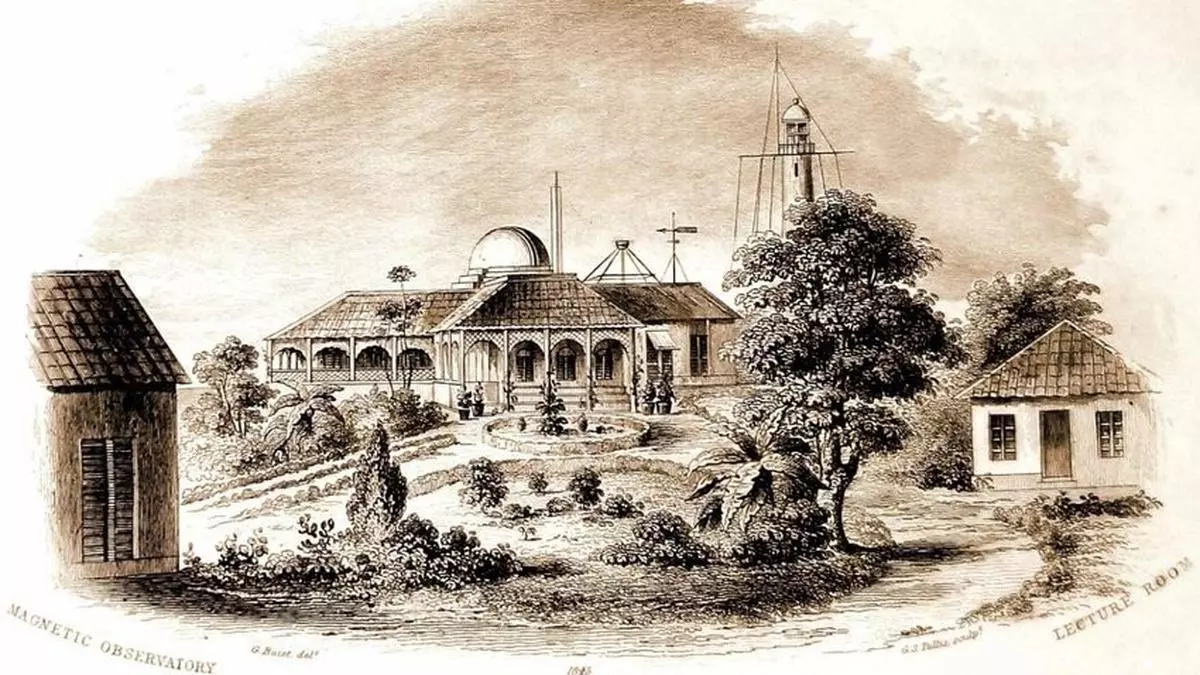
If you want to ‘see’ a long-lost city lying buried deep underground, but without digging, what do you do? You turn to a magnetometer, a device that senses variations in the earth’s magnetic field caused by the differences in the magnetic properties of material lying underground.

A magnetometer has revealed an unfinished city in Iraq. Around 700 BC, neo-Assyrian emperor Sargon II began constructing a new capital, Dur-Sharrukin (now Khorsabad), in present-day Iraq. It was long thought to have been abandoned early, but new findings challenge this assumption. 

For 2,500 years, Khorsabad was largely forgotten until it was rediscovered in the 1800s. French archaeologists unearthed treasures in the palace but found little evidence of other structures within the city’s one-mile-square walls. Recent surveys by the French Archaeological Mission and Ludwig-Maximilian University aimed to reassess the site following its occupation by the Islamic State, mapping 7 per cent of the area with high-resolution magnetometers. 

The team avoided drawing attention by hand-carrying the equipment. Over seven days the survey revealed hidden structures up to 10 ft underground, including a water gate, potential palace gardens, and a massive 127-room villa double the size of the White House.


Source link

‘Folded paper’ turns agricultural tool

‘Folded paper’ turns agricultural tool


A recent government press release said that the National Institute of Biotic Stress Management has distributed ‘foldscopes’ — portable microscopes — to farmers in nearly 20 districts of Chhattisgarh. It described the foldscope as “the new tool that is empowering communities” and “helping agricultural livelihoods”.

Foldscopes aid in pest and disease detection, soil quality assessment and water analysis. It helps in in-situ diagnosis and digital cataloguing of plant-pathogenic fungi through foldscope microscopy. 

In Chhattisgarh, it is used to identify diseases such as powdery mildew, leaf blight, leaf spot and post-harvest diseases. As many as 16 fungal diseases and their causal organisms were identified based on the morphological structure of the pathogens and host species such as Golovinomyces cichoracearum and Erysiphe polygoni. Furthermore, five biopesticides and two bioagents were also tested, the release said. 

“Foldscope microscopy was also used for assessing semen quality in straws for cattle artificial insemination (AI). This could be a pioneering application with significant potential to enhance conception rates and improve the grading of indigenous cattle breeds,” the release said. 

The foldscope was developed about 10 years ago by Manu Prakash, an Indian-American bioengineer and professor at Stanford University, and his team as part of an effort to make scientific tools more affordable and accessible. 

It is said that Prakash once visited a farm and noticed the lack of equipment for scientific farming. This spurred him to work towards bringing frugal engineering to farmland testing equipment. The result was the foldscope, a tool that could perform basic scientific tasks while being portable, durable, and affordable. The foldscope was introduced in 2014 and has since been used globally for education, diagnostics, and research, particularly in resource-constrained settings.


Source link

YouTube
Instagram
WhatsApp