Building India’s home-grown quantum internet network

Building India’s home-grown quantum internet network


In a modest room at IIT-Madras, the embryo of a (literally) ‘far-reaching’ technology has just got its first heartbeats. On December 24, a Section 8 (not-for-profit) company, styled ‘IITM CDoT Samgnya Technologies Foundation’, received a formal approval from the Ministry of Corporate Affairs.

The company is building India’s home-grown quantum internet with local access, or QuILA. A 550 km fibre optic cable between Chennai and Bengaluru, and another 2,200 km cable between Bengaluru and Delhi will form the backbone of a network that will carry tamper-proof quantum signals. 

The team at the newly formed company is drawing up a detailed project report to secure funds from the ₹6,003-crore National Quantum Mission; but work on the project is furiously underway. 

Looking at the tiny components strewn on the table, you would scarcely guess what they are meant to become. What you see resembles just a printed circuit-board with wires sticking from it — far from the big, buzzing machines one may have expected. Incredible as it may seem, this is the testbed for India’s quantum internet, developed by the Centre for Quantum Information, Communications and Computing (CQuICC), which is one of the four ‘hubs’ under the mission. Each hub has a specific mandate — the one in IIT-Madras is for ‘quantum communications’. 

Indigenised nodes

CQuICC has already developed a quantum line, with ‘Alice’ (the sender point) and ‘Bob’ (receiver) five km apart, between IIT-M and the National Informatics Centre (NIC), via IIT-Madras Research Park and the Society for Electronics Transactions Security (SETS). That, of course, is for starters. The Alice and Bob nodes are imported and cost ₹2 crore each; the task before the centre is to indigenise them and make them available for a tenth of the imported cost, apart from averting the national security worries that imported components can potentially pose, says Pradeep Thangappan, industry liaison for CQuICC. This network, meant to test and develop scheduling and routing protocols, is part of the ‘Metro Access Quantum Area Network’ (MAQAN) project. Thangappan points to a unique feature — the existing optic fibre network will be used for quantum communications and the internet. Between Chennai and Delhi, there will be over 500 nodes (where information is either generated, processed, transmitted or received).

India aims to build MAQAN networks in Chennai, Bengaluru, Hyderabad and Delhi. These networks connect to QuILA, allowing people to use the internet. (It must be noted that, to an internet user, quantum technology is invisible — what you do sitting at your computer will not change, but a quantum internet will be superior in terms of security, speed and reliability.)

Once the MAQANs and QuILA are set up, expected within a few years, India will have its own quantum internet. For that, CQuICC is working towards standardising communication equipment as well as developing protocols for ‘entanglement sharing’ (distribution of entangled photons across the network) and quantum key distribution (to secure against hacking and eavesdropping), says Prof Anil Prabhakar, Principal Investigator, CQuICC. 

Plugging into IBM hub

Prabhakar notes that CQuICC is also working to make IIT-Madras an ‘IBM quantum hub’ — namely a research network established by IBM. Membership in the IBM Q network means that, through CQuICC, universities, companies, governments, and startups will get access to IBM’s hardware, such as a 53-qubit quantum processor, and an opportunity to collaborate with global peers. 

Divided opinion

Apart from IIT-Madras, the other hubs under the mission are IISc, Bengaluru, for quantum computing, IIT-Bombay for quantum sensing and metrology, and IIT-Delhi for quantum materials and devices. 

Quantum technology is set to revolutionise sensing (a big help in medical diagnosis) and communications, but opinion is divided over the relevance of ‘quantum computers’. Experts (who declined to be named) caution against the “hype” around quantum computing. The mission aims “to develop intermediate-scale quantum computers with 20-50 physical qubits (three years), 50-100 physical qubits (five years) and 50-1,000 physical qubits (eight years) in various platforms like superconducting and photonic technology”.

It is moot whether even a 1,000-qubit quantum computer is a better performer than today’s conventional exascale computers. For example, the exascale computer Frontier, at the Oak Ridge National Laboratory, USA, can perform a billion billion (1 followed by 18 zeroes) floating point operations per second. For some specific tasks, quantum computers are better but, generally, conventional exascale or even peta-scale supercomputers are far more practical than quantum computers, which are error-prone. A growing body of opinion holds that error-free, million-qubit quantum computers may be developed some day in the future, but for now most quantum computers are only toys.


Source link

Nanoplastics: A new source of worry in the battle against antimicrobial resistance

Nanoplastics: A new source of worry in the battle against antimicrobial resistance


Antibiotic resistance (aka antimicrobial resistance) is a global menace, and India is among the worst hit countries. 

According to a July 2024 Lancet article, the AR burden in India is “particularly high”. “The growing resistance to existing antibiotics amidst the shrinking pipeline of newer drugs is a serious threat to attaining the SDG [UN sustainable development goals] target by 2030,” it said.

Now, a study by the Institute of Nano Science and Technology, Mohali, has brought to light a hitherto unknown cause of AR: nanoplastics. 

Nanoplastics, derived from single-use plastic bottles, contribute to the spread of AR, the study has found, underscoring an unrecognised public health risk. 

The joint threat of plastic pollution and antibiotic resistance is a growing concern. Nanoplastics and microorganisms coexist in diverse environments, including the human gut. 

This problem led INST scientists to trace how plastic nanoparticles could impact bacteria. 

Recognising the central role of Lactobacillus acidophilus in the gut microbiota, Dr Manish Singh and his team investigated whether nanoplastics could transform beneficial bacteria into carriers of AR genes and pose a risk to human gut microbiome health. 

They synthesised nanoplastic particles from used plastic water bottles as they better represent the actual pollutant nanoplastics resulting from discarded single-use plastic bottles and containers. 

The scientists demonstrated that nanoplastics derived from polyethylene terephthalate (PET) bottles can facilitate the cross-species gene transfer from E coli to Lactobacillus acidophilus through a process called horizontal gene transfer (HGT), particularly through outer membrane vesicle (OMV) secretion in bacteria. 

Gene transfer mechanism

According to the researchers, there are two novel mechanisms through which nanoplastics derived from PET bottles facilitate AR gene transfer. 

The first is through a direct transformation pathway, where the nanoplastics act as physical carriers, transporting AR plasmids across bacterial membranes and promoting direct gene transfer between bacteria. 

The second is through the OMV-induced transfer pathway, where the nanoplastics induce oxidative stress and damage to bacterial surfaces, which activates the stress response genes and triggers an increase in OMV secretion.

The OMV, loaded with AR genes, becomes a potent vector for gene transfer across bacterial species, thus facilitating the spread of AR genes even among unrelated bacteria. 

“This reveals an important and previously overlooked dimension of nanoplastics’ effects on microbial communities,” the release says. 

The study, published in the journal Nanoscale, highlights how nanoplastics may unexpectedly contribute to the AR crisis by introducing AR genes to beneficial gut bacteria like Lactobacillus acidophilus, which could act as reservoirs for AR genes, potentially transferring them to pathogenic bacteria during the course of infections.

Protecting beneficial gut bacteria is crucial for immune support, digestion, and disease prevention. 

Limiting nanoplastic contamination could help preserve gut microbiota integrity, minimising the chances of AR gene transfer from beneficial to pathogenic bacteria and supporting microbiome resilience. 

With increasing plastic pollution, this finding highlights the need for strict safety guidelines, awareness programmes, as well as policies that prioritise responsible usage of plastics and waste management to safeguard human health and microbiome stability.


Source link

TDB-DST supports Agnikul Cosmos to develop and commercialise Agnibaan

TDB-DST supports Agnikul Cosmos to develop and commercialise Agnibaan


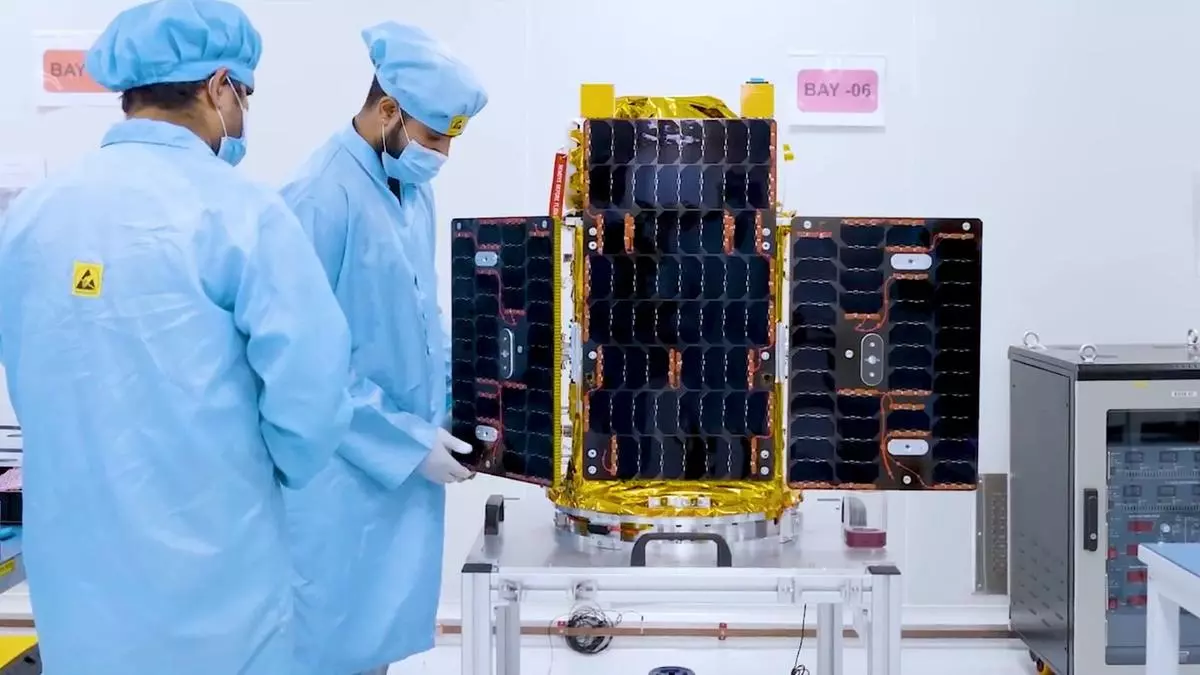
Union Ministry of Science & Technology on Tuesday announced support to the Chennai-based Agnikul Cosmos Chennai to develop and commercialise Agnibaan, a customisable two-stage launch vehicle capable of delivering payloads of upto 300 kg to orbits at 700 km altitude.

This initiative was supported by the Technology Development Board (TDB), a statutory body under the Department of Science & Technology (DST), says a release.

TDB has sanctioned financial assistance for the “Development and Commercialisation of Modular Configurable Launch Vehicle for 100 Kg Payload.” The project aims to make satellite launches more accessible, efficient, and affordable.

Agnikul Cosmos, incubated at IIT-Madras, achieved a milestone with the maiden launch of Agnibaan SOrTeD, the world’s first flight using a single-piece 3D-printed rocket engine, in May.

Agnibaan offers dedicated, scalable launches for payloads ranging from 30 to 300 kg; reduced lead times for satellite launches to just two weeks; operational flexibility with mobile launch systems deployable globally and customizable space missions for small satellites, eliminating inefficiencies of traditional rideshare models.

It also incorporates several indigenous technological advancements like India’s first single-piece 3D-printed rocket engine and other critical components; mobile launch platforms capable of enabling launches from any location globally and development of all major subsystems, including engines, mission control systems, and launchpad infrastructure, the release said.

Rajesh Kumar Pathak, Secretary, TDB, said Agnikul Cosmos, supported by TDB, embodies this success, showcasing India’s indigenous talent and the spirit of Atmanirbhar Bharat while setting new benchmarks in space technology commercialisation.”

Srinath Ravichandran and Syed Peer Mohamed Shah Khadri, Founders of Agnikul Cosmos said, “We started as a start-up at IIT Madras in a DST supported lab (NCCRD). Now, after having built some new technology, this financial assistance coming in through TDB is a strong sign of encouragement and support for all of us in the team to build world class space technology hardware from India.”


Source link

Subabul seeds and insulin resistance management

Subabul seeds and insulin resistance management


Researchers have identified the therapeutic potential of seed pods from the traditional medicinal plant Subabul in managing insulin resistance related to type II diabetes and developed a marker-assisted fraction and four active compounds from it. 

Subabul or Leucaena leucocephala is a fast-growing leguminous tree commonly found in tropical and subtropical regions. The leaves and immature seeds are eaten raw or cooked in the form of soup or salad, providing a rich source of protein and fibre. Several ethnic communities consume it and also use it as animal feed. 

Researchers at the Institute of Advanced Study in Science and Technology, Guwahati, investigated the therapeutic potential of the seed pods of medicinal plant subabul in managing insulin resistance related to type II diabetes. 

A team consisting of Abhipsha Saikia, Pranamika Sarma and Prof Jagat C Borah developed a bio-activity guided fraction and four active compounds after screening all the fractions for their bio-activity.

Fermented bamboo for weight management

Extract from a traditional fermented bamboo shoot variety of Tripura, popularly called ‘melye-amiley’, has anti-obesity effects, offering a solution to weight management and metabolic health, according to a new study. It reduces lipid accumulation and increases fatty acid beta-oxidation. 

The techniques of fermentation are as old as human civilisation and have been passed down through generations, and mainly used to preserve food, and enhance nutritional quality, taste and flavour. Based on the environment, availability of food materials and the traditional knowledge of the community, the techniques and products vary. 

A study — led by Prof Mojibur R Khan from the Institute of Advanced Study in Science and Technology, Guwahati — looked into the anti-obesity effects of different varieties of traditional fermented bamboo shoots of the northeastern region. 

Based on in-vitro cell culture studies, the team observed that the traditional fermented bamboo shoot variety ‘melye-amiley’ can reduce intracellular lipid accumulation.

Fire-resilient flowering species

A new fire-resilient, dual-blooming species — which experiences a burst of flowering triggered by grassland fires and has an inflorescence structure that is rare among Indian species — has been discovered in the biodiversity hotspot Western Ghats. 

Over the past few decades, scientists at the Agharkar Research Institute, Pune, have been studying the region’s rich biodiversity. 

A recent discovery by a team led by Dr Mandar Datar, which included Talegaon-Dabhade based botanist Adittya Dharap and PhD student Bhushan Shigwan, has added a new species — Dicliptera polymorpha

The name of the species is meant to reflect its diverse morphological traits, including fire-resilient, pyrophytic habit and an unusual dual-blooming pattern. In addition to its typical post-monsoon flowering, the species exhibits a second, vigorous burst of flowering triggered by the grassland fires that are commonly ignited by locals. 

This species is taxonomically unique, with inflorescence units (cymules) that develop into spicate inflorescences. It is the only known Indian species with this spicate inflorescence structure.


Source link

The writing on the prison wall

The writing on the prison wall


In 1561, the police caught Hew Draper for his “heinous crime” — practising sorcery. In jail, the Briston innkeeper could not contain his zest for his art. He engraved on the prison wall an astrological sphere with all the zodiac signs. 

Draper’s work, etched in stone, was comprehensible enough. But the jail has held hundreds of prisoners, many of whom have similarly recorded their thoughts and feelings on the cold walls. 

What did they want to convey? 

Raising the intrigue is the fact that the jail is part of the iconic Tower of London, an awe-inspiring superstructure that was built in 1066 by William the Conqueror. 

The scribblings on the wall have always been a mystery. Most of them were declared illegible. But researchers are carrying on regardless, using modern techniques. By using raking light (light shone at an angle), laser scanning and X-ray, researcher Jamie Ingram was able to pick up words here and there. 

When Ingram started off, he was told there would be 79 graffities; he found 354. 

The researchers are piecing together information to try and make sense of them. Some of the scribblings are religious, at least one refers to a ‘husband’. 

It would be interesting to find out if Lady Jane Grey had anything to say. Grey was Queen of England before she was executed at the age of 16, in 1554. Her rule lasted all of nine days, earning her the epithet ‘the nine-day queen’.


Source link

India warms up for a quantum jump

India warms up for a quantum jump


The world is probably still coming to terms with the latest, most mind-boggling development in the quantum world — Google’s Willow chip, a quantum processor that paves way for ‘large-scale’ quantum computers. Hartmut Neven, founder and lead, Google Quantum AI, says Willow has been shown to perform in five minutes computing that the fastest classical computer will take ‘1 followed by 25 zeros’ number of years. 

That’s a head-spinner. 

Where is India in quantum computing? Well, certainly considerably behind the leaders. 

Qubit power 

Today, India has a small-scale quantum computer at the Tata Institute of Fundamental Research (TIFR), which is a 7-qubit machine. 

Qubits are the information holders in a quantum computer, just like transistors in a classical computer. In a classical computer, the ‘off’ and ‘on’ states of the transistors represent 0 and 1; any information is encoded in terms of 0s and 1s. 

There are many types of qubits — energy levels of atoms, spin of a particle, polarisation of a photon, and superconducting circuits. Qubits can exist in more than one state (superposition) and can be ‘entangled’ so that the state of one qubit affects the state of another — a useful property. 

A 7-qubit quantum computer is a good start. A Bengaluru-based startup, QPiAI is developing a 25–qubit quantum computer, which is also small-scale. 

Under the National Quantum Mission, India aims to develop intermediate-scale quantum computers of 50-1,000 qubits — still in the category of ‘noisy’, less powerful and more error-prone. 

Thus, in terms of quantum computing, India is somewhat behind the US and China, which have intermediate-scale quantum computers, but not far behind the European Union, Japan and Australia. 

Startup momentum

Computing is only one of the many applications of quantum technology; others include communication and sensing. 

You can apply quantum technology in cryptography to transmit data safely. You can make medical devices that are more accurate. In these areas, an ecosystem is rapidly evolving in India. 

Recently, the government picked eight ‘pioneering startups’ in quantum computing for grants under the National Quantum Mission, from among 108 applications. The rest may be considered during the subsequent rounds of assessments. That there are more than 100 startups already in this field indicates the vibrancy of the emerging quantum ecosystem in India. Many of them started off without expectation of support from the mission. 

The mission, conceived four years ago, was slow to get off the ground. However, it gathered momentum on August 19, 2023, when the Cabinet approved and fertilised it with a budget of ₹6,003 crore for 2023-24 to 2030-31. In January this year, the mission governing board was set up. 

In its first meeting, it decided to issue a ‘request for proposal’ (RFP) to set up four thematic hubs, and these were finalised a few months ago. The hubs have come up at the Indian Institute of Science, Bengaluru for quantum computing; IIT-Madras for quantum communications, IIT-Bombay for quantum sensing and metrology; and IIT-Delhi for quantum materials and devices. 

There is also the Quantum Technology Foundation (QTF) at IISER-Pune, under the National Mission on Interdisciplinary Cyber-Physical Systems. These hubs support about 80 institutional ‘spokes’ across the country. Entrepreneurship development is one of the major mandates of the hubs. The mission is now working with the All-India Council for Technical Education (AICTE), the regulator for technical colleges, to launch BTech and MSc programmes in quantum technology. 

Funding support

With financial support from the mission and other help from the hubs, the startups are expected to blossom. Typically, government cash handouts range from a few tens of lakhs to low-crore rupees, but it is different under the NQM. “We have created a generous scheme where selected startups could get up to ₹25 crore,” says Dr Ajai Chowdhry, Chairman of NQM’s mission governing board. 

Bengaluru-based QNu Labs will receive ₹25 crore. Sunil Gupta, co-founder and CEO of QNu Labs, says the investment “has come at the right time and will accelerate our journey of becoming a global leader in quantum communication”. 

The startup intends “to build and deploy the world’s first end-to-end quantum network encompassing data security technologies”. 

Its three products — quantum key distribution, random number generator, and cryptography — have many overseas customers. In March 2024, it opened an office in the US to service the American market. 

Quanastra, another recipient of investments, makes superconducting nanowire single-photon detectors. IIT Delhi-incubated PrenishQ makes ultrahigh-vacuum chambers and narrow line-width lasers for quantum computers. Pristine Diamonds of Ahmedabad is making diamond materials for quantum sensors for accurate measurements of magnetic and electrical fields, temperature, pressure and time. This finds use in medical imaging, navigation, material science and environment monitoring. 

In a recent speech, Science Minister Jitendra Singh said India is “determined to lead this global revolution”. 

You may either agree with the minister or call his statement hyperbole. But there is enough evidence to conclude that India is not a laggard in quantum technology.


Source link

YouTube
Instagram
WhatsApp