Shapeshifting, misfit materials that power up tech advancement

Shapeshifting, misfit materials that power up tech advancement


Two breakthroughs in material science, both related to manipulating the arrangement of atoms in a material, were reported recently. 

The first is the discovery of a new way of changing the phase of a material, from crystalline to amorphous, using an electrical pulse, which has the potential to revolutionise data storage in gadgets, mainly computer RAM. This new method consumes “a billion times less electricity” than the traditional melt-quench process, according to a paper published in Nature by researchers of IISc-Bengaluru, University of Pennsylvania School of Engineering and Applied Science, and Massachusetts Institute of Technology (MIT). 

Electronic storage devices use a type of glass called chalcogenide, which can change its phase from crystalline to amorphous (and back, when needed). In a solid, the atoms are in an ordered state. In an amorphous phase, the atoms are disordered, as in a liquid, but frozen into solid state — sort of a ‘liquid in solid form’. These two phases of a material are used to attribute the values ‘0’ and ‘1’ for storing data. The phase change from crystalline to amorphous is achieved by highly localised application of laser pulses, which consumes a lot of electricity. The crystals must be heated beyond 800 degrees C and then rapidly cooled. If there is a way to convert crystal directly to glass without the intermediate liquid phase, then the power required for memory storage can be greatly reduced. 

A group of 12 researchers have demonstrated amorphisation of indium selenide using pulsed electric current. The localised electric pulse causes the weakly bonded layers of the material to slide over each other, like tectonic plates — and, like the plates, they too generate a shock wave, explains one of the researchers, Dr Pavan Nukala of the Centre for Nanoscience and Engineering, IISc, Bengaluru. The wave propagates through the material and causes amorphisation. 

This new process has immediate application in microelectronics, but is really a breakthrough in material science as it shows a new way of thinking about amorphisation, he tells Quantum

Desired misfit

The second discovery — by a team led by Prof Kanishka Biswas, New Chemistry Unit, Jawaharlal Nehru Centre for Advanced Scientific Research (JNCASR), Bengaluru — has led to the synthesis of a new material with high potential for conversion of waste heat into electricity. The group researched into ferecrystals, a class of ‘misfit layered compounds’ (MLC) — so called because their atomic layers are misaligned, like an uneven stack of cards. 

MLCs have an interesting property — they do not allow the smooth conduction of heat and thereby block heat transfers. This ultra-low thermal conductivity creates a heat gradient across the material. According to the ‘Seebeck effect’, discovered in 1821, wherever there is a heat gradient, the material can also generate electricity. 

The ferecrystal material shows a ‘thermoelectric figure of merit’ of 2.3, a high number that means the material can convert a lot of heat into electricity. 

“The material is already generating electricity in the lab. However, it needs to be scaled up for practical use,” Biswas says.


Source link

ChatGPT outage caused widespread disruptions to AI services worldwide, leading to user frustration.

ChatGPT outage caused widespread disruptions to AI services worldwide, leading to user frustration.


OpenAI experienced a major service disruption on Thursday, December 11, 2024, impacting ChatGPT, its API, and Sora platforms, causing widespread technical challenges for millions of users worldwide.

The outage began shortly before 7 PM Eastern Time (5.30 AM Indian Standard Time), rendering ChatGPT, API services, and Sora inaccessible. Users encountered login difficulties and error messages, with many unable to use the popular AI chatbot and related services.

OpenAI quickly acknowledged the technical issues on X (formerly Twitter), stating, “We’re experiencing an outage right now. We have identified the issue and are working to roll out a fix.” The company’s engineers confirmed API calls were returning errors and platform access was compromised.

Services were gradually restored, with full functionality returning around 8 AM IST. Both free and paid users were affected, triggering significant social media reaction. Downdetector, a service disruption monitoring platform, recorded a sharp increase in user complaints during the outage.

The incident highlighted the growing technological dependence on AI tools, particularly OpenAI’s services. Businesses relying on the API experienced operational challenges, while individual users expressed frustration through memes and social media posts.

This disruption followed another major tech service outage by Meta on Wednesday, which affected WhatsApp, Instagram, and Facebook platforms, compounding user frustration with technology services.

OpenAI has not provided a detailed explanation of the root cause of the outage. The company’s primary focus remained on restoring services and minimizing user inconvenience.

The back-to-back service disruptions underscore the critical nature of digital platforms in contemporary professional and personal communication ecosystems.

At press time, OpenAI confirmed services had returned to normal, with ongoing monitoring to prevent potential future incidents.


Source link

ISRO to launch PROBA-3 mission satellites from Sriharikota today

ISRO to launch PROBA-3 mission satellites from Sriharikota today


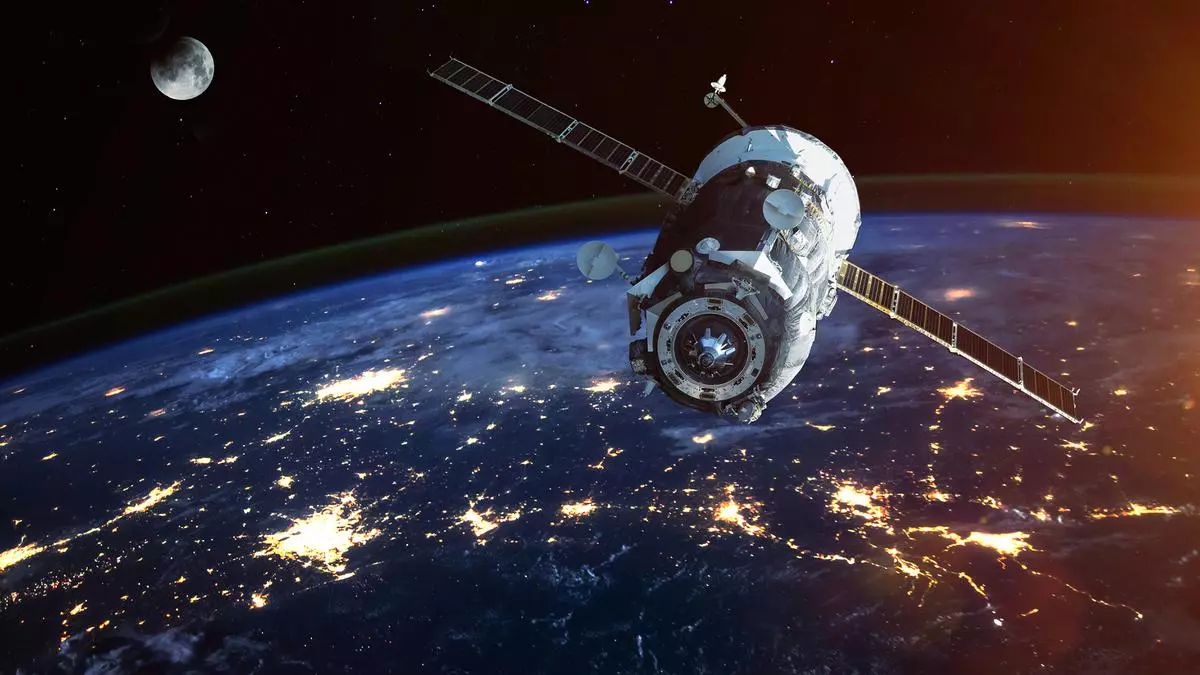
The Indian Space Research Organisation (Isro) is set to launch the Polar Satellite Launch Vehicle (PSLV)-C59 /Proba-3 mission from the Satish Dhawan Space Centre in Sriharikota, Andhra Pradesh on Wednesday.

The mission will entail the Polar Satellite Launch Vehicle (PSLV)-C59 carrying around satellites weighing approx. 550 kgs in a highly elliptical orbit.

The PROBA-3 mission is an “In-Orbit Demonstration (IOD) mission” by the European Space Agency (ESA).

Posting about the anticipated launch on X, the space organisation said, Liftoff Day is Here! PSLV-C59, showcasing the proven expertise of ISRO, is ready to deliver ESA’s PROBA-3 satellites into orbit.

This mission, powered by NSIL with ISRO’s engineering excellence, reflects the strength of international collaboration. A proud milestone in India’s space journey and a shining example of global partnerships.

Liftoff: 4th Dec 2024, 16:08 IST.

Location: SDSC-SHAR, Sriharikota.

The mission consists of 2 spacecrafts, namely Coronagraph Spacecraft (CSC) and the Occulter Spacecraft (OSC) which will be launched together in a “stacked configuration” (one on top of another).

PSLV is a launch vehicle which helps carry satellites other various other payloads to space, or according to ISRO’s requirements. This launch vehicle is India’s first vehicle to be equipped with liquid stages.

The first PSLV was launched successfully in October 1994. The PSLVC-59 will have four stages of launch, according to ISRO. The total mass which the launch vehicle will be lifting off is around 320 tonnes.

The Space organisation also highlighted how this launch mission also exemplifies the “trusted precision” of the PSLV and collaboration with other agencies.


Source link

Memories of another life: Making a case for research into reincarnation

Memories of another life: Making a case for research into reincarnation


The nebulous and fascinating concept of continuum of life beyond death has been, by and large, ignored by the scientific community. But not all scientists are reincarnation sceptics. A small group of inquiring researchers has kept the field alive, though barely — as a few recent studies illustrate.

These researchers are adherents of a school of thought that moved the concept of ‘life beyond death’ out of the sphere of religion and culture and into science, following the seminal investigative work done by Dr Ian Stevenson, a Canadian-American psychiatrist and Founder and Director of the Division of Perceptual Studies at the University of Virginia School of Medicine. 

Over three decades from the mid-1960s, Dr Stevenson investigated over 2,600 cases of previous birth memories, checking their claims against fraud or alternative explanations. Incidentally, Dr Satwant Pasricha, Head of the Department of Clinical Psychology at the National Institute of Mental Health and Neurosciences (NIMHANS), Bengaluru, collaborated with Dr Stevenson on this work. Dr Stevenson has authored a number of books, including the two-volume Reincarnation and Biology: A Contribution to the Etiology of Birthmarks and Birth Defects (priced ₹32,000). Whether Dr Stevenson proved reincarnation is a matter of opinion but there is little doubt that he established a case for further research. 

The case, however, has not been followed up with the same vigour as ‘mainstream’ science but from time to time, researchers have been coming up with their own investigations into emerging cases of previous birth recalls. Many of these studies have been published as research papers in the Explorejournal, which calls itself “an interdisciplinary journal that explores the healing arts, consciousness, spirituality, eco-environmental issues and basic science as all these fields relate to health”.

A Brazilian flashback

In one such recent paper, the Brazilian authors report the case of a child named Paulo, who showed remarkable resemblance in mannerisms with his mother’s uncle, Roberto, who had been shot dead 19 years previously. The child would mystifyingly scream in fear and cry if he happened to see a gunfire scene on TV; he once even called his mother ‘Côca’, a long-forgotten nickname given to her by Roberto. 

When Paulo was six, he told his mother that when he was at work, a robber came and fired four shots at him — exactly as happened to Roberto. 

The authors report that the child made 13 spontaneous statements that had something to do with his past life; nine were accurate. Paulo also showed eight behaviours that matched the habits and interests of Roberto. 

“This case’s characteristics fit cross-cultural patterns verified among a worldwide variety of past-life claims. The score of 19 points on the strength-of-case scale measurement is higher than the mean of 10.4 in a sample of 799 cases,” the authors say in the paper, which contains a table illustrating matches between Paulo and Roberto. 

This study, as well as another in Japan, follow the approach developed by Dr Stevenson. He details birthmarks or birth defects that correspond to wounds, usually fatal, on the person whose life was remembered. He also explains childhood or infancy phobias — such as Paulo’s fear of gunshots — that correspond to experiences in previous births. A 2022 work, ‘Japanese children with past-life memories’ by researcher Masayuki Okhado, describes 17 cases, including that of Akane, born in 2006 with an oval-shaped birthmark on her forehead, “just like a bindi”, and who at three years started talking about her past life as an Indian girl who died young in a fire caused by her mother’s lover. Akane knew some Indian gods unfamiliar to most Japanese, and said the birthmark was given by a goddess just before her death, so that she wouldn’t forget her Indian life. 

Research vs ridicule

In a similar case, Takeharu, born in 2012, started saying at age three that he wanted to see Yamato, which his parents knew nothing about but later discovered to be a battleship sunk by American air forces in April 1945. Okhado notes that Takeharu had “unusual knowledge” about the battleship, which is “unlikely to be accounted for by normal means such as fraud, fantasy, and knowledge acquired through normal means”. 

There are thousands of other well-documented cases, including names such as James Leininger, Yvonne Ehrlich and Bajrang Bahadur Saxena. 

Fifty years of documentation of thousands of previous life memories is nothing to be sneezed at. Yet, well-funded, systematic research on this subject is lacking. Scientific orthodoxy dismisses reincarnation research as pseudo-science, and the researchers are ridiculed. 

When Quantum reached out to Dr Pasricha for a comment on reincarnation research, she said she did not wish to give one. But there is a case for continued research, perhaps with AI tools that can throw up more matching features. As the work of American psychiatrist and hypnotherapist Dr Brian Weiss shows, there is a role for past life memories in psychiatry.


Source link

Low-cost water test kit

Low-cost water test kit


Scientists at IIT-Bombay have developed AroTrack, a low-cost, portable device to detect harmful pollutants like phenol and benzene in water. The device addresses the challenges of industrial water pollution and the inadequacy of current detection methods, which are expensive and can be handled only by skilled technicians. Leveraging proteins from the bacteria found in polluted environments, AroTrack identifies aromatic xenobiotics through a chemical reaction that changes the solution’s colour. 

The core biosensing module, MopR, was engineered to detect specific pollutants with high accuracy, even in complex environments. This innovative technology, priced $50, is compact, user-friendly, and operates efficiently even in rural and remote areas. Testing showed it reliably detects pollutants at low concentrations, even in challenging conditions, making it ideal for regions with limited access to water quality testing facilities. The next step is to equip the device to detect a wider range of pollutants and enhance its market readiness.

Prepping nanozymes for biomedical applications

Researchers are expanding the horizons of artificial enzymes known as ‘nanozymes’ for use as catalysts in transforming biomaterials for medicinal and biomedical applications. Several complex natural enzymes can act on proteins to generate functional proteins. However, the interplay of nanozymes with proteins has rarely been explored. 

Scientists are now probing the unexplored roles of nanozymes in biological environments and their interplay beyond small molecule substrates due to their potential use in biotechnological and therapeutic interventions. They are also trying to develop next-generation artificial enzymes to overcome the limitations of selectivity, specificity and efficiency of existing ones. 

Dr Amit Vernekar and his PhD students Adarsh Fatrekar and Rasmi Morajkar have probed the crucial role played by manganese-based oxidase nanozyme in stitching collagen, a vital structural protein in various biological tissues, through a covalent process known as ‘crosslinking’ to produce biomaterials.

Eco-friendly alloy coating

Scientists from the International Advanced Research Centre for Powder Metallurgy and New Materials (ARCI), led by Dr Nitin P Wasekar, have developed an ecofriendly electro-deposition process for nicket-tungsten alloy coatings with multilayered architecture to reduce stress due to friction. Heavy energy loss and failure of moving machine parts, such as gears in automobiles, is attributed to higher friction and wear-and-tear. Numerous efforts have been made to tackle this issue through surface coatings/oxide layers to avert direct contact between moving parts. 

Among the sliding wear contacts, heat generated at the contact surfaces allows the formation of oxide layers. With subsequent wear of materials, the oxide layer is removed either partially or fully and again formed as a cyclic process. Effective dissipation of frictional heat from the mating surface also determines the service life. A thinner and well-adherent oxide layer with effective heat dissipation is recommended. Researchers are working towards alternate layers of high and low thermal diffusivity to enhance the service life of engineering components.


Source link

Mariana Trench: Sounds from the deep

Mariana Trench: Sounds from the deep


From time to time, deep grumbling sounds, alternating with a series of high-pitched metallic pings, come from the depths of the 2,400-km-long Mariana Trench in the Pacific Ocean bed, which holds the deepest point of any ocean (11 km).

These mechanical sounds have perhaps been coming for centuries but were first heard by mankind in 2014. 

What is it? A monster? An alien underwater civilisation? A secret operation, perhaps, by the US Navy? 

It piqued scientific curiosity. Theories abounded, opinions differed. Some speculated that the sounds came from some deepwater animal species but others disagreed, given the mechanical quality of the sounds. 

In 2018, a group of American scientists got down to work. They put in eight ‘drifting acoustic spar buoy recorders’ (DASBRs) — suspended vertically at a depth of 150 m — to record the sounds for two minutes every 10 minutes, and collected 1,807 hours of recordings. In 2021, they deployed 22 DASBRs and collected 4,405 hours of recordings. 

Analysing this huge cache of data was impossible for humans, so they turned to AI for help — one created by Google. 

It has now been determined that the sounds are emitted by the gigantic whale species Bryde’s whale, which can grow to be 17 m long and can swim to extreme depths.

Thanks for the information but it opens up another line of questioning: Why are these animals going to such depths and for what?


Source link

YouTube
Instagram
WhatsApp